Mormon Temple Garments 2026: Meaning, Purpose & Buying Guide

Introduction to a Sacred American Textile Tradition
Within the rich tapestry of American religious clothing and indigenous-adjacent spiritual traditions, few garments are as deeply personal, widely misunderstood, and culturally significant as the temple garments worn by members of The Church of Jesus Christ of Latter-day Saints (often referred to as Mormon garments). Unlike outer religious vestments—such as the clerical collars of Catholic priests or the prayer shawls of Jewish rabbis—these are sacred undergarments. They are worn beneath everyday clothing as a constant, private reminder of spiritual covenants. As we navigate the textile landscape of 2026, the design, fabric technology, and purchasing methods for these garments have evolved significantly, blending deep-rooted 19th-century theology with modern 21st-century apparel engineering.
For members of the LDS faith, the garment is not merely a piece of clothing; it is a sacred item that represents a personal commitment to God. Understanding the meaning, purpose, and traditions surrounding these garments provides profound insight into one of America's most prominent indigenous-born religious movements and its unique approach to sacred dress.
The Theological Meaning and Purpose
To understand the garment, one must understand the LDS concept of the temple. In Latter-day Saint theology, temples are dedicated spaces where members participate in sacred ordinances and make covenants (promises) with God. According to the Gospel Topics essay on Garments published by the Church, the temple garment serves as a physical reminder of those covenants.
The garment features specific symbolic marks woven or embroidered into the fabric. Historically, these marks were physical cut-outs or stitched symbols representing the compass (symbolizing an undeviating course to eternal life) and the square (symbolizing exactness and honor). Today, these marks are subtly integrated into the design. The purpose of the garment is multifaceted:
- Remembrance: It serves as a tactile, daily reminder of the wearer's promises to follow Jesus Christ.
- Modesty: It establishes a baseline for modest dress, encouraging members to choose outer clothing that covers the sacred garment.
- Spiritual Protection: While not viewed as a magical shield against physical harm, it is considered a source of spiritual protection and a defense against temptation.
Historical Evolution: From Nauvoo to 2026
The tradition of the temple garment originated in Nauvoo, Illinois, in 1842, when the religion's founder, Joseph Smith, introduced temple ordinances to early followers. The original garments were one-piece union suits, typically made of unbleached cotton or linen, extending to the wrists and ankles. They were designed in an era before modern climate control, serving both a modesty and a practical warmth function.
Over the decades, as societal norms and clothing styles shifted, the Church adapted the garment to remain practical for modern wearers while preserving its sacred symbols. The transition from a one-piece suit to a two-piece set (a top and bottom) occurred in the mid-20th century, drastically improving comfort and daily usability. By 2026, the Church's Distribution Services has leveraged advanced global textile supply chains to offer a highly diverse range of fabrics and cuts, ensuring that members living in diverse climates—from the humid tropics of South America to the freezing winters of North America—can wear the garment comfortably.
Core Traditions and Daily Wear Guidelines
The traditions surrounding the wearing and handling of LDS garments are strict and deeply ingrained in the culture of the faith. Endowed members are instructed to wear the garment day and night throughout their lives. It is only removed for activities where it would be damaged, soiled, or impractical, such as swimming, bathing, or participating in strenuous contact sports.
Because the garment is considered sacred, it is treated with a high degree of respect. It is never left in public view, and members are taught not to discuss the specific symbolic marks casually or in a mocking manner. When washing, drying, or storing the garments, they are handled with the same care one might afford a cherished religious text or heirloom.
2026 Garment Styles and Fabric Innovations
The year 2026 has seen a continuation of the Church's efforts to provide garments that meet the diverse needs of its global membership. The official Church Distribution store offers a wide array of styles tailored to different body types, genders, and climate requirements.
For women, the 2026 lineup includes camisoles, cap sleeves, short sleeves, and maternity styles, with neckline variations (such as scoop, v-neck, and rounded) to accommodate different outerwear fashions while maintaining modesty. For men, options include crew neck, v-neck, and athletic cuts in both short and long sleeves. Below is a comparison of the primary fabric technologies available in the 2026 catalog:
| Fabric Type | Best For | Key Features (2026 Lineup) | Care Instructions |
|---|---|---|---|
| 100% Cotton | Sensitive skin, traditional preference | Breathable, classic weave, highly durable, natural fibers | Machine wash warm, tumble dry low |
| Cotton/Modal Blend | Everyday wear, office environments | Exceptionally soft, resists shrinking, drapes well under clothing | Machine wash cold, tumble dry low |
| Stretch Mesh | Hot climates, summer months | Lightweight, maximum airflow, quick-drying, form-fitting | Machine wash cold, hang dry recommended |
| Performance Synthetic | Athletes, manual labor, high humidity | Moisture-wicking, anti-microbial treatment, high elasticity | Machine wash cold, tumble dry low |
Purchasing Guide: Navigating the 2026 Distribution Store
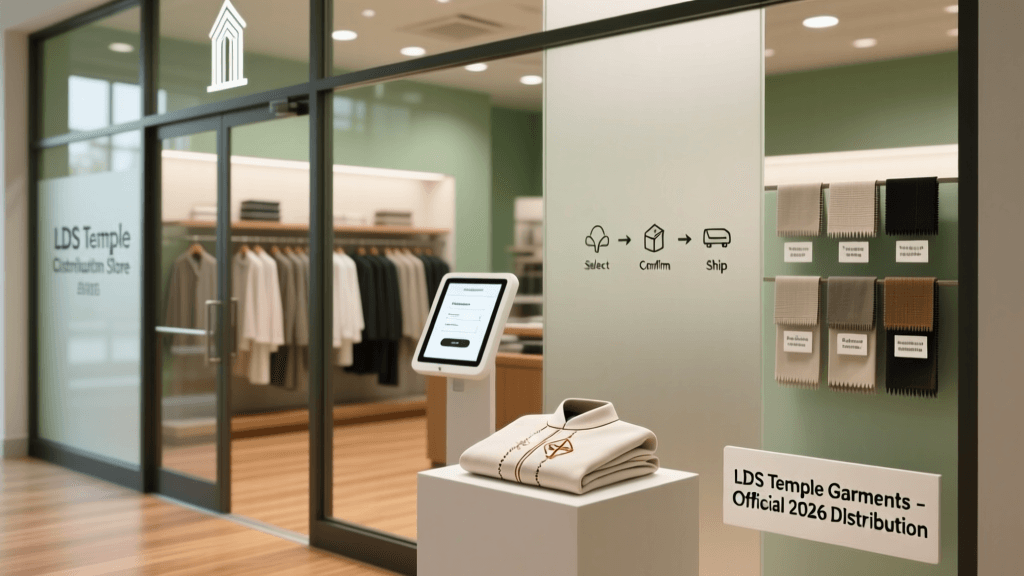
Unlike standard apparel, temple garments are not available in commercial retail stores or secular e-commerce platforms. They are exclusively distributed through The Church of Jesus Christ of Latter-day Saints' own distribution network. To purchase garments, an individual must be an endowed member in good standing and possess a current temple recommend, which is verified at the point of purchase (either digitally online or in-person at a physical distribution center).
How to Order in 2026:
- Account Verification: Log into your official Church account on the distribution website. The system automatically verifies your temple recommend status via the Church's centralized membership database.
- Sizing and Measuring: The 2026 online portal features an updated, highly accurate digital sizing tool. Members are encouraged to measure their chest, waist, and hips using a soft tailor's tape measure rather than relying on standard commercial clothing sizes, as garment sizing is uniquely calibrated.
- Custom Adjustments: For members with specific physical disabilities or medical needs, the distribution centers offer modified garments (e.g., garments with Velcro closures for those with limited mobility, or specialized cuts for wheelchair users).
- Shipping and Pickup: Orders can be shipped directly to the member's home in discreet packaging, or routed to a local distribution center or temple for pickup.
Garment Care and Respectful Disposal
Proper care extends the life of the garment and maintains the integrity of the sacred marks. Never use bleach or harsh chemical stain removers on temple garments, as these chemicals will rapidly degrade the fabric and destroy the symbolic marks. In 2026, the Church recommends using mild, enzyme-free detergents and washing garments in cold or warm water to preserve the elasticity of modern synthetic blends.
When a garment becomes worn, torn, or no longer usable, it must be disposed of respectfully. The established tradition requires the member to carefully cut out the sacred marks (the compass, square, and navel/knee markers) using fabric scissors. These specific pieces containing the marks are then destroyed (often by cutting them into unrecognizable shreds) and disposed of in the regular trash. The remaining, unmarked fabric can be thrown away, repurposed as cleaning rags, or, if the garment is completely unworn and still in its original packaging, returned to the distribution center or donated to approved thrift stores like Deseret Industries.
Conclusion
The Mormon temple garment represents a fascinating intersection of American religious history, personal devotion, and modern textile science. As of 2026, the continued refinement of these garments highlights a commitment to ensuring that millions of adherents worldwide can honor their spiritual covenants comfortably and practically in their daily lives. For researchers of indigenous American religions and traditional garments, the LDS temple garment stands as a profound example of how sacred clothing adapts to the modern era without losing its foundational spiritual meaning.