Navajo Diné Biil Dress and Weaving Traditions 2026
The Spiritual and Historical Roots of Diné Weaving
The Diné (Navajo) people of the American Southwest possess one of the most revered, enduring, and complex textile traditions in North America. Far beyond mere garment construction, Diné weaving is a profound spiritual practice, a historical record, and a vital economic pillar for Indigenous communities. As we navigate the cultural and textile landscape of 2026, the traditional garments born from this practice—most notably the Biil dress—continue to serve as powerful symbols of Indigenous resilience, identity, and sovereignty. To understand the Biil dress is to understand the very fabric of Diné cosmology.
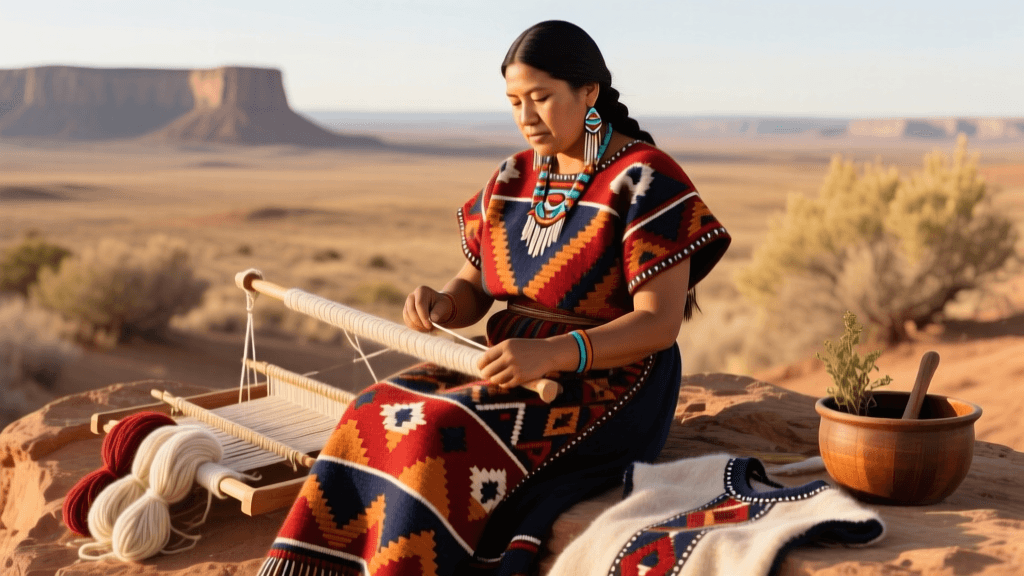
According to Diné teachings, the art of weaving was not invented but gifted. Spider Woman (Na'ashjé'íí Asdzáá) instructed the Diné on how to build the first loom using elements of the natural world: the cross poles were made of sky and earth cords, the warp sticks of sun rays, and the batten of a sun halo. Spider Man taught the people how to spin the wool. This divine origin means that every time a Diné weaver sits at the upright loom in 2026, they are engaging in a sacred dialogue with their ancestors and the natural world. The National Park Service notes that this deep spiritual connection is what differentiates authentic Diné textiles from mass-produced imitations, anchoring each garment in a specific geographic and spiritual landscape.
Anatomy of the Biil: The Traditional Two-Piece Dress
The Biil (pronounced roughly as 'beel') is the traditional two-piece woven dress worn by Diné women. Historically, before the introduction of commercial fabrics and the shift toward the velvet skirts and blouses seen in contemporary powwow and chapter house regalia, the Biil was the everyday and ceremonial garment of the Diné woman. In 2026, the Biil is experiencing a massive cultural renaissance, worn by Indigenous knowledge keepers, educators, and youth during graduations, ceremonies, and cultural gatherings as a deliberate act of decolonization and reclamation.
The garment is constructed from two identical, rectangular hand-woven panels. These panels are placed over the shoulders and sewn together along the sides, leaving openings for the arms and the head. The dress is typically belted at the waist with a woven sash, known as a l'eeyó, or a concho belt made of silver and turquoise. The geometric patterns woven into the Biil are not merely decorative; they often represent the four sacred mountains, the path of the sun, or the harmonious balance of Hózhó (beauty, balance, and harmony).
A critical design element in many Diné textiles, including the borders of shawls and sometimes the hems of modern Biil adaptations, is the 'spirit line' or ch'ihónít'i'. This is a deliberate, contrasting line woven from the center of the design out to the edge of the textile. It provides a pathway for the weaver's spirit to exit the garment, ensuring that their creative energy is not trapped within the intricate geometry of the weave, allowing them to continue creating with a clear mind.
The 2026 Landscape: Navajo-Churro Wool and Natural Dyes
The soul of the Biil dress lies in its material, and in 2026, there is an unprecedented resurgence in the use of authentic Navajo-Churro sheep wool. The Churro sheep, originally brought to the Americas by Spanish colonizers in the 16th century, became inextricably linked to Diné survival and culture. Following the devastating forced removal of the Diné during the Long Walk and subsequent government-led flock reductions in the 1930s, the Churro breed was nearly eradicated. Today, thanks to the tireless efforts of Indigenous shepherds and organizations like the Navajo-Churro Sheep Association, the breed has been successfully revitalized.
Churro wool is uniquely suited for weaving. It features a long, lustrous staple with very little lanolin, making it easy to clean and spin without heavy industrial processing. In 2026, master weavers are increasingly rejecting synthetic, commercial acrylic yarns in favor of hand-spun, locally sourced Churro wool. This shift is accompanied by a return to natural, botanical dyes. Weavers across the reservation are harvesting wild walnut hulls for rich browns, lichen for soft yellows, and utilizing cochineal insects and imported indigo for vibrant reds and deep blues. The result is a Biil dress that literally embodies the earth of the Colorado Plateau.
2026 Market Guide: Sourcing Authentic Diné Garments
For collectors, cultural practitioners, and supporters looking to acquire a hand-woven Biil dress or authentic Diné textiles in 2026, ethical sourcing is paramount. The market is unfortunately saturated with imported, machine-made knock-offs that appropriate Indigenous designs. To ensure you are supporting genuine Diné artisans, buyers must rely on the protections of the Indian Arts and Crafts Act. The Indian Arts and Crafts Board provides vital resources for verifying the authenticity of Native American art and offers mechanisms for reporting fraudulent sales.
In 2026, the most ethical way to purchase a custom Biil dress is directly from the weaver or through Indigenous-owned cooperatives and verified galleries in the Southwest. Platforms like the Santa Fe Indian Market, the Heard Museum Guild Indian Fair, and direct-to-consumer social media channels managed by the weavers themselves have bypassed exploitative middlemen. When commissioning a custom Biil dress in 2026, buyers should expect a lead time of six to fourteen months. Weaving a two-panel dress using hand-spun, naturally dyed Churro wool requires hundreds of hours of meticulous labor, from shearing and washing the fleece to spinning, dyeing, and finally weaving on the upright loom.
2026 Pricing and Material Comparison for Diné Textiles
| Item / Material | 2026 Average Market Cost | Sourcing & Production Notes |
|---|---|---|
| Custom Hand-Woven Biil Dress (Fine Weave) | $4,500 - $12,000+ | Requires 6-14 months lead time. Price scales with thread count and use of rare natural dyes like cochineal. |
| Woven Sash / L'eeyó (Churro Wool) | $350 - $800 | Often woven with a warp-faced technique for durability. Essential for securing the Biil dress. |
| Raw Navajo-Churro Fleece (Unwashed) | $18 - $30 per lb | Sourced directly from Diné shepherds during the spring 2026 shearing season. Highly sought after by hand-spinners. |
| Natural Dye Extracts (Indigo/Cochineal) | $45 - $120 per oz | Used for achieving vibrant reds and blues. Often imported or cultivated in specialized Southwest botanical gardens. |
| Commercial Acrylic Yarn (Rug Weight) | $12 - $20 per skein | Used in more affordable, everyday textiles. Lacks the cultural and environmental sustainability of Churro wool. |
Caring for Hand-Woven Churro Wool Garments
A hand-woven Biil dress is an heirloom investment that requires specialized care to maintain its structural integrity and color vibrancy. Because Churro wool has a different molecular structure than modern Merino wool, it requires gentle handling. In 2026, textile conservators strongly advise against dry cleaning authentic, naturally dyed Diné garments, as the harsh chemical solvents can strip the natural oils from the long-staple fibers and cause botanical dyes to bleed or fade.
Instead, if the garment requires cleaning, it should be hand-washed in cool water using a pH-neutral, lanolin-preserving wool wash. The dress should never be wrung or twisted, as this will distort the warp and weft tension. Instead, gently press the water out and lay the garment flat on a clean, dry towel in a shaded, well-ventilated area. Direct sunlight can rapidly degrade natural dyes like wild walnut and lichen. For storage, the Biil dress should be folded with acid-free tissue paper and kept in a cedar chest or a breathable cotton garment bag to protect it from textile moths and carpet beetles, which remain a persistent threat to natural wool garments.
Supporting Indigenous Artisans Ethically
As the demand for authentic Indigenous regalia and traditional garments continues to grow in 2026, the responsibility falls on the consumer to engage with the market ethically. Purchasing a Diné Biil dress is not merely a fashion transaction; it is a direct investment in Indigenous food sovereignty (via sheep herding), cultural preservation, and economic independence. Always ask for the weaver's name, their chapter or community affiliation, and the specific materials used in the garment. By prioritizing transparency, respecting the intellectual property of Indigenous designs, and paying fair market value for hundreds of hours of skilled labor, we can ensure that the sacred teachings of Spider Woman continue to thrive for generations to come.