Chinese Fashion History Research: 2026 Digital Drape Analysis

The Intersection of Ancient Sartorial Elegance and Modern Computation
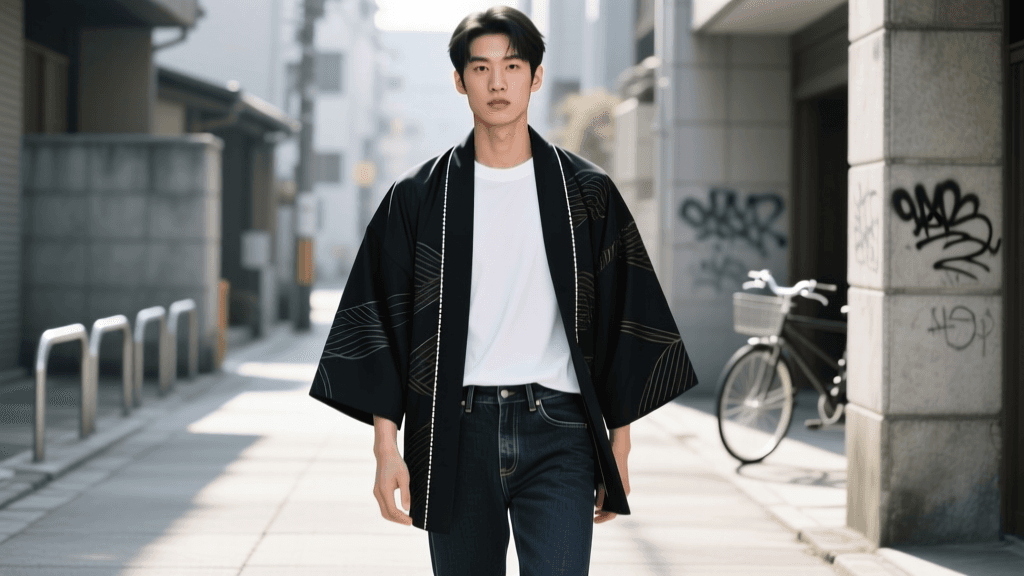
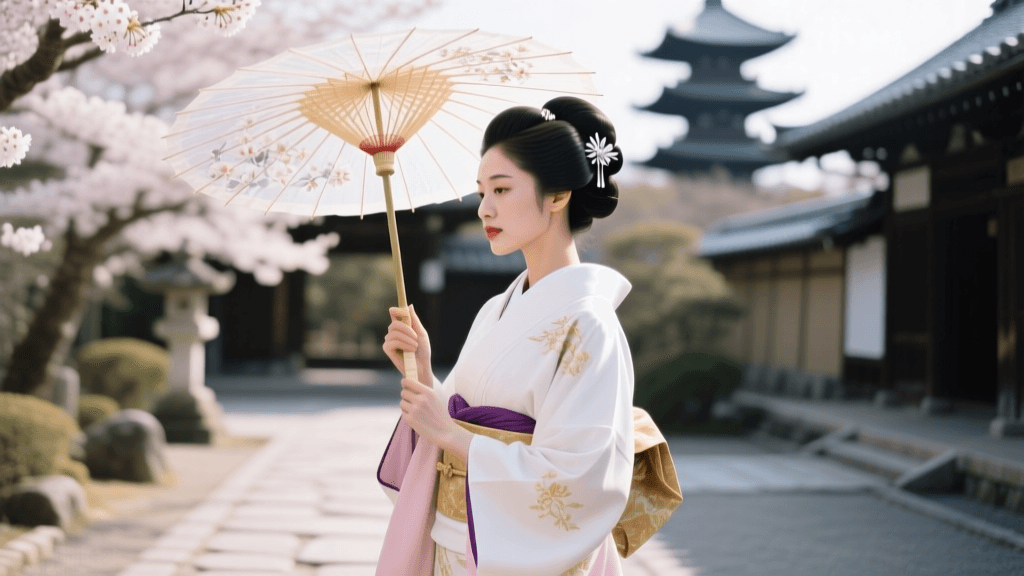
The intersection of ancient Chinese sartorial elegance and modern computational design has reached an unprecedented zenith in 2026. As the Xin Zhongshi (新中式) or 'New Chinese Style' movement continues to dominate global runways, streetwear, and cultural festivals, the academic discipline of Chinese fashion history has evolved from static archival study into a dynamic, data-driven science. Universities across Asia are now pioneering digital drape analysis to understand how historical garments actually moved, folded, and interacted with the human body. This pedagogical shift is not merely about preserving the past; it is about providing contemporary designers with mathematically accurate foundations for the future of Asian traditional garments.
In 2026, fashion history education is no longer confined to the lecture hall or the dusty, climate-controlled archives. Institutions like Donghua University in Shanghai and the Beijing Institute of Fashion Technology (BIFT) have completely overhauled their curricula to integrate physics-based cloth simulation, AI-assisted pattern recognition, and digital twin technology. Students and researchers are now expected to bridge the gap between archaeology and software engineering, creating highly accurate virtual reconstructions of excavated textiles. By analyzing the drape of a Han dynasty Shenyi (deep robe) or the kinetic flow of a Tang dynasty silk shawl, academics are uncovering lost tailoring techniques that dictated the social and physical mobility of ancient Chinese citizens.
3D Fabric Drape Analysis in Historical Reconstruction
At the core of this academic revolution is 3D fabric drape analysis. Traditional Hanfu garments rely heavily on the gravitational drape and kinetic movement of specific textiles, rather than complex Western-style darting and tailoring. The structural integrity of a Ming dynasty Mamianqun (horse-face skirt) or the ethereal float of a Song dynasty Luo (gauze) robe is entirely dependent on the physical properties of the fabric. In 2026, academic researchers utilize advanced software ecosystems, heavily relying on platforms highlighted by CLO Virtual Fashion Education, to simulate these historical textiles with sub-millimeter accuracy.
By inputting exact archaeological data—such as warp and weft density, thread thickness, and fiber composition—researchers can generate digital twins of fragile artifacts that cannot be physically handled. For instance, the legendary plain gauze gown from the Mawangdui Han dynasty tombs, weighing a mere 49 grams, presents a unique challenge in digital simulation. Its gossamer-thin structure requires complex algorithmic adjustments to simulate the aerodynamic drag and static cling inherent to ancient sericulture. Through these simulations, historians have discovered how ancient Chinese scholars utilized the specific drape of ramie and silk to project philosophical ideals of fluidity, modesty, and harmony with nature.
Key Textile Parameters for Hanfu Simulation
To accurately reconstruct historical garments, academic programs in 2026 require students to map physical textile properties to digital simulation parameters. The following table outlines the standard academic framework used to digitize prominent historical Chinese fabrics:
| Historical Textile | Era of Prominence | Physical Weight (g/m²) | Bending Rigidity | 2026 Digital Simulation Focus |
|---|---|---|---|---|
| Plain Silk Gauze (Luo) | Song Dynasty | 12 - 18 | Extremely Low | Aerodynamic drag, translucent layering, static cling |
| Ramie Cloth (Xia) | Pre-Qin to Ming | 120 - 180 | High | Stiff structural folds, crease retention, friction mapping |
| Zhuanghua Brocade | Ming Dynasty | 250 - 320 | Very High | Gravity-induced hem drape, metallic thread reflection, volume |
| Warp-Printed Silk | Tang Dynasty | 45 - 60 | Low to Medium | Kinetic flow during movement, bias-cut draping behaviors |
AI-Assisted Pattern Recognition and Digital Archives
Beyond the physical drape of the fabric, understanding the surface design and structural patterning of ancient garments is a monumental task. Many of the most vital references for Chinese fashion history do not come from surviving garments, but from mural paintings, ceramic figurines, and stone carvings along the Silk Road. The Dunhuang Mogao Caves, for example, contain thousands of square meters of murals depicting celestial beings and donors in intricate, multi-layered garments. In 2026, academic researchers are deploying specialized AI vision models to analyze these frescoes, automatically detecting seam lines, collar overlaps, and hidden waistbands that are obscured by centuries of artistic stylization and pigment degradation.
These digital archives are crucial for cross-referencing. As noted by the Metropolitan Museum of Art's Heilbrunn Timeline of Art History, the evolution of Chinese silk production deeply influenced global trade and cultural exchange. By combining AI pattern recognition with surviving textile fragments housed in institutions like the Victoria and Albert Museum Asian Collections, researchers can mathematically deduce the missing dimensions of a garment. If an AI detects a specific type of pleating ratio in a Tang dynasty figurine, researchers can use 3D simulation to test whether that pleat ratio is physically possible with the loom widths available during that specific century, thereby validating or correcting historical hypotheses.
The Xin Zhongshi Movement: From Archive to Runway
The academic rigor applied to digital drape analysis in 2026 is directly fueling the Xin Zhongshi (New Chinese Style) commercial market. Modern consumers demand garments that evoke historical authenticity while providing contemporary comfort. Designers are collaborating with university research labs to extract the 'drape DNA' of historical garments. For example, the iconic Song dynasty aesthetic of slender, understated elegance is achieved not through tight tailoring, but through the precise manipulation of fabric grain and the strategic placement of internal ties. By utilizing the 2026 digital simulation databases, modern brands can replicate the exact kinetic flow of a historical scholar's robe using modern, machine-washable sustainable fibers, ensuring the cultural essence survives the transition to modern daily wear.
Actionable Guide for Aspiring Fashion Historians
For students, educators, and independent researchers looking to enter the field of Chinese fashion history and digital drape analysis in 2026, a structured approach to skill development is essential. Below is an actionable roadmap to building a competitive academic portfolio:
- Master Physics-Based Simulation Software: Achieve advanced certification in CLO 3D or Marvelous Designer. Focus specifically on the 'Material Editor' modules, learning how to translate physical textile testing data (like KES-FB measurements) into digital parameters.
- Study Archaeological Textile Reports: Regularly review publications from the Chinese National Silk Museum and the Institute of Archaeology (CASS). Familiarize yourself with the exact fiber compositions, dyeing techniques, and loom limitations of different dynasties.
- Learn Basic Algorithmic Pattern Drafting: Understand how traditional Chinese flat-pattern drafting (which utilizes geometric shapes and straight lines) differs from Western contoured drafting. Use parametric design tools to automate the generation of historical collar and sleeve variations.
- Engage with Digital Heritage Databases: Utilize open-access 3D scans and high-resolution photogrammetry provided by global museums. Practice mapping 2D historical motifs onto 3D simulated garments, paying close attention to how pattern distortion occurs across complex pleats and seams.
- Conduct Kinetic Validation Testing: Whenever possible, sew physical prototypes of your digital reconstructions using historically analogous fabrics. Record the physical movement and compare it against your simulation to refine your digital material presets.
Conclusion
The landscape of Chinese fashion history education in 2026 is a testament to the power of interdisciplinary research. By marrying the meticulous, empirical study of ancient textiles with cutting-edge 3D drape simulation and AI-driven archival analysis, academics are breathing new, kinetic life into the garments of the past. This digital renaissance ensures that the profound philosophical and aesthetic principles embedded in traditional Asian garments are not lost to time, but are instead preserved, understood, and seamlessly integrated into the global fashion lexicon of the future.