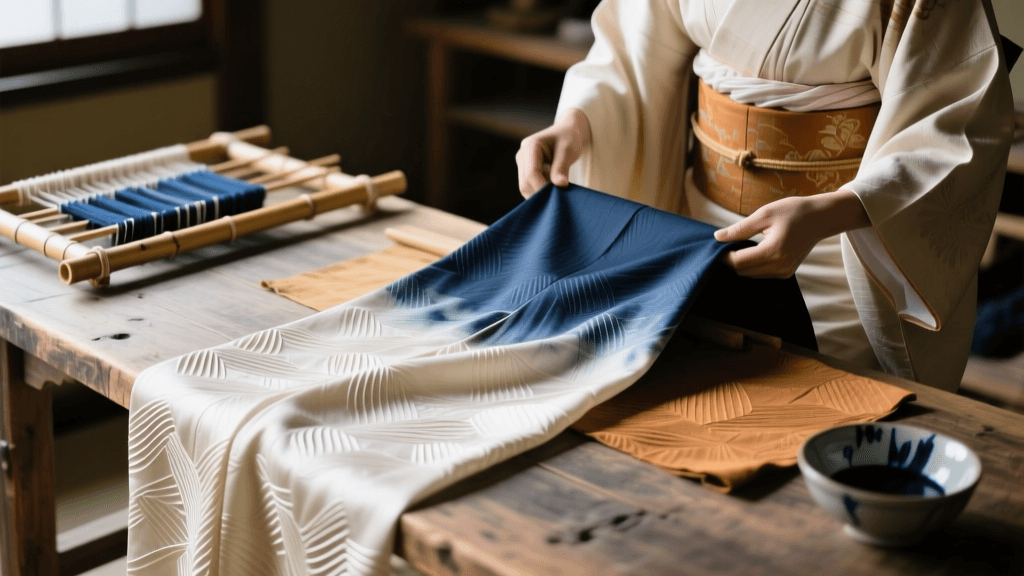
Best Digital Archiving Tools for Chinese Fashion Research 2026
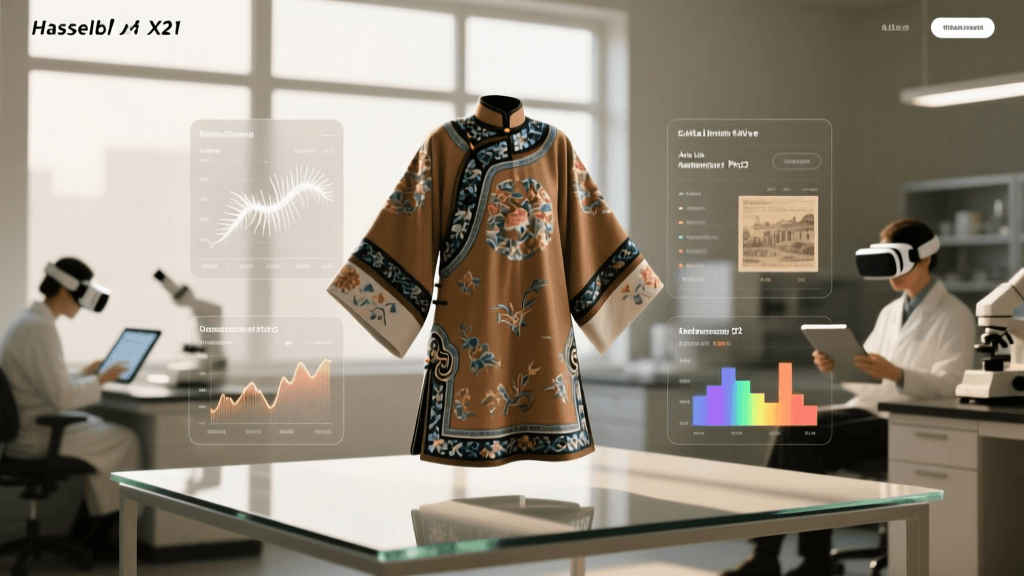
The Evolution of Chinese Fashion History Education in 2026
The academic study of Chinese fashion history has undergone a radical transformation as we navigate through 2026. No longer confined to dusty physical archives and fragile, light-sensitive textiles, researchers and university students now rely on advanced digital preservation techniques to study historical garments. This shift is largely driven by the explosive global growth of the Xin Zhongshi (new Chinese style) movement, which demands rigorous, historically accurate data to inform contemporary design. Academic institutions are responding by integrating high-fidelity 3D scanning, AI-driven textile analysis, and virtual reality into their curricula, ensuring that the intricate details of Ming dynasty mamianqun (horse-face skirts) and Qing dynasty jifu (dragon robes) are preserved with sub-millimeter accuracy.
For educators and researchers, the transition to digital archiving is not merely about preservation; it is about accessibility and interactive learning. By creating digital twins of rare historical garments, universities can share their collections globally, allowing students to manipulate, deconstruct, and analyze traditional weaving techniques without risking damage to the original artifacts. According to the UNESCO Digital Heritage guidelines, the integration of 3D modeling and open-access digital repositories is now considered a fundamental standard for cultural heritage preservation, a mandate that leading Asian textile museums and academic labs have fully embraced this year.
Overcoming the Challenges of Digitizing Historical Silk
Digitizing historical Chinese garments presents unique technical challenges, primarily due to the material properties of silk. Traditional photogrammetry often fails when confronted with the specularity (reflectiveness) and translucency of ancient silk damasks, brocades, and gauzes. Light passes through or bounces off the fibers, creating noise and gaps in the resulting 3D mesh. Furthermore, the delicate nature of these garments means they cannot be pinned, stretched, or subjected to intense heat from traditional lighting rigs.
In 2026, the academic community has largely solved these issues through polarized light scanning and AI-assisted texture reconstruction. Modern hardware utilizes cross-polarization techniques to eliminate specular highlights, capturing the true matte color and weave structure of the silk. Meanwhile, machine learning algorithms can now predict and fill in the micro-gaps of complex embroidery, such as the intricate kesi (silk tapestry) technique, resulting in flawless digital replicas that accurately represent the drape, weight, and texture of the original textile.
Top Digital Archiving and 3D Scanning Tools for 2026
To build a comprehensive digital archive, academic labs require a combination of hardware and software tailored to the nuances of historical textiles. Below are the industry-standard tools currently dominating Chinese fashion history research.
Artec Leo (2026 Academic Edition)
The Artec Leo remains the premier handheld 3D scanner for textile preservation in 2026. Its onboard processing and AI-driven HD mode allow researchers to scan delicate garments while they are mounted on archival mannequins, eliminating the need to lay them flat. The Leo's ability to capture the complex topography of raised embroidery, such as the metallic thread couching found on Qing dynasty court robes, is unparalleled. For university labs, the wireless capability means students can easily move around large, voluminous garments like the round-collar paofu without tripping over cables or accidentally snagging fragile fibers.
RealityCapture by Epic Games
For macro-level photogrammetry and detailed texture mapping, RealityCapture is the software of choice in academic research. When paired with a polarized cross-lighting photography rig, RealityCapture processes hundreds of high-resolution images into a seamless 3D model. Its 2026 updates include specialized algorithms for translucent materials, making it exceptionally effective for capturing the layered, ethereal qualities of traditional silk gauze (luo) and leno weaves. Researchers use it to generate ultra-high-resolution 8K texture maps that reveal the individual twist of the silk threads to students studying via VR headsets.
CLO 3D for Historical Pattern Reconstruction
While scanning captures the current state of a garment, CLO 3D allows researchers to reverse-engineer the original flat patterns and simulate the historical drape. By inputting the physical properties of specific historical silks—such as the stiffness of Song dynasty zhuanghua satin or the fluidity of Han dynasty mawei skirts—students can digitally reconstruct the flat-cut geometry of traditional Chinese tailoring. This software is crucial for the Xin Zhongshi movement, as it allows designers to test how historical proportions translate to modern bodies before cutting physical fabric.
Comparative Analysis of Academic Archiving Tools
Selecting the right tool depends on the specific research goals of the academic lab. The following table outlines the primary use cases and specifications for the top tools utilized in 2026.
| Tool / Software | Primary Academic Use Case | Accuracy / Resolution | Best For Garment Type |
|---|---|---|---|
| Artec Leo | High-fidelity topography and embroidery capture | Up to 0.1 mm accuracy | Heavily embroidered robes, structured jackets |
| RealityCapture | Color-accurate texture mapping and weave analysis | 8K+ texture resolution | Painted silks, dyed textiles, complex brocades |
| CLO 3D | Pattern reverse-engineering and drape simulation | Physics-based drape accuracy | Flowing skirts, multi-layered ruqun ensembles |
| Polarized Light Rigs | Eliminating specularity for raw silk scanning | Dependent on camera sensor | Glossy satins, metallic thread work |
Building a Digital Heritage Lab: A Guide for Universities
For academic institutions looking to establish or upgrade a digital heritage lab in 2026, a strategic approach to equipment and spatial design is essential. The first step is environmental control. The scanning room must maintain a strict climate of 20 degrees Celsius and 50 percent relative humidity to protect the textiles during the digitization process. Lighting must be entirely controllable; ambient light must be blocked out to ensure the polarized flash systems function correctly without interference.
Budget allocation should prioritize the camera and lighting rig over the software, as RealityCapture operates on a flexible licensing model that is highly accessible for educational institutions. A standard academic lab setup requires a full-frame mirrorless camera with a macro lens, a motorized turntable for smaller accessories like cloud collars and lotus shoes, and a robust workstation with a minimum of 128GB RAM to handle the massive point-cloud data generated during processing. Furthermore, universities must train students not just in software operation, but in the ethical handling of historical artifacts, ensuring that the pursuit of digital data never compromises the physical integrity of the garment.
Open-Access Repositories and Global Collaboration
The true power of digital archiving lies in shared knowledge. In 2026, the siloed approach to museum collections has been replaced by interconnected, open-access repositories. Academic researchers are actively contributing their 3D models and pattern reconstructions to global databases, fostering cross-cultural studies. For instance, comparing the digital drape of a Chinese Hanfu skirt with a contemporaneous Korean Hanbok or Japanese Kimono allows students to understand the broader Silk Road exchanges and regional tailoring divergences. These digital archives also serve as a vital resource for the global diaspora, allowing independent designers and historians worldwide to study authentic construction techniques that were previously locked away in physical vaults.
Conclusion
The integration of advanced digital archiving tools into Chinese fashion history education represents a monumental leap forward for the field. By leveraging the precision of the Artec Leo, the textural brilliance of RealityCapture, and the predictive physics of CLO 3D, researchers in 2026 are not merely preserving the past; they are breathing new, interactive life into it. As the Xin Zhongshi movement continues to bridge the gap between ancient aesthetics and modern wardrobes, the rigorous, data-driven research facilitated by these digital tools ensures that the legacy of Chinese textile arts remains accurate, accessible, and profoundly influential for generations to come.