Decoding Kimono Fabrics: Nishijin-ori to Oshima Tsumugi
The Art of Japanese Silk: Beyond the Surface
When discussing traditional Japanese clothing, the striking silhouette of the kimono often takes center stage. However, for collectors, practitioners, and enthusiasts of Asian traditions, the true soul of the garment lies in its fabric. Japanese textile craftsmanship is a meticulous discipline where weaving, dyeing, and finishing techniques converge to create textiles that are not merely clothing, but wearable art. Understanding the nuances of kimono fabrics—specifically the woven masterpieces like Nishijin-ori, the mud-dyed resilience of Oshima Tsumugi, and the glossy elegance of Rinzu—is essential for anyone looking to invest in, wear, or preserve these cultural artifacts. The standard kimono fabric bolt, known as a tanmono, measures approximately 36 centimeters in width and 11.5 meters in length, providing just enough material to construct a single garment with minimal waste.
Nishijin-ori: The Brocade of Kyoto
Originating from the Nishijin district of Kyoto, Nishijin-ori is not a single fabric but a prestigious designation for a variety of complex, pattern-woven silks. Recognized by the Nishijin Textile Industry Association, this craft traces its roots back to the Onin War in the late 15th century, when displaced weavers returned to Kyoto with advanced Chinese weaving techniques. Today, creating a single Nishijin-ori textile requires over twenty distinct specialized steps, from design drafting and thread dyeing to the final weaving on a Jacquard or traditional handloom.
Craftsmanship and Characteristics
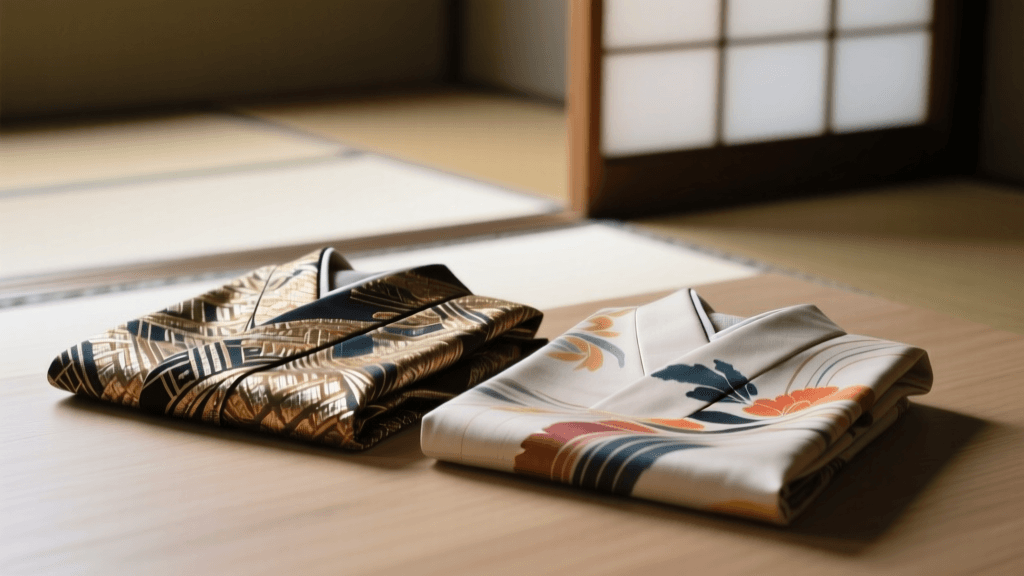
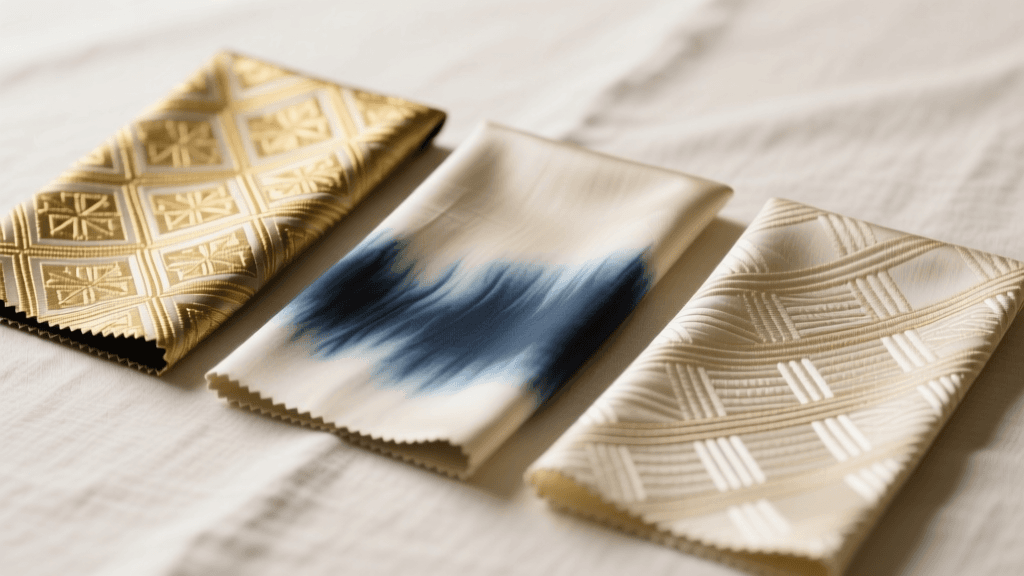
Nishijin-ori is renowned for its opulent use of metallic threads, gold leaf, and vibrantly dyed silk yarns that are woven together to create intricate, tapestry-like patterns. Unlike Yuzen, where patterns are dyed onto a finished white cloth, Nishijin patterns are born directly on the loom. The resulting fabric is thick, heavy, and incredibly structured, making it the premier choice for formal obi sashes and high-tier formal kimono such as the kurotomesode and furisode.
- Weight: Heavy and stiff, providing excellent structural support for complex obi knots like the taiko musubi.
- Cost: A genuine hand-woven Nishijin fukuro obi can range from $2,000 to over $15,000, depending on the inclusion of precious metals and the complexity of the weave.
- Formality: Highest tier. Reserved for weddings, tea ceremonies, and official state functions.
Oshima Tsumugi: The Mud-Dyed Masterpiece
In stark contrast to the opulent brocades of Kyoto is Oshima Tsumugi, a pongee silk woven in Amami Oshima, Kagoshima Prefecture. According to the Association for the Promotion of Traditional Craft Industries, Oshima Tsumugi is celebrated as one of the world's finest textiles, prized for its lightweight nature, exceptional durability, and subtle, sophisticated patterns.
The Mud-Dyeing Process
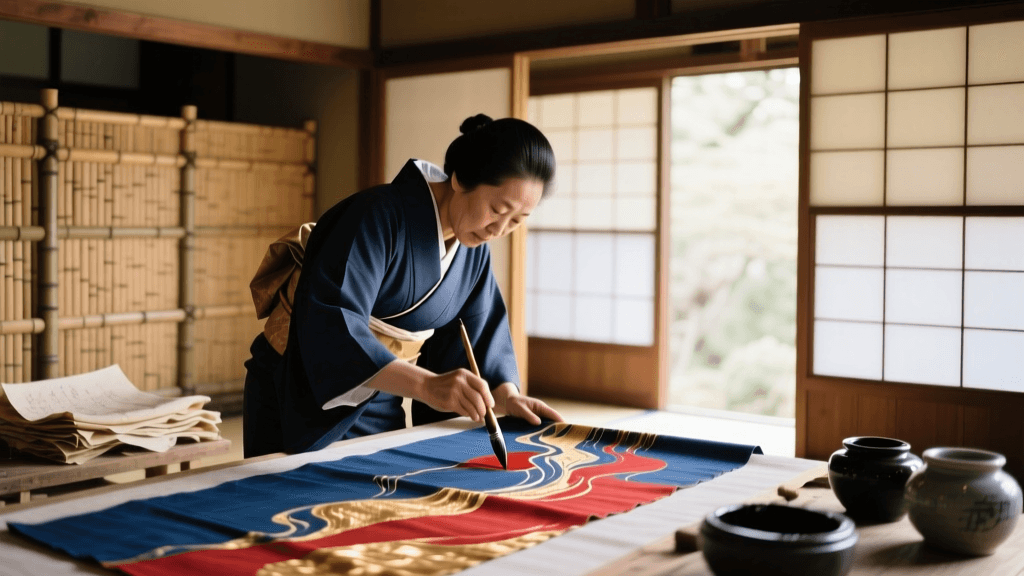
The magic of Oshima Tsumugi lies in its unique, labor-intensive dyeing technique. Silk threads are first dyed with the tannin-rich extract of the native teichigi (ironwood) plant. They are then repeatedly submerged in iron-rich mud. The chemical reaction between the tannin and the iron produces a deep, rich, and colorfast black or dark brown. This process may be repeated up to 80 times to achieve the perfect hue. The threads are then meticulously tie-dyed using cotton threads (kasuri) to create geometric or nature-inspired micro-patterns before weaving.
The beauty of Oshima Tsumugi is that it is a fabric of contradictions: it is painstakingly crafted yet designed for everyday wear; it is dyed in dark mud yet possesses a subtle, luminous sheen.
- Weight: Exceptionally lightweight and breathable, draping beautifully against the body while resisting wrinkles.
- Cost: A full kimono bolt typically costs between $1,500 and $4,500, reflecting the months of manual labor required.
- Formality: Smart casual to semi-formal. It is considered the ultimate everyday luxury fabric, perfect for theater visits and dining, but technically inappropriate for strict ceremonial events.
Rinzu and the Canvas of Yuzen Dyeing
Rinzu is a type of silk damask characterized by a glossy, reflective background with a matte pattern woven into it. This subtle interplay of light and shadow makes Rinzu a favorite for the uchikake (wedding over-robe) and formal houmongi (visiting kimono). The fabric is soft, highly pliable, and takes dye exceptionally well, making it the ultimate canvas for elaborate Yuzen dyeing techniques. Kyo-Yuzen, originating in Kyoto, utilizes a rice-paste resist method to create vivid, painterly designs that sit on top of the Rinzu weave, allowing the damask pattern to subtly peek through the dyed motifs.
Fabric Comparison Chart: Weight, Cost, and Formality
To help collectors and wearers make informed decisions, below is a structured comparison of these premier kimono fabrics.
| Fabric Type | Primary Technique | Weight and Drape | Formality Level | Estimated Cost (USD) | Best Season |
|---|---|---|---|---|---|
| Nishijin-ori | Complex Brocade Weaving | Heavy, stiff, structured | Ultra-Formal (Ceremonial) | $2,000 - $15,000+ | Autumn / Winter |
| Oshima Tsumugi | Mud-Dyeing and Kasuri Weave | Lightweight, crisp, durable | Smart Casual / Everyday Luxury | $1,500 - $4,500 | Spring / Autumn |
| Rinzu | Damask Weaving | Soft, fluid, elegant drape | Formal / Semi-Formal | $800 - $3,000 | All Seasons (with lining) |
| Ro / Sha | Leno / Gauze Weaving | Sheer, breathable, airy | Semi-Formal / Casual | $400 - $1,500 | Summer (July - August) |
Practical Guide: Identifying Authentic Silk
When shopping for vintage or antique kimono, distinguishing between genuine silk and modern synthetic blends is crucial. Authentic silk possesses a unique acoustic property known as 'scroop'—a distinct, crisp rustling sound produced when the fabric is crushed in the hand. Synthetic fabrics like polyester tend to feel overly slippery and produce a dull, muffled sound. Additionally, examine the fabric under natural light. Hand-woven Tsumugi silk will often feature slight, intentional irregularities or 'slubs' in the thread, which are hallmarks of artisanal craftsmanship rather than manufacturing defects. For absolute certainty, a microscopic burn test on a loose thread will reveal that genuine silk burns slowly, smells like singed hair, and leaves a crushable black ash, whereas synthetic fibers will melt into a hard plastic bead.
Practical Guide: Caring for Your Silk Kimono
Owning a silk kimono is a commitment to preservation. Japanese silk is a protein fiber that is highly susceptible to moisture, direct sunlight, and improper folding. Here is actionable advice for maintaining your garments.
Proper Storage Dimensions and Materials
Never store silk in plastic, which traps moisture and causes yellowing or mold. Instead, wrap your folded kimono in tatou (traditional acid-free Japanese paper), which costs around $5 to $10 per sheet. The ideal storage vessel is a kiri-tansu (paulownia wood chest). Paulownia naturally regulates humidity and repels insects.
- Standard Kimono Folded Dimensions: Approximately 35 cm x 25 cm x 5 cm.
- Storage Box Sizing: Ensure your paulownia box drawers are at least 38 cm wide, 28 cm deep, and 8 cm high to prevent compression creases.
- Obi Storage: Nishijin-ori obi should be folded loosely in a separate, wider drawer (minimum 90 cm wide) to protect the metallic threads from snapping.
The Biannual Airing (Mushiboshi)
Silk garments must be aired out twice a year, traditionally during the dry, crisp days of late autumn (October/November) and early spring (March/April). Unfold the kimono and hang it on a specialized bamboo kimono hanger in a shaded, well-ventilated room with a relative humidity of around 50% for 4 to 6 hours. Never expose the silk to direct sunlight, as UV rays will rapidly degrade the dye and weaken the protein fibers.
Professional Cleaning Costs and Timing
Do not attempt to wash a silk kimono at home. When the garment requires cleaning, seek a specialist who performs maruarai (a traditional Japanese dry-cleaning method that uses solvents and careful hand-stretching).
- Cost: Expect to pay between $50 and $150 for a full kimono maruarai, and $40 to $90 for an obi.
- Timing: Clean the garment before storing it for the season, even if it appears unworn, as invisible body oils and sweat can oxidize and cause permanent brown stains over time.
Preserving the Legacy of Asian Traditions
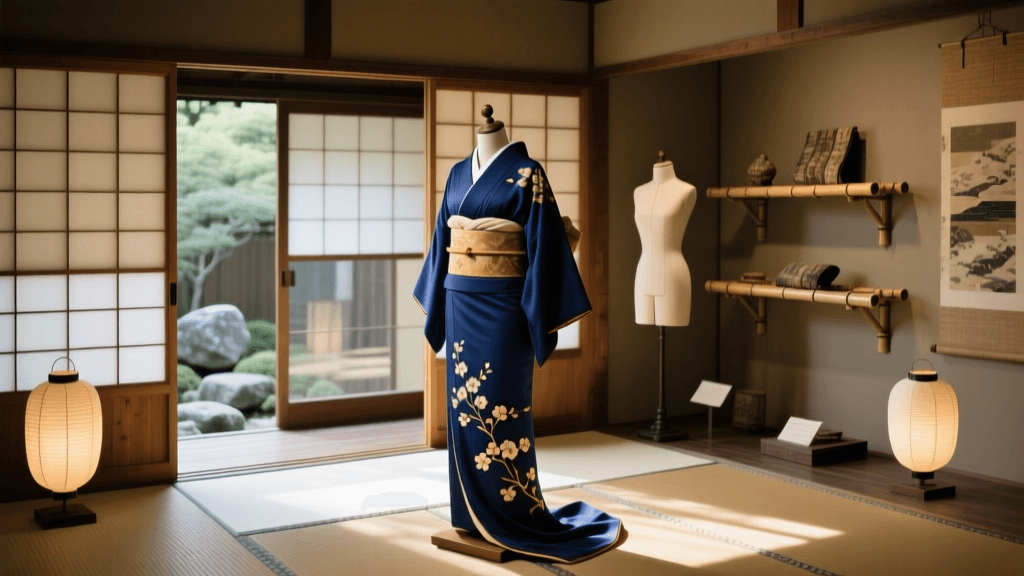
The fabrics of the Japanese kimono are a testament to centuries of regional specialization and artistic devotion. From the imperial elegance of Kyoto's Nishijin-ori to the earthy, resilient beauty of Amami Oshima's mud-dyed Tsumugi, each textile tells a story of its landscape and its makers. By understanding the distinct characteristics, appropriate uses, and rigorous care requirements of these fabrics, enthusiasts and collectors do more than wear a garment—they actively participate in the preservation of Asian cultural heritage. For further reading on the historical evolution of these textiles, the Victoria and Albert Museum's extensive kimono archives offer a wealth of visual and historical context.