Best Hanfu Garments for Tai Chi & Qigong Practice 2026
The Intersection of Xin Zhongshi and Traditional Wellness
The year 2026 has seen a remarkable convergence of traditional Chinese aesthetics and holistic health practices. As the Xin Zhongshi (新中式) or "New Chinese Style" movement matures, it has evolved beyond mere streetwear and office attire to deeply influence the wellness and martial arts communities. For practitioners of Tai Chi and Qigong, the garments worn during practice are not merely decorative; they are functional tools that facilitate the flow of Qi (vital energy), allow for deep biomechanical stances, and regulate body temperature during mindful movement. Choosing the right Hanfu for your morning practice requires an understanding of historical silhouettes, modern textile innovations, and the specific physical demands of your chosen discipline.
According to research highlighted by Harvard Medical School, Tai Chi is often described as "meditation in motion," offering profound benefits for balance, cardiovascular health, and stress reduction. To fully immerse yourself in these benefits, your clothing must move seamlessly with your body. In this comprehensive guide, we explore the best Hanfu styles, fabrics, and footwear for Tai Chi and Qigong practitioners in 2026.
The Biomechanics of Qi: Why Garment Drape Matters
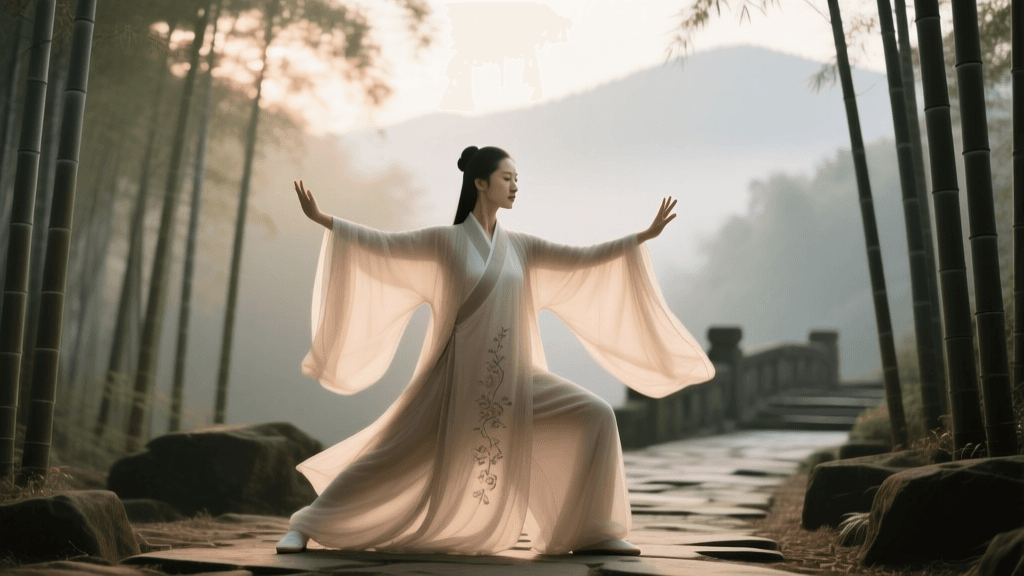
In traditional Chinese wellness philosophies, the physical body is mapped with meridian lines through which Qi flows. Restrictive clothing—such as tight synthetic activewear or rigid denim—can create tension that practitioners believe stifles this energy flow. Hanfu, by its very nature, is designed around the concept of pingmian caijian (flat-plane cutting). Unlike Western tailoring, which darts and seams fabric to hug the body's contours, traditional Hanfu relies on the natural drape of the fabric and the use of sashes or ties to secure the garment.
This flat-cutting method provides an extraordinary range of motion. When you sink into a Ma Bu (horse stance) or transition through the fluid movements of the Yang style Tai Chi form, the fabric glides over the skin without pulling at the shoulders or restricting the diaphragm. Deep, abdominal breathing—a cornerstone of Qigong—requires a relaxed midsection. The crossed collars (jiaoling youren) and wide sashes of Hanfu provide gentle, adjustable support to the core without the constriction of modern elastic waistbands.
Top Hanfu Silhouettes for Mindful Movement in 2026
Not all Hanfu is created equal when it comes to physical exertion. While the grand, floor-sweeping sleeves of the Tang dynasty Daxiushan are stunning for photography, they are entirely impractical for martial arts. Here are the top three silhouettes favored by wellness practitioners this year.
1. The Daopao (道袍): The Ultimate Taoist Robe
Translating literally to "Taoist Robe," the Daopao is a staple of the Ming dynasty wardrobe and remains the gold standard for Qigong and Tai Chi practice in 2026. Its defining feature is the anbai (hidden pendulum) or side slits that feature internal fabric panels. These panels prevent the legs from being exposed during high kicks or deep lunges while maintaining a modest, continuous silhouette when standing still. The sleeves are typically cut in a Zhaixiu (narrow sleeve) or moderately wide style, allowing the practitioner to perform hand forms without the fabric dipping into their line of sight or catching on their fingers.
2. The Yesa (曳撒): For Dynamic Chen Style Tai Chi
For those who practice the more martial, explosive movements of Chen style Tai Chi, the Yesa is the ideal garment. Originally a Yuan and Ming dynasty military and riding garment, the Yesa features a fitted, cross-collared upper bodice that transitions into a densely pleated lower skirt. The pleats sit flat against the body during static poses but fan out beautifully during spins, sweeps, and Fajin (explosive power) releases. The structured upper body provides excellent posture support, reminding the practitioner to keep the spine aligned and the chest slightly hollowed (hanxiong babe).
3. The Song Dynasty Beizi (褙子): Ideal for Ba Duan Jin
The Beizi is an open-front, long coat that was immensely popular during the Song dynasty. Because it is left unfastened at the front (or secured only by a delicate tie), it offers maximum ventilation and an ethereal, flowing aesthetic. It is particularly suited for gentle, standing Qigong practices like Ba Duan Jin (Eight Brocades) or Zhan Zhuang (standing like a tree). The straight, vertical lines of the Beizi visually elongate the body, reinforcing the mind-body connection of rooting downward into the earth while extending upward toward the sky.
Fabric Science: Selecting Materials for Breathability and Flow
The Xin Zhongshi market in 2026 has introduced incredible textile blends that honor historical aesthetics while solving the age-old problem of silk being too delicate and raw linen being too abrasive. When selecting a wellness Hanfu, you must balance drape, moisture-wicking capabilities, and weight.
| Fabric Type | Weight | Breathability | Drape Quality | Best Practice Style |
|---|---|---|---|---|
| Summer Ramie (夏布) | Lightweight | Exceptional | Crisp, Structured | Summer Qigong, Zhan Zhuang |
| Mulberry Silk Crepe | Medium | High | Fluid, Heavy | Indoor Tai Chi, Flowing Forms |
| Copper-Infused Linen | Medium | Very High | Soft, Relaxed | Outdoor Morning Practice |
| Tencel-Cotton Blend | Light-Medium | High | Excellent Drape | Dynamic Chen Style, Daily Wear |
In 2026, copper-infused linen has become a breakthrough fabric in the wellness space. Copper yarns woven into natural linen provide subtle antimicrobial properties, which is highly beneficial for garments worn during heavy sweating in outdoor summer practices. Furthermore, Tencel-cotton blends offer the luxurious, liquid drape of silk but are entirely machine washable, making them the pragmatic choice for daily practitioners.
Grounding the Practice: Traditional Footwear
A crucial, often overlooked element of Tai Chi and Qigong is the connection between the feet and the earth. Modern running shoes with thick, cushioned heels disrupt the body's natural alignment and numb the proprioceptive feedback required for balancing on one leg. In 2020, Taijiquan was officially inscribed on UNESCO's Intangible Cultural Heritage list, bringing global attention to the authentic mechanics of the art, including its traditional gear.
Practitioners are increasingly returning to Qiancengdi (thousand-layer sole) cloth shoes. These traditional shoes feature soles made from dozens of layers of cotton cloth stitched tightly together with hemp thread. The result is a flat, zero-drop shoe that is incredibly durable, flexible, and provides just enough grip on stone or wood surfaces without isolating the foot from the ground. For modern practitioners who require slightly more arch support, several Xin Zhongshi brands now offer hybrid cloth shoes featuring a traditional cotton upper with a thin, flexible natural rubber outsole, bridging the gap between ancient grounding techniques and modern durability.
Practical Guide: Sizing and Layering for Outdoor Practice
Proper sizing is critical when ordering Hanfu for martial arts. A garment that is too long will cause tripping hazards during sweeping stances, while sleeves that are too long will obscure your hand gestures. Follow these actionable steps to build your 2026 wellness wardrobe:
- Measure for the Stance: When measuring your inseam or overall garment length, do not stand with your legs together. Assume a standard horse stance. The hem of your Daopao or Yesa should hover roughly two inches above the ankle bone to prevent stepping on the fabric when your center of gravity drops.
- The Sleeve Test: For Tai Chi, opt for sleeves that end precisely at the wrist bone or the base of the thumb. If you prefer a slightly wider sleeve for aesthetic flow, ensure the garment includes internal shouyi (cuff ties) to secure the fabric back during complex weapon forms or partner pushing-hands drills.
- Layering for Climate Control: The National Center for Complementary and Integrative Health (NCCIH) notes that Tai Chi is widely practiced outdoors year-round to maximize the benefits of fresh air and nature. In cooler months, layer a lightweight, merino wool Xin Zhongshi base layer beneath your Hanfu. The crossed collar of the Hanfu naturally frames the base layer, turning a practical thermal necessity into a stylish, layered aesthetic.
- Sash Placement: When tying your sash, position it slightly below the navel (the Dantian). This not only secures the garment but serves as a physical, tactile reminder to breathe deeply into your lower abdomen and maintain your center of gravity during practice.
Conclusion: Embodying Tradition Through Movement
The integration of Hanfu into Tai Chi and Qigong practice is more than a sartorial choice; it is a profound embodiment of Asian traditions. By selecting garments like the Daopao or Yesa, and prioritizing breathable, historically informed textiles, practitioners in 2026 are able to deepen their mind-body connection. The flowing drape of the fabric becomes a visual extension of the Qi itself, turning every morning practice into a moving meditation that honors the past while actively nurturing the health of the present.