Mastering Chinese Drawloom Weaving: Yunjin Brocade in 2026
The Resurgence of the Da Hua Drawloom in 2026
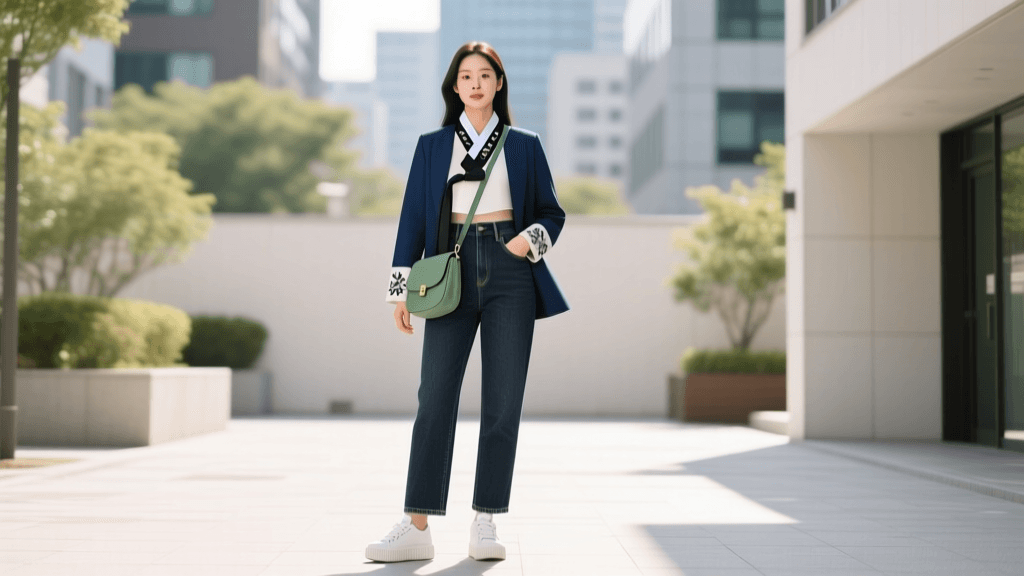
In the landscape of 2026 global fashion and heritage preservation, few textiles command as much reverence as Chinese Yunjin (cloud brocade). As the Xin Zhongshi (new Chinese style) movement continues to dominate international runways and luxury markets this year, the demand for authentic, hand-woven traditional garments has reached unprecedented heights. At the heart of this revival is the Da Hua Loom, an ancient drawloom that operates as a magnificent, room-sized wooden computer. Unlike modern power looms that mass-produce synthetic imitations, the Da Hua drawloom requires the synchronized effort of two master artisans to weave intricate patterns using silk, gold, and peacock feather threads. This article explores the mechanics of this ancient technology, the step-by-step weaving process, and how collectors and designers in 2026 can source authentic pieces while supporting vital cultural preservation initiatives.
Anatomy of the Ancient Da Hua Loom
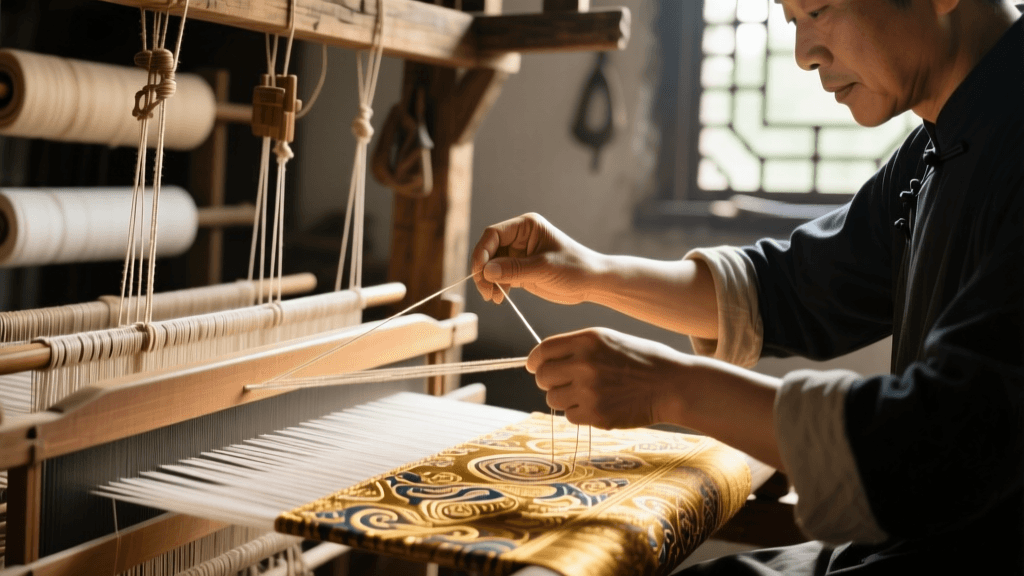
The Da Hua Loom (大花楼机) is a marvel of ancient Chinese engineering, measuring roughly five meters long, four meters high, and two meters wide. Constructed entirely from wood and traditional joinery, it functions on principles that predate and ultimately inspired the 19th-century Jacquard loom in Europe. The most striking feature of the Da Hua Loom is its overhead harness system, which consists of thousands of knotted silk cords. These cords act as a physical, tactile memory bank, storing complex pattern drafts that can contain millions of individual weave intersections.
Operating the loom requires a highly coordinated duo. The zhuaihua (pattern puller) sits elevated at the top of the loom, reading the corded pattern and manually lifting the precise warp threads to create the shed. Below, the zhihua (weaver) sits at the bench, managing the shuttle, beating the weft threads tightly into place with a heavy wooden reed, and executing the intricate interlocking of supplementary wefts, including metallic threads. According to historical textile archives documented by institutions like the Metropolitan Museum of Art, this dual-weaver system allowed Chinese artisans to achieve a level of polychrome complexity and structural density that was virtually impossible to replicate in the Western world until the industrial revolution.
Yunjin, Shu, and Song: A 2026 Brocade Comparison
While Yunjin is the most famous drawloom textile, China boasts three major historical brocades. For designers and collectors navigating the 2026 market, understanding the distinctions in origin, current pricing, and production time is essential for authentic sourcing.
| Brocade Type | Origin Region | 2026 Avg. Price (USD/m) | Daily Output (cm) | Key Characteristics & Materials |
|---|---|---|---|---|
| Yunjin (Cloud) | Nanjing, Jiangsu | $4,500 - $8,000 | 5 - 6 cm | Heavy use of gold/silver foil threads, peacock feathers, and vibrant polychrome silk. Requires the Da Hua drawloom. |
| Shu Brocade | Chengdu, Sichuan | $1,200 - $2,500 | 15 - 20 cm | Known for warp-faced structures, rich earthy and jewel tones, and historical motifs inspired by the ancient Shu kingdom. |
| Song Brocade | Suzhou, Jiangsu | $1,800 - $3,200 | 10 - 15 cm | Features a flat, matte finish with subtle, elegant geometric and floral patterns. Often used for mounting scrolls and luxury apparel. |
Note: 2026 pricing reflects the severe shortage of master-level drawloom weavers and the rising cost of authentic mulberry silk and precious metal threads.
The Weaving Process: From Thread to Cloud
Creating authentic Yunjin brocade is an exercise in extreme patience and meticulous planning. The process from raw silk to finished fabric involves over a hundred distinct steps, but the core weaving methodology can be broken down into three critical phases.
1. Pattern Drafting and Cord Knotting (Tiaohua)
Before a single thread is woven, the pattern must be translated into the loom's physical memory. A master pattern designer drafts the motif on a specialized grid paper, where each square represents a single intersection of warp and weft. This draft is then handed to a cord-knotting specialist who translates the grid into the huaben (pattern book) of knotted silk cords. In 2026, while some preliminary digital mapping is used to visualize colorways, the physical knotting remains entirely manual. A single complex garment pattern can require tens of thousands of knots, taking weeks to complete.
2. Loom Setup and Threading
Setting up the Da Hua Loom is a monumental task. The warp threads, often numbering over 14,000 individual silk filaments, must be passed through the heddles, the pattern cords, and the reed with zero margin for error. Each thread is tensioned individually using bamboo weights. The supplementary weft threads—dyed in dozens of shades and supplemented with flattened gold leaf wrapped around silk cores—are loaded into specialized bamboo shuttles. This setup phase alone can take a team of artisans up to a month to finalize.
3. The Dual-Weaver Synchronization
The actual weaving is a rhythmic, almost musical performance. The pattern puller at the top of the loom chants a traditional cadence, signaling which cords to pull to open the correct shed. The weaver below listens, inserts the shuttle carrying the ground weft, and beats it into place. For the elaborate brocaded patterns, the weaver uses a technique called digging (wa hua), where colored threads are woven only into specific, isolated areas of the pattern rather than across the entire width of the fabric. This creates the signature discontinuous weft effect, allowing for limitless color variations without adding bulk to the reverse side of the textile. Because of this painstaking method, a master weaver produces a mere five to six centimeters of fabric per day.
Sourcing Authentic Hand-Woven Brocade in 2026
With the surge in Xin Zhongshi fashion, the market has been flooded with power-loom imitations masquerading as hand-woven heritage textiles. For collectors, museums, and luxury brands looking to source authentic Yunjin in 2026, rigorous verification is required.
- Examine the Reverse Side: Authentic Yunjin woven on a Da Hua Loom using the discontinuous weft technique will have a relatively clean reverse side, with threads only appearing where the color is needed on the front. Power-loom fakes often carry continuous floating threads across the entire back.
- Look for Metallic Thread Authenticity: True heritage Yunjin uses real gold or silver foil pressed onto paper or animal membrane, then sliced into micro-strips and wrapped around a silk core. Imitations use synthetic metallic yarns that lack the deep, warm luster and will tarnish or fray differently over time.
- Verify Certification: Authentic pieces are typically accompanied by a digital and physical certificate of origin from recognized bodies such as the Nanjing Yunjin Museum or the UNESCO Intangible Cultural Heritage registry. In 2026, the Chinese Ministry of Culture and Tourism has implemented blockchain-backed NFC tags in high-end heritage textiles to guarantee provenance and track the specific artisan who wove the piece.
Preservation and the Future of Heritage Weaving
The survival of the Da Hua drawloom technique relies heavily on continuous practice and transmission. Recognized by UNESCO as an Intangible Cultural Heritage of Humanity, Nanjing Yunjin brocade has benefited from significant government and private grants in 2026 aimed at establishing new apprenticeship academies. These programs pair aging master weavers with young design students, ensuring that the tactile knowledge of loom mechanics and the oral traditions of pattern chanting are not lost to history.
Furthermore, modern conservationists are utilizing high-resolution 3D scanning to map the structural integrity of surviving antique looms, creating open-source blueprints for future restorations. As the global appetite for slow fashion and culturally significant garments grows, the Da Hua drawloom stands not merely as a relic of the past, but as a living, breathing engine of 2026's most exclusive and meaningful textile art. By understanding the profound complexity of these ancient techniques, consumers and designers can make informed choices that honor the artisans and sustain the legacy of Chinese weaving for generations to come.