Custom Silk Momme Guide for Cheongsam and Hanbok 2026
The Foundation of East Asian Elegance: Understanding Silk in 2026
When commissioning or sewing traditional Asian garments, the choice of textile dictates not only the drape and silhouette but also the historical authenticity and longevity of the piece. In 2026, the landscape of silk production has evolved, blending centuries-old sericulture techniques with modern, climate-responsive weaving technologies. For the modern cheongsam (qipao) and hanbok, understanding silk weight—measured in momme (mm)—is the single most critical factor in achieving a flawless, comfortable, and culturally resonant garment.
Historically, silk has been the lifeblood of Asian textile heritage. As documented by the Metropolitan Museum of Art, the mastery of silk production and its subsequent weaving into intricate patterns has defined the sartorial elegance of East Asia for millennia. Today, as we navigate the 2026 textile market, artisans and home sewists alike must navigate a vast array of silk weights, finishes, and sustainable alternatives to honor these traditions while adapting to contemporary lifestyles.
Demystifying Momme: The Metric of Silk Quality
Unlike cotton or wool, which are measured by thread count or yarn weight, silk is measured by momme (pronounced 'moe-mee'). One momme equals approximately 4.340 grams per square meter (g/m²). The higher the momme, the heavier, more durable, and more opaque the silk fabric will be. In 2026, with global supply chain shifts and advancements in eco-friendly sericulture, the availability of ultra-high momme silks (30mm and above) has increased, allowing for luxurious, structured garments that previously required heavy synthetic interlinings.
According to UNESCO's Intangible Cultural Heritage records, traditional sericulture and silk craftsmanship involve meticulous control over the silkworm diet and reeling process, which directly impacts the tensile strength and luster of the final thread. This heritage craftsmanship is what gives high-momme silks their unparalleled resilience and rich, pearlescent sheen.
2026 Silk Momme Comparison Chart for Traditional Garments
| Momme Weight | Silk Type Examples | Best Garment Application | 2026 Avg. Cost (Per Yard) | Drape and Opacity |
|---|---|---|---|---|
| 12mm - 15mm | Habotai, Lightweight Crepe de Chine | Inner linings, summer under-layers, lightweight scarves | $18 - $28 | Fluid, highly sheer, delicate |
| 16mm - 19mm | Crepe de Chine, Charmeuse, Crepe Back Satin | Everyday cheongsam, flowing hanbok chima (skirts), blouses | $32 - $48 | Excellent drape, semi-opaque, soft |
| 20mm - 24mm | Heavy Charmeuse, Silk Twill, Duchess Satin | Formal cheongsam, structured jeogori (jackets), winter wear | $55 - $85 | Structured, opaque, rich luster |
| 25mm - 30mm+ | Heavy Brocade, Silk Wool Blends, Raw Silk (Myeongju) | Ceremonial hanbok, bridal cheongsam, outer coats (magoja) | $90 - $160+ | Stiff, highly durable, completely opaque |
Selecting Silk for the Custom Cheongsam (Qipao)
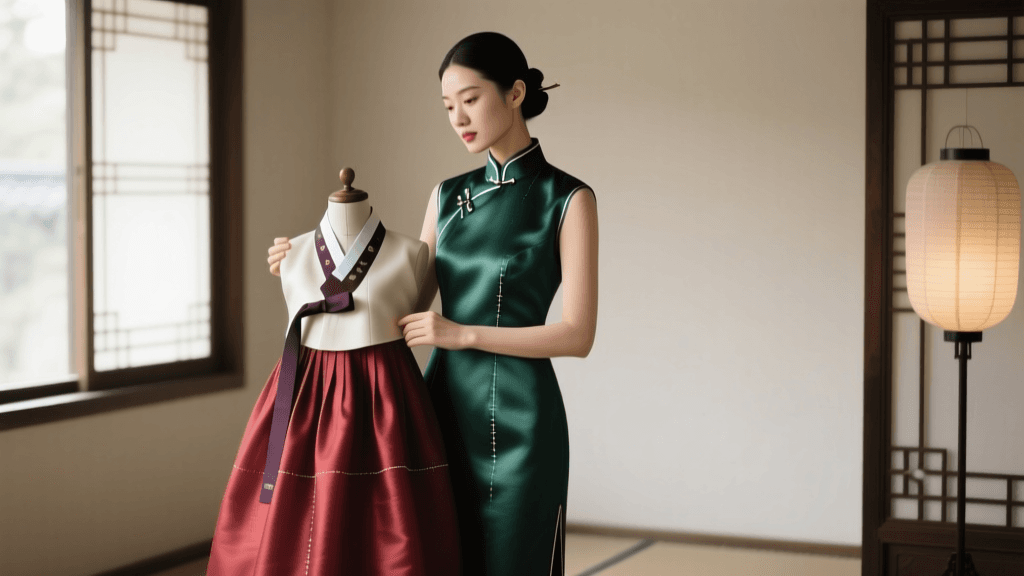
The cheongsam is renowned for its figure-hugging silhouette, high mandarin collar, and intricate frog closures. Because the garment relies heavily on precise tailoring and often utilizes bias-cut panels to contour the body, the choice of silk weight is paramount.
Everyday and Summer Cheongsam (16mm - 19mm)
For daily wear or summer events, a 16mm to 19mm Crepe de Chine is the gold standard in 2026. This weight offers a beautiful, matte-to-soft-luster finish that breathes well in humid climates. It possesses enough body to hold the iconic frog buttons without tearing, yet remains fluid enough to allow for walking slits. When cutting Crepe de Chine on the bias, expect a 5% to 8% stretch; professional tailors recommend letting the bias-cut panels hang for 48 hours before hemming to prevent uneven dropping.
Formal and Winter Cheongsam (22mm+)
For formal occasions, winter wear, or bridal cheongsams, 22mm to 30mm Silk Satin or traditional Silk Brocade is required. Brocade, woven with supplementary weft threads to create raised, intricate patterns (such as peonies, dragons, or geometric lattices), provides the structural stiffness needed for a sharp mandarin collar. In 2026, we are seeing a surge in Peace Silk (Ahimsa silk) brocades, which are harvested without harming the silkworm, appealing to the eco-conscious consumer without sacrificing the heavy, luxurious drape required for formal qipaos.
Selecting Silk for the Contemporary Hanbok
The hanbok presents a completely different set of structural requirements. Characterized by its voluminous skirts (chima) and short, structured jackets (jeogori), the hanbok relies on textiles that can hold geometric shapes while remaining lightweight enough for comfort.
The Jeogori (Jacket) and Structural Needs
The jeogori requires a silk that can support the stiff, curved lines of the sleeves (baerae) and the crisp edges of the collar (dongjeong). A 20mm to 24mm Silk Twill or a traditional raw silk like Myeongju is ideal. Myeongju, a distinctly Korean textile woven from thick, untwisted silk threads, offers a subtle, matte texture and incredible durability. In 2026, modern weavers are blending Myeongju with sustainable lotus stem fibers, creating a textile that maintains the historical stiffness of raw silk while offering enhanced moisture-wicking properties.
The Chima (Skirt) and Voluminous Draping
The chima requires a massive amount of fabric—often 3 to 5 yards of 45-inch wide silk per skirt. Using a heavy 30mm silk would result in a garment too heavy to wear comfortably. Therefore, a 16mm to 19mm silk is preferred, but with a specific weave. Silk Organza or a crisp Silk Taffeta is frequently used as an interlining or overlay to provide the iconic bell shape of the hanbok skirt without adding excessive weight. For the outer layer, a 16mm Crepe Back Satin offers a brilliant sheen on the outside and a matte, grippy texture on the inside, helping the skirt stay anchored at the chest.
2026 Sourcing, Sustainability, and Market Pricing
The 2026 global textile market has placed a heavy emphasis on traceability and sustainability. When sourcing silk for traditional garments, buyers should look for Global Organic Textile Standard (GOTS) certifications or specific regional heritage marks, such as the Shengze silk certifications from China or the Gyeongju silk marks from South Korea.
Pricing has shifted due to climate impacts on mulberry crops and the rising cost of ethical labor. As of early 2026, a standard yard of high-quality 19mm Crepe de Chine will cost between $38 and $48 USD, while artisanal, hand-loomed 25mm brocades can easily exceed $120 per yard. For budget-conscious sewists, Tencel-silk blends (typically 70% Tencel, 30% silk) have emerged as a popular alternative, offering a similar drape and cooling effect at roughly 40% less cost, though they lack the historical authenticity and thermal regulation of pure mulberry silk.
Tailoring Protocols and Care Instructions
Working with silk requires specialized tools and techniques. Always use Microtex (sharp) needles, size 60/8 for silks under 19mm, and 70/10 for heavier brocades. Use 100% silk thread for seams to ensure the thread degrades and stretches at the same rate as the fabric, preventing puckering. Before cutting, steam-press the fabric heavily; silk can shrink up to 10% upon its first exposure to high heat and moisture.
For care, dry cleaning remains the safest option for structured cheongsams and hanboks with interlinings. However, for unlined, everyday 16mm silk garments, hand-washing in cool water (below 30°C) with a pH-neutral, enzyme-free silk detergent is highly recommended in 2026 to preserve the natural sericin coating, which provides the inherent luster and strength of the silk fiber.