Buying Custom Hanbok Online in 2026: Seoul Boutique Guide
The Digital Evolution of Heritage Fashion in 2026
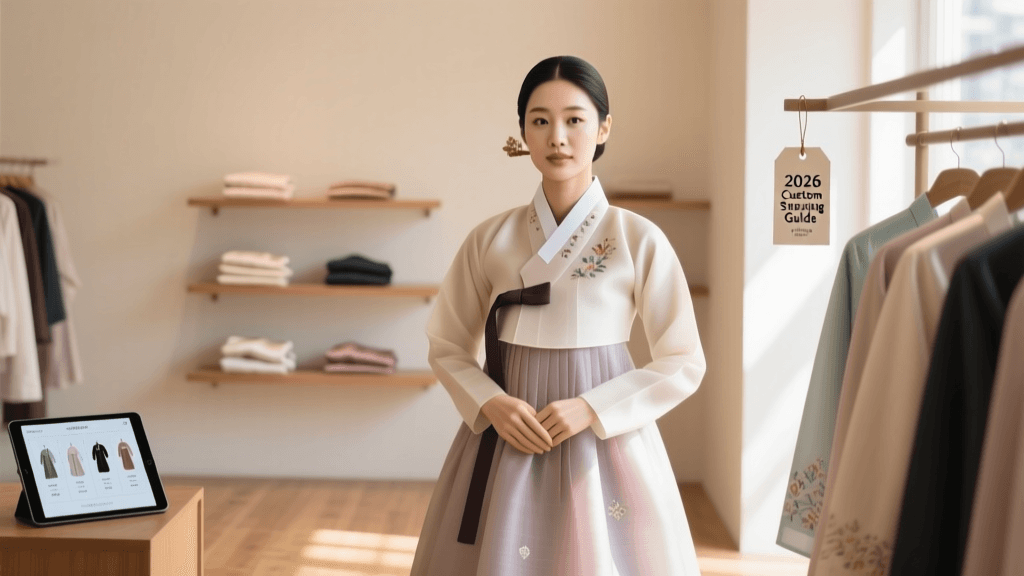
The landscape of acquiring traditional Asian garments has undergone a massive, permanent transformation. In 2026, purchasing a bespoke, authentic hanbok no longer requires a physical pilgrimage to the historic ateliers of Bukchon Hanok Village or the sprawling textile markets of Dongdaemun. Today, master artisans and heritage fashion houses in South Korea have fully embraced digital storefronts, offering global clientele access to museum-quality traditional Korean clothing. According to cultural heritage reports from the Korea Craft & Design Foundation, the international export of bespoke traditional garments has surged over the last three years, driven by advanced virtual consultation tools, high-resolution textile scanning, and a renewed global interest in slow, heritage fashion.
For international buyers, navigating these online marketplaces requires an understanding of traditional garment architecture, precise measurement techniques, and the nuances of Korean silk weaving. This comprehensive guide will walk you through the best online boutiques, how to measure yourself for a flawless fit, and how to select the right fabrics for your custom hanbok in 2026.
Top Verified Seoul Boutiques for Global Bespoke Orders
While global marketplaces like Etsy or YesStyle offer mass-produced, costume-grade alternatives, serious collectors and those seeking authentic ceremonial wear must order directly from verified Seoul-based ateliers. These houses maintain strict adherence to traditional construction methods while offering robust international shipping and English-language virtual consultations.
| Boutique Name | Specialty | 2026 Price Range (USD) | Bespoke Lead Time |
|---|---|---|---|
| Park Sul Nyeo Hanbok | Royal Court Replicas & Bridal | $1,200 - $3,500+ | 8 - 12 Weeks |
| Sonjjang Hanbok | Modernized Traditional & Ceremonial | $450 - $950 | 4 - 6 Weeks |
| Leesle | Contemporary Everyday Hanbok | $180 - $350 | 2 - 3 Weeks |
Park Sul Nyeo Hanbok remains the pinnacle of luxury. Founded by a master artisan recognized for her work in historical Korean dramas, this house specializes in heavy, multi-layered silk garments featuring intricate gold-leaf stamping (geumbak). Their online portal in 2026 includes a 3D body-scanning integration via smartphone, allowing for unparalleled precision in bridal commissions.
Sonjjang Hanbok strikes the perfect balance for international buyers seeking authentic ceremonial wear for weddings, first birthday celebrations (doljanchi), or formal cultural events. Their online fabric library is extensive, and they offer dedicated video consultations to discuss color theory and seasonal appropriateness.
Leesle caters to the modern wardrobe. If you are looking for a contemporary hanbok that can be integrated into daily 2026 streetwear—featuring shorter jeogori (jackets) and machine-washable blended fabrics—Leesle’s direct-to-consumer website is the most user-friendly, with ready-to-ship and semi-custom options.
Mastering Hanbok Measurements for Online Tailoring
Unlike Western tailoring, which relies heavily on bust, waist, and hip circumference, traditional hanbok construction is based on linear measurements and the natural drape of the fabric. When submitting your details to a Seoul boutique, you will need to provide specific traditional metrics. Have a professional tailor take these measurements, or use a high-quality digital measuring tape at home.
The Jeogori (Traditional Jacket)
- Hwajang (Sleeve Length): Measure from the prominent bone at the base of your neck (the seventh cervical vertebra), straight across the shoulder, and down the outside of the arm to the wrist bone. This ensures the iconic curved baerae (sleeve bottom) drapes correctly.
- Donaemul (Armhole Depth): Measure from the base of the neck down to the armpit level. A proper donaemul prevents the jacket from pulling tightly across the chest when the arms are raised.
- Git (Collar Width): Standard width is usually between 5 to 7 centimeters, but bespoke tailors will adjust this based on the thickness of your neck and the overall scale of your frame to ensure the V-shaped neckline is elegant and proportionate.
- Jeogori Length: For women, measure from the base of the neck down to the underbust. In 2026, while ultra-short jackets are out of fashion, the traditional length that grazes the high waistline of the chima remains the standard for elegance.
The Chima (Skirt) and Baji (Trousers)
- Chima Length: Measure from the underbust (where the skirt's waistband will sit) down to the ankle bone. Traditional hanbok skirts are designed to hide the feet. If you plan to wear traditional beoseon (padded socks) and hwa (shoes), add 2 centimeters to your floor-length measurement.
- Chest/Underbust Circumference: The chima is secured just below the bust. Provide this exact circumference so the tailor can calibrate the interior ties and ensure the heavy silk pleats sit flat against the ribcage without gaping.
- Baji (Men's Trousers): Measure from the natural waist down to the ankle. The baji is intentionally voluminous; the tailor will use your thigh and calf measurements not to make the pants tight, but to calculate the proper width of the fabric panels for the characteristic billowing effect.
Navigating 2026 Textile Trends: Silk, Ramie, and Blends
The soul of the hanbok lies in its textile. When browsing online fabric swatches, you will encounter specialized terminology. Understanding these materials is crucial for selecting a garment suited to your climate and occasion.
Myeongju (Silk) and Mosi (Ramie)
Myeongju is a traditional Korean silk woven from silkworm threads. It possesses a subtle, elegant sheen that is far less reflective than Western satin, making it highly prized for photography and formal events. In 2026, look for Myeongju certified by the Korean Silk Association, which guarantees traditional looming techniques combined with modern, eco-friendly color-fastness dyes. Expect to pay between $80 to $150 USD per yard for premium graded silk, which significantly impacts your final bespoke quote.
Mosi is a fine ramie fabric, historically woven in the Hansan region. It is incredibly breathable, slightly stiff, and translucent, making it the ultimate choice for summer hanbok. A bespoke Mosi jeogori is a masterpiece of summer tailoring, offering a crisp, cooling silhouette.
Wearing a hanbok is not merely about draping fabric; it is about embodying the philosophy of harmony between the human form and the natural world. The precise measurement of the goreum and the selection of seasonal textiles dictate the visual and spiritual balance of the entire silhouette.
The Goreum (Ribbon) and Accessory Selection
The goreum is the long, flowing ribbon used to tie the jeogori. It is the focal point of the upper body. When ordering online, you will be asked to select the color and width of your goreum. Traditional color pairings (such as a jade green jacket with a crimson ribbon) carry deep historical significance, often denoting marital status or age in the Joseon Dynasty. Today, buyers frequently opt for tonal goreum or those featuring subtle silver-thread embroidery.
Additionally, consider adding a norigae to your order. This traditional ornamental pendant is tied to the goreum or the chima waistband. Online boutiques offer norigae crafted with jade, amber, and braided silk knots. A high-quality, hand-knotted norigae will cost between $60 and $200 USD, but it elevates a simple hanbok into a complete ceremonial ensemble.
Shipping, Customs, and Garment Care Logistics
Ordering a bespoke garment from Seoul requires patience and an understanding of international logistics. In 2026, most premium boutiques ship via Korea Post EMS or private couriers like DHL and FedEx. Shipping costs for a full, multi-layered bridal hanbok—packed in rigid, archival-quality preservation boxes to protect the gold leaf and silk pleats—typically range from $65 to $120 USD.
Customs and Duties: Always factor in your local import duties. Because these garments are high-value, customs agencies in North America and Europe will likely assess a textile import tax. Request that the boutique provide a detailed commercial invoice that accurately describes the items as 'Handwoven Silk Ceremonial Garments' to avoid misclassification.
Care and Maintenance: Authentic Myeongju silk and Mosi ramie must never be washed at home. Water will permanently alter the stiffness of the ramie and cause the silk dyes to bleed. You must locate a dry cleaner in your local area who specializes in heritage textiles or theatrical costumes. When storing your hanbok, never hang the chima on a wire hanger; the weight of the silk pleats will distort the waistband. Instead, fold the garment along its traditional crease lines, wrap it in acid-free tissue paper, and store it in a breathable cotton pouch in a climate-controlled environment.