Heavy Crepe vs Charmeuse Silk for Custom Cheongsams 2026
The 2026 Cheongsam Renaissance: Why Fabric Choice Matters
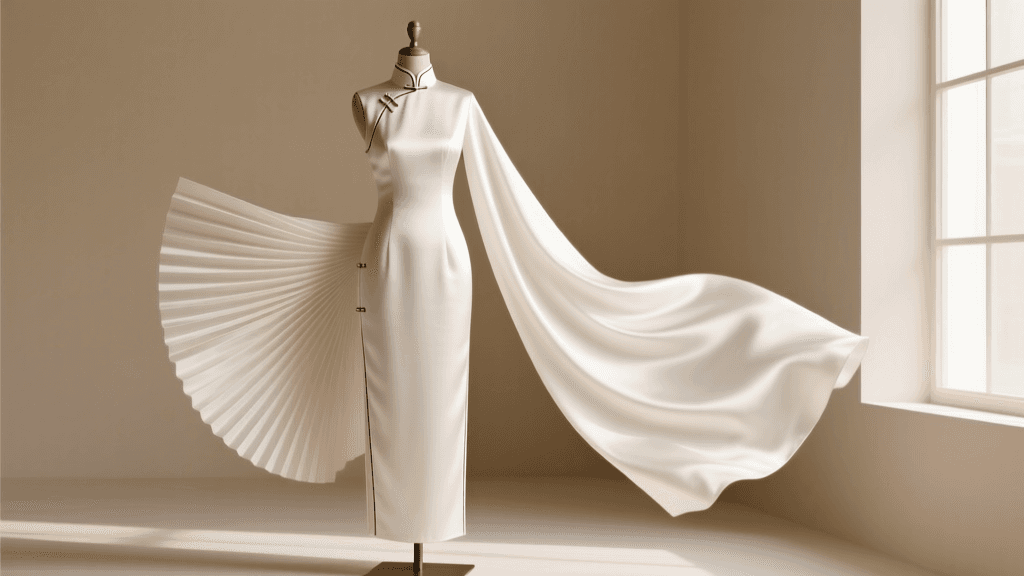
As we navigate the global fashion landscape of 2026, the cheongsam (or qipao) has firmly transcended its mid-century associations to become a staple of modern, bespoke Asian-inspired wardrobes. No longer reserved strictly for weddings or lunar new year celebrations, contemporary wearers are commissioning custom cheongsams for boardroom meetings, gallery openings, and upscale evening events. However, the success of a bespoke garment hinges entirely on the foundational textile. When consulting with master tailors this year, the debate almost always narrows down to two premier mulberry silk weaves: heavy silk crepe and silk charmeuse. Understanding the structural and aesthetic differences between these two fabrics is essential for achieving the perfect silhouette.
Understanding Silk Weight: The Momme System
Before comparing specific weaves, one must understand how silk is measured. Unlike cotton or wool, silk weight is measured in 'momme' (abbreviated as mm). One momme equals 4.34 grams per square meter. In 2026, the luxury textile market has standardized specific momme weights for different garment applications. A standard silk blouse might use 16mm to 19mm silk, but a high-quality, custom cheongsam requires a minimum of 19mm to ensure opacity, durability, and the ability to hold complex tailoring structures like the Mandarin collar and the iconic side slits. The higher the momme, the more durable, opaque, and structured the fabric will be, which directly impacts both the drape and the 2026 market pricing per yard.
Heavy Silk Crepe: The Architectural Choice
Heavy silk crepe, typically ranging from 30 to 40 momme, is the undisputed champion of structural integrity. Characterized by its matte finish and subtle, pebbled texture, crepe de chine or heavy 4-ply crepe offers a sophisticated, understated elegance. Because the yarns are tightly twisted before weaving, the resulting fabric has a natural elasticity and a remarkable ability to hold pressed seams.
Pros of Heavy Crepe
- Structural Support: It provides the necessary stiffness to support elaborate pankou (traditional frog buttons) and heavy embroidery without sagging.
- Matte Elegance: The lack of high sheen makes it highly appropriate for daytime events, professional settings, and minimalist modern designs.
- Wrinkle Resistance: The pebbled texture naturally hides creases, making it an excellent choice for travel and long events.
Cons of Heavy Crepe
- Bulkier Seams: At 40 momme, the fabric can create thick seams, requiring a highly skilled tailor to grade the seams properly to avoid a boxy silhouette.
- Less Fluid Drape: It does not cling to the body, which can be a pro or a con depending on the desired fit.
Silk Charmeuse: The Fluid Elegance
Conversely, silk charmeuse is the quintessential luxury fabric for evening wear. Woven with a satin weave structure, charmeuse features a glossy, reflective front and a dull, matte back. In 2026, the most sought-after charmeuse for cheongsams falls in the 22mm to 30mm range, providing a beautiful, liquid drape that catches the light dynamically as the wearer moves.
Pros of Silk Charmeuse
- Luminous Sheen: The high-gloss finish elevates the garment, making it the premier choice for galas, weddings, and red-carpet events.
- Sensuous Drape: Charmeuse flows over the body's natural curves, creating a romantic and highly feminine silhouette.
- Lightweight Comfort: Even at higher momme weights, charmeuse feels exceptionally light and cool against the skin.
Cons of Silk Charmeuse
- Snagging and Water Spots: The long float yarns on the surface are prone to snagging on jewelry, and water droplets can leave permanent spots if not treated immediately.
- Lack of Structure: It requires extensive interfacing to support a stiff Mandarin collar or heavy knot closures, which can sometimes compromise the fabric's natural fluidity.
Direct Comparison: Crepe vs. Charmeuse in 2026
| Feature | Heavy Silk Crepe (30-40mm) | Silk Charmeuse (22-30mm) |
|---|---|---|
| Finish | Matte, pebbled texture | High-gloss, reflective front |
| Drape | Structured, holds shape | Fluid, clings to curves |
| Best Use Case | Daywear, office, winter/autumn | Evening wear, summer/spring |
| Durability | High, resists snags and wrinkles | Moderate, prone to snags and water spots |
| 2026 Avg. Price (Per Yard) | $85 - $140 USD | $60 - $110 USD |
| Tailoring Difficulty | Moderate (requires seam grading) | High (slippery, requires specialized needles) |
Sustainable Sourcing and 2026 Textile Innovations
The demand for traceable, eco-conscious textiles has peaked in 2026. Discerning clients are no longer just asking about momme weight; they are asking about the ethical footprint of their silk. According to the Textile Exchange Preferred Fiber and Materials Market Report, the adoption of regenerative sericulture and 'peace silk' (Ahimsa silk, where the moth is allowed to emerge from the cocoon) has grown exponentially in the luxury Asian garment sector.
For the modern cheongsam, lotus-silk blends and traceable mulberry silk from certified regenerative farms in Zhejiang province are highly prized. These innovative textiles offer the same luxurious hand-feel as traditional silk but with a vastly reduced water footprint and ethical labor guarantees. When sourcing fabric for your bespoke piece, always request the blockchain-verified origin tag that most premium 2026 textile merchants now provide.
The Importance of Lining: Cupro vs. Habotai
A custom cheongsam is only as good as its interior architecture. In 2026, master tailors strongly advise against synthetic linings like polyester, which trap heat and generate static electricity that ruins the drape of the outer silk. The two premier choices are:
- Cupro (Bemberg): A regenerated cellulose fiber derived from cotton linter. It is breathable, anti-static, and has a silky feel. It is the top recommendation for heavy crepe cheongsams as it provides a smooth glide without adding bulk.
- Silk Habotai (8mm - 12mm): A lightweight, plain-weave silk. It is the traditional choice and is best paired with silk charmeuse to maintain a 100% natural fiber composition, though it requires more delicate care and can sometimes shrink if not pre-washed by the tailor.
Tailor Consultation Checklist
When sitting down with your bespoke tailor, bring this checklist to ensure your fabric choice aligns with your design vision:
- Collar Stiffness: If you want a tall, rigid Mandarin collar, choose heavy crepe or ask for specialized organic cotton interfacing if using charmeuse.
- Pattern Matching: If using a brocade or printed silk, ask how they will handle pattern matching at the side seams and front flap. Crepe hides mismatched patterns better than high-sheen charmeuse.
- Slit Finishing: The side slits of a cheongsam endure immense tension. Ensure the tailor uses silk organza stay-tape along the slit edges, regardless of whether you choose crepe or charmeuse.
- Pre-shrinking: Confirm that the tailor will steam and pre-shrink both the outer silk and the lining before cutting to prevent post-construction warping.
Expert Care and Preservation
Preserving these investment garments requires specific care protocols. The historical significance and delicate nature of silk demand respect. As noted by The Metropolitan Museum of Art's Heilbrunn Timeline of Art History, silk proteins are highly sensitive to environmental factors, particularly UV light and high alkalinity. For a comprehensive look at historical textile preservation, the Victoria and Albert Museum's Asian Textile Collections guidelines also emphasize the importance of proper storage.
Never hang a heavy crepe or charmeuse cheongsam on a wire hanger, as the weight of the fabric will distort the shoulders and cause permanent stretching. Instead, store the garment flat in a breathable cotton garment bag, layered with acid-free tissue paper to prevent hard creases. When cleaning, avoid standard dry-cleaning chemicals like perc, which can strip the natural sericin from the silk fibers over time. Seek out a specialist wet-cleaning service that utilizes pH-neutral, biodegradable detergents designed specifically for luxury protein fibers.
'The true mastery of the cheongsam lies not in the tightness of the fit, but in the conversation between the wearer's movement and the silk's memory. Crepe remembers the structure; charmeuse remembers the flow.' — Master Tailor Lin, Shanghai Bespoke Guild, 2026.
Conclusion
Choosing between heavy silk crepe and silk charmeuse for a custom cheongsam in 2026 ultimately depends on the garment's intended purpose and the wearer's lifestyle. Heavy crepe offers an architectural, modern resilience perfect for the contemporary professional, while charmeuse delivers an unparalleled, luminous romance for evening occasions. By understanding the nuances of momme weight, prioritizing sustainable sourcing, and insisting on proper interior tailoring, you ensure that your bespoke cheongsam will remain a breathtaking testament to Asian sartorial heritage for decades to come.