Collector's Guide to Authenticating Antique Taisho Kimonos
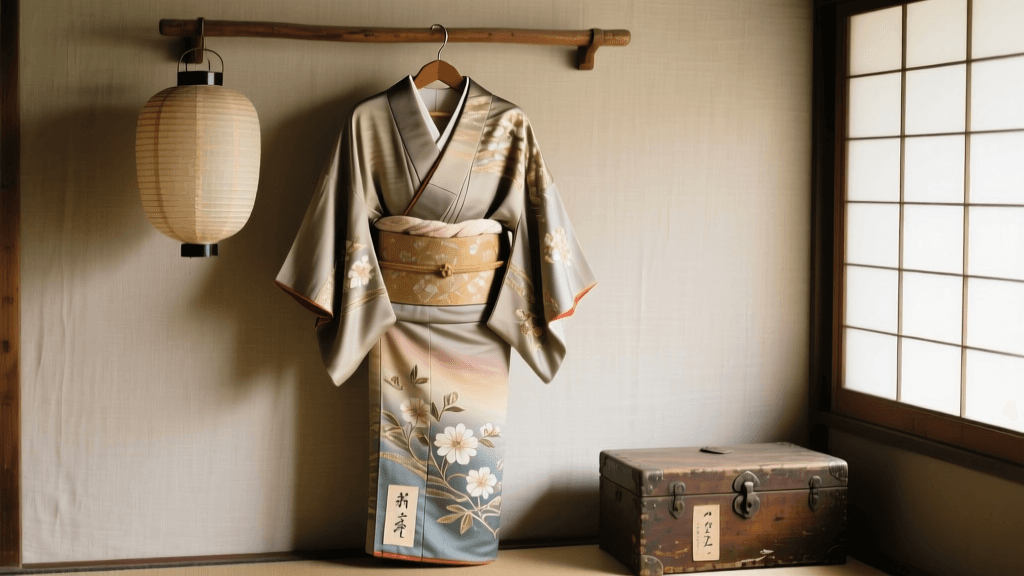
The pursuit of vintage and antique Japanese garments is more than a mere hobby; it is an act of historical preservation. For serious collectors, the Taisho period (1912–1926) represents a golden age of sartorial rebellion and textile innovation. Though brief, this era bridged the strict traditions of the Meiji period and the mass-produced modernity of the Showa era, resulting in some of the most visually striking and highly sought-after kimonos in the antique market today.
The Taisho Aesthetic: Romanticism Meets Modernism
To authenticate a Taisho-era garment, one must first understand the cultural zeitgeist that produced it. The Taisho era was characterized by Taisho Roman, a cultural movement that embraced Western romanticism, Art Deco design, and a newfound sense of individualism. According to the Metropolitan Museum of Art's Asian Art department, the integration of Western motifs and modern art movements into traditional Japanese garments created a unique visual vocabulary that had never been seen before.
Unlike the subdued, nature-inspired motifs of the preceding Edo and Meiji periods, Taisho kimonos frequently feature bold, oversized geometric patterns, abstract florals, and Art Deco-influenced architecture. The color palettes shifted dramatically as well. While natural dyes were still used, the introduction of vibrant synthetic aniline dyes allowed for striking hues—deep purples, vivid crimsons, and mustard yellows—that became hallmarks of the era. When examining a potential acquisition, look for these dramatic, large-scale motifs that often wrap continuously across the seams, a design choice that became highly popular among the modern moga (modern girls) of the 1920s.
Identifying Authentic Taisho Meisen Silk
The undisputed star of the Taisho textile world is meisen silk. Meisen is a type of ikat-woven fabric where the silk threads are pre-dyed using stencils before they are woven together. This technique results in a fabric with slightly blurred, soft edges on the motifs, giving the textile a distinct, painterly quality.
During the Taisho era, meisen production exploded in popularity due to its durability, vibrant colors, and relatively affordable price point compared to hand-painted Yuzen silk. To authenticate a Taisho meisen kimono, collectors should look for the following specific details:
- Reversibility: Because the threads are dyed before weaving, true meisen patterns will show through to the reverse side of the fabric, albeit in a muted, inverted color palette. If the inside of the kimono is stark white or solid with no pattern bleed-through, it is likely a later stencil-printed silk from the mid-Showa period, not authentic Taisho meisen.
- Texture and Weight: Taisho meisen is notably thick, crisp, and durable. It has a substantial drape and a slightly ribbed texture. It should not feel flimsy or paper-thin.
- Motif Scale: Taisho meisen favors large, repeating geometric patterns, arrow feathers (yabane), tortoiseshell (kikko), and abstract florals. The scale of the motifs is often much larger than those found on earlier garments.
Condition Assessment: What Collectors Must Inspect
Antique silk is inherently fragile, and a kimono that is over a century old requires meticulous condition assessment before purchase. The Victoria and Albert Museum highlights how historical Japanese textiles are highly susceptible to environmental degradation, making proper inspection vital for collectors.
When evaluating a Taisho kimono, conduct the following checks:
1. The 'Crunch' Test for Silk Shattering
Silk shattering occurs when the fibers degrade and micro-tear, often due to historical use of metallic salts in black or dark brown dyes. Gently scrunch a section of the fabric (preferably near the hem or sleeve edges). If the silk emits a distinct 'crunching' sound or feels brittle, the structural integrity of the garment is compromised. Shattered silk cannot be restored and will eventually tear under its own weight.
2. Identifying Yake (Fading) and Jimi (Stains)
Yake refers to fading caused by light exposure, often visible as stark color differences along the fold lines where the kimono was stored. While minor fading can be forgiven, severe yake across the main motifs drastically reduces the value. Jimi are age spots or water stains. Protein-based stains on century-old silk are notoriously difficult to remove without damaging the fibers, so factor the cost of specialized conservation into your purchasing decision.
3. Inspecting the Lining and Collar
The inner lining (hiyoku) and the collar (eri) endure the most friction and body oils. Check for discoloration, thinning, or previous, poorly executed patches. A replaced collar is common in vintage kimonos, but it should be noted as it alters the garment's original state.
Market Valuation and Pricing Guide
The market for Taisho-era kimonos has surged in recent years, driven by both domestic Japanese collectors and international vintage fashion enthusiasts. Pricing is heavily dictated by the textile type, the rarity of the motif, and the condition. Below is a structured valuation guide for the current market.
| Textile Type | Defining Characteristics | Average Market Price (USD) | Collector Demand |
|---|---|---|---|
| Taisho Meisen | Ikat-woven, blurred edges, bold geometric or Art Deco motifs, highly durable, pattern visible on reverse. | $150 - $450 | Very High |
| Taisho Yuzen | Resist-dyed, intricate pictorial motifs, softer drape, often features metallic embroidery or gold leaf. | $300 - $800+ | High (Condition Dependent) |
| Taisho Omeshi | Pre-dyed silk crepe, distinct ribbed texture, elegant but subtle patterns, highly formal. | $100 - $250 | Moderate |
| Taisho Haori (Jacket) | Often feature hidden, highly elaborate linings (uragawari) with Yuzen dyeing, contrasting with plain exteriors. | $80 - $300 | High (Especially for linings) |
Sourcing and Archival Preservation
Sourcing authentic Taisho kimonos requires navigating both physical and digital marketplaces. In Japan, the Toji Temple flea market in Kyoto and the Oedo Antique Market in Tokyo are premier physical locations, though they require early arrival and a trained eye. Online, specialized Japanese proxy services and dedicated vintage kimono dealers offer curated selections, albeit at a premium. When buying from general auction sites, always request high-resolution photos of the reverse side of the fabric to verify meisen weaving and check for hidden stains near the hem.
Once acquired, proper archival preservation is non-negotiable. Conservation experts at the Smithsonian National Museum of Asian Art emphasize the importance of climate control and acid-free storage for historical textiles. Never store antique silk on wire hangers or in plastic garment bags, which trap moisture and emit off-gassing chemicals that yellow silk.
Instead, fold the kimono using traditional Japanese folding techniques along its original seams. Wrap the garment in tatou (archival, acid-free Japanese paper) or unbleached muslin. Store the wrapped kimono in a kiri (paulownia wood) box. Paulownia is naturally resistant to insects and regulates humidity, creating an ideal microclimate. Avoid cedar chests, as the natural oils and acids in cedar can transfer to the silk and cause irreversible staining. Finally, store your collection in a dark, climate-controlled room with a stable humidity level between 45% and 55% to ensure these wearable masterpieces survive for another century.