Digital Reconstruction in Chinese Fashion History Research 2026

The Evolution of Chinese Fashion History Education in 2026
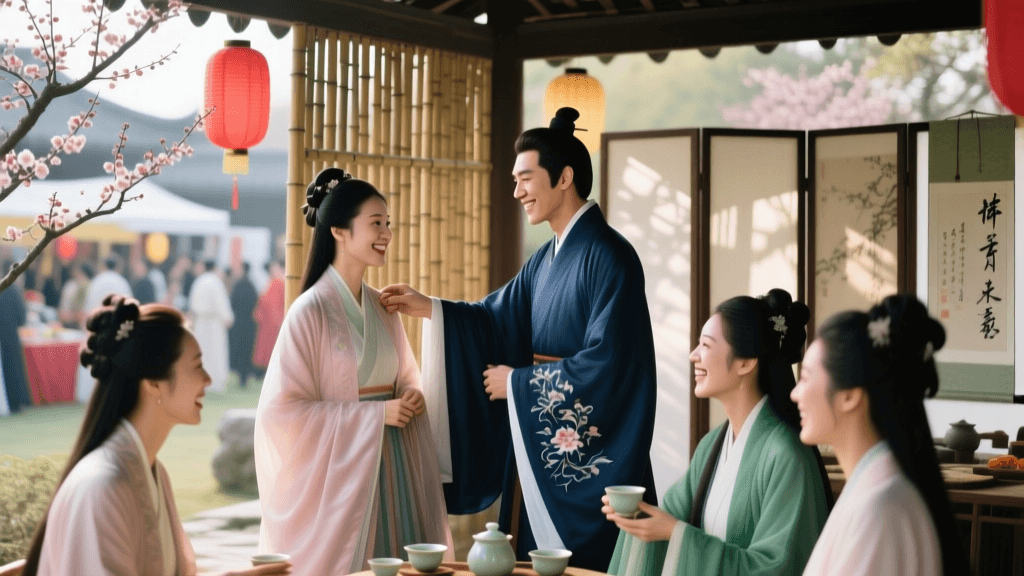
The landscape of Chinese fashion history education has undergone a radical transformation by 2026. Moving away from purely archival and text-based methodologies, leading academic institutions across Asia and the globe have fully integrated digital reconstruction and artificial intelligence into their core curricula. Universities such as Donghua University in Shanghai, Tsinghua University in Beijing, and international partners like the London College of Fashion now mandate digital fluency for textile history students. This shift is not merely a technological upgrade; it is a fundamental reimagining of how we interact with, preserve, and understand ancient Asian garments. In 2026, students do not just study the history of the Han or Tang dynasties—they virtually weave, drape, and animate these garments using advanced physics engines and AI-driven pattern recognition.
The Intersection of Academia and the Xin Zhongshi Movement
This academic rigor directly fuels the booming Xin Zhongshi (新中式), or 'New Chinese Style', movement that dominates the 2026 global fashion landscape. Modern designers and commercial brands rely heavily on university research labs to ensure historical accuracy before adapting ancient motifs for contemporary wear. When a luxury brand wants to release a modern interpretation of a Song dynasty beizi (褙子), they consult academic databases featuring 3D-scanned artifacts and digitally reconstructed drape analyses. By bridging the gap between rigorous historical research and modern commercial application, academic programs are ensuring that the Xin Zhongshi movement remains deeply rooted in authentic cultural heritage rather than superficial aesthetic appropriation.
Key Technologies Driving Academic Research
CLO 3D and Marvelous Designer for Drape Analysis
At the heart of the 2026 digital textile lab is CLO 3D. The latest iterations of this software allow students to input exact historical specifications—such as the warp and weft density, thread thickness, and specific silk sericin content—to simulate how ancient fabrics behaved. According to the CLO Virtual Fashion Education portal, academic licenses now include specialized historical material libraries, enabling students to accurately simulate the unique fluidity of ancient Chinese damasks and the crisp structure of hemp-based linens used by commoners in the Ming dynasty.
AI-Assisted Pattern Reconstruction
Many ancient garments recovered from tombs are fragmented or degraded by centuries of environmental exposure. In 2026, researchers utilize generative AI models trained on thousands of intact textile fragments to predict and reconstruct missing pattern pieces. By feeding high-resolution photogrammetry scans of degraded silk into these neural networks, students can generate mathematically probable 2D sewing patterns, which are then imported into 3D environments to test their structural viability and historical accuracy.
Case Study: Reconstructing the Mawangdui Han Dynasty Silks
One of the most prominent case studies in modern Chinese fashion history courses is the digital reconstruction of the Mawangdui Han dynasty plain gauze gown (素紗襌衣). Unearthed in the 1970s, this legendary garment weighs a mere 49 grams and represents the pinnacle of ancient Chinese sericulture and weaving. As noted by the Metropolitan Museum of Art, early Chinese silk production achieved a level of fineness that remained unmatched for centuries.
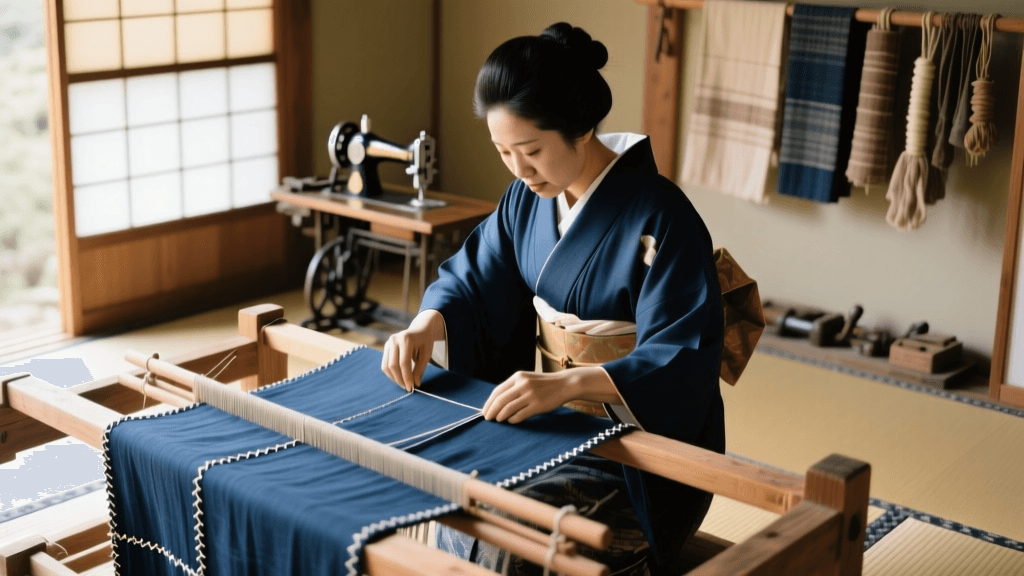
In the 2026 academic lab, recreating this 49-gram marvel digitally requires meticulous attention to material physics. Students must adjust the digital fabric's bending stiffness, shear modulus, and surface friction to near-zero values. The challenge lies in the software's physics engine: simulating a fabric so light that it reacts to micro-currents of virtual air requires advanced computational rendering. Through this exercise, students gain a profound, tactile understanding of Han dynasty weaving capabilities, learning exactly how the loom was tensioned and how the raw silk was processed to achieve such ethereal lightness.
Curriculum Integration: What Students Learn Today
To understand how these technologies are structured in a modern academic setting, below is a standard syllabus framework for a 2026 graduate-level course titled 'Digital Antiquity: Chinese Textile Reconstruction'.
| Module | Topic Focus | Practical Lab Assignment | Software Used |
|---|---|---|---|
| Module 1 | History of Sericulture & Loom Mechanics | Build a virtual drawloom and simulate the weaving of a Tang dynasty ling (twill) pattern. | Blender 4.5, CLO 3D |
| Module 2 | AI Pattern Prediction from Fragments | Use machine learning to reconstruct a fragmented Ming dynasty dragon robe hemline. | Custom Python AI Scripts, Marvelous Designer |
| Module 3 | Material Physics & Drape Simulation | Recreate the 49g Mawangdui gauze gown and test its drape under varying virtual wind conditions. | CLO 3D (Advanced Physics Engine) |
| Module 4 | Xin Zhongshi Commercial Adaptation | Adapt a historically accurate Song dynasty silhouette into a modern, manufacturable 2026 ready-to-wear pattern. | CLO 3D, Adobe Illustrator |
Essential Tools and Hardware for 2026 Researchers
For institutions and independent researchers looking to establish a digital fashion history lab in 2026, specific hardware and software investments are required to handle the intense computational load of high-fidelity cloth simulation and AI rendering.
- Workstation GPU: NVIDIA RTX 5090 or equivalent. The complex particle systems used to simulate individual silk threads in real-time require massive VRAM (minimum 24GB) to prevent viewport lag during drape analysis.
- Photogrammetry Scanners: Artec Space Spider 2. Capturing the micro-textures of degraded historical textiles without causing physical damage is paramount. The latest 2026 models offer sub-millimeter accuracy with safe, low-heat structured light.
- Software Subscriptions: CLO 3D Academic License (approx. $150/year per student), alongside access to university-hosted AI pattern prediction servers.
- Color Calibration: X-Rite i1Display Pro Plus. Ensuring that the digital dyes (such as traditional indigo, madder root, and rattan yellow) match the spectrophotometric readings of the physical artifacts is crucial for accurate historical documentation.
Conservation and the Digital Archive
Beyond education, this digital research plays a critical role in the physical conservation of Asian garments. The Getty Conservation Institute has long championed the use of advanced imaging and digital modeling to aid in the preservation of global heritage. By creating perfect digital twins of fragile Chinese textiles, researchers can study the stress points and structural weaknesses of a garment without ever physically handling it. If a 15th-century Ming robe needs physical stabilization, conservators can use the 3D model to plan their interventions, testing different support fabrics and stitching techniques in the digital realm before applying them to the priceless artifact.
Future Prospects and Academic Collaboration
As we move through 2026, the future of Chinese fashion history education is deeply collaborative. Open-source digital archives are emerging, allowing universities in China to share their 3D textile scans and physics parameters with researchers in Europe and the Americas. This democratization of data ensures that the rich history of Asian traditions is not locked away in physical vaults but is accessible to any student with a computer and a passion for cultural preservation. By mastering the digital tools of today, the next generation of fashion historians is ensuring that the intricate weaves, vibrant dyes, and elegant drapes of ancient China will be studied, appreciated, and worn for centuries to come.