Kimono Silk Guide 2026: Chirimen vs Habutae Fabrics
The Foundation of the Kimono: Silk Weave Anatomy
When selecting a traditional Japanese kimono in 2026, understanding the underlying textile is just as critical as appreciating the surface motif. While modern synthetic blends and washable polyesters have flooded the fast-fashion market, serious collectors, cultural practitioners, and global enthusiasts continue to seek out authentic silk. Among the vast lexicon of Japanese silk textiles, two foundational weaves dominate the market: Habutae and Chirimen. Both are woven from premium mulberry silk, yet their structural differences result in vastly different garments in terms of drape, weight, seasonal appropriateness, and dye affinity.
According to the Victoria and Albert Museum's comprehensive kimono archive, the evolution of silk weaving in Japan was heavily influenced by both indigenous innovation and historical trade along the Silk Road. Today, the distinction between a plain weave and a crepe weave dictates not only how a kimono hangs on the body but also how it interacts with traditional dyeing techniques like Yuzen and Shibori. For the modern buyer navigating the 2026 textile market, knowing when to choose the smooth elegance of Habutae versus the textured resilience of Chirimen is essential.
Habutae: The Smooth Elegance of Plain Weave
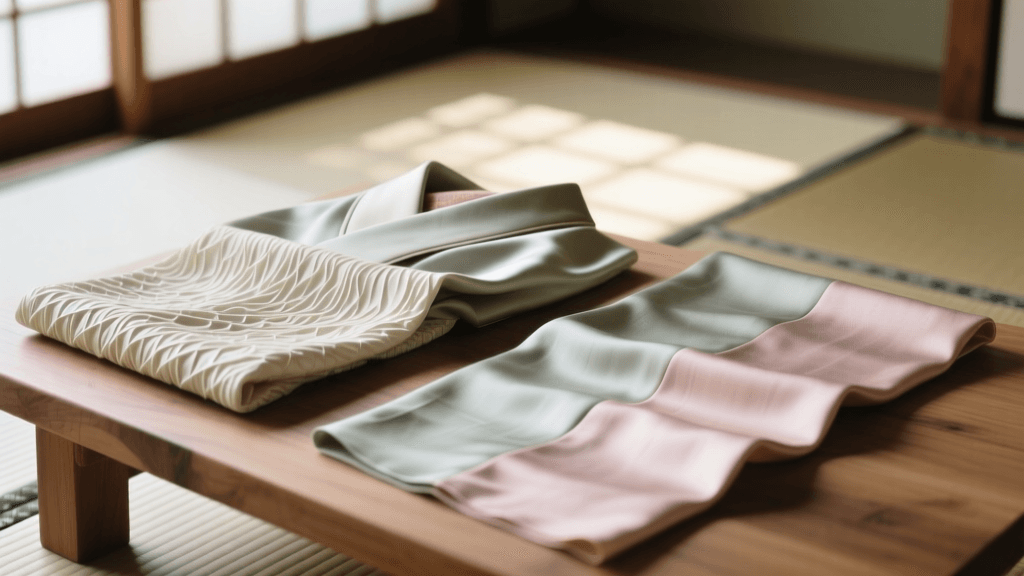
Habutae (羽二重) translates literally to 'feather cloth' or 'double feather.' It is a plain weave silk, meaning the warp and weft threads cross each other in a simple, alternating over-and-under pattern. What makes Habutae unique is its density; it typically uses two or more warp threads for every single weft thread, creating a fabric that is remarkably smooth, lustrous, and tightly woven.
Because the threads are not twisted tightly before weaving, Habutae retains a flat, reflective surface that catches the light beautifully. In 2026, high-grade Habutae remains the premier choice for formal lining (juban), lightweight spring garments, and intricate hand-painted designs. Its smooth surface acts as a flawless canvas, allowing fine brushwork and micro-patterns to be rendered without the interference of fabric texture.
Chirimen: The Resilient Beauty of Crepe
Chirimen (縮緬) is the Japanese term for silk crepe. The magic of Chirimen lies in the weft thread. Before weaving, the raw silk weft threads are twisted tightly—often over 2,000 to 3,000 times per meter. During the weaving process, the weaver alternates between threads twisted in an 'S' direction and threads twisted in a 'Z' direction. After the fabric is woven, it is washed in hot water and kneaded. The tension in the tightly twisted threads releases, causing the fabric to shrink and creating a distinct, pebbled surface texture known as shibo.
This pebbled texture gives Chirimen a matte finish, a luxurious tactile feel, and a remarkable resistance to wrinkling. As noted by Japan's Ministry of Economy, Trade and Industry (METI), regional variations like Tango Chirimen (from the Kyoto/Fukui border) are protected traditional crafts, ensuring that the meticulous twisting and weaving processes meet rigorous 2026 quality standards. Chirimen is heavier, drapes with a fluid, weighted elegance, and is the undisputed king of autumn and winter kimono.
Drape, Weight, and the 2026 Climate Factor
The global climate shifts observed in 2026 have subtly influenced how traditional garments are worn and selected. With summers in East Asia becoming increasingly humid and prolonged, the heavy weight of standard Chirimen is largely reserved for late autumn, winter, and early spring. Habutae, being lighter and more breathable, has seen a resurgence in late-spring and early-autumn wear.
However, the drape of the fabric remains the primary consideration for stylists. Habutae is relatively stiff; it holds its shape well, making it excellent for structured garments and formal obi sashes. Chirimen, conversely, is highly pliable. It clings to the body's contours and falls in soft, cascading folds. When tying a complex obi knot, a Chirimen kimono will grip the sash and stay in place, whereas a slippery Habutae kimono may require additional ties and clips to maintain the silhouette throughout a long day of wear.
Dyeing Affinity: Matching Textile to Technique
The surface of the silk dictates the dyeing technique. In 2026, master dyers in Kyoto and Kanazawa continue to match specific weaves to specific resist-dyeing methods to achieve optimal results.
- Yuzen and Hand-Painting: Habutae is the preferred canvas for hand-painted Yuzen. The smooth surface allows the dye to spread evenly and the artisan's brush to glide without catching on fabric irregularities.
- Shibori (Tie-Dye): Chirimen is the absolute standard for Shibori. The fabric's natural elasticity and pebbled texture allow it to be bound, stitched, and compressed tightly. When released, the 'shibo' texture enhances the three-dimensional quality of the Shibori patterns.
- Edo Komon: This technique involves dyeing micro-patterns so fine they look like a solid color from a distance. Habutae's tight, flat weave is required to hold the incredibly detailed stencils used in Edo Komon dyeing.
For a deeper understanding of how these garments are constructed and dyed, the Encyclopaedia Britannica's structural overview of Japanese garments provides excellent historical context on how regional dyeing hubs specialized in specific silk weaves over centuries.
2026 Market Pricing and Sourcing Authentic Bolts
Purchasing a standard tanmono (a bolt of fabric roughly 36cm wide and 12 meters long, enough for one kimono) requires a significant investment in 2026. Due to the rising costs of sustainable sericulture and the shrinking number of master weavers, authentic silk prices have appreciated. Below is a comparison of the two primary silks, alongside the summer alternative, Ro.
| Feature | Habutae (Plain Weave) | Chirimen (Crepe) | Ro (Summer Gauze) |
|---|---|---|---|
| Surface Texture | Smooth, highly lustrous | Matte, pebbled (shibo) | Sheer, striped gauze |
| Weight & Drape | Lightweight, structured | Heavy, fluid, pliable | Ultralight, airy, stiff |
| Wrinkle Resistance | Low (creases easily) | High (bounces back) | Moderate |
| Best Dye Techniques | Hand-painting, Edo Komon | Shibori, Stencil Yuzen | Woven patterns, light dye |
| 2026 Avg. Bolt Price | ¥45,000 - ¥70,000 | ¥60,000 - ¥110,000 | ¥50,000 - ¥85,000 |
| Primary Season | Spring / Autumn | Winter / Late Autumn | Peak Summer (July/Aug) |
Sustainable Sericulture and 2026 Innovations
A major talking point in the 2026 Asian traditional garment market is sustainability. The environmental impact of traditional silk production—specifically the boiling of cocoons and the heavy water usage in dyeing—has led to new innovations. Several cooperatives in the Fukui prefecture have introduced closed-loop water systems for washing and degumming Chirimen, reducing water waste by up to 40% compared to 2020 baselines. Furthermore, 'Peace Silk' (Ahimsa silk), where the moth is allowed to emerge from the cocoon before the silk is harvested, is becoming increasingly available for Habutae weaves, though it results in a slightly slubbier, less uniform thread that many modern buyers actually prefer for its organic, artisanal aesthetic.
Modern Care and Maintenance
Caring for these distinct weaves requires different approaches. Habutae is notoriously prone to water spotting and creasing. If caught in a sudden rain shower, a Habutae kimono must be hung immediately and allowed to air dry, followed by professional pressing. It is highly recommended to store Habutae garments folded with acid-free tissue paper along the crease lines to prevent permanent fiber breakage.
Chirimen is much more forgiving. Its crepe structure naturally hides minor wrinkles, and it is less susceptible to visible water spots. However, because Chirimen is heavily twisted, it can stretch out of shape if hung on a standard hanger for long periods. Both garments should be aired out in the shade twice a year—traditionally during the dry, crisp days of late autumn—to prevent mold and allow the silk fibers to breathe. For 2026 collectors, utilizing modern, breathable cotton storage wraps (tatou-shi) rather than plastic bins remains the golden rule for preserving the protein structure of the silk.
Conclusion
Choosing between Chirimen and Habutae is not merely a matter of aesthetic preference; it is a decision rooted in the physics of the weave, the climate of the season, and the artistry of the dye. Whether you are commissioning a bespoke piece from a Kyoto atelier or hunting for vintage treasures in the markets of Kanazawa, understanding these textile foundations ensures that your kimono will not only look spectacular but will drape, move, and endure exactly as the master weavers intended.