Kimono Fabric Sound & Texture: A Sensory Guide 2026
The Forgotten Sense: Auditory Aesthetics in Japanese Fashion
When we think of the traditional Japanese kimono, our minds immediately conjure vivid visual imagery: the sweeping hemlines, the intricate yuzen dyeing, and the striking obi sashes. However, to truly understand the depth of this garment in 2026, one must look beyond the visual and engage with the profound sensory experience it offers. The kimono is a multi-sensory masterpiece, and perhaps its most captivating, yet frequently overlooked, characteristic is its acoustic and tactile profile.
In an era where fast fashion prioritizes visual trends over physical interaction, the traditional Japanese textile industry continues to champion the sensory weight, drape, and sound of authentic fabrics. For modern practitioners, collectors, and cultural enthusiasts, understanding how a kimono feels against the skin and sounds in motion is just as critical as its visual pattern. This guide explores the intricate world of kimono fabric textures and the unique acoustic signatures they produce, offering a comprehensive sensory roadmap for 2026.
The Auditory Experience: Understanding 'Kinu-Zure'
In Japanese aesthetics, the sound of clothing is not considered mere background noise; it is an intentional element of elegance. The term kinu-zure (衣擦れ) translates literally to 'clothing rubbing' or 'the rustling of silk.' Historically, during the Heian period (794–1185), the subtle, swishing sound of layered silk robes announced the arrival of a noblewoman or a secret lover before she was even seen. The acoustic signature of the fabric was a hallmark of refinement, status, and presence.
Today, kinu-zure remains a deeply prized sensory attribute. The sound is produced by the friction of the outer kimono rubbing against the nagajuban (under-kimono) and the obi sash as the wearer walks. However, not all silks produce the same sound. The acoustic profile is entirely dependent on the weave structure, the twist of the yarn, and the weight of the textile. A tightly woven, heavy silk will produce a deep, resonant swoosh, while a lightweight, open-weave summer silk creates a crisp, breezy snap. According to the Victoria and Albert Museum's extensive kimono archives, the physical manipulation of silk yarns to achieve specific drapes and textures has been a cornerstone of Japanese sartorial art for centuries, directly influencing how the garment interacts with the human body in motion.
Tactile Profiles: Decoding Traditional Kimono Weaves
To master the sensory experience of the kimono, one must understand the primary weaving techniques that dictate both touch and sound. In 2026, despite the influx of modern synthetic blends, purists and high-end artisans continue to rely on three foundational textile categories to achieve the perfect sensory balance.
Chirimen (Crepe Silk): The Bumpy Elegance
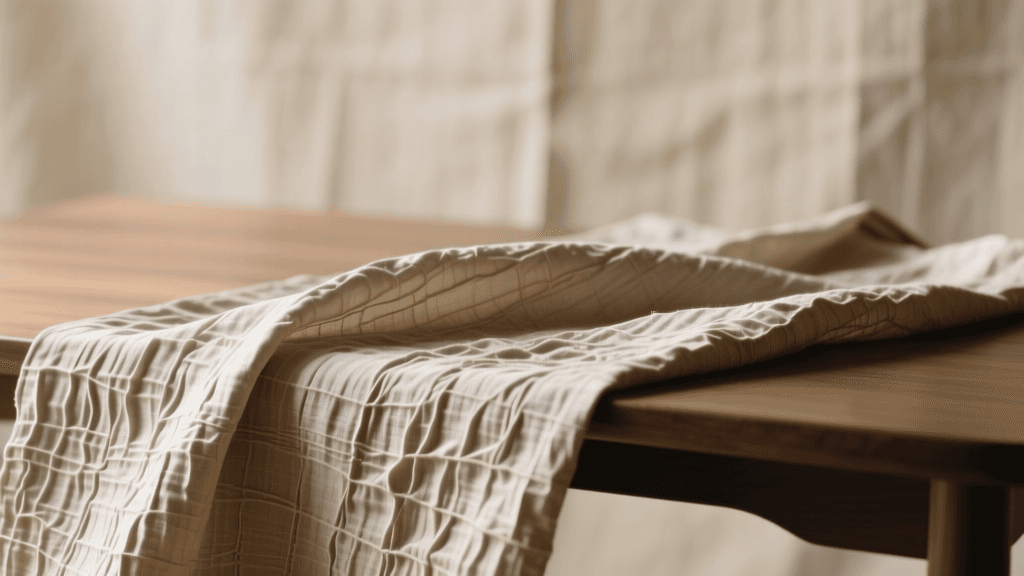
Chirimen is arguably the most popular fabric for formal and semi-formal kimonos. It is created by weaving silk threads with alternating left-twisted and right-twisted yarns. When the fabric is washed and refined, the differing tensions cause the threads to shrink unevenly, creating a distinct, bumpy surface texture known as shibo.
- Tactile Sensation: Chirimen feels slightly pebbled, resilient, and incredibly soft against the skin. The crinkles give the fabric a natural elasticity and a luxurious, heavy drape.
- Acoustic Profile: Because of its textured surface and heavy drape, chirimen produces a soft, muffled, and continuous rustle. It is a quiet, intimate sound that speaks to understated luxury.
Tsumugi (Pongee): The Earthy Crispness
Tsumugi is traditionally woven from silk noil (the shorter fibers left over from reeling) or silk floss. Unlike the glossy finish of chirimen, tsumugi has a matte appearance and a slightly irregular, slubby texture. According to the Nishijin Textile Industry Association, the meticulous hand-spinning and dyeing processes involved in creating high-end tsumugi, such as the famous Oshima Tsumugi, represent some of the most labor-intensive textile crafts in Japan.
- Tactile Sensation: Initially, tsumugi feels crisp, dry, and slightly rough, almost akin to raw linen or light cotton. However, with years of wear, the fibers break in, becoming exceptionally soft and molding perfectly to the wearer's body.
- Acoustic Profile: Tsumugi is relatively quiet. It produces a muted, dry swish. It lacks the sharp 'snap' of glossy silks, aligning with its rustic, understated, and deeply traditional aesthetic.
Ro and Sha (Summer Gauze): The Breezy Snap
Worn exclusively during the peak of summer, Ro and Sha are open-weave, sheer fabrics created using a leno weave technique, where warp threads are twisted around each other to create tiny, breathable gaps in the textile.
- Tactile Sensation: These fabrics are incredibly lightweight, airy, and cool to the touch. They feel crisp and slightly stiff compared to the buttery softness of chirimen, allowing the garment to stand slightly away from the skin to promote airflow.
- Acoustic Profile: The crispness of the leno weave produces a sharp, breezy snap when the wearer moves. It is the most audible of the summer fabrics, evoking the feeling of a cool breeze rustling through bamboo leaves.
2026 Market Trends: Preserving the Sensory Experience
As we navigate 2026, the traditional textile hubs of Kyoto, specifically the Nishijin district, are facing unique challenges. Record-breaking summer temperatures and shifting climate patterns have forced artisans to innovate while strictly preserving the sensory integrity of historical weaves. Weavers are currently developing ultra-lightweight Ro variations that maintain the traditional acoustic 'snap' without the heavy, suffocating drape of older summer silks.
Furthermore, the market for authentic, sensory-rich silk has seen a resurgence among younger demographics in Japan and international collectors. The Kyoto Museum of Traditional Crafts frequently highlights how modern consumers are increasingly valuing the tactile authenticity of hand-woven textiles over mass-produced, visually identical synthetic alternatives. In 2026, investing in a genuine, hand-woven tanmono (fabric bolt) is considered both a cultural preservation effort and a luxury investment.
Comparative Guide: Kimono Fabric Sensory Profiles (2026)
When shopping for a kimono or commissioning a bespoke piece, use this sensory comparison chart to align your fabric choice with your desired tactile and acoustic experience.
| Fabric Type | Tactile Sensation | Acoustic Profile (Sound) | Ideal Season | 2026 Avg. Price (Tanmono) |
|---|---|---|---|---|
| Chirimen (Crepe) | Bumpy, heavy, soft, elastic | Soft, muffled, continuous rustle | Spring / Autumn / Winter | ¥45,000 - ¥85,000 ($300 - $570) |
| Tsumugi (Pongee) | Crisp, matte, earthy, softens over time | Muted, dry swish, very quiet | Autumn / Winter / Spring | ¥60,000 - ¥150,000 ($400 - $1,000) |
| Ro (Gauze) | Lightweight, airy, crisp, cool | Sharp, breezy snap, highly audible | Peak Summer (July - August) | ¥35,000 - ¥70,000 ($230 - $470) |
| Sha (Gauze) | Sheer, slightly stiffer than Ro | Crisp, papery rustle | Early Summer (June - July) | ¥40,000 - ¥75,000 ($260 - $500) |
| Rinzu (Satin Damask) | Smooth, glossy, heavy, slippery | Deep, resonant swoosh | Winter / Formal Events | ¥80,000 - ¥200,000 ($530 - $1,330) |
How to Curate a Sensory Kimono Wardrobe in 2026
Building a kimono wardrobe based on sensory experience requires careful attention to how garments interact with one another. The sound and feel of your kimono are not dictated by the outer layer alone; they are the result of a complex system of layering and tension.
1. The Importance of the Nagajuban
The nagajuban (under-kimono) is the unsung hero of the kimono's acoustic profile. If you wear a heavy chirimen kimono over a smooth, synthetic nagajuban, the friction will be high, resulting in a louder, more pronounced kinu-zure. Conversely, pairing a silk kimono with a silk nagajuban creates a smooth, gliding interaction that produces a softer, more refined rustle. In 2026, many wearers opt for high-quality, breathable cupro or washable silk blends for their nagajuban to balance acoustic elegance with modern maintenance needs.
2. Mastering Tension with Koshihimo
The way a kimono is tied directly impacts its sound. The koshihimo (thin ties used to secure the garment at the waist) dictate the tension of the fabric. If the kimono is tied too loosely, the fabric will not rub against itself efficiently, dampening the sound. If tied with the correct, traditional tension, the overlapping front panels will glide and snap beautifully with every step. Practicing your dressing technique (kitsuke) is just as important as the fabric you purchase if you wish to master the auditory aesthetic.
3. Seasonal Sensory Transitions
Japanese fashion is deeply tied to the calendar. Transitioning your wardrobe is not just about visual motifs (like swapping cherry blossoms for maple leaves); it is about changing the physical sensation of the garment. Moving from the heavy, comforting embrace and muffled sound of winter awase (lined) kimonos to the crisp, cooling snap of unlined hitoe and summer ro is a vital psychological and physical marker of the changing seasons. Embracing these tactile shifts is key to fully experiencing the kimono as a living tradition.
Conclusion: Beyond the Visual
The kimono is far more than a beautiful garment to be looked at; it is an immersive environment to be felt and heard. The subtle rustle of kinu-zure, the pebbled comfort of chirimen, and the crisp snap of summer ro connect the modern wearer to centuries of Japanese aesthetic philosophy. As we move through 2026, prioritizing these sensory details not only enriches our personal experience but also supports the master artisans in Kyoto and beyond who dedicate their lives to preserving the touch and sound of authentic Japanese silk. By choosing our garments with our ears and hands as well as our eyes, we keep the full, multi-sensory soul of the kimono alive.