Crafting Complete Hanfu Ensembles With Jade Accessories
The Renaissance of the Complete Hanfu Silhouette
The modern Hanfu movement has evolved far beyond simply slipping on a traditional robe. Today's enthusiasts focus on zhuangrong—the complete, harmonious presentation of garments, hair, makeup, and accessories. Among the most revered and historically significant accessories in Chinese sartorial history is jade (yu). As noted by the Metropolitan Museum of Art's Heilbrunn Timeline of Art History, jade has been esteemed in China for over 5,000 years, prized not only for its beauty but for its association with moral integrity, cosmic harmony, and social status.
When assembling a historically inspired Hanfu outfit, particularly from the Ming Dynasty (1368–1644), the integration of jade hair accessories and waist ornaments is what elevates a costume into a culturally resonant ensemble. This guide provides actionable advice on selecting garments, sourcing authentic jade, and styling your hair to achieve a flawless, museum-quality silhouette.
The Foundation: Building the Ming Dynasty Wardrobe
Before accessorizing, the foundational garments must be correctly proportioned. The quintessential Ming Dynasty women's ensemble is the Aoqun (a long-sleeved, lined jacket paired with a skirt) or the addition of a Pifeng (a sleeveless or short-sleeved cloak). According to the Metropolitan Museum of Art's essay on the Ming Dynasty, clothing during this era was characterized by structured silhouettes, high collars, and intricate textile patterns, reflecting a period of immense economic prosperity and cultural refinement.
Key Measurements and Sourcing
- The Mamianqun (Horse-Face Skirt): The skirt should sit at the natural waist. For modern, practical wear, measure the length from your natural waist to exactly 5 cm above the ground to prevent tripping while maintaining the elegant, sweeping drape. The hem width should be between 3 to 4 meters to ensure the pleats fan out correctly when walking.
- The Ao (Jacket): Opt for a jacket with a standing collar (liling) and metal toggle buttons (zikou). The sleeves should extend past the wrists by at least 5 cm, a hallmark of Ming formalwear. Budget approximately $80 to $150 for a high-quality, machine-embroidered cotton-linen blend set, or $250+ for authentic silk brocade.
- Fabric Weight: To support the weight of heavy jade accessories without pulling the fabric, ensure the skirt's waistband is made of stiffened cotton or canvas, measuring 8 to 10 cm in width.
The Crown Jewel: Jade Hair Accessories (Shoushi)
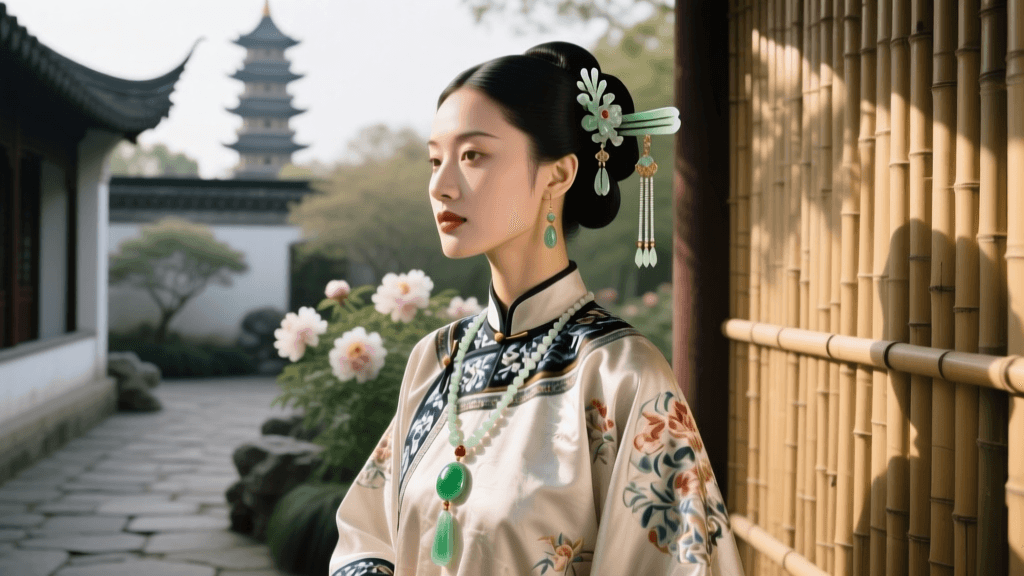
In traditional Chinese culture, the hair was considered a sacred canvas. The Shoushi (head ornaments) of the Ming Dynasty were elaborate, often combining gold, pearls, and jade. For modern Hanfu wearers, jade hairpins offer a sophisticated, understated elegance that pairs beautifully with both pastel and deeply saturated silk garments.
Types of Jade Hairpins
- Zan (Single-Prong Hairpin): Used to secure the primary bun. A jade Zan should be at least 15 cm long to penetrate a thick, modern hair donut and anchor into the natural hair beneath.
- Chai (Double-Prong Hairpin): Provides structural support for heavier updos. Look for Chai with prongs spaced 1.5 cm apart for optimal grip.
- Buyao (Step-Shake): These feature dangling ornaments that tremble with the wearer's movements. While historical Buyao were often gold, modern jade-topped Buyao with silk tassels provide a beautiful kinetic element to the ensemble.
Styling Hack: Securing Heavy Jade
Authentic nephrite jade is dense and heavy. To prevent the hairpin from slipping out of a modern, slippery hair texture, wrap a small section of hair around the base of the jade ornament after inserting the prong, and secure it with a discreet, matte U-pin. Alternatively, use a textured hair spray on the bun before inserting the jade Zan to create friction.
Harmonizing the Ensemble: Jade Pendants and Waist Ornaments
The waist is the secondary focal point of a Hanfu ensemble. Historically, the sound of jade pendants clinking together was thought to regulate a noble's walking pace, promoting a dignified and measured gait. As highlighted in research on historical textiles from institutions like the Metropolitan Museum of Art's Chinese Silk archives, the interplay between woven silk sashes and carved stone ornaments was a defining feature of elite Asian dress.
For a complete Ming-inspired look, attach a Yupei (jade pendant) to the waistband of your Mamianqun. A carved jade Ping'an Kou (peace buckle) or a Bi disc suspended from a hand-braided silk tassel adds verticality to the outfit. Match the color of the silk tassel to the secondary color in your jacket's embroidery to create a cohesive visual loop.
Budgeting and Sourcing: A Practical Guide to Jade
Sourcing authentic jade can be daunting due to the prevalence of dyed glass and resin imitations. Below is a comparison chart to help you budget and select the right type of jade for your Hanfu accessories.
| Jade Type | Mineral Composition | Avg. Cost (USD) | Best Hanfu Application |
|---|---|---|---|
| Hetian (Nephrite) | Calcium magnesium silicate | $200 - $2,000+ | Heirloom hairpins (Zan), ceremonial pendants |
| Xiuyan (Serpentine) | Serpentine group | $20 - $150 | Everyday Buyao, casual hair sticks, starter sets |
| Dushan (Plagioclase) | Feldspar | $50 - $300 | Carved waist pendants (Yupei), belt ornaments |
| Feicui (Jadeite) | Sodium aluminum silicate | $100 - $5,000+ | Qing-era accents, modern luxury Hanfu jewelry |
Pro-Tip for Sourcing: When buying online, always request a certificate of authenticity from a recognized gemological laboratory. For everyday Hanfu wear, Xiuyan jade offers the best balance of historical aesthetic, durability, and affordability.
Step-by-Step Assembly Guide
To bring your complete ensemble together, follow this chronological dressing order to ensure structural integrity and aesthetic balance:
- Base Layers: Put on your inner garments (Zhongyi) and secure the Mamianqun tightly at the natural waist. Ensure the flat front and back panels are perfectly centered.
- The Jacket and Cloak: Don the Ao, fastening the metal toggles from the inside out. Drape the Pifeng over the shoulders, allowing it to hang straight.
- Hair Preparation: Brush hair upward into a high bun or a traditional Ming-style Diji (crown-like base). Secure with elastic and U-pins.
- Primary Jade Insertion: Insert the longest jade Zan horizontally through the thickest part of the bun to act as the primary anchor.
- Secondary Ornaments: Add a jade Chai at a 45-degree angle above the Zan for structural cross-support.
- Kinetic Accents: Place the jade Buyao on the sides of the bun, ensuring the dangling elements do not tangle with your collar.
- Waist Finishing: Tie the silk-tasseled Yupei to the left side of the skirt's waistband, allowing it to rest against the pleats.
Conclusion
Building a complete Hanfu ensemble with jade accessories is an exercise in cultural appreciation, patience, and artistic styling. By understanding the historical context of the Ming Dynasty silhouette, selecting proportionate garments, and investing in authentic jade hairpins and pendants, you transform a simple outfit into a living tribute to Asian traditions. The weight of the jade in your hair and the soft clink of the pendants at your waist will fundamentally change how you carry yourself, connecting you to centuries of sartorial elegance.