Chinese Wedding Attire Guide: Qun Kwa, Xiu He Fu & Hanfu
The Renaissance of Traditional Chinese Wedding Attire
For decades, the standard bridal uniform across Asia leaned heavily toward Western-style white gowns. However, a powerful cultural renaissance has swept across the Chinese diaspora and mainland China alike, bringing centuries-old ceremonial garments back to the forefront of modern weddings. Today's brides are no longer treating traditional attire as a mere costume change for the morning tea ceremony; they are embracing it as the centerpiece of their wedding day. This shift is deeply intertwined with a broader cultural revival. As noted by the BBC's coverage of the Hanfu movement, younger generations are actively reclaiming historical dress as a marker of identity, elegance, and cultural pride.
Choosing the right traditional Chinese wedding dress requires navigating a complex landscape of regional customs, historical accuracy, and modern tailoring. Whether you are drawn to the structured opulence of the Cantonese Qun Kwa, the romantic flow of the Xiu He Fu, or the historical grandeur of Ming Dynasty Hanfu, this comprehensive guide will provide the actionable advice, measurements, and timelines you need to curate your perfect ceremonial look.
The Qun Kwa (裙褂): The Cantonese Classic
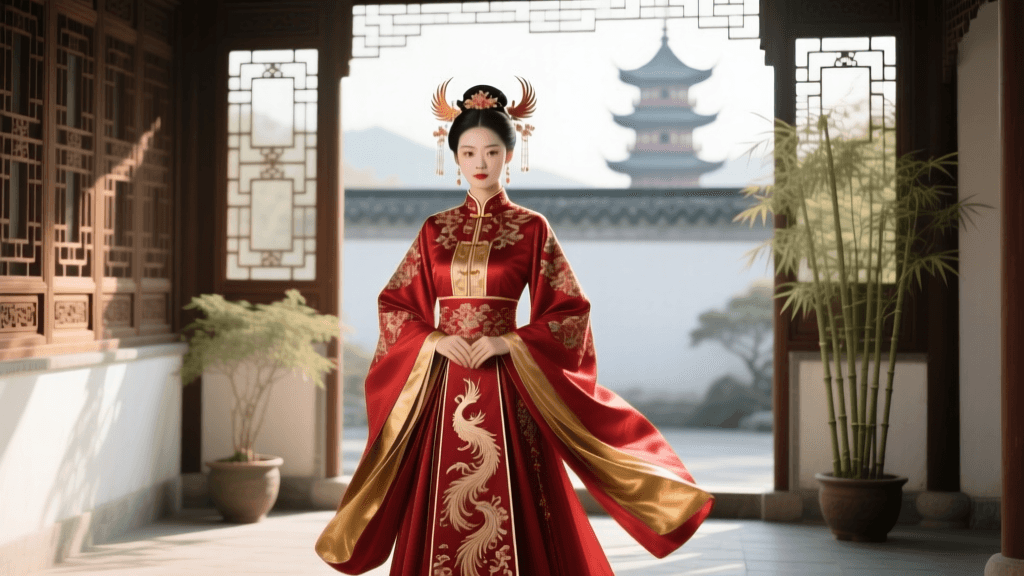
Originating from the Guangdong region, the Qun Kwa (often simply called a Kwa) is a two-piece ensemble consisting of a tailored jacket (gua) and a straight, ankle-length skirt (kwa). It is the gold standard for traditional Cantonese weddings and is renowned for its dense, intricate embroidery.
Embroidery Density and Pricing Tiers
The value and prestige of a Qun Kwa are determined by the density of its panjin (gold and silver thread) embroidery. The more the base silk is obscured by metallic thread, the higher the tier:
- Xiao Wu Fu (Small Five Blessings): 30% to 50% embroidery coverage. The red silk base is highly visible. Cost: $800 - $1,500 to purchase.
- Zhong Wu Fu (Medium Five Blessings): 60% to 70% coverage. Offers a beautiful balance of red and gold. Cost: $1,500 - $3,000.
- Da Wu Fu (Large Five Blessings): 80% to 90% coverage. The garment appears predominantly gold and silver. Cost: $3,000 - $6,000.
- Gua Huang (Jacket Emperor): 100% coverage. A masterpiece of craftsmanship where no red silk is visible, requiring up to a year of continuous hand-embroidery by master artisans. Cost: $10,000 to $30,000+.
Actionable Advice: Because a high-tier Qun Kwa is an heirloom investment, many brides opt to rent the Gua Huang or Da Wu Fu for the wedding day. Expect rental costs to range from $500 to $1,500 for a weekend. If purchasing, order at least 9 to 12 months in advance, as authentic hand-embroidered pieces from Suzhou or Guangzhou cannot be rushed.
The Xiu He Fu (秀禾服): The Modern Romantic
Despite its traditional appearance, the Xiu He Fu is a relatively modern invention. It takes its name from the character 'Xiu He' in the 2001 television drama Orange Turned Red. The costume designers created a stylized, romanticized version of late Qing dynasty and early Republican-era clothing, and it quickly became a staple for Chinese brides worldwide.
Silhouette and Styling
Unlike the straight, restrictive skirt of the Qun Kwa, the Xiu He Fu features a flared, A-line pleated skirt (often a Mamian skirt or horse-face skirt variant) and a looser, more forgiving jacket with wide, flowing sleeves. This makes it exceptionally comfortable and flattering for a wider variety of body types.
- Best For: Brides who want a traditional look but prioritize comfort, ease of movement, and a softer, more romantic silhouette.
- Cost: Generally more affordable than the Qun Kwa due to machine-assisted embroidery and simpler construction. Purchases range from $400 to $2,000.
- Lead Time: 3 to 6 months for custom sizing; readily available off-the-rack for immediate purchase.
The Hanfu (汉服): The Historical Revival
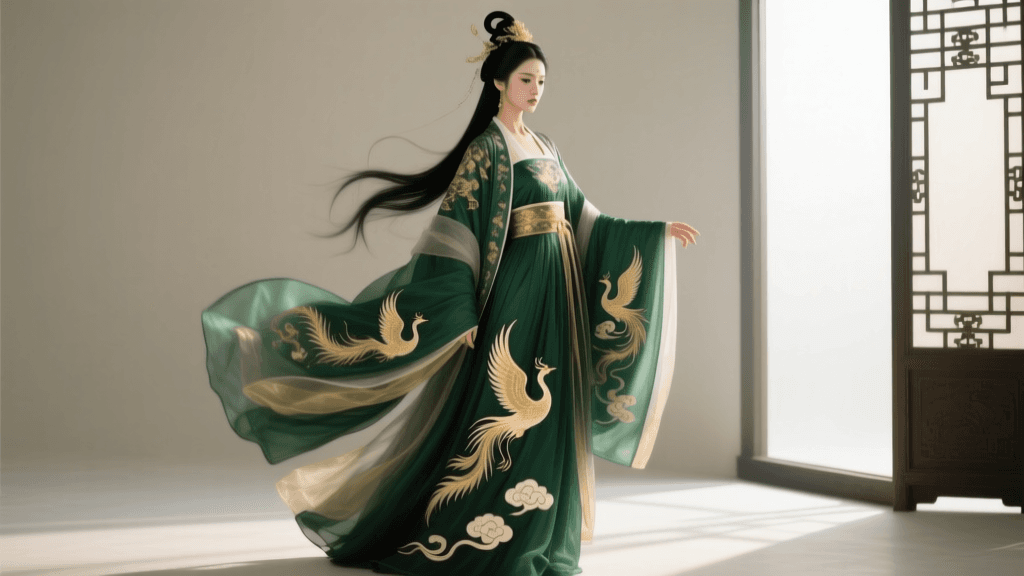
For brides seeking deep historical authenticity, the Hanfu movement has resurrected the wedding garments of the Han Chinese dynasties. The most popular choice for weddings is the Ming Dynasty ceremonial attire, known as Fengguan Xiapei (Phoenix Crown and Cloud Shoulder).
According to the Victoria and Albert Museum's archives on Chinese dress, Ming dynasty ceremonial wear was characterized by rich, deep colors, structured silhouettes, and profound symbolic motifs. A traditional Ming wedding Hanfu features a heavily pleated Mamian skirt, a long, sweeping cross-collared robe (Aoqun), and a cloud shoulder (Yunjian) draped over the top, often paired with an elaborate phoenix crown.
Actionable Advice: Hanfu requires precise layering. You will need to purchase or rent the inner garments (zhongyi), the main skirt and top, the outer robe, and the cloud shoulder separately. Budget $1,200 to $4,000 for a complete, high-quality silk set. Ensure your tailor understands historical Hanfu proportions; the shoulder seams should drop slightly past the natural shoulder to achieve the authentic, elegant drape.
Comparison Chart: Choosing Your Ceremonial Garment
To help you decide which garment aligns with your wedding vision, budget, and timeline, refer to the comparison table below. This data reflects current market averages for custom-made, high-quality garments.
| Feature | Qun Kwa (Cantonese) | Xiu He Fu (Modern) | Hanfu (Ming Dynasty) |
|---|---|---|---|
| Silhouette | Straight, structured, boxy | A-line flared skirt, softer drape | Layered, sweeping, historical volume |
| Embroidery | Dense gold/silver thread (3D effect) | Colorful silk thread, flatter motifs | Woven brocade, subtle metallic accents |
| Avg. Purchase Cost | $1,500 - $15,000+ | $400 - $2,000 | $1,200 - $4,000 |
| Lead Time | 9 - 12 Months | 3 - 6 Months | 4 - 8 Months |
| Best Ceremony | Tea Ceremony, Banquet Entrance | Pre-wedding shoots, Morning Games | Traditional Vows, Cultural Banquets |
Practical Guide: Measurements, Fittings, and Timelines
Securing the perfect traditional Chinese wedding dress requires a different approach than buying a Western gown. The tailoring techniques, fabric behaviors, and undergarment requirements are unique. The Metropolitan Museum of Art's landmark exhibition, China: Through the Looking Glass, highlighted how the structural foundations of Eastern garments rely heavily on flat-cutting and precise layering rather than Western darting and corsetry.
Essential Measurements for Your Tailor
When ordering a custom Qun Kwa or Xiu He Fu, provide your tailor with the following precise measurements (in inches or centimeters):
- Bust, Waist, and Hips: Measured at the fullest points. For the Qun Kwa, the jacket is tailored closely to the torso, while the Xiu He Fu allows for a looser fit.
- Shoulder Width: Crucial for Hanfu and Qun Kwa to ensure the embroidery sits flat across the upper back without bunching.
- Sleeve Length: Measured from the center back of the neck, over the shoulder, and down to the wrist bone. Traditional sleeves should cover the hands when arms are resting at the sides.
- Hollow to Hem: Measured from the hollow of the collarbone to the desired hemline. Pro Tip: Always take this measurement while wearing the exact heel height you plan to wear on your wedding day.
The Wedding Day Timeline
- 12 Months Out: Finalize your dress style. If ordering a hand-embroidered Qun Kwa, place your deposit now.
- 6 Months Out: First fitting. Check the placement of major motifs (like the dragon and phoenix) to ensure they align correctly across the jacket's front closure.
- 3 Months Out: Finalize accessories. Order your hairpieces, veils, and traditional embroidered shoes.
- 1 Month Out: Final fitting. Your body may fluctuate due to wedding stress; ensure the tailor leaves a 1-inch seam allowance inside the Qun Kwa jacket for last-minute adjustments.
Accessorizing Your Ceremonial Look
The garment is only half the equation. Traditional Chinese wedding attire demands specific accessories to complete the ceremonial aesthetic.
- Footwear: Opt for traditional red silk shoes with embroidered phoenixes. If wearing a Hanfu, cloud-head shoes (Yuntou shoes) are historically accurate and incredibly comfortable for long banquet hours.
- Jewelry: Heavy gold jewelry is customary, particularly the 'Dragon and Phoenix' bangles (Long Feng Zhuo). Brides often wear four to six bangles on each wrist during the tea ceremony to symbolize prosperity and the family's blessing.
- Hair and Headpieces: For the Qun Kwa and Xiu He Fu, a modernized pearl and gold filigree crown is standard. For the Ming Dynasty Hanfu, invest in a replica Fengguan (Phoenix Crown) featuring kingfisher feather inlay (or modern silk-thread alternatives) and dangling pearl tassels.
Conclusion: Honoring Heritage with Modern Elegance
Selecting your traditional Chinese wedding attire is a profound journey into your heritage. Whether you choose the unmatched prestige of a hand-embroidered Gua Huang, the romantic versatility of the Xiu He Fu, or the historical majesty of Ming Dynasty Hanfu, the key to success lies in meticulous planning. By understanding the nuances of embroidery density, respecting historical silhouettes, and adhering to strict fitting timelines, you ensure that your ceremonial attire will be as timeless and enduring as the marriage it celebrates.