The Ultimate Guide to Chinese Qun Kwa Wedding Attire
Introduction to the Qun Kwa: The Heart of the Chinese Tea Ceremony
In the vibrant tapestry of traditional Chinese weddings, few garments command as much respect, admiration, and cultural weight as the Qun Kwa (also spelled Kwa or Kwan). While the modern white wedding gown dominates the banquet hall and the sleek cheongsam (qipao) often makes an appearance at the evening reception, the Qun Kwa remains the undisputed queen of the traditional Chinese Tea Ceremony (Jing Cha). This two-piece ceremonial ensemble, consisting of a tailored jacket (Kwa) and a pleated or A-line skirt (Qun), is a masterpiece of silk, metallic thread, and centuries-old symbolism. For brides looking to honor their heritage while making a breathtaking visual statement, understanding the nuances of the Qun Kwa is essential. This comprehensive guide explores the history, symbolism, grading systems, and practical buying advice for selecting the perfect Qun Kwa for your wedding day.
Historical Roots and Cultural Significance
The origins of the Qun Kwa are deeply intertwined with the sartorial shifts of the Qing Dynasty (1644–1912). According to the Metropolitan Museum of Art's Heilbrunn Timeline of Art History, the Qing era saw a fascinating blend of Manchu and Han Chinese clothing traditions. While Manchu women traditionally wore the one-piece chenyi (a precursor to the modern cheongsam), Han Chinese women continued to wear two-piece ensembles consisting of a top and a skirt. The Qun Kwa evolved from the formal ceremonial jackets worn by Han noblewomen and the wives of high-ranking officials during this period. Over time, the luxurious embroidery and auspicious motifs originally reserved for the elite became accessible to commoners for their most important life event: marriage. Today, the Qun Kwa stands as a living artifact of Chinese textile history, representing familial blessings, prosperity, and the harmonious union of yin and yang.
Decoding the Embroidery: Symbols of Marital Bliss
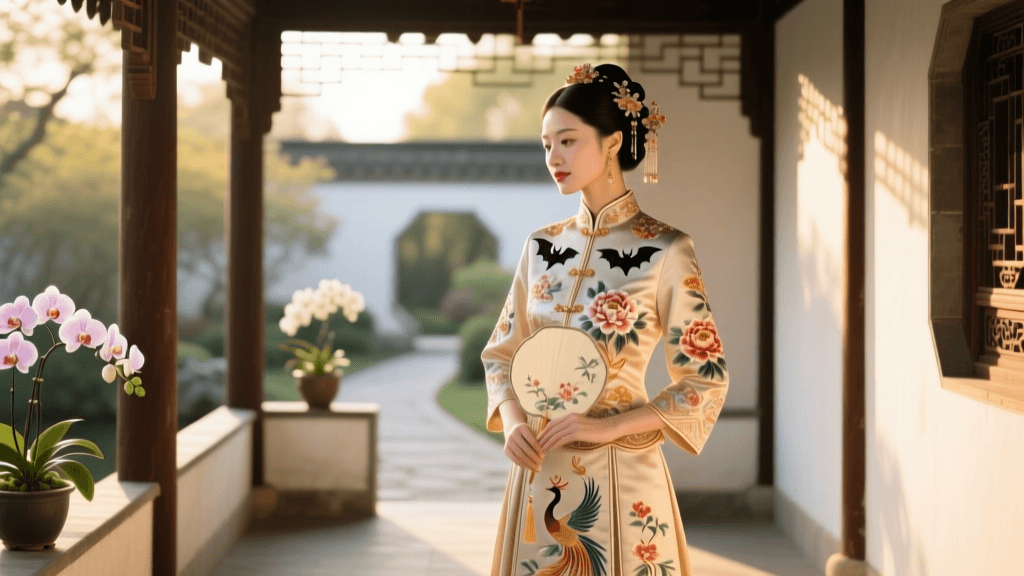
A genuine Qun Kwa is not merely a garment; it is a canvas of well-wishes. The intricate embroidery, traditionally done with gold and silver metallic threads on red silk satin, is densely packed with auspicious motifs. Understanding these symbols allows a bride to choose a dress that aligns with her personal hopes for her marriage:
- The Dragon and Phoenix (Long Feng): The most iconic motif, representing the perfect balance of yin and yang. The dragon symbolizes the groom (power, strength, and good fortune), while the phoenix represents the bride (grace, virtue, and renewal). Together, they signify a harmonious and balanced marriage.
- Bats (Fu): In Mandarin, the word for bat sounds identical to the word for 'good fortune' or 'blessings.' Five bats are often embroidered together to represent the 'Five Blessings': longevity, wealth, health, virtue, and a peaceful death.
- Peonies: Known as the 'King of Flowers,' peonies symbolize wealth, honor, and feminine beauty. They are often woven into the background to ensure a prosperous household.
- Lotus Flowers: Rising unsullied from muddy waters, the lotus represents purity, harmony, and the birth of children (as the word for lotus, lian, sounds like the word for 'continuous').
- Goldfish or Koi: Symbolizing abundance and surplus, ensuring the couple will never lack for wealth or resources.
Qun Kwa vs. Cheongsam: Choosing Your Tea Ceremony Attire
Many modern brides debate between wearing a Qun Kwa or a traditional red Cheongsam (Qipao) for the tea ceremony. While both are culturally significant, they offer vastly different silhouettes, comfort levels, and historical weights. Below is a structured comparison to help you decide which garment best suits your ceremony.
| Feature | Qun Kwa (Kwa) | Cheongsam (Qipao) |
|---|---|---|
| Silhouette | Loose, structured two-piece (jacket and skirt). Modest and boxy. | Form-fitting, one-piece dress with a high collar and side slits. |
| Material | Heavy silk satin or velvet, fully lined, heavily embroidered. | Lighter silk, brocade, or lace; embroidery is often localized. |
| Formality | Highest level of traditional formality; essential for elder blessings. | High formality, but leans more towards modern elegance and fashion. |
| Comfort & Fit | Highly forgiving; accommodates fluctuations in weight and bloating. | Requires precise tailoring; restrictive around the bust, waist, and hips. |
| Heirloom Value | Often passed down through generations as a family heirloom. | Rarely passed down due to its highly tailored, body-specific fit. |
The Five Grades of Qun Kwa: Understanding Embroidery Density
When shopping for a Qun Kwa, you will quickly encounter a grading system based on the density of the embroidery. The more densely embroidered the garment, the higher its grade, cost, and prestige. As noted in comprehensive cultural archives like Wikipedia's guide on the Qun Kwa, the density directly correlates to the hundreds of hours of meticulous hand-stitching required by master artisans. Here are the five traditional grades:
1. Xiao Wu Fu (小五福 - Small Five Blessings)
Density: Approximately 30% to 50% of the red base fabric is visible.
Details: This is the most accessible and affordable grade. The motifs are spaced out, making the dress lighter and more breathable. It is an excellent choice for brides on a budget or for summer weddings where heavy layers might cause discomfort.
2. Da Wu Fu (大五福 - Large Five Blessings)
Density: Approximately 50% to 70% coverage.
Details: A step up in luxury, the Da Wu Fu features larger, more intricate motifs with less visible red silk. The metallic threads catch the light beautifully, making it a popular mid-tier choice for professional wedding photography.
3. Zhong Wu Fu (中五福 - Medium Five Blessings)
Density: Approximately 70% to 85% coverage.
Details: At this level, the embroidery becomes incredibly dense. The garment is noticeably heavier and stiffer due to the sheer volume of gold and silver threading. It projects a strong sense of opulence and tradition.
4. Xiao Huang (小皇 - Small Emperor)
Density: Approximately 85% to 95% coverage.
Details: Reserved for brides who want a near-complete metallic sheen. The red silk is barely visible, appearing only in the deepest recesses of the embroidery patterns. The stiffness of the jacket gives it a regal, armor-like structure.
5. Gua Huang (褂皇 - Emperor of Jackets)
Density: 100% coverage. Absolutely no red base fabric is visible.
Details: The pinnacle of Chinese bridal couture. A genuine, hand-embroidered Gua Huang can take a single master artisan over a year to complete. The entire garment is encased in gold, silver, and sometimes colored silk threads. Due to the immense labor and cost, Gua Huangs are almost exclusively rented rather than purchased, and they carry a profound sense of majesty.
Practical Buying and Renting Guide: Actionable Advice
Securing the perfect Qun Kwa requires careful planning, precise measurements, and a clear understanding of the market. Whether you are commissioning a bespoke piece or renting from a bridal boutique, follow these actionable guidelines.
Timeline and Booking
For Bespoke (Custom) Orders: You must begin the process 9 to 12 months before your wedding date. Master embroiderers are often booked months in advance, and hand-stitching a high-grade Kwa takes hundreds of hours. Expect at least two fitting sessions: one for the base muslin toile and one for the final silk garment.
For Rentals: Begin your boutique visits 4 to 6 months in advance. Traditional Chinese weddings rely heavily on the Lunar Calendar, meaning multiple brides may be competing for the same auspicious dates. High-grade pieces like the Gua Huang are often booked out a year in advance for peak lunar wedding seasons.
The Measurement Process
Unlike a flowing Western ballgown, the Qun Kwa jacket requires precise structural tailoring to ensure the stiff collar sits correctly and the shoulder seams align perfectly with your natural frame. A professional tailor will take at least 12 to 15 specific measurements, including:
- Bust, Waist, and Hips: Taken with the specific undergarments you plan to wear.
- Shoulder Width: Crucial for the structured silhouette of the Kwa jacket.
- Armhole Depth and Bicep Circumference: Ensures you can comfortably lift your arms to serve tea to elders without the jacket riding up uncomfortably.
- Sleeve Length: Traditionally, the sleeves should hit exactly at the wrist bone to allow heavy gold bangles to be visible.
- Back Width and Front Waist Length: Dictates how the jacket drapes over the skirt's waistband.
Cost and Budget Expectations
The price of a Qun Kwa varies wildly based on the grade, the quality of the metallic threads (real gold-wrapped threads vs. synthetic Lurex), and whether it is machine-embroidered or hand-stitched.
- Machine-Embroidered / Low Grade (Purchase): $200 – $600 USD. Ideal for keeping as a casual heirloom or for pre-wedding photoshoots.
- Hand-Embroidered Mid-Grade (Purchase): $1,500 – $4,500 USD. A beautiful investment piece that can be passed down to future generations.
- Gua Huang / High-Grade Hand-Embroidered (Purchase): $10,000 – $30,000+ USD. True luxury couture.
- Rental Costs: Renting is the most practical route for high-grade garments. Expect to pay between $150 and $400 USD for a 3-day rental of a Da Wu Fu or Zhong Wu Fu, and $500 to $1,200+ USD for a pristine Gua Huang. Always inquire about the boutique's damage policy, as repairing torn metallic embroidery is highly specialized and expensive.
Accessorizing the Qun Kwa
The Qun Kwa is only half of the ceremonial look. To complete the traditional bridal aesthetic, specific accessories are required:
- Gold Jewelry (Si Dian Jin): The tea ceremony involves the gifting of gold. Brides typically wear heavy 24k gold Dragon and Phoenix bangles, layered necklaces, and elaborate gold hairpins. The high, stiff collar of the Kwa is designed specifically to frame these necklaces perfectly.
- The Red Veil (Hong Gai Tou): A sheer red silk veil, often embroidered with matching motifs, is draped over the bride's head or attached to a traditional hair comb. It symbolizes modesty and the warding off of evil spirits.
- Footwear: Brides wear traditional red silk flats, heavily embroidered with lotus flowers or double-happiness characters. Because the Qun Kwa skirt is typically ankle-length, the shoes are subtly revealed when walking or kneeling for the tea ceremony. Ensure you buy them a half-size up to accommodate potential foot swelling on your long wedding day.
Conclusion
Choosing to wear a Qun Kwa for your Chinese wedding tea ceremony is a profound way to connect with centuries of cultural heritage. From the rhythmic stitching of the master artisans to the heavy, auspicious weight of the gold threads, the garment is a physical manifestation of your family's love and blessings. By understanding the grading systems, planning your tailoring timeline, and respecting the deep symbolism woven into the silk, you ensure that your bridal attire is not just a beautiful outfit, but a timeless heirloom that honors the past while celebrating your future.