Eco-Friendly Hanfu Dyeing 2026: Chinese Plant Dye Guide
The 2026 Hanfu Sustainability Shift
As we navigate through 2026, the global Hanfu movement has evolved far beyond a simple aesthetic revival of traditional Chinese clothing. Today's enthusiasts and designers are deeply invested in the environmental footprint of their garments. With the fashion industry's synthetic dye pollution remaining a critical ecological issue, the ancient Chinese art of Cao Mu Ran (plant dyeing) is experiencing a massive, eco-conscious renaissance. According to the UNEP's sustainable fashion initiative, the shift toward bio-based, non-toxic textile coloration is one of the most vital steps in reducing water toxicity and microplastic shedding. For modern Hanfu makers, utilizing traditional Chinese natural dye plants offers a bridge between historical authenticity and cutting-edge 2026 sustainability standards.
Historically, the mastery of natural dyes was a closely guarded artisanal skill, vital to the vibrant silks documented in the Metropolitan Museum of Art's Heilbrunn Timeline of Art History. Today, modern chemistry and botanical science have optimized these ancient methods, making them accessible, colorfast, and scalable for home dyers and boutique Hanfu studios alike. This comprehensive guide explores the premier Chinese natural dye plants, modern eco-mordanting techniques, and actionable steps for dyeing your own sustainable Hanfu in 2026.
The Core Chinese Natural Dye Plants
Lan Cao (Chinese Indigo)
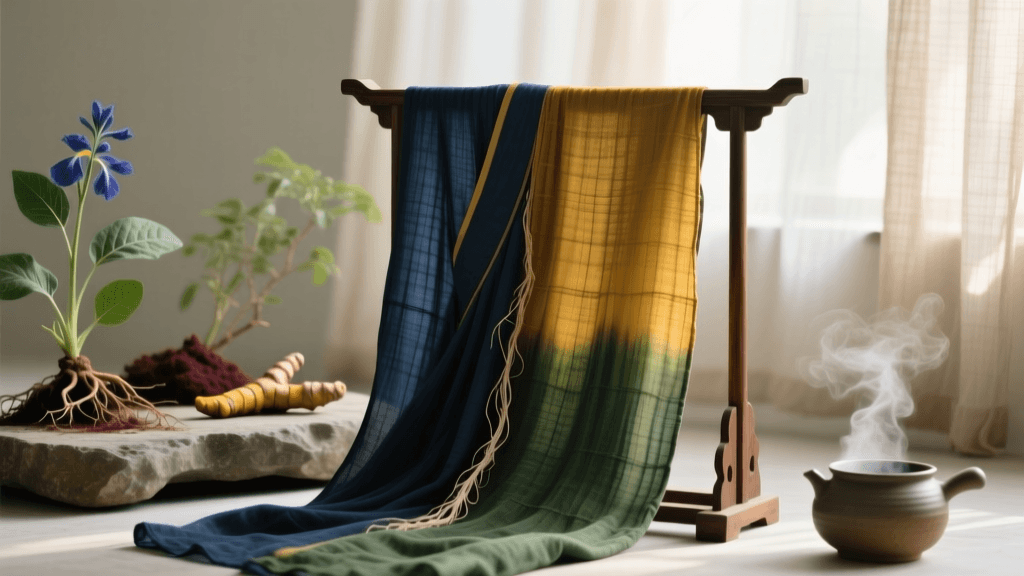
When discussing traditional Chinese blues, Lan Cao is the undisputed king. While true indigo (Indigofera tinctoria) is famous globally, the traditional Chinese variant relies heavily on Strobilanthes cusia (Ma Lan) and Persicaria tinctorium. As detailed in Britannica's botanical archive, indigo is a vat dye, meaning it is insoluble in water and requires a reduction process to bind to fibers. In 2026, organic farming cooperatives in Guizhou and Yunnan have perfected the fermentation of indigo mud (Dian Ni), yielding a rich, living dye paste. A 500g jar of premium, organic, pre-reduced Chinese indigo mud currently retails for around $35 USD, offering enough pigment to dye multiple silk Ruqun sets. The resulting shades range from pale 'moon white' to deep 'raven blue', depending on the number of oxidization dips.
Qian Cao (Chinese Madder)
For authentic Hanfu reds, terracottas, and soft pinks, Qian Cao (Rubia cordifolia) is the botanical standard. The roots of this climbing plant contain alizarin and purpurin, which yield stunning warm reds. The critical secret to dyeing with Qian Cao in 2026 is strict temperature control. The dye bath must be maintained between 50°C and 60°C. If the temperature exceeds 70°C, the yellow-brown pigments in the root will extract alongside the red, resulting in a muddy, undesirable brick color. Modern digital induction dye pots have made maintaining this precise temperature window easier than ever for home artisans.
Huai Hua (Pagoda Tree Buds)
To achieve the brilliant, imperial yellows seen in Ming Dynasty garments, dyers turn to Huai Hua, the unopened flower buds of the Pagoda Tree (Sophora japonica). These buds are incredibly rich in rutin, a flavonoid that produces a vibrant, colorfast yellow. Unlike many natural yellows that fade rapidly in sunlight, Huai Hua boasts exceptional lightfastness. In 2026, sustainably foraged Huai Hua buds are widely available from specialized herbal apothecaries online, typically costing $18 USD per 500g. They require a simple simmering extraction and pair beautifully with silk and ramie.
Zi Cao (Gromwell Root)
Zi Cao (Lithospermum erythrorhizon) is a fascinating plant that yields deep purples, magentas, and crimson reds. However, its active compound, shikonin, is not water-soluble. Traditional dyers historically used alkaline wood ash water to extract the color, but 2026 eco-dyers often use a food-grade alcohol tincture method or a specialized oil-extraction technique before emulsifying it into a water bath. The color shifts dramatically based on pH: acidic environments push the dye toward vibrant red, while alkaline shifts create deep, moody purples.
Eco-Friendly Mordanting in 2026
A mordant is a substance used to set dyes on fabrics by forming a coordination complex with the dye, which then attaches to the fabric. Historically, heavy metals like chrome and tin were used, but these are highly toxic and banned in modern eco-friendly practices. Even traditional alum (potassium aluminum sulfate), while relatively safe, requires mining. The breakthrough in 2026 is the widespread adoption of Symplocos, a plant-based bio-mordant. Symplocos leaves naturally accumulate aluminum from the soil. By simmering these leaves, dyers create a 100% plant-based, zero-chemical mordant bath that rivals the colorfastness of synthetic alum. Additionally, soy milk is utilized as a protein binder for cellulose Hanfu fabrics like hemp and cotton, allowing plant dyes to adhere without any metallic salts.
Comparative Guide to Chinese Plant Dyes
| Plant Name (Pinyin) | Botanical Name | Color Yield | 2026 Eco-Mordant | Lightfastness | Avg Cost (USD/500g) |
|---|---|---|---|---|---|
| Lan Cao | Strobilanthes cusia | Blues, Teals | Vat Reduction (Fructose/Lime) | Excellent | $35.00 |
| Qian Cao | Rubia cordifolia | Reds, Terracotta | Symplocos / Alum | Good | $28.00 |
| Huai Hua | Sophora japonica | Bright Yellow | Symplocos / Soy Milk | Excellent | $18.00 |
| Zi Cao | Lithospermum erythrorhizon | Purple, Crimson | pH Manipulation | Fair | $42.00 |
| Su Mu | Caesalpinia sappan | Pink, Deep Red | Iron / Symplocos | Fair | $15.00 |
Step-by-Step: Dyeing a Silk Mamianqun
Creating a naturally dyed Mamianqun (pleated skirt) requires patience and precision. Here is a 2026-tested workflow for dyeing silk using Qian Cao (Madder).
- Scouring: Silk contains sericin (a natural gum) and manufacturing oils. Wash your silk fabric in warm water (40°C) with a pH-neutral, eco-friendly enzymatic detergent for 45 minutes. Rinse thoroughly.
- Bio-Mordanting: Prepare a Symplocos leaf bath by simmering 50g of dried leaves per 100g of fabric weight in distilled water for one hour. Strain the liquid, submerge the wet silk, and maintain at 60°C for 45 minutes. Let the silk cool in the bath to maximize fiber absorption.
- Extraction: While the silk is mordanting, simmer 100g of crushed Qian Cao roots in distilled water at 60°C for two hours. Do not let it boil. Strain the liquid through a fine mesh bag.
- The Dye Bath: Submerge the mordanted, wet silk into the madder extraction. Keep the temperature strictly at 55°C. Stir gently every 10 minutes to ensure an even dye uptake across the intricate pleats of the Mamianqun.
- Oxidation and Rinsing: After 90 minutes, remove the silk. It will look slightly lighter when wet. Hang it to oxidize in a shaded, well-ventilated area. Once dry, rinse in cool water with a splash of white vinegar to set the pH and enhance the red hue.
Troubleshooting Common Dyeing Issues
Even with modern 2026 equipment, natural dyeing can present challenges. Uneven dyeing on heavy silk brocades is usually caused by inadequate scouring or insufficient water volume in the dye pot; always ensure a 30:1 water-to-fabric ratio. Dull or muddy colors with Qian Cao are almost always the result of temperature spikes above 65°C; invest in a reliable digital sous-vide stick to regulate your dye vat. Rapid fading is often linked to hard water. The minerals in tap water can bind with natural tannins and alter the color chemistry; always use filtered or distilled water for your primary extraction and mordanting phases.
Caring for Naturally Dyed Hanfu
Naturally dyed garments are living textiles that require specific care to maintain their vibrancy. Never wash your plant-dyed Hanfu in commercial alkaline laundry detergents, as high pH levels will strip the color and shift the hues (for example, turning a madder red into a dull orange). Instead, use traditional soapnut (Sapindus) liquid or a specialized pH-neutral silk wash. Always hand wash in cool water and dry the garment flat in the shade. UV radiation is the enemy of natural dyes, particularly Zi Cao (Gromwell), which will fade if left in direct sunlight.
Environmental Impact and Sourcing
The shift toward Cao Mu Ran is not merely an aesthetic choice; it is a profound environmental statement. Synthetic azo dyes require vast amounts of petroleum derivatives and release toxic heavy metals into waterways. In contrast, the spent plant matter from a Hanfu dye session—whether it is madder roots or pagoda tree buds—is 100% biodegradable and can be composted to enrich soil. Furthermore, the water used in natural dye baths, free from synthetic fixatives and toxic mordants, can be safely neutralized and used to water ornamental gardens. By sourcing from certified organic cooperatives in 2026, Hanfu enthusiasts are supporting regenerative agriculture, preserving ancient botanical knowledge, and ensuring that the beauty of traditional Chinese clothing does not come at the expense of the earth.