Sustainable Chinese Plant Dyes: Eco-Friendly Guide 2026
The Renaissance of Chinese Botanical Dyes in 2026
As the global fashion industry faces unprecedented scrutiny regarding water pollution and chemical runoff, the year 2026 has marked a definitive turning point toward regenerative textile practices. Synthetic azo dyes, which historically account for massive ecological degradation, are being rapidly replaced by heritage botanical alternatives. According to the United Nations Environment Programme (UNEP), the transition to circular and sustainable fashion models is no longer optional but a critical mandate for brands operating in the mid-2020s. Within this shift, traditional Chinese natural dye plants are experiencing a massive renaissance. By combining ancient botanical wisdom with modern 2026 eco-friendly mordanting techniques, artisans and sustainable fashion houses are achieving vibrant, colorfast garments without relying on toxic heavy metals or synthetic reducing agents.
Chinese dyeing traditions, dating back thousands of years to the Zhou and Han dynasties, offer a rich palette of colors derived from roots, leaves, bark, and flower buds. Today, these plants are being cultivated using regenerative agriculture practices, ensuring that the soil is enriched rather than depleted. This comprehensive guide explores the most vital Chinese dye plants, modern bio-mordanting alternatives, and actionable low-water vat recipes for the contemporary eco-conscious dyer.
Top Traditional Chinese Dye Plants for Sustainable Fashion
1. Chinese Indigo (Dian Lan)
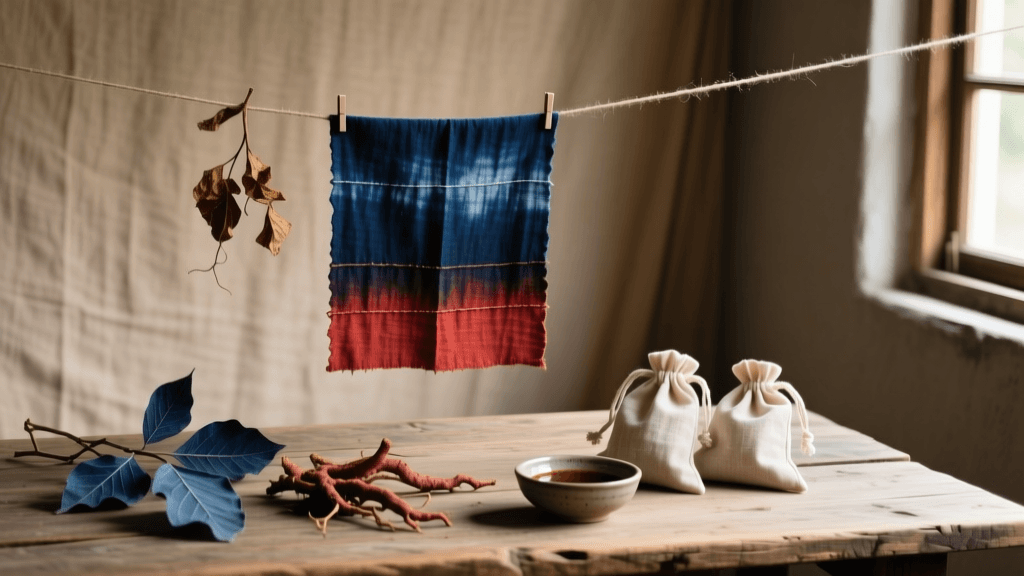
While Indigofera tinctoria is widely known globally, the traditional southern Chinese indigo, often referred to as Strobilanthes cusia (Acanthaceae family) or Polygonum tinctorium, holds a unique place in heritage dyeing. Known in traditional medicine as Ban Lan Gen, the leaves of this plant contain indican, a precursor to the blue pigment. In 2026, sustainable textile cooperatives in Guizhou and Yunnan provinces are utilizing advanced, low-impact bioreactor fermentation to extract the indigo pigment without the use of harsh synthetic chemicals. The resulting indigo mud is then dried into cakes or powders. When reduced in an alkaline vat, it yields the iconic deep, living blues that continue to shift and fade beautifully over years of wear, a hallmark of authentic heritage denim and traditional Dong minority textiles.
2. Chinese Madder (Qian Cao)
Rubia cordifolia, known as Qian Cao in traditional Chinese pharmacology, is the premier source of natural reds, oranges, and deep terracottas. The roots contain alizarin and purpurin, which require careful temperature management during extraction. Modern 2026 dyeing protocols emphasize keeping the dye bath strictly between 40°C and 50°C. Exceeding 60°C extracts unwanted brown tannins and dulls the vibrant red hues. Sourced primarily from the mountainous regions of Shaanxi and Sichuan, organic madder root has stabilized in price at approximately $45 per kilogram in the 2026 wholesale market, making it an accessible luxury for independent sustainable designers. The Food and Agriculture Organization (FAO) highlights the importance of sustainably foraging and cultivating non-wood forest products like madder to support rural economies while preventing over-harvesting.
3. Pagoda Tree (Huai Shu)
The Japanese Pagoda Tree (Sophora japonica), widely cultivated across northern China, provides one of the most brilliant and lightfast natural yellows available. The unopened flower buds, known as Huai Mi, are harvested in late summer and dried. These buds are incredibly rich in rutin, a flavonoid that yields a striking, luminous yellow when simmered in water. Historically reserved for imperial garments and high-ranking officials during the Ming and Qing dynasties, Pagoda Tree yellow is now a staple in 2026 eco-fashion collections. An added benefit of Huai Mi is its high tannin content, which allows it to act as both a substantive dye and a natural mordant, binding beautifully to cellulose fibers like organic cotton and hemp without the need for metallic salts.
Eco-Friendly Mordanting: Ditching Heavy Metals
Historically, natural dyes required metallic mordants like potassium aluminum sulfate (alum), chrome, or tin to bond the pigment to the fiber. While alum is relatively safe, its mining carries a heavy ecological footprint. Chrome and tin are highly toxic and strictly regulated in 2026. The modern sustainable dyer relies on bio-mordants and plant-based alternatives that close the ecological loop.
| Mordant Type | Botanical Source | 2026 Eco-Impact | Color Shift on Madder |
|---|---|---|---|
| Bio-Protein Binder | Organic Soy Milk | Zero heavy metals, fully biodegradable | Soft coral to peach |
| Plant Tannins | Chinese Gallnuts (Wu Bei Zi) | Renewable, supports local foraging economies | Deep brick red to rust |
| Natural Alum | Symplocos Leaves | Forest-friendly, eliminates mining impact | Bright orange-red |
| Iron Modifier | Upcycled Iron Water | Upcycled waste, use sparingly to avoid fiber degradation | Muted burgundy to brown |
Soy milk mordanting, a technique refined by modern artisans, utilizes the proteins in raw, unboiled soy milk to bind to cellulose fibers, creating a protein-rich surface that natural dyes naturally adhere to. Chinese Gallnuts, harvested from the Rhus chinensis tree, provide a massive tannin payload that acts as a powerful bridge between plant fibers and dye molecules, completely eliminating the need for mined minerals.
Step-by-Step: The 2026 Low-Water Fructose Indigo Vat
Traditional indigo vats often rely on sodium dithionite (hydrosulfite) as a reducing agent, which creates toxic sulfite byproducts that contaminate local waterways. In 2026, the industry standard for eco-friendly indigo dyeing is the organic fructose-lime vat, also known as the 1-2-3 vat. This method uses natural sugars to reduce the indigo, making the spent vat safe enough to compost or use as a nitrogen-rich garden fertilizer.
Ingredients and Measurements
- 1 part natural Chinese indigo powder (e.g., 50 grams)
- 2 parts calcium hydroxide / slaked lime (e.g., 100 grams)
- 3 parts organic fructose powder (e.g., 150 grams)
- 10 liters of warm water (50°C)
Preparation Steps
- Paste Creation: In a small glass jar, mix the indigo powder with a small amount of warm water and a few glass marbles. Shake vigorously for five minutes to break down the indigo particles into a smooth, lump-free paste.
- Vat Filling: Fill your dye pot with 10 liters of water heated to exactly 50°C. Avoid higher temperatures, as heat above 60°C will kill the organic reduction process.
- Adding Alkali: Slowly sprinkle the calcium hydroxide into the water, stirring gently to avoid introducing excess oxygen. The pH should reach between 10 and 11.
- Adding Reducing Agent: Stir in the fructose powder. The sugar will consume the dissolved oxygen in the water, creating an anaerobic environment.
- Introducing Indigo: Gently pour the indigo paste into the pot. Cover tightly with a lid to prevent oxygen from entering.
- Resting Period: Let the vat sit undisturbed in a warm environment (around 40°C to 50°C) for 24 to 48 hours. The liquid will turn a deep amber or yellow-green, and a coppery, bubbly scum (the indigo flower) will form on the surface, indicating successful reduction.
- Dyeing: Wet your pre-mordanted fabric, squeeze out excess water, and gently submerge it into the vat for 5 to 10 minutes. Upon removal, the fabric will appear yellow-green but will oxidize into a rich blue within minutes of exposure to the air. Repeat dips for darker shades.
Sourcing, Pricing, and Sustainability Metrics
Sourcing authentic, ethically harvested Chinese dye plants in 2026 requires transparency. The World Wildlife Fund (WWF) Apparel Industry Initiatives strongly advocates for supply chain traceability to ensure that water stewardship and fair labor practices are maintained at the agricultural level. When purchasing madder root, indigo cakes, or pagoda buds, look for suppliers who provide Global Organic Textile Standard (GOTS) certification for their processing auxiliaries, and who can trace the botanical origin back to specific regenerative farming cooperatives in China.
Furthermore, the integration of blockchain technology in 2026 allows buyers to scan a QR code on their raw dye materials, revealing the exact harvest date, soil health metrics of the farm, and the water usage footprint of the extraction process. This level of transparency ensures that the revival of ancient Chinese dyeing techniques actively contributes to a greener, more equitable global fashion ecosystem, proving that tradition and cutting-edge sustainability are not mutually exclusive, but deeply intertwined.