Chinese Natural Dye Plants: Eco-Friendly Guide 2026
The Renaissance of Chinese Botanical Dyes in 2026
As the global fashion industry faces stricter environmental regulations and water scarcity challenges in 2026, the revival of traditional Chinese natural dyeing techniques has moved from niche artisan circles to the forefront of sustainable textile production. For centuries, Chinese artisans utilized a rich pharmacopeia of local flora to color silk, hemp, and ramie. Today, these ancient methods offer a viable, eco-friendly alternative to synthetic azo dyes, which are increasingly scrutinized for their toxic effluent and microplastic pollution.
According to the latest sustainability frameworks outlined by organizations like Textile Exchange, transitioning to biodegradable, plant-based colorants is a critical step in achieving circular fashion economies. By leveraging traditional Chinese dye plants, modern dyers can achieve vibrant, colorfast results while adhering to the principles of green chemistry. This guide explores the most prominent Chinese botanical dyes, their sustainable applications, and actionable, step-by-step methodologies for eco-friendly dyeing in your own studio or workshop.
Top Traditional Chinese Dye Plants for Eco-Friendly Fashion
1. Chinese Indigo (Persicaria tinctoria / Liancao)
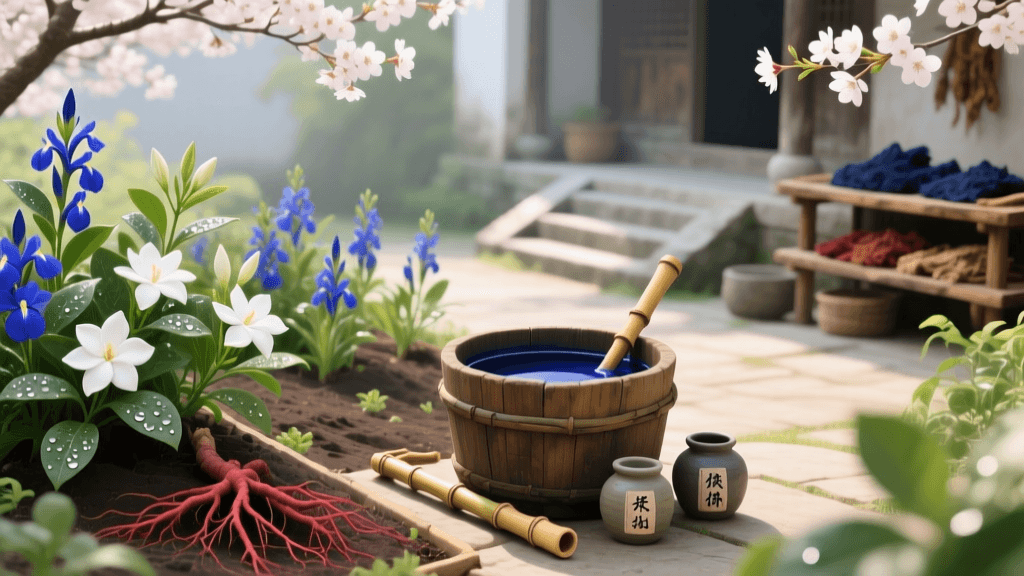
Historically classified as Polygonum tinctorium, Chinese indigo (Liancao) is the cornerstone of traditional blue dyeing in East Asia. Unlike synthetic indigo, which requires toxic reducing agents like sodium dithionite, traditional Chinese indigo vatting relies on organic fermentation. The leaves contain indican, which hydrolyzes into indoxyl and subsequently oxidizes into insoluble indigo blue. In 2026, eco-conscious studios utilize organic vat recipes combining fructose, calcium hydroxide (slaked lime), and natural indigo powder, completely eliminating heavy metals and toxic salts from the wastewater. This botanical verification is well-documented in databases such as the Royal Botanic Gardens, Kew, confirming its safety and agricultural viability.
2. Gardenia (Gardenia jasminoides / Zhi Zi)
Gardenia fruit (Zhi Zi) yields a brilliant, luminous yellow due to its high concentration of crocin, the same carotenoid pigment found in saffron. What makes Gardenia exceptionally sustainable is its status as a 'direct dye.' It possesses a natural affinity for protein fibers like silk and wool, and with minimal eco-friendly mordanting, it binds beautifully to cellulose fibers like cotton and linen. Because it requires no heavy metal mordants to achieve colorfastness, the exhausted dye bath can be safely composted or used to irrigate acid-loving plants, embodying true zero-waste principles.
3. Pagoda Tree Buds (Styphnolobium japonicum / Huai Mi)
The unopened flower buds of the Pagoda Tree (Huai Mi) are a staple in traditional Chinese dyeing, prized for yielding bright, clear yellows and, when over-dyed with indigo, vibrant botanical greens. The primary coloring agent is rutin, a flavonoid that requires a metallic mordant to bind to the fiber. Modern sustainable practices substitute toxic chrome or tin mordants with Aluminum Acetate or Potassium Aluminum Sulfate (Alum), which are abundant, naturally occurring minerals with low environmental toxicity when managed correctly in closed-loop water systems.
Comparison Chart: Yield, Mordants, and Lightfastness
Understanding the specific requirements of each plant is crucial for minimizing resource waste. Below is a comparative analysis of the top Chinese dye plants for 2026 sustainable textile production.
| Plant (Common / Botanical) | Traditional Name | Target Color | Eco-Mordant Required | Lightfastness | Water Impact |
|---|---|---|---|---|---|
| Chinese Indigo (Persicaria tinctoria) | Liancao | Deep Blue | None (Vat reduction) | Excellent | Low (Vat reused for months) |
| Gardenia Fruit (Gardenia jasminoides) | Zhi Zi | Bright Yellow | None / Soy Milk Binder | Moderate | Very Low (Direct compost) |
| Pagoda Buds (Styphnolobium japonicum) | Huai Mi | Yellow / Green | Alum (15% WOF) | Good | Low (Alum water reused) |
| Madder Root (Rubia cordifolia) | Qian Cao | Brick Red / Orange | Alum + Cream of Tartar | Excellent | Moderate (Requires multiple rinses) |
Step-by-Step Eco-Friendly Dyeing Process for Cellulose Fibers
Dyeing plant-based fibers (cotton, hemp, ramie) with natural dyes historically required intensive water and chemical usage. By applying modern green chemistry principles, as advocated by the EPA's Green Chemistry framework, we can optimize the process for maximum color yield and minimum environmental impact. The following protocol uses Gardenia (Zhi Zi) as a model for a sustainable, low-water dyeing session.
Phase 1: Scouring and Bio-Mordanting
Cellulose fibers contain natural waxes and pectins that repel water-based dyes. Instead of using harsh synthetic surfactants, scour your fabric using a plant-based soap and soda ash.
- Measurement: Use 1% Weight of Fabric (WOF) for soda ash and 2% WOF for plant-based liquid soap.
- Process: Simmer the fabric at 80°C (176°F) for 60 minutes. Rinse in warm water.
- Bio-Mordanting: To bind the Gardenia dye without metallic salts, use a soy milk protein binder. Dilute unsweetened, additive-free soy milk in water at a 1:5 ratio. Soak the scoured fabric for 12 hours, then air dry completely. The soy protein acts as a bridge between the cellulose and the crocin pigment.
Phase 2: Extraction and Dye Bath Preparation
Efficient extraction ensures you use less plant material and less energy.
- Measurement: Use 100% WOF of dried Gardenia pods (e.g., 100g of pods for 100g of fabric). Crush the pods lightly to expose the seeds.
- Process: Place the pods in a stainless steel pot with just enough water to cover them (a 1:10 liquor ratio, significantly lower than the traditional 1:30 ratio). Simmer at 70°C (158°F) for 45 minutes. Strain the liquid through a fine mesh cloth. Repeat the extraction once more with fresh water, combining both liquids to create your master dye bath.
Phase 3: Dyeing and Post-Fixation
- Dyeing: Enter your soy-mordanted, damp fabric into the warm dye bath. Maintain a temperature of 60°C (140°F) for 60 minutes, stirring gently every 15 minutes to ensure even penetration.
- Fixation: To lock in the color and improve lightfastness, prepare a post-mordant bath using 5% WOF of Aluminum Acetate dissolved in warm water. Soak the dyed fabric in this solution for 30 minutes at room temperature.
- Rinsing: Rinse the fabric in cool water until the runoff is clear. Hang to dry out of direct sunlight.
Sourcing Sustainable Materials in 2026
The commercial viability of Chinese natural dyes has improved dramatically. In 2026, a kilogram of premium, organically cultivated dried Gardenia pods averages around $45 to $60 USD from certified agricultural cooperatives in Zhejiang and Fujian provinces. When sourcing, always look for suppliers who practice regenerative agriculture and can provide transparency regarding their water usage and soil health.
Furthermore, investing in a closed-loop water filtration system for your studio allows you to safely reuse mordant baths and neutralize acidic or alkaline wastewater before it enters the municipal system. By marrying the ancient wisdom of Chinese botanical dyeing with modern ecological stewardship, artisans and fashion brands can create garments that are not only visually stunning but profoundly respectful of the earth.
Conclusion
The transition to natural, plant-based dyes is no longer just a romantic ideal; it is a necessary evolution for the textile industry. Traditional Chinese dye plants like Liancao, Zhi Zi, and Huai Mi offer a vibrant, sustainable palette that honors cultural heritage while protecting our ecosystems. By mastering these eco-friendly techniques and adhering to precise, low-impact methodologies, dyers in 2026 are weaving a greener, more sustainable future into the very fabric of our clothing.