Eco-Friendly Hanfu Dyeing 2026: Chinese Indigo Plant Guide
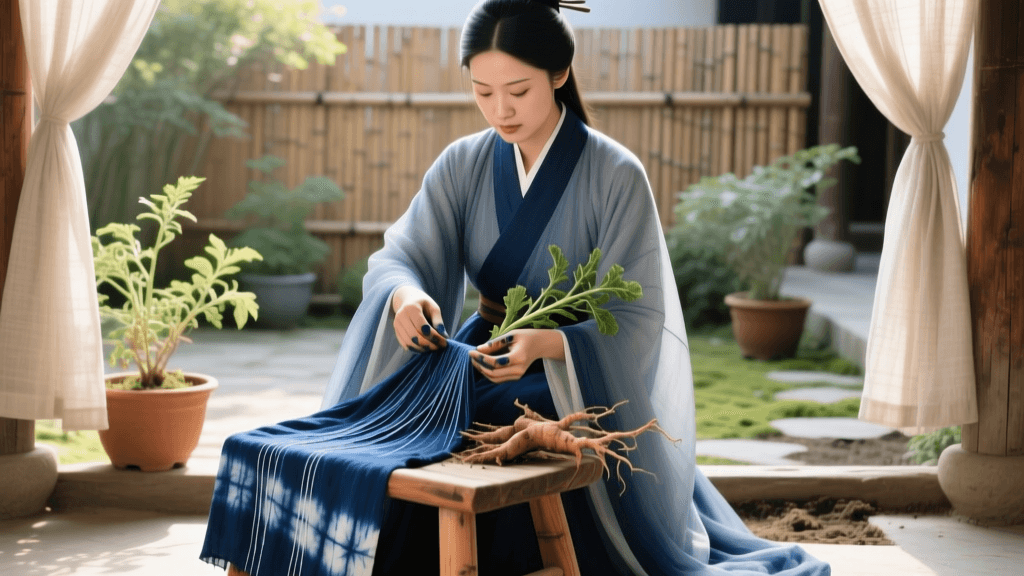
The 2026 Renaissance of Cao Mu Ran in Hanfu Tailoring
As the global fashion industry faces stricter environmental regulations in 2026, the traditional Hanfu movement has reached a critical turning point. Consumers and artisans alike are moving away from the synthetic azo dyes that dominated the fast-fashion Hanfu boom of the early 2020s. Today, the focus has shifted entirely to Cao Mu Ran (草木染), the ancient Chinese art of botanical dyeing. Driven by the 2026 zero-azo directives and a growing demand for traceable, organic garments, eco-friendly dyeing is no longer just a niche artisanal practice—it is the gold standard for premium traditional Chinese clothing.
According to recent data highlighted by UNEP Sustainable Fashion initiatives, the textile industry is under immense pressure to reduce water pollution and carbon footprints. For Hanfu makers, this means returning to the roots of Chinese botanical chemistry. By utilizing indigenous plants like Chinese indigo and madder, artisans are creating garments that are not only historically accurate but also biologically safe and environmentally regenerative.
Botanical Spotlight: Strobilanthes Cusia (Chinese Indigo)
When Western dyers think of indigo, they typically picture Indigofera tinctoria. However, the traditional blue of southern Chinese textiles, particularly those used in Ming and Song dynasty-inspired Hanfu, often comes from Strobilanthes cusia (formerly classified as Baphicacanthus cusia). Known in traditional Chinese medicine as Banlangen, this plant thrives in the humid, subtropical climates of Fujian, Guangdong, and Yunnan.
Unlike true indigo, which is a legume, Strobilanthes cusia is an herbaceous shrub of the Acanthaceae family. The leaves contain indican, a precursor to indigotin. According to botanical records detailed by Britannica's comprehensive guide on indigo plants, the extraction process requires careful fermentation to hydrolyze the indican into indoxyl, which then oxidizes in the air to form the insoluble blue pigment. In 2026, organic farming cooperatives in Fujian have perfected a cold-water fermentation method that preserves the plant's natural antimicrobial properties, resulting in a blue dye that naturally resists moths and mildew—a massive benefit for preserving silk Hanfu.
Botanical Spotlight: Rubia Cordifolia (Chinese Madder)
To achieve the rich crimsons, terracottas, and deep oranges seen in traditional ceremonial Hanfu, dyers turn to Rubia cordifolia, commonly known as Chinese madder or Qiancao. The dye compounds, primarily alizarin and purpurin, are concentrated in the plant's roots, which must be harvested after three to four years of growth to ensure maximum color yield and ecological sustainability.
In 2026, the sourcing of Rubia cordifolia has become highly regulated to prevent over-harvesting. Premium Hanfu studios now exclusively use certified organic madder root from regenerative agriculture projects in Sichuan. These projects ensure that the soil microbiome is replenished after harvest, aligning perfectly with the modern ethos of sustainable Asian traditions.
Step-by-Step Eco-Friendly Dyeing Guide for 2026
Creating a naturally dyed Hanfu requires patience, precision, and a deep respect for the chemistry of the plants. Below is the modernized, eco-friendly protocol used by top-tier Hanfu ateliers in 2026.
Step 1: Scouring the Fiber
Natural dyes will not adhere properly to fibers that contain natural waxes, oils, or manufacturing residues. For silk or ramie Hanfu fabrics, scouring is essential.
- Materials: Sodium carbonate (soda ash) at 2% weight of fabric (WOF), and a pH-neutral eco-detergent.
- Process: Heat water to 60°C (140°F). Add the soda ash and detergent. Submerge the fabric and simmer gently for 45 minutes. Rinse thoroughly in lukewarm water until the runoff is completely clear.
Step 2: Mordanting (Crucial for Madder)
While indigo is a vat dye and bonds directly to the fiber through oxidation, madder is an adjective dye and requires a mordant to act as a chemical bridge between the fiber and the pigment.
- Materials: Potassium aluminum sulfate (alum) at 15% WOF, and cream of tartar at 5% WOF to keep the silk from becoming brittle.
- Process: Dissolve the mordant in hot water. Submerge the scoured fabric and maintain a temperature of 80°C (176°F) for one hour. Allow the fabric to cool in the bath overnight for maximum penetration. Do not rinse; simply squeeze out excess liquid and proceed to dyeing.
Step 3: Building the 2026 Organic Fructose Indigo Vat
Historically, indigo vats relied on wood ash (highly alkaline) and fermentation. In the late 20th century, synthetic sodium dithionite (hydrosulfite) became the standard reducing agent, but it is toxic and produces foul-smelling, hazardous wastewater. In 2026, the industry standard for eco-friendly dyeing is the Fructose Vat, which uses organic fruit sugars to reduce the indigo.
- Recipe (for a 10-liter vat): 50g Chinese indigo pigment (extracted from Strobilanthes cusia), 100g calcium hydroxide (slaked lime) to raise the pH to 11, and 100g organic fructose powder as the reducing agent.
- Process: Heat water to 50°C (122°F). Mix the indigo with a small amount of warm water and rubbing alcohol to create a paste. Add to the vat, followed by the lime and fructose. Stir gently to avoid introducing oxygen. Cover and let sit for 2 hours. The liquid should turn a clear, yellowish-green, with a coppery sheen on the surface—the sign of a perfectly reduced vat.
Step 4: Dyeing and Oxidation
Submerge the pre-wetted fabric into the vat gently, massaging it underwater for 5 minutes. Remove the fabric; it will appear yellow-green. As it is exposed to the oxygen in the air, the magic of oxidation occurs, and the fabric will slowly bloom into a deep, rich blue over 15 minutes. Repeat this dipping and airing process 5 to 8 times to achieve the dark, authoritative blues required for formal Hanfu outer garments.
2026 Sustainability Metrics: Synthetic vs. Natural Dyes
To understand why the shift toward Cao Mu Ran is so vital, we must look at the data. The following table compares traditional synthetic azo dyes with the botanical alternatives discussed above, based on 2026 textile industry lifecycle assessments recognized by Textile Exchange Standards.
| Metric | Synthetic Azo Dyes | Chinese Indigo (Strobilanthes) | Chinese Madder (Rubia) |
|---|---|---|---|
| Water Footprint (Liters/kg) | 150 - 200 (High pollution) | 45 (Closed-loop fermentation) | 60 (Biodegradable runoff) |
| Toxicity & Effluent | High (Carcinogenic amines) | None (Medicinal grade) | None (Safe for soil) |
| Colorfastness (Light) | Excellent (Grade 5) | Good (Grade 4) | Moderate (Grade 3-4) |
| 2026 Avg Cost (per kg) | $12 - $18 USD | $85 - $110 USD | $65 - $90 USD |
| End-of-Life Impact | Microplastic/chemical leaching | 100% Compostable | 100% Compostable |
While the upfront cost of botanical dyes is significantly higher, the 2026 market shows that consumers are willing to pay a 30-40% premium for Hanfu that carries a verified Cao Mu Ran certification, viewing it as an investment in both cultural heritage and environmental stewardship.
Caring for Naturally Dyed Hanfu
Garments dyed with Strobilanthes cusia and Rubia cordifolia are living textiles. They require specific care to maintain their vibrancy and structural integrity over decades.
- Washing: Never use alkaline laundry detergents or bleach, as high pH levels will strip the mordant and alter the color (indigo may turn grayish, while madder can shift to a muddy brown). Use a pH-neutral, plant-based soap specifically formulated for silk and natural dyes.
- Drying: Botanical dyes are photosensitive. Always dry your Hanfu indoors or in deep shade. Direct ultraviolet sunlight will rapidly degrade the alizarin in madder and fade the indigotin in Chinese indigo.
- Storage: Store naturally dyed garments in breathable cotton bags. Because Strobilanthes cusia retains natural antimicrobial properties, you will find that your indigo-dyed Hanfu is naturally resistant to the silverfish and moths that typically plague silk wardrobes.
The Future of Sustainable Asian Traditions
The year 2026 marks a definitive maturation in the Hanfu community. The romanticism of reviving ancient silhouettes is now matched by a rigorous commitment to the ecological philosophies that originally governed their creation. By embracing Strobilanthes cusia and Rubia cordifolia, modern dyers are not merely replicating the past; they are actively participating in a sustainable future. Through the mindful application of Cao Mu Ran, the garments we wear become a testament to the harmony between human artistry and the natural world, ensuring that Asian textile traditions remain vibrant, relevant, and ecologically sound for generations to come.