Traditional Chinese Drawlooms and Kesi Weaving in 2026
The Resurgence of Ancient Chinese Weaving in 2026
As the global fashion industry pivots toward sustainability, artisanal craftsmanship, and deep cultural storytelling in 2026, the Xin Zhongshi (New Chinese Style) movement has catalyzed a massive revival of ancient textile arts. Discerning collectors and avant-garde designers are no longer satisfied with digital prints mimicking heritage patterns; they demand the structural integrity and historical authenticity of hand-loomed textiles. At the forefront of this renaissance are two marvels of ancient Chinese engineering: the Hualou (drawloom) and the Kesi (cut silk tapestry) technique. Understanding these traditional looms and weaving methods offers a profound glimpse into the intersection of ancestral technology and contemporary luxury fashion.
Understanding the Hualou (Drawloom) Mechanics
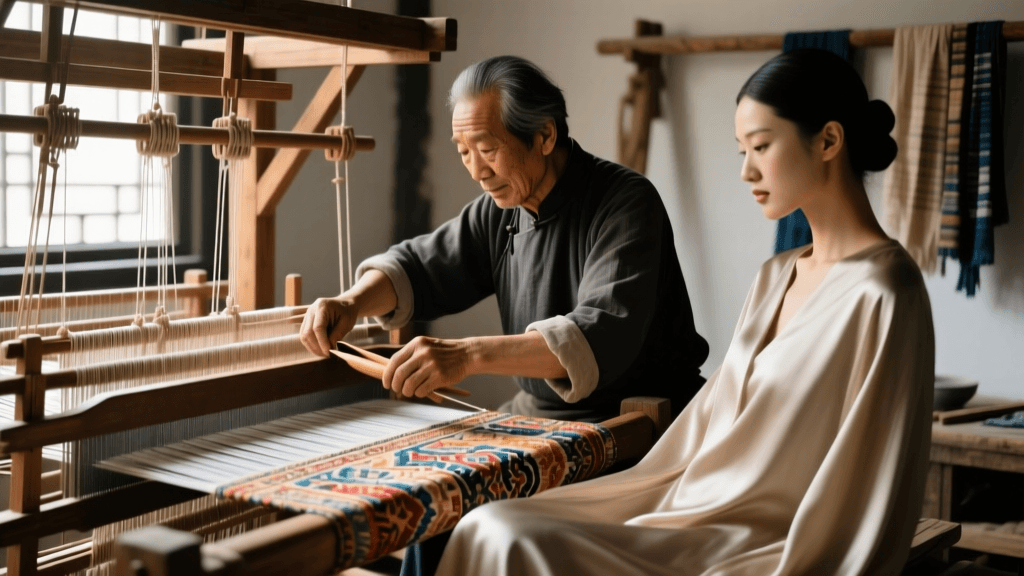
The Hualou, or traditional Chinese drawloom, is a towering wooden apparatus that represents one of the most complex mechanical inventions of the ancient world. Measuring up to six meters in length and four meters in height, this loom is specifically designed to weave intricate, large-scale brocades, such as the world-renowned Nanjing Yunjin (cloud brocade). Unlike modern automated Jacquard looms, the Hualou requires the synchronized labor of two artisans: the weaver, who sits at the front managing the shuttle and warp tension, and the 'drawboy' or pattern-puller, who sits elevated on a platform at the top of the loom.
The Original 'Computer Code': Pattern Cords
The genius of the Hualou lies in its pattern cord system, known as the hua ben. Long before the advent of binary code or punch cards, Chinese weavers programmed complex motifs using a network of knotted cords. The drawboy pulls specific bundles of these cords to lift precise warp threads, creating the 'shed' through which the weaver passes the shuttle. A single elaborate dragon or phoenix motif might require thousands of individual cord pulls. In 2026, heritage preservationists at institutions like the China National Silk Museum are utilizing 3D scanning and AI-assisted mapping to digitally archive these physical cord setups, ensuring that if a master weaver's physical rigging is ever lost, the 'code' can be accurately reconstructed.
Warp Tension and Material Integration
Weaving on a Hualou is a physically demanding task. The warp threads, often made of tightly twisted mulberry silk, must be kept under immense, uniform tension. Weavers in 2026 are increasingly integrating unconventional, sustainable materials into the warp and weft, such as lotus fiber and recycled metallic threads, blending ancient tensioning techniques with modern eco-conscious material science. The integration of real gold leaf, silver threads, and even peacock feather filaments into the weft is what gives Nanjing Yunjin brocade its legendary, shimmering status on the UNESCO Intangible Cultural Heritage list.
Kesi (Cut Silk) Tapestry: The Pinnacle of Patience
While the Hualou is celebrated for its mechanical complexity, Kesi (literally 'cut silk') is revered for its painstaking manual artistry. Kesi is a slit-tapestry weave characterized by the principle of tong jing duan wei—the warp threads pass continuously through the entire fabric, but the colored weft threads are cut and turned back whenever a color boundary is reached. This technique leaves tiny, vertical slits between adjacent color blocks, which, when held up to the light, resemble the precise cuts of a carving knife. This optical illusion gives Kesi its name and its ethereal, sculptural quality.
The Bobbin Shuttle Technique
Instead of a single wide shuttle, a Kesi weaver uses dozens of small, boat-shaped bobbins, each wound with a different color of dyed silk. The weaver manually interlocks the weft threads at the color boundaries to prevent the slits from tearing the fabric apart. A single square foot of high-density Kesi can require tens of thousands of bobbin passes and take several weeks to complete. In 2026, master Kesi artisans are collaborating with contemporary jewelers to weave micro-pearls and faceted gemstones directly into the silk weft, creating hybrid textile-jewelry pieces that command astronomical prices at international design weeks.
Comparison of China's Three Great Brocades
To fully appreciate the output of these ancient looms, one must understand the distinct regional brocades they produce. Below is a comparative guide to China's 'Three Great Brocades,' updated with 2026 market insights for collectors and designers.
| Brocade Type | Origin | Primary Loom | Distinctive Feature | 2026 Market Price (Per Meter) |
|---|---|---|---|---|
| Shu Brocade | Chengdu | Multi-heddle Loom | Geometric patterns, durable warp-faced weave, vibrant colors | $150 - $300 |
| Song Brocade | Suzhou | Drawloom | Soft texture, intricate continuous motifs, elegant sheen | $400 - $600 |
| Yunjin Brocade | Nanjing | Hualou Drawloom | Peacock feather and gold thread integration, imperial motifs | $800 - $1,500 |
Integrating Ancient Weaves into 2026 Xin Zhongshi Fashion
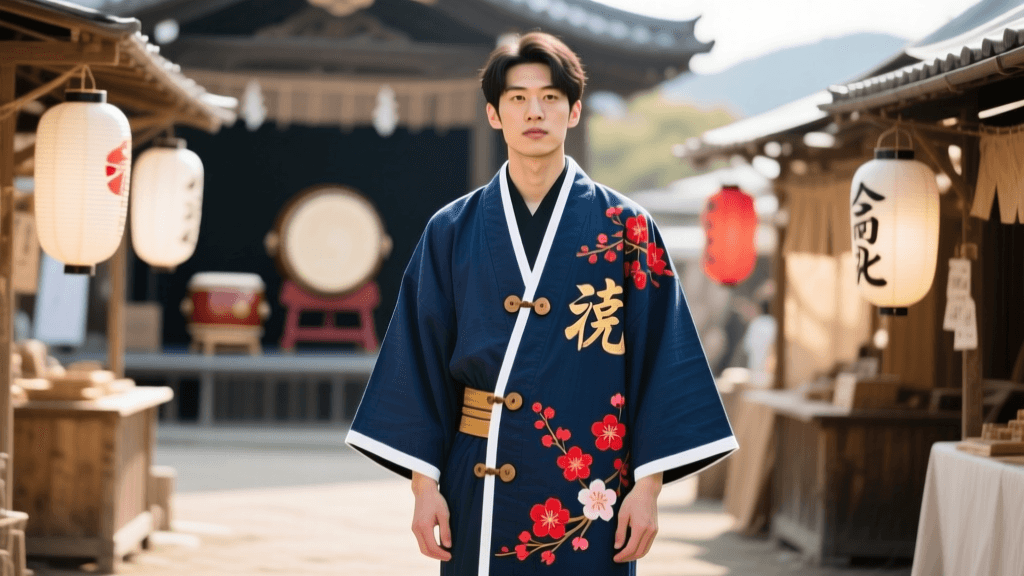
The Xin Zhongshi movement of 2026 is defined by its refusal to treat traditional garments as mere costumes. Instead, designers are deconstructing ancient weaves and applying them to modern, architectural silhouettes. A prominent trend this year involves using rigid, heavily structured Shu brocade for tailored, oversized blazers, providing a stark, modern contrast to the fabric's ancient origins. Meanwhile, delicate Kesi panels are being inset into sheer organza evening gowns, allowing the 'carved' slits of the tapestry to interact dynamically with light and skin. For designers looking to source authentic, hand-loomed yardage, partnering directly with state-sponsored artisan cooperatives in Zhejiang and Jiangsu provinces ensures fair compensation for weavers and guarantees the absence of mechanized imitations.
Where to Study and Experience Traditional Looms Today
For textile enthusiasts, historians, and fashion students, witnessing the rhythmic clack of the wooden beater and the physical exertion of the drawboy is an essential pilgrimage. The high-speed rail networks of 2026 make the 'Silk Weaving Heritage Trail' more accessible than ever, connecting Shanghai, Suzhou, and Nanjing in under two hours.
Nanjing Brocade Museum
The Nanjing Brocade Museum remains the premier destination for observing the Hualou in action. The museum's Intangible Heritage Wing features daily live demonstrations by master weavers. Visitors in 2026 can also participate in immersive, multi-day workshops where they learn to thread the heddles and read basic pattern cords, offering a tactile understanding of ancient textile engineering.
Suzhou Silk Museum and Kesi Studios
In Suzhou, the epicenter of traditional Chinese sericulture and silk craftsmanship, boutique Kesi studios offer intimate viewing experiences. Unlike the massive brocade looms, Kesi frames are smaller and often situated in quiet, garden-adjacent studios. Travelers are advised to book private studio visits at least three months in advance, as the 2026 surge in heritage tourism has made these exclusive sessions highly sought after.
Conclusion
The survival and evolution of the Hualou drawloom and Kesi tapestry techniques are testaments to the enduring power of human craftsmanship. As we navigate the highly digitized fashion landscape of 2026, these ancient looms remind us that true luxury is measured not just in the rarity of materials, but in the irreplaceable human time, mechanical ingenuity, and cultural memory woven into every single thread.