Kimono Storage Preservation & Archival Methods for 2026
Introduction to Kimono Preservation in 2026
The preservation of traditional Japanese garments, particularly vintage and antique silk kimonos, requires a meticulous balance of historical respect and modern conservation science. As of 2026, the intersection of traditional Japanese storage practices and contemporary archival standards has created a comprehensive framework for collectors, curators, and enthusiasts. Silk is a delicate protein fiber that is highly susceptible to environmental degradation, including acid migration, light exposure, fluctuating humidity, and pest infestations. Whether you are safeguarding a Meiji-era uchikake (wedding kimono) or a vibrant Taisho-era haori, implementing rigorous preservation protocols is essential to ensure these textile masterpieces survive for future generations.
The Shift from Traditional Tansu to Archival Vaults
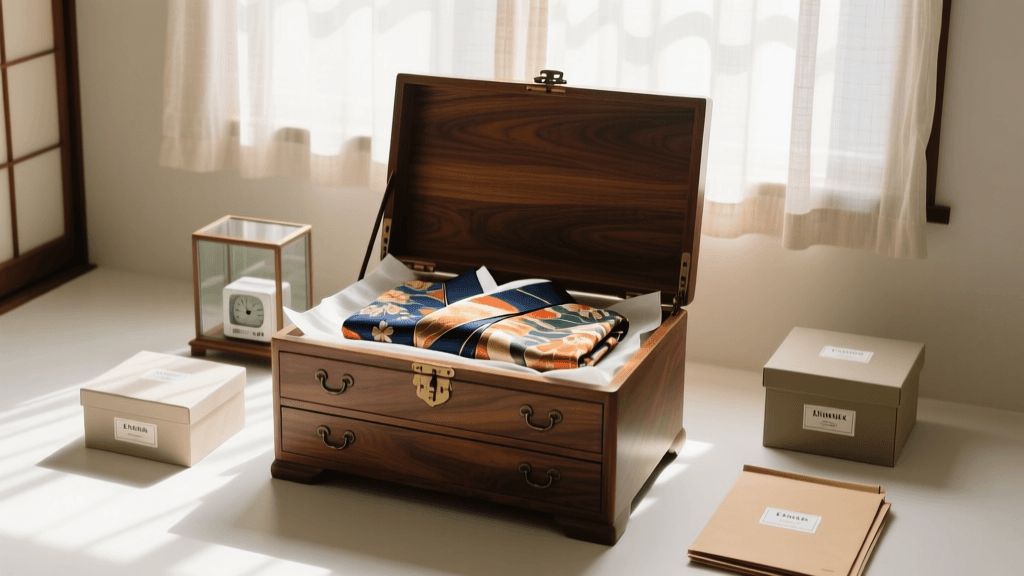
Historically, kimonos were stored in tansu, traditional Japanese wooden chests crafted from Paulownia (kiri) wood. Paulownia is naturally lightweight, fire-resistant, and possesses an incredible ability to expand and contract with humidity changes, effectively sealing out moisture during Japan's humid summers and preventing excessive dryness in the winter. However, in 2026, modern indoor environments with central HVAC systems have altered the ambient climate, making traditional wooden chests alone insufficient for long-term archival preservation.
Today's best practice involves a hybrid approach. Collectors utilize the tansu as a secondary outer shell for light and dust protection, while the kimonos themselves are wrapped in unbuffered acid-free materials and placed inside inert, archival-grade corrugated boxes. This dual-layer system provides the aesthetic and historical reverence of traditional Japanese furniture while guaranteeing the chemical stability demanded by modern textile conservators.
Essential Archival Materials for Silk
When selecting materials for kimono storage, understanding the chemical nature of silk is paramount. Silk is a protein fiber, much like human hair or wool. Therefore, it requires unbuffered acid-free tissue paper. Buffered tissue contains an alkaline reserve (usually calcium carbonate) designed to neutralize acids in plant-based cellulose fibers like cotton or linen. However, this alkaline reserve can cause severe chemical degradation and yellowing in protein-based fibers over time.
2026 Kimono Storage Material Comparison
| Material | Purpose | Pros | Cons | 2026 Est. Cost |
|---|---|---|---|---|
| Paulownia Tansu | Outer Storage Shell | Natural humidity buffering, pest-resistant, historically accurate | Expensive, heavy, requires periodic maintenance | $2,500 - $8,500 |
| Unbuffered Acid-Free Tissue | Wrapping & Interleaving | Prevents acid migration, softens folds, safe for protein fibers | Must be replaced every 2-3 years as it absorbs ambient pollutants | $45 per 100 sheets |
| Archival Corrugated Box | Primary Enclosure | Blocks light, provides structural support, prevents crushing | Bulky, requires significant shelf space | $65 - $130 per box |
| IoT Hygrothermograph | Environmental Monitoring | Real-time smartphone alerts for temp/RH fluctuations | Requires Wi-Fi setup and periodic battery replacements | $150 - $350 |
| Silicone Release Paper | Interleaving Metallic Threads | Prevents surihaku (gold leaf) from adhering to opposite fabric | Specialty item, higher cost per sheet | $85 per 50 sheets |
Climate Control and Environmental Monitoring
The physical environment is the most critical factor in textile preservation. According to the Canadian Conservation Institute, maintaining a stable relative humidity (RH) between 45% and 50% is critical for preventing the embrittlement of historic silk fibers. Fluctuations in humidity cause the fibers to swell and contract, leading to micro-tears, especially in garments featuring metallic threads or dense embroidery which react differently to moisture than the silk base.
Temperature should be kept as cool and stable as possible, ideally around 18°C (65°F). In 2026, the integration of IoT (Internet of Things) micro-sensors has revolutionized how private collectors monitor these environments. Small, wireless Bluetooth and Wi-Fi enabled hygrothermographs can be placed directly inside storage closets or tansu drawers, sending instant push notifications to a smartphone if the RH drops below 40% or spikes above 60%, allowing for immediate intervention before mold or desiccation can occur.
Step-by-Step Tatami Folding and Wrapping Techniques
The way a kimono is folded dictates its structural longevity. The traditional tatami-datami folding method is designed to follow the natural seams of the garment, minimizing stress on the woven threads. However, folding inherently creates creases, and over decades, silk will split along these fold lines due to gravity and tension.
- Padding the Folds: Before executing the final folds, roll small 'sausages' of unbuffered acid-free tissue paper and place them inside every fold line. This creates a gentle curve rather than a hard crease, distributing the stress across a wider area of the fabric.
- Handling Shibori: For kimonos featuring shibori (three-dimensional tie-dye), folding is strongly discouraged as it will crush the intricate textured knots. These garments should be rolled around acid-free archival tubes, padded with tissue, and covered with a cotton muslin dust cover.
- Protecting Surihaku: Garments with surihaku (metallic leaf application) or heavy metallic embroidery must be interleaved with silicone release paper or specialized glassine. If folded directly against itself, the metallic adhesives can soften over time and permanently bond to the opposite side of the silk.
Pest Management Without Toxic Chemicals
Webbing clothes moths and carpet beetles are the natural enemies of silk and wool. Historically, collectors relied on chemical fumigants like naphthalene or paradichlorobenzene (mothballs). In 2026, museum conservators universally condemn the use of these chemicals. Not only do they pose severe health risks to humans, but the off-gassing creates acidic compounds that chemically burn silk and cause irreversible black tarnishing on silver and gold metallic threads.
The National Park Service Museum Handbook advocates for Integrated Pest Management (IPM) and non-chemical eradication methods. If an infestation is suspected, the safest and most effective treatment is the anoxic (oxygen deprivation) method or deep freezing. To freeze a kimono, it must be sealed in an airtight polyethylene bag with a desiccant to prevent condensation, and placed in a chest freezer at -20°C for a minimum of 72 hours. Afterward, it must be thawed slowly at room temperature while still sealed to prevent moisture shock. Regular vacuuming of the storage area and the use of pheromone traps for monitoring are the best preventive measures.
Digital Collection Management and RFID Tracking
As collections grow, physical preservation must be paired with robust digital cataloging. Constantly unboxing and handling kimonos to check their condition exposes them to light, oils from human skin, and physical stress. In 2026, advanced collectors and institutions utilize passive UHF RFID (Ultra-High Frequency Radio Frequency Identification) tags specifically designed for textile integration.
These tags, encased in inert, flexible silicone, can be loosely stitched into the eri (collar) or tied to the himo (tying cords) using unbleached cotton thread. When paired with collection management software, a simple sweep of a handheld RFID reader allows curators to audit their entire vault in minutes without ever opening a single archival box. The digital database tracks the garment's provenance, condition reports, high-resolution photography, and the date of its last tissue-paper replacement, ensuring a proactive rather than reactive approach to preservation.
Conclusion
Kimono storage and preservation in 2026 is a discipline that honors the past while embracing the future. By transitioning from purely traditional storage to a scientifically backed archival methodology, collectors can halt the march of time on these delicate silk canvases. Investing in unbuffered acid-free materials, maintaining rigorous climate control, and adopting non-toxic pest management strategies ensures that the vibrant colors, intricate weaves, and profound cultural narratives of Japanese garments remain intact for centuries to come.