Theatrical Kimono: Kabuki, Noh & Bunraku Costumes 2026
The Art of Shozoku: Beyond Everyday Kimono
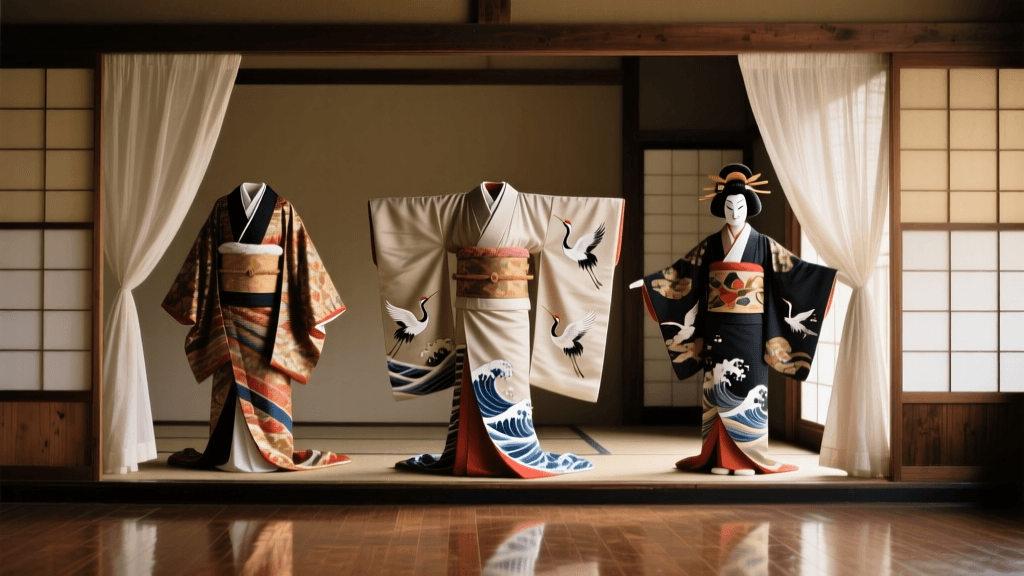
When discussing traditional Japanese garments, the everyday kimono often takes center stage. However, the true zenith of Japanese textile artistry is found in shozoku—the magnificent theatrical costumes worn in Kabuki, Noh, and Bunraku. As we explore the cultural landscape in 2026, these garments remain not just relics of the Edo period, but living, breathing components of performance art that dictate movement, convey deep psychological symbolism, and require unparalleled craftsmanship. Unlike standard kimono, which are tailored to flatter the individual wearer's physique, theatrical kimono are engineered to transform the human body into a larger-than-life archetype, whether it be a vengeful spirit, a noble samurai, or a tragic heroine.
The creation of these garments relies on the historic Nishijin textile district in Kyoto, where master weavers and dyers continue to utilize techniques that date back centuries. In 2026, the intersection of heritage preservation and modern archival technology has brought new global attention to these masterpieces, allowing international audiences to appreciate the intricate threads that hold Japan's classical theater together.
Kabuki Shozoku: Spectacle, Weight, and the Hikinuki
Kabuki theater is renowned for its visual extravagance, and its costumes, known as isho or shozoku, reflect this maximalist philosophy. A single Kabuki kimono can weigh upwards of 20 kilograms (44 pounds), heavily embroidered with gold and silver threads, and padded to give the actor a commanding, superhuman silhouette. The sheer weight of the costume forces the actor into the grounded, dramatic postures characteristic of Kabuki's mie (striking a pose).
One of the most thrilling aspects of Kabuki costuming is the hikinuki (pulling out) technique. This is a rapid, on-stage costume change where stage assistants (kuroko) pull specific basting threads, causing the outer kimono to instantly fall away and reveal a completely different costume underneath. This technique visually represents a sudden shift in a character's psychological state or social status. According to Shochiku's official Kabuki portal, the precision required for a flawless hikinuki demands months of rehearsal between the actor and the dressing masters (kokata), ensuring that not a single thread snags during the live 2026 performance seasons.
Color and pattern in Kabuki are strictly codified. For instance, a kimono featuring a prominent kumadori (stylized makeup) matching motif indicates a heroic, passionate character, while intricate spiderweb or snake-scale patterns woven into the silk instantly signal a villainous or demonic entity to the audience.
Noh Shozoku: The Embodiment of Yugen and Spiritual Weight
If Kabuki is the theater of spectacle, Noh is the theater of subtlety and spiritual depth. Noh costumes are designed to embody the aesthetic principle of yugen—a profound, mysterious sense of the beauty of the universe. The garments are less about realistic representation and more about suggesting the essence of a character, whether human, demon, or deity.
The most iconic Noh garment is the karaori, a thick, heavily brocaded silk robe with a stiff, structured silhouette. The karaori is so rigid that it acts almost like a shell around the actor. This rigidity is intentional; it restricts the actor's natural movements, compelling them to use the suriashi (sliding step) and highly stylized, slow gestures that define Noh. The Japan Arts Council National Noh Theatre notes that the subtle tilt of a karaori sleeve is enough to convey profound weeping or sorrow to an audience seated meters away.
Another essential garment is the choken, a lightweight, unlined silk robe with long, flowing sleeves worn by female characters or celestial beings. Unlike the heavy karaori, the choken catches the air and the stage lighting, creating an ethereal, floating effect as the actor dances. In 2026, contemporary Noh performances have increasingly utilized restored Edo-period choken garments, treated with advanced, non-invasive UV-blocking sprays to protect the fragile 300-year-old dyes from modern stage lighting.
Bunraku Costumes: Engineering Kimono for Puppetry
Bunraku, Japan's traditional puppet theater, presents a unique challenge for kimono construction. The puppets are approximately two-thirds the size of a human and are operated by three puppeteers working in perfect unison. The kimono must be constructed not just for visual beauty, but for mechanical functionality. As recognized by the UNESCO Intangible Cultural Heritage registry, Bunraku is a highly complex art form where the costume acts as the literal skin of the puppet.
The main puppeteer (omozukai) controls the head and the right arm, inserting their hand directly into the kimono's right sleeve. The left-arm puppeteer (hidarizukai) and the leg puppeteer (ashizukai) must manipulate their respective parts through the fabric without disrupting the drape of the silk. To facilitate this, Bunraku kimono are tailored with specific internal slits, hidden ties, and weighted hems. The weighting is crucial; it ensures that when the puppet sits or kneels, the kimono falls and pools exactly as a real silk garment would on a human body, maintaining the illusion of life.
Furthermore, the collars of Bunraku kimono are often stuffed with cotton or paper to maintain a perfect, rigid V-shape at the nape of the neck, a hallmark of traditional Japanese beauty that would otherwise collapse without a human neck to support it.
Comparative Analysis: The Three Theatrical Traditions
Understanding the distinct requirements of each theatrical form highlights the versatility of the kimono as a performance tool. Below is a structured comparison of the costume characteristics across Japan's three classical theaters in the 2026 performance landscape.
| Feature | Kabuki Shozoku | Noh Shozoku | Bunraku Costumes |
|---|---|---|---|
| Primary Material | Heavy silk crepe, thick brocade, extensive metallic thread | Stiff silk brocade (karaori), lightweight unlined silk (choken) | Medium-weight silk, internally weighted hems, cotton stuffing |
| Average Weight | 10 kg to 20+ kg (extremely heavy) | 5 kg to 12 kg (structured and rigid) | 2 kg to 4 kg (scaled for 2/3 size puppets) |
| Movement Impact | Forces grounded, wide stances; enables rapid on-stage changes | Restricts natural gait; enforces sliding steps (suriashi) | Must allow three separate puppeteers to manipulate limbs invisibly |
| Key Symbolism | Color and pattern denote moral alignment and emotional state | Texture and layering denote spiritual rank and age | Silhouette and drape create the illusion of human biology |
2026 Preservation: Nishijin Weavers and Climate Archiving
The survival of these magnificent garments relies entirely on the artisans of Kyoto's Nishijin district and the archival teams at Japan's national theaters. In 2026, the preservation of theatrical kimono has entered a new era. With the increasing frequency of extreme humidity fluctuations due to shifting global climate patterns, traditional wooden storage chests (tansu) are no longer sufficient on their own.
Modern theatrical costume departments now employ micro-climate archival rooms. These spaces maintain a strict 50% relative humidity and a temperature of 20°C (68°F) to prevent the silk proteins from degrading and the metallic threads from oxidizing. Furthermore, 2026 has seen the integration of AI-assisted pattern mapping. When a 200-year-old Kabuki kimono suffers irreversible thread loss, conservators use high-resolution multispectral imaging to map the original dye penetrations, allowing Nishijin weavers to recreate the exact historical pattern for replica garments used in rigorous touring schedules, while the originals remain safely archived.
Your 2026 Guide to Experiencing Theatrical Kimono
For textile enthusiasts and cultural travelers visiting Japan in 2026, witnessing these garments in action is an unforgettable experience. Here is how you can integrate theatrical kimono viewing into your itinerary:
- Kabukiza Theatre (Tokyo): Book a single-act ticket (hitomaku-mi) to experience the visual shock of a live hikinuki change. The Kabukiza Gallery, located on the 5th floor, frequently rotates exhibits featuring the heavy, embroidered uchikake worn by onnagata (male actors playing female roles).
- National Noh Theatre (Tokyo): Visit the exhibition hall on the 1st floor, which is free to the public. Here, you can view the intricate karaori robes up close, observing the raised brocade patterns that are invisible from the audience seating.
- National Bunraku Theatre (Osaka): Attend a performance and pay close attention to the hems of the puppet kimono. The backstage tours, available on select weekends in 2026, offer a rare glimpse into the kokata (dressing room) where the complex internal rigging of the puppet garments is prepared.
"The theatrical kimono is not merely worn; it is inhabited. It dictates the breath, the step, and the soul of the character, bridging the gap between the mortal actor and the immortal archetype." — Master Costumer at the Shochiku Wardrobe Department.
Whether you are studying the structural engineering of Bunraku silk, the spiritual weight of Noh brocade, or the explosive color of Kabuki crepe, the theatrical kimono remains one of Asia's most profound sartorial achievements. By understanding the mechanics and symbolism of shozoku, your appreciation for these classical arts will deepen immensely, revealing the hidden threads that weave Japan's cultural heritage together.