Top Chinese Fashion Creators Reshaping Hanfu Trends in 2026
The New Vanguard of Chinese Fashion Journalism
The landscape of Asian traditional fashion journalism has undergone a seismic shift over the last decade, transitioning from the glossy pages of print magazines to the hyper-visual, algorithm-driven feeds of digital content creators. In 2026, the term 'fashion journalism' in China is virtually synonymous with the independent bloggers, textile historians, and digital stylists who dominate platforms like Xiaohongshu (Little Red Book) and Bilibili. These creators are not merely showcasing outfits; they are conducting rigorous sartorial research, reviving ancient weaving techniques, and dictating the global narrative surrounding traditional Chinese garments.
For global enthusiasts, researchers, and designers, understanding this digital ecosystem is no longer optional—it is essential. The modern 'Guochao' (national trend) movement has matured far beyond its early stages of simple aesthetic appreciation. Today, it is a sophisticated intersection of historical accuracy, sustainable textile production, and modern streetwear styling. According to cultural market analyses frequently covered by Jing Daily, the consumer demand for historically accurate, high-quality traditional garments has forced creators to adopt journalistic rigor, effectively turning social media influencers into the new editors-in-chief of Chinese fashion.
Three Dominant Creator Archetypes in 2026
To navigate the vast ocean of Chinese fashion content, it is crucial to understand the distinct archetypes of creators driving the conversation. The digital journalism space for traditional garments is currently led by three main categories of influencers, each offering a unique lens on heritage clothing.
1. The Textile Historian and Archivist
These creators operate primarily on Bilibili, producing long-form, documentary-style video essays that rival academic publications. In 2026, the focus has shifted heavily toward the microscopic analysis of historical textiles. Historians use digital microscopy and AI-assisted pattern reconstruction to analyze surviving Ming Dynasty Mamianqun (horse-face skirts) and Song Dynasty Beizi (outer jackets). They publish detailed breakdowns of loom mechanics, thread counts, and the socio-economic status associated with specific motifs. Their 'articles' are often 40-minute video journals that serve as primary educational resources for independent tailors and global fashion students.
2. The Urban Neo-Traditional Stylist
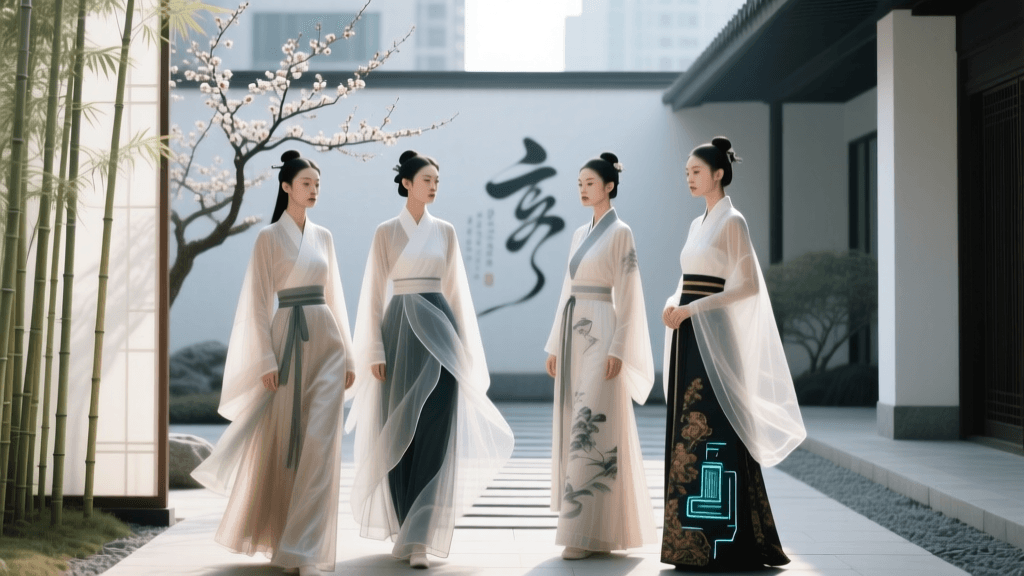
Found predominantly on Xiaohongshu, these digital journalists focus on the practical integration of traditional garments into a modern, cosmopolitan wardrobe. The Mamianqun, once reserved for special occasions or niche hobbyists, has been fully cemented as a staple of corporate and streetwear fashion in major cities like Shanghai and Chengdu. Stylists publish daily editorial lookbooks, reviewing the drape, weight, and versatility of skirts from various independent Taobao ateliers. They provide critical reviews of garment construction, exposing poor stitching or historically inaccurate motifs, thereby holding brands accountable and elevating industry standards.
3. The Eco-Artisan and Dyeing Advocate
With the global fashion industry facing intense scrutiny over sustainability, a new wave of Chinese creators is focusing on ancient, eco-friendly dyeing methods. Xiangyunsha (gambiered Canton gauze), a luxurious silk dyed with yam juice and river mud, has become a massive focal point in 2026. Artisan bloggers travel to Guangdong province to document the grueling, sun-dependent process of creating this 'soft gold.' Their content bridges the gap between environmental journalism and fashion, educating consumers on why authentic, naturally dyed garments command premium prices and how to care for them without relying on harsh, modern chemicals.
Platform Breakdown: Where to Find the Best Content
Understanding where to look is just as important as knowing who to follow. The Chinese digital landscape is highly segmented, with each platform serving a different facet of fashion journalism. Below is a comparison of the primary platforms used by traditional fashion creators in 2026.
| Platform | Primary Content Format | Best Used For | Algorithm Focus in 2026 |
|---|---|---|---|
| Xiaohongshu (RED) | High-res photo carousels, short styling vlogs, brand reviews | Outfit inspiration, atelier reviews, purchasing guides, modern styling | Favors high-aesthetic editorials, detailed text reviews, and niche community engagement |
| Bilibili | Long-form documentary videos, video essays, livestream Q&As | Deep historical research, textile analysis, loom mechanics, cultural context | Rewards watch time, academic rigor, high production value, and community bullet comments |
| Douyin | Fast-paced transitions, viral trends, behind-the-scenes manufacturing | Discovering new independent brands, viral styling hacks, quick textile showcases | Prioritizes viral hooks, visual transformations, and direct e-commerce integration |
| Zhihu | Long-form text essays, Q&A threads, academic debates | Historical fact-checking, debating dynasty-specific accuracy, textile sourcing | Highlights authoritative voices, detailed citations, and structured, logical arguments |
Actionable Guide: Search Terms and Navigation
For international researchers, designers, and enthusiasts who do not speak fluent Mandarin, navigating these platforms can be daunting. However, utilizing specific, highly targeted search terms will unlock a treasure trove of digital fashion journalism. In 2026, the most valuable content is often hidden behind precise terminology rather than broad hashtags.
As reported by global fashion watchdogs like the Business of Fashion, the cross-pollination of Eastern heritage techniques and Western design relies heavily on open-source digital research. To tap into this, save the following search terms for your Xiaohongshu and Bilibili explorations:
- 汉服 (Hanfu): The broad term for traditional Han Chinese clothing. Use this as a base, but always pair it with specific dynasty names for better results.
- 马面裙 (Mamianqun): The horse-face skirt. Essential for researching pleating techniques, waistband construction, and modern corporate styling.
- 香云纱 (Xiangyunsha): Gambiered Canton gauze. The premier search term for eco-friendly, naturally dyed luxury silk.
- 宋制 (Song Zhi): Song Dynasty style. Highly popular in 2026 for its minimalist, elegant, and lightweight aesthetics, perfect for summer layering.
- 明制 (Ming Zhi): Ming Dynasty style. The gold standard for structured, formal, and heavily brocaded winter garments.
- 国风穿搭 (Guochao Chuan Da): National trend styling. Use this to find creators who mix traditional pieces with modern streetwear, denim, or tailored blazers.
- 文物复原 (Wenwu Fuyuan): Artifact restoration. The ultimate keyword for finding creators who meticulously recreate garments based on museum pieces and archaeological finds.
The Impact of Digital Journalism on Global Runways
The rigorous documentation and critique provided by these Chinese digital journalists have not gone unnoticed by the global fashion establishment. In the 2026 runway season, several European and American luxury houses have faced intense scrutiny—and subsequent course correction—thanks to the rapid, well-researched takedowns published by Xiaohongshu historians when cultural motifs were misattributed or poorly executed.
This dynamic has fostered a new era of collaborative respect. International designers now frequently consult Bilibili textile archivists and Xiaohongshu styling influencers to ensure cultural authenticity and technical accuracy before launching Asia-inspired collections. The dialogue has shifted from one-way appropriation to a two-way exchange, heavily mediated by digital creators who act as both gatekeepers and cultural ambassadors.
Furthermore, independent Chinese ateliers, armed with the viral marketing power of these bloggers, are now exporting directly to global consumers. A detailed review from a top-tier Xiaohongshu creator can sell out a limited run of hand-loomed Song brocade jackets in minutes, with shipping routes extending to Paris, New York, and London. The Sixth Tone has frequently highlighted how this digital-to-physical pipeline is revitalizing rural weaving communities, providing them with a direct economic lifeline to the global luxury market.
Conclusion: Embracing the Creator-Led Renaissance
The era of passive consumption of traditional Asian fashion is over. In 2026, engaging with Chinese fashion journalism means diving into the comments sections of Bilibili documentaries, saving detailed sizing charts from Xiaohongshu carousels, and learning the intricate vocabulary of ancient looms. The content creators leading this charge are doing more than just curating beautiful images; they are actively preserving, translating, and evolving a millennia-old sartorial heritage for the modern world. For anyone serious about Asian traditions, following these digital journalists is the most vital step in understanding the past, present, and future of the garment.