Izumo no Okuni: The Kabuki Founder's Bold Kimono Legacy
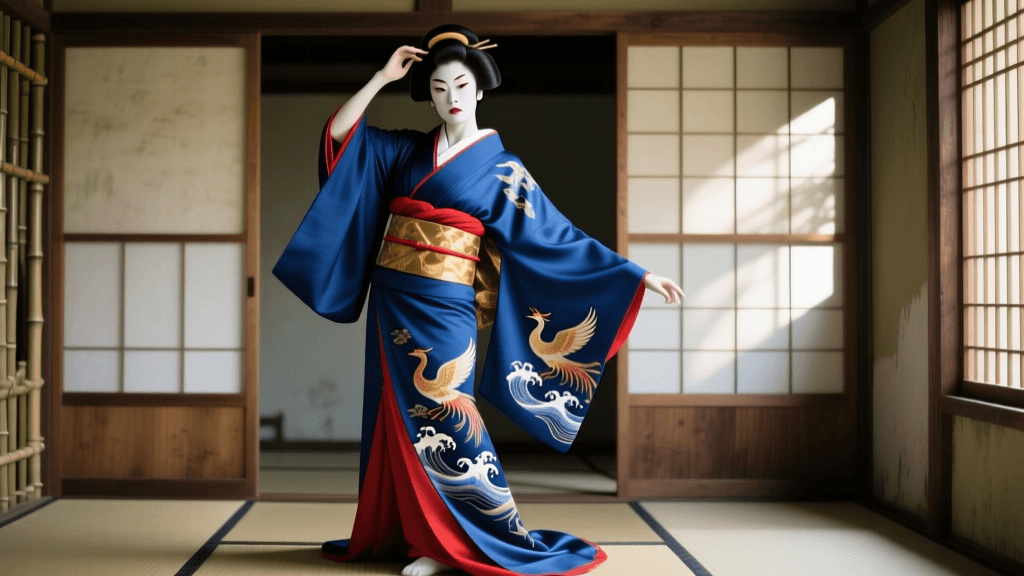
Izumo no Okuni: The Rebel Who Revolutionized Japanese Fashion
In the rich tapestry of Japanese garment history, few figures cast as long, vibrant, and disruptive a shadow as Izumo no Okuni. In 1603, on the dry riverbeds of Kyoto's Kamo River, Okuni began performing a new, avant-garde style of dance and theater that would eventually be known as Kabuki. However, Okuni's legacy is not merely theatrical; she was a profound fashion icon whose subversion of gender norms and bold textile choices permanently altered the trajectory of traditional Japanese clothing. For modern enthusiasts of the kimono and yukata, understanding Okuni’s sartorial rebellion offers a masterclass in breaking the rules of kitsuke (kimono dressing) with intention, artistry, and historical reverence.
The Sartorial Rebellion: Cross-Dressing and the Birth of a Cultural Phenomenon
During the transition from the Muromachi to the Edo period, the kosode (the direct predecessor to the modern kimono) was undergoing a radical evolution. While aristocratic women were bound by the rigid, multi-layered jūnihitoe traditions of the Heian court, and samurai men adhered to strict formal kamishimo dress codes, Okuni shattered these boundaries. She famously performed in the attire of a man, wearing a vibrant, patterned kosode paired with a hakama (pleated trousers) and carrying a sword at her hip.
This was not merely a theatrical costume; it was a profound social statement. By adopting masculine garments and pairing them with unapologetically feminine grace, Okuni created a visual tension that captivated the citizens of Kyoto. Her flamboyant use of color, mismatched patterns, and bold accessories stood in stark contrast to the subdued aesthetics dictated by the ruling classes. Safflower red (benibana), an incredibly expensive dye at the time, was utilized boldly in her wardrobe, signaling both wealth and audacity. According to Britannica's comprehensive history of Kabuki, Okuni's performances were so wildly popular—and her fashion so scandalously alluring—that the Tokugawa shogunate eventually banned women from performing in 1629, citing the disruption of public morals. Yet, the fashion legacy she ignited could not be extinguished. The subsequent onnagata (male actors specializing in female roles) inherited and exaggerated Okuni's original fusion of masculine and feminine styling, embedding her rebellious DNA into the very fabric of Japanese textile arts.
Decoding Okuni’s Style: Key Elements of the Original Kabuki Wardrobe
To translate Okuni's 17th-century rebellion into modern, actionable kitsuke, we must first isolate the core components of her wardrobe. The table below breaks down her historical styling choices and provides practical methods for integrating them into a contemporary traditional wardrobe.
| Historical Element (1600s) | Okuni's Original Use | Modern Kimono Adaptation | Practical Styling Tip |
|---|---|---|---|
| Men's Kosode | Worn as outerwear with bold, mismatched patterns | Vintage men's kimono or haori worn by women | Pair a subdued women's komon with a loud, vintage men's haori for striking contrast. |
| Hakama | Worn for mobility and masculine flair | Pleated andon-bakama or umanori-bakama | Opt for a 100cm length hakama in silk or linen for casual, Hakone-style streetwear. |
| Sword (Katana) | Tucked into the obi as a symbol of rebellion | Decorative kanzashi or bold obi-jime | Use a thick, braided obi-jime (approx. 1.5cm diameter) in a contrasting metallic hue. |
| Asymmetrical Layering | Exposed linings and off-center collars | Deep eri (collar) pulls and contrasting han-eri | Pull the back collar down 8-10cm to expose the nape, framing a bold, embroidered han-eri. |
Actionable Guide: Incorporating Okuni’s Bold Legacy into Modern Kitsuke
Embracing the spirit of Izumo no Okuni does not mean wearing a literal stage costume. Instead, it involves adopting her philosophy of contrast, volume, and gender-fluid layering. Here is how you can practically apply her legacy to your traditional garment collection today.
1. The Statement Haori and Masculine Layering
One of the most accessible ways to channel Okuni’s cross-gender styling is by incorporating a vintage men’s haori (jacket) into a women’s kimono ensemble. Men’s vintage haori often feature extraordinary, hidden linings (ura-gi) and bold, large-scale crests (mon) that differ vastly from the smaller, more delicate patterns found on women's garments.
- Measurements: When sourcing a men's haori to wear over a women's kimono, look for a sleeve drop (sode-take) of 49-52cm to ensure it does not overwhelm your frame. The body width (yuki) should ideally be between 64-68cm.
- Styling: Wear the haori open to showcase the obi beneath, or tie it with a braided haori-himo in a contrasting color like deep crimson or gold.
- Sourcing & Costs: Authentic vintage silk men's haori can be sourced from specialized online kimono dealers or Kyoto thrift markets for approximately $80 to $250, depending on the condition and the presence of hand-painted yuzen linings.
2. Bold, Asymmetrical Obi Knots
The standard taiko-musubi (drum knot) is elegant, but it is inherently symmetrical and sedate. Okuni’s spirit demands volume, asymmetry, and theatricality. To honor her legacy, experiment with the kabuki-musubi or a modified fukura-suzume (plump sparrow) knot.
Okuni’s fashion was never about blending in; it was about commanding the space. Your obi knot should act as the architectural centerpiece of your ensemble, projecting confidence and movement.
Use a fukuro obi (standard width 30-31cm, length 420-450cm) featuring metallic threads or large, dramatic motifs. When tying the knot, intentionally leave the obi-jime (decorative cord) slightly off-center, or use a obi-dome (brooch) featuring theatrical motifs like fans, masks, or cranes. This subtle asymmetry mimics the dynamic, frozen-in-motion poses of early Kabuki dancers.
3. Sourcing and Styling Vintage 'Kabuki' Textiles
The Tokugawa shogunate’s sumptuary laws frequently attempted to ban commoners from wearing lavish textiles, pushing the merchant classes to develop hidden luxuries. To capture the rebellious essence of Okuni’s era, seek out garments featuring e-gasuri (picture kasuri) or shibori tie-dyeing techniques that utilize high-contrast color palettes—such as deep indigo paired with stark white, or vibrant safflower red against black.
According to the Victoria and Albert Museum's extensive research on kimono history, the Edo period saw an explosion of textile innovation driven by the very urbanites who idolized Kabuki actors and early fashion icons like Okuni. When purchasing vintage pieces, look for the term kabuki-gara (Kabuki pattern), which often features dramatic, slanted compositions and bold, graphic lines that defy the traditional horizontal or vertical symmetry of older aristocratic garments.
4. Footwear and Accessories: Grounding the Rebellion
Okuni’s performances required intense physical mobility, meaning her footwear had to be both practical and striking. While aristocratic women wore delicate, elevated geta or soft zori, Okuni favored sturdy, flat-soled zori with thick, highly visible hanao (thong straps). To incorporate this into modern styling, avoid overly delicate, pastel footwear. Instead, source vintage or custom zori featuring thick, velvet or brocade hanao in deep burgundy, black, or gold. Pair these with crisp, white tabi socks (ideally with a reinforced sole if you plan on walking outdoors). The stark contrast of the white tabi against a dark, bold zori strap anchors the outfit and provides a nod to the practical, grounded reality of Okuni’s riverbed performances.
Preserving the Legacy: Where to Study Historical Kabuki Garments
To truly master the nuances of Okuni’s fashion legacy, one must study the surviving garments and woodblock prints of the Edo period. While Okuni’s original 1603 garments have not survived the centuries, the theatrical costumes she inspired are meticulously preserved in several world-class institutions.
- The Kyoto Costume Museum: A vital resource for understanding the transition from the kosode to the modern kimono. Their exhibitions frequently highlight the impact of urban merchant culture and theatrical fashion on everyday dress.
- The Victoria and Albert Museum (V&A): Their digital and physical archives contain exceptional examples of Edo-period kosode that showcase the bold, asymmetrical patterns popularized by early Kabuki trendsetters.
- Japan Guide’s Kabuki Resources: For those looking to experience the living legacy of Okuni’s fashion, attending a performance at the Kabukiza Theatre in Tokyo is essential. As noted in Japan Guide's overview of Kabuki theater, the costumes used in modern performances are direct descendants of the flamboyant, rule-breaking styles that Okuni pioneered on the riverbeds of Kyoto.
Conclusion: The Enduring Power of Sartorial Rebellion
Izumo no Okuni was more than a performer; she was a visionary who used traditional Japanese garments as a canvas for social and artistic rebellion. By blending masculine silhouettes with feminine grace, and by embracing bold, asymmetrical textiles, she laid the groundwork for centuries of Japanese fashion evolution. Today, when you tie an asymmetrical obi, drape a vintage men’s haori over your shoulders, or select a kimono with a daring, graphic pattern, you are not merely getting dressed. You are participating in a 400-year-old tradition of sartorial defiance, keeping the vibrant, unapologetic spirit of Kabuki’s founder alive in the modern world.