Chinese Fashion History Research: Top 2026 Digital Tools
The Evolution of Chinese Fashion History Education in 2026
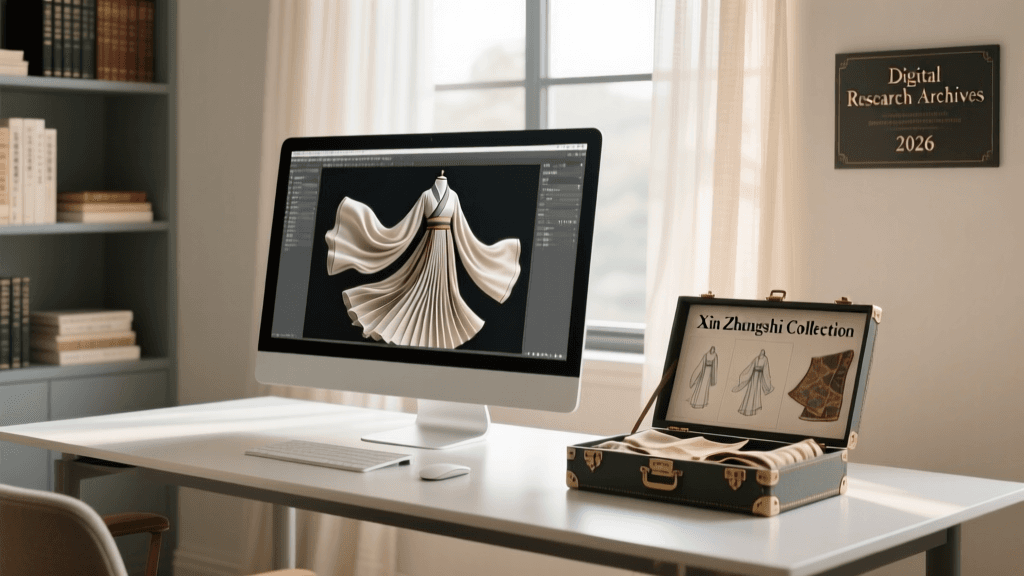
The academic study of Chinese fashion history has undergone a radical transformation by 2026. No longer confined to dusty basement archives and static museum displays, university curricula and independent research now heavily integrate digital twins, AI-assisted fragment reconstruction, and advanced physics-based fabric simulation. For scholars, textile conservators, and design students, understanding the evolution of garments—from the flowing Shenyi of the Han Dynasty to the intricate structural tailoring of the Ming and Qing eras—requires a mastery of both historical context and cutting-edge digital tools.
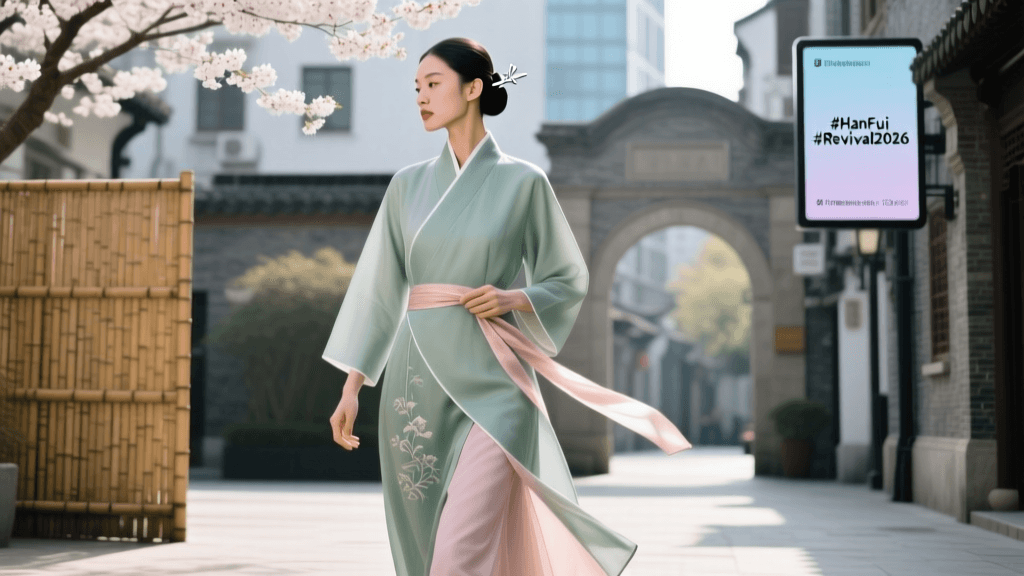
In 2026, the intersection of traditional textile craftsmanship and modern technology is most evident in the academic analysis of the Xin Zhongshi (New Chinese Style) movement. Researchers are moving beyond superficial motif extraction, utilizing 3D drape analysis to understand how historical flat-pattern drafting techniques, such as lianxiu (one-piece sleeve construction) and jiaoling youren (cross-collar right-over-left), interact with the human body in motion. This comprehensive guide outlines the premier digital archives, simulation software, and physical handling protocols essential for serious Chinese fashion history research today.
Premier Digital Archives for Textile Researchers
Access to high-resolution, metadata-rich digital archives is the foundation of modern fashion history education. In 2026, several global institutions have set the gold standard for open-access Asian textile collections, providing researchers with downloadable 3D scans, multispectral imaging of dyes, and exhaustive weave-structure documentation.
The Metropolitan Museum of Art Open Access
The Metropolitan Museum of Art's Open Access initiative remains an indispensable resource for academics studying Chinese textiles. The Met's database allows researchers to filter specifically by dynasty, material (such as kesi silk tapestry or embroidered satin), and garment type. For academic papers, the ability to download high-resolution TIFF files of Qing Dynasty court robes (chaofu) enables deep analysis of thread count, gold leaf application techniques, and structural seam placements without risking damage to the physical artifacts.
Victoria and Albert Museum Asian Collections
The Victoria and Albert Museum's Asian Collections offer unparalleled insight into the Silk Road exchanges that influenced Chinese weaving techniques. The V&A's digital portal in 2026 features advanced CIDOC CRM metadata tagging, allowing students to trace the migration of specific weaving structures, like weft-faced compound twills, from Central Asia into the Tang Dynasty weaving hubs of Chang'an. The museum's detailed conservation reports, available alongside the digital artifacts, provide crucial data on historical dye degradation and tensile strength loss in excavated silks.
3D Fabric Drape Analysis in Historical Reconstruction
One of the most significant academic advancements in 2026 is the use of 3D fashion design software to simulate the drape, weight, and movement of historical Chinese fabrics. Traditional Western pattern-making relies heavily on darts and bias cuts to contour the body, whereas historical Chinese tailoring relies on the natural drape of the fabric, governed by gravity and the textile's inherent physical properties. Software platforms equipped with advanced physics engines allow researchers to input specific fabric parameters—such as bending stiffness, shear modulus, and surface friction—to digitally reconstruct how a Song Dynasty Luo (gauze) robe would behave compared to a heavy Ming Dynasty Yunjin brocade.
Comparing Simulation Software for Historical Textiles
When selecting a platform for academic research and historical reconstruction, scholars must consider the software's ability to handle complex, multi-layered traditional garments and specialized weave structures. Below is a comparison of the top platforms utilized in university fashion history programs in 2026.
| Software Platform | Best Suited Historical Fabric | Drape Accuracy Score (2026) | Academic License Cost |
|---|---|---|---|
| CLO3D Education | Song Dynasty Luo (Gauze) & Lightweight Silks | 94% | $50 / semester |
| Marvelous Designer | Ming Dynasty Yunjin Brocade & Heavy Outerwear | 89% | $39 / month |
| Browzwear (VStitcher) | Qing Dynasty Silk Satin & Lined Garments | 91% | Institutional Tier |
CLO Virtual Fashion's Educational Program is particularly favored in 2026 for its precise handling of Xiangyunsha (gambiered Canton gauze). Because Xiangyunsha is coated in river mud and dyed with薯莨 (shoulang yam) juice, it possesses a unique, paper-like stiffness and a distinct acoustic rustle. CLO3D's custom physics sliders allow researchers to replicate this specific shear rigidity, providing accurate visualizations of how the fabric stands away from the body in traditional Lingnan-region garments.
Academic Methodologies for the Xin Zhongshi Movement
The Xin Zhongshi (New Chinese Style) movement has dominated Asian fashion design weeks and retail markets, but its academic study requires a rigorous, critical methodology. In university seminars, educators challenge students to look past the mere application of traditional embroidery or pankou (knotted buttons) to modern silhouettes. True academic engagement with Xin Zhongshi involves the structural translation of historical tailoring into contemporary, sustainable wardrobes.
Researchers in 2026 are heavily focused on the zero-waste potential of traditional Chinese flat-pattern cutting. Historical garments were designed to minimize fabric waste, utilizing geometric puzzle-piece layouts on narrow silk loom widths (typically 50-60 cm). By digitizing these ancient cutting layouts and running them through modern nesting algorithms, academic researchers are proving that Ming Dynasty tailoring logic can significantly reduce textile waste in modern mass production. Furthermore, the study of mianfu (ceremonial cotton/silk padding) layering techniques is being adapted to create sustainable, biodegradable winter insulation alternatives for modern Xin Zhongshi outerwear, replacing synthetic poly-fills.
Best Practices for Physical Archive Access and Handling
Despite the proliferation of digital tools, primary research often necessitates physical examination of excavated textiles and museum-held garments. Accessing physical archives in 2026 requires strict adherence to international conservation protocols, particularly when dealing with fragile, protein-based silk fibers that are highly susceptible to photochemical degradation and mechanical stress.
Environmental and Handling Protocols
When booking research appointments at institutions like the China National Silk Museum in Hangzhou or university-affiliated ethnic costume museums, scholars must prepare for rigorous environmental controls. Physical study rooms are maintained at a strict 50% Relative Humidity (RH) with a tolerance of ± 5%, and ambient temperatures are kept at 18°C to 20°C (64°F to 68°F) to prevent the embrittlement of historical sericin (silk gum).
- Lighting Limits: Illumination in study areas is capped at 50 lux for dyed silks and embroideries to prevent irreversible chromophore fading. Researchers must bring specialized, low-lumen, UV-filtered inspection lights if detailed weave analysis is required.
- Handling Gloves vs. Bare Hands: While nitrile gloves are standard for handling metal artifacts or heavily soiled textiles, leading conservationists in 2026 recommend meticulously cleaned, dry, bare hands for handling fragile, excavated silk. Cotton or nitrile gloves can reduce tactile sensitivity, increasing the risk of catching a fingernail or glove fiber on a degraded warp thread, potentially causing a catastrophic tear.
- Support Materials: Garments must never be lifted by the shoulders or seams. Researchers must use acid-free, unbuffered tissue paper to support the entirety of the garment's weight from underneath, utilizing Tyvek slings for transport across the study table.
Conclusion: The Future of Textile Scholarship
The landscape of Chinese fashion history education in 2026 is a dynamic synthesis of ancient craftsmanship and futuristic technology. By leveraging open-access digital archives, mastering 3D fabric drape analysis, and applying rigorous structural critiques to the Xin Zhongshi movement, today's scholars are preserving and recontextualizing Asian sartorial heritage. Whether simulating the flow of Tang Dynasty silks in a virtual physics engine or carefully examining the gold-wrapped weft threads of a Ming Dynasty dragon robe under low-lux lighting, the modern researcher is equipped with an unprecedented toolkit to decode the intricate language of traditional Asian garments.