Chinese Fashion Blogs Reviving Mamianqun & Plant Dyes 2026
The Evolution of Chinese Fashion Journalism in 2026
In 2026, the landscape of Chinese fashion journalism has undergone a profound transformation. The era of superficial street-style snaps and fleeting luxury unboxings has largely given way to deep-dive cultural heritage journalism. On platforms like Xiaohongshu (Little Red Book), Bilibili, and Weibo, a new generation of content creators is acting as digital archivists, textile historians, and investigative journalists. These creators are spearheading the 'New Chinese Style' (Xin Zhong Shi) movement, moving beyond mere aesthetics to interrogate the supply chains, historical accuracy, and ecological impact of traditional garments. At the forefront of this digital renaissance is the meticulous documentation and revival of the Mamianqun (horse-face skirt) and the ancient art of eco-friendly plant dyeing.
Modern Chinese fashion blogs in 2026 operate much like independent editorial houses. Creators are traveling to remote villages in Guizhou and Yunnan to document master dyers, visiting silk weaving mills in Suzhou, and publishing long-form video essays that break down the structural engineering of Ming Dynasty garments. This shift reflects a broader consumer demand for transparency, sustainability, and cultural rootedness in an increasingly fast-paced digital world.
The Mamianqun Phenomenon: From Historical Artifact to 2026 Runway
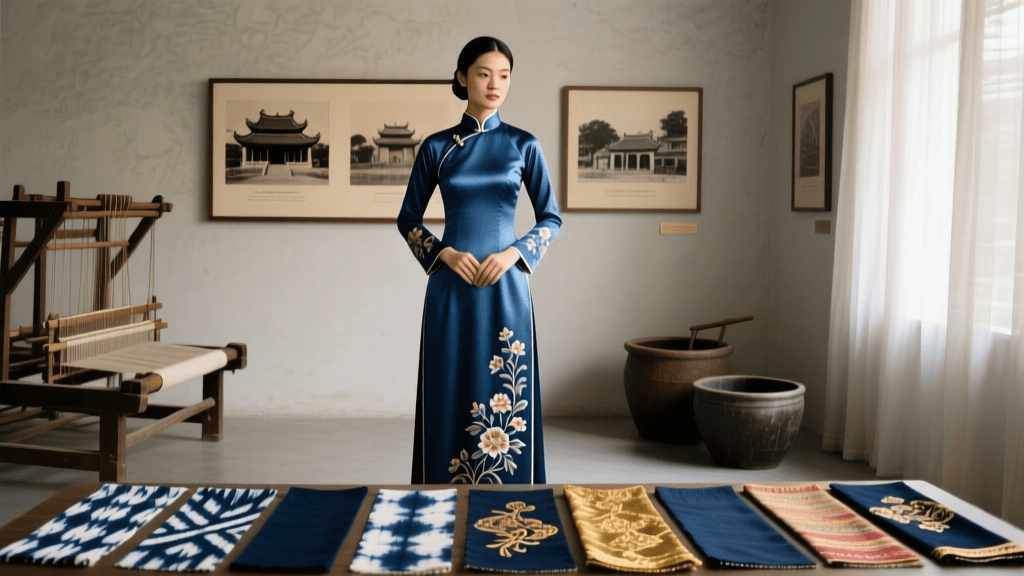
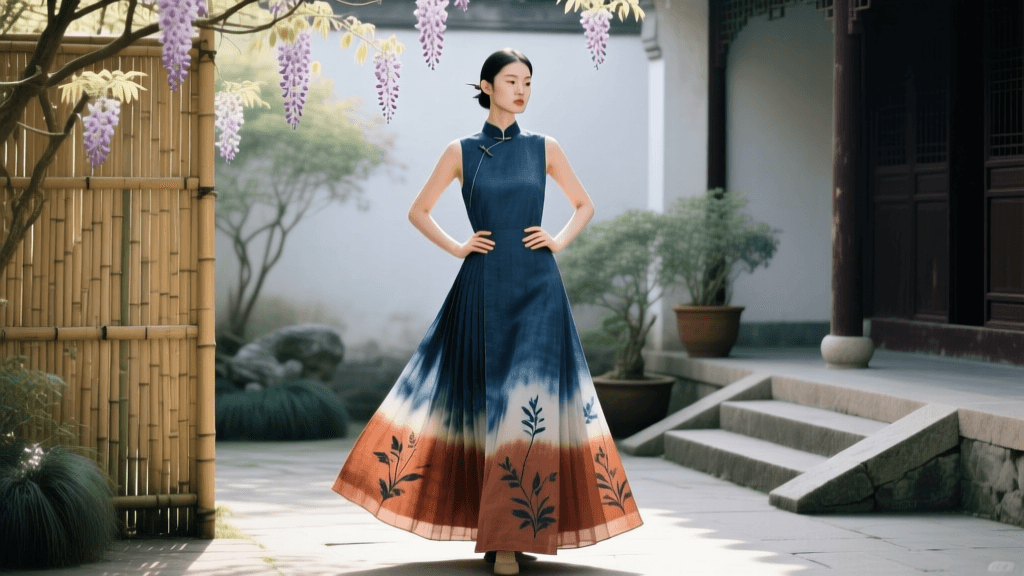
The Mamianqun, characterized by its flat front and back panels (the 'horse faces') and intricate side pleats, has become the undisputed centerpiece of Chinese heritage fashion journalism. In 2026, top fashion bloggers are not just styling these skirts; they are deconstructing them. Investigative fashion creators are publishing detailed guides on how to identify authentic Zhuanghua (brocade) weaving techniques versus mass-printed imitations, educating millions of followers on the nuances of traditional textile production.
Deconstructing the Pleats: A Creator’s Guide
A hallmark of high-quality Chinese fashion journalism in 2026 is the inclusion of precise, actionable tailoring data. Leading Bilibili creators specializing in Hanfu and Mamianqun construction frequently publish structural blueprints for their audiences. According to historical textile analysis, such as the resources provided by The Metropolitan Museum of Art's Heilbrunn Timeline of Art History, the structural integrity of traditional Chinese garments relies heavily on precise geometric folding and fabric weight distribution.
Top creators advise their followers and aspiring designers to adhere to specific measurements for modern wearability while respecting historical silhouettes:
- Waistband Width: Authentic 2026 reproductions maintain a traditional wide waistband, typically measuring between 6 to 8 centimeters, which provides crucial structural support and prevents the heavy brocade from sagging.
- Pleat Depth and Spacing: Investigative bloggers emphasize that standard side pleats should be precisely 2 to 3 centimeters deep. Creators often use digital calipers in their video reviews to measure the pleat consistency of various commercial brands, calling out manufacturers who use heat-pressed synthetic pleats that degrade after washing.
- Fabric Weight (GSM):strong> Fashion journalists categorize Mamianqun fabrics by season. Summer skirts utilize lightweight Tencel-blend or thin silk at 80-120 g/m², while winter ceremonial skirts require heavy jacquard or wool-blends at 250-300 g/m² to ensure the pleats swing dynamically without losing their shape.
Documenting Eco-Friendly Plant Dyes: The Creator’s Expedition
Parallel to the structural revival of the Mamianqun is the intense journalistic focus on natural, eco-friendly dyeing methods. In 2026, sustainability is a core pillar of Chinese fashion blogging. Content creators are producing high-definition, cinematic documentaries that follow the lifecycle of plant-based dyes, from the harvesting of raw botanicals to the complex fermentation processes required to fix the colors to silk and hemp fibers.
Indigo, Madder, and Gardenia in the Digital Age
The documentation of these natural dyes requires a blend of cultural appreciation and scientific rigor. Top Xiaohongshu creators specializing in eco-textiles frequently share the exact chemical parameters required for successful natural dyeing, elevating their blogs from simple lifestyle pages to educational resources. The sericulture and silk craftsmanship of China, recognized for its profound historical importance, is deeply intertwined with these dyeing techniques, as noted by UNESCO's Intangible Cultural Heritage list.
Leading eco-fashion journalists outline the following technical parameters for traditional plant dyeing in their 2026 guides:
- Indigo (Lan Cao): Creators document the fermentation of indigo leaves in alkaline vats. They emphasize that the vat must be maintained at a strict temperature of 25°C to 30°C, with a pH level carefully balanced between 9 and 11 using wood ash lye. Bloggers often use digital pH meters in their vlogs to demonstrate the precision required to achieve the coveted deep 'Qing' (cyan-blue) hue.
- Madder Root (Qian Cao): Used for rich reds and terracottas, madder requires a mordant to bind to silk fibers. Fashion journalism blogs detail the use of traditional alum (mingfan) mordanting, advising a ratio of 15% alum to the weight of the dry fabric, simmered at exactly 80°C for 45 minutes to prevent the silk proteins from denaturing.
- Gardenia (Zhi Zi): Prized for its vibrant, sunlit yellows, gardenia fruit extraction is highly sensitive to light. Creators warn their audiences that gardenia-dyed garments must be dried in deep shade and stored away from UV light, providing actionable care instructions that bridge historical knowledge with modern wardrobe maintenance.
2026 Content Creator Archetypes in Traditional Chinese Fashion
As the niche of heritage fashion journalism has matured, distinct creator archetypes have emerged on Chinese social platforms. Understanding these archetypes helps brands, researchers, and consumers navigate the wealth of information available in 2026.
| Creator Archetype | Primary Platform | Content Focus | Key 2026 Trend |
|---|---|---|---|
| The Archival Purist | Bilibili | Historical accuracy, museum-grade reproductions, pattern drafting. | Using 3D scanning and AI to reconstruct damaged Ming Dynasty textile patterns. |
| The Eco-Textile Journalist | Xiaohongshu | Supply chain transparency, natural dyes, sustainable silk farming. | On-the-ground investigations into the ethical treatment of sericulture workers. |
| The Modern Stylist | Weibo / Douyin | Integrating Mamianqun and Qipao into contemporary corporate and streetwear. | 'Micro-styling' videos showing how to pair heavy brocade skirts with minimalist tech-wear. |
Actionable Advice for Aspiring Heritage Fashion Bloggers
For those looking to enter the space of Chinese traditional fashion journalism in 2026, the barrier to entry is higher than ever. Audiences are highly educated and quick to spot historical inaccuracies or greenwashing. Success requires a commitment to rigorous research, ethical sourcing, and high-quality visual storytelling.
Sourcing Authentic Xiangyunsha for Editorial Shoots
Xiangyunsha (gambiered Cantonese silk) is one of the most highly sought-after and frequently counterfeited textiles in the 2026 market. Authentic Xiangyunsha is dyed using the juice of the薯莨 (shuliang) yam and coated with iron-rich mud from specific riverbeds in the Pearl River Delta. Aspiring journalists must know how to verify authenticity before featuring a garment.
Verification Checklist for Bloggers:
- The Sound Test: Authentic Xiangyunsha produces a distinct, crisp rustling sound (often described as 'the sound of wind in the bamboo') when walked in. Creators frequently use ASMR-style audio recording in their reviews to prove authenticity.
- The Mud-Coating Patina: True Xiangyunsha features a dual-tone effect. The side coated with river mud should exhibit a deep, lustrous black with a subtle, organic crackle pattern, while the reverse side remains a rich, earthy brown. Bloggers use macro-lenses to capture this crackle, which synthetic imitations fail to replicate.
- Odor Profiling: Genuine gambiered silk retains a very faint, earthy, and slightly medicinal scent, even after years of use. Investigative bloggers often include sensory descriptions in their long-form reviews to provide a holistic assessment of the textile.
Ethical Storytelling and Citing Historical Sources
In 2026, the most respected Chinese fashion blogs are those that transparently cite their sources. Whether referencing a specific Ming Dynasty tomb excavation report or interviewing a third-generation master weaver in Nanjing, ethical storytelling is paramount. Creators are increasingly partnering with university textile departments and local museums to ensure their content is historically sound. By bridging the gap between academic research and accessible digital media, these fashion journalists are not merely documenting a trend; they are actively preserving and evolving the living heritage of Asian traditions for a global, digitally-native audience.