Chinese Drawloom Weaving: Yunjin & Kesi Techniques for 2026
The Renaissance of the Chinese Drawloom in 2026
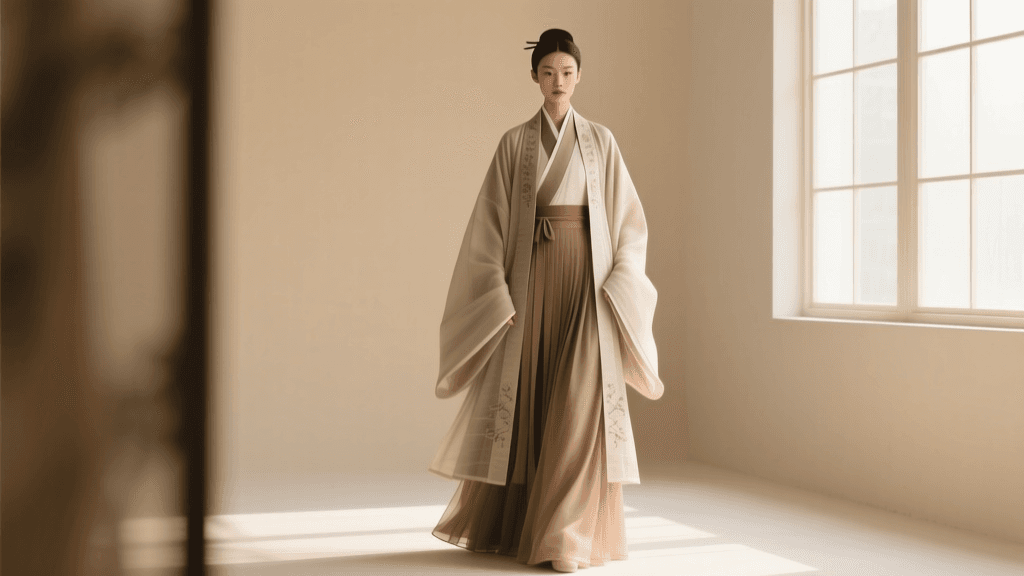
As the Xin Zhongshi (New Chinese Style) movement reaches new heights in 2026, the global fashion and interior design sectors are looking beyond surface-level motifs to the very structural foundations of Asian textile heritage. At the forefront of this renaissance is the revival of the Chinese drawloom, an ancient engineering marvel that birthed the world's most luxurious fabrics. Today, master weavers and contemporary designers are collaborating to bring Yunjin (Cloud Brocade) and Kesi (Cut Silk) out of museum archives and into modern, wearable art.
Unlike the rapid, automated power looms that dominate the 2026 fast-fashion market, traditional drawloom weaving remains a painstakingly slow, deeply meditative practice. According to the China National Silk Museum, the preservation of these ancient weaving techniques has seen a 40% increase in state and private funding over the last three years, driven by a new generation of consumers demanding authentic, sustainable, and culturally resonant luxury goods.
Anatomy of the Da Hua Loom: Engineering Marvel of Antiquity
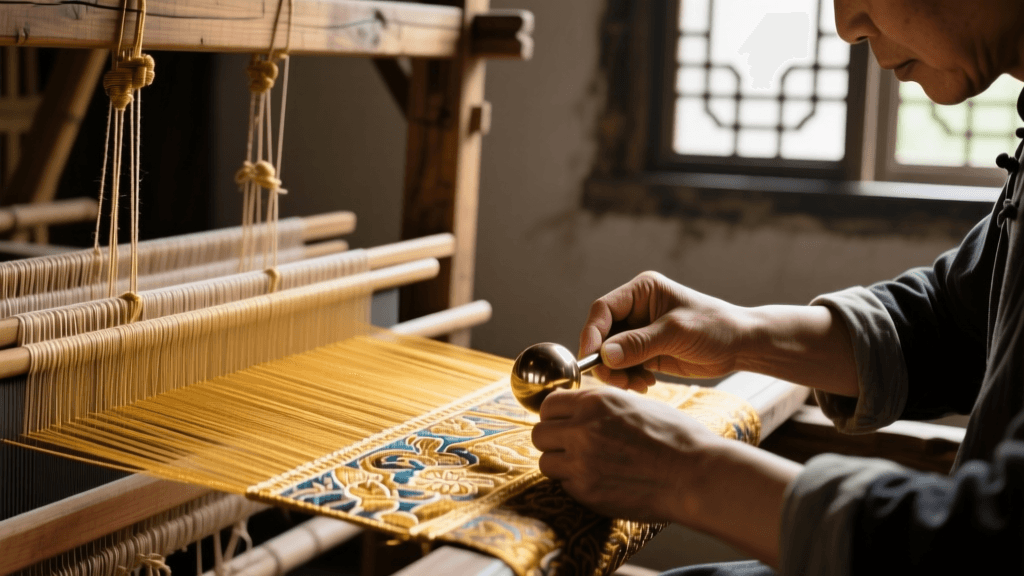
The traditional Chinese drawloom, known as the Da Hua Loom (大花楼机), is a massive wooden structure that often measures over four meters long and three meters high. It requires a two-person operation: the weaver, who sits at the front managing the shuttle and beaters, and the 'drawboy' (or drawgirl), who sits atop the loom's upper carriage, manually pulling the complex harness cords to create the intricate shed for the pattern.
In 2026, while some heritage workshops have integrated digital Jacquard mechanisms to assist the drawboy, purist artisans still rely on the traditional knot-cord memory system. This system, an ancient precursor to binary computer programming, uses thousands of individually tied cords to 'remember' complex patterns. The physical exertion and synchronization required between the two operators make the Da Hua Loom not just a tool, but a performative duet of human craftsmanship.
Yunjin (Cloud Brocade): Weaving the Sky
Originating in Nanjing over 1,600 years ago, Yunjin represents the pinnacle of Chinese brocade weaving. The name translates to 'Cloud Brocade,' a nod to its vibrant, sunset-like color palettes and the sheer lightness of the finished textile despite its heavy metallic threads. In 2026, authentic hand-woven Yunjin is exceptionally rare, with master weavers producing only five to six centimeters per day.
The hallmark of traditional Yunjin is the incorporation of precious materials. Artisans weave flattened gold leaf, silver threads, and even iridescent peacock feather filaments directly into the silk warp and weft. As highlighted by the UNESCO Intangible Cultural Heritage registry, the Nanjing Yunjin brocade technique requires over 140 distinct steps, from silk reeling to the final weaving, ensuring that every centimeter of fabric carries immense cultural weight.
Kesi (Cut Silk): The Slit Tapestry of Emperors
While Yunjin is a brocade, Kesi is a slit tapestry. The term 'Kesi' translates to 'cut silk,' referring to the visual effect created by the weaving technique. Unlike continuous weft brocades, Kesi weavers use small, individual wooden shuttles for each color block, turning the weft thread back on itself when it reaches the edge of a color area. This creates tiny, intentional slits between color fields, giving the fabric a carved, sculptural quality.
The Metropolitan Museum of Art notes that Kesi was historically favored for reproducing imperial paintings and calligraphy due to its ability to capture subtle gradients and fine brushstrokes. In 2026, Kesi is highly sought after for high-end Xin Zhongshi accessories, such as structured obi-style belts, ceremonial collars, and luxury handbag panels, where its reversible nature and structural integrity shine.
2026 Market Comparison: Yunjin, Kesi, and Songjin
For collectors, designers, and enthusiasts navigating the 2026 heritage textile market, understanding the distinctions between the 'Three Great Brocades' and tapestries is crucial. Below is a comparative analysis of these premier weaves based on current market conditions and technical specifications.
| Textile Type | Weaving Technique | Daily Output (Handloom) | 2026 Avg. Market Price (per sq. cm) | Primary Modern Application |
|---|---|---|---|---|
| Yunjin (Cloud Brocade) | Continuous weft, brocaded with metallic/peacock threads | 5 - 6 cm | $45 - $120 USD | Haute couture panels, luxury home decor |
| Kesi (Cut Silk) | Slit tapestry, discontinuous weft, fully reversible | 2 - 3 cm | $80 - $250 USD | Art pieces, high-end accessories, ceremonial wear |
| Songjin (Song Brocade) | Warp-faced compound weave, geometric/floral patterns | 10 - 15 cm | $15 - $40 USD | Full Xin Zhongshi garments, bookbinding, framing |
Authenticating Hand-Woven Textiles in the Modern Market
With the surge in demand for traditional Asian garments in 2026, the market has seen an influx of power-loom imitations marketed as 'hand-woven.' To ensure you are investing in genuine drawloom or tapestry textiles, apply these practical authentication methods:
- Examine the Reverse Side: Authentic Kesi will look nearly identical on both sides, with clean color transitions and visible slits. Power-loomed fakes will have a messy, web-like float of threads on the back.
- Check the Metallic Threads: Traditional Yunjin uses genuine gold leaf wrapped around a silk or cotton core. Modern fakes use synthetic metallic yarns (Lurex). Genuine gold thread will not tarnish and has a softer, more muted luster compared to the high-gloss shine of synthetic alternatives.
- Look for the 'Drawloom Mark': Hand-woven drawloom fabrics often feature microscopic irregularities in the beat density. A perfectly uniform warp and weft count across a large yardage is a strong indicator of computerized Jacquard power-loom production.
- Verify the Provenance: Reputable dealers in 2026 provide a certificate of authenticity detailing the artisan's name, the workshop location (e.g., Nanjing or Suzhou), and the exact number of weaving hours invested.
Preservation and Storage: Caring for Heritage Silks in 2026
Owning a piece of hand-woven Yunjin or Kesi is an investment in wearable history, but these organic textiles require meticulous care. In 2026, conservation science has advanced, yet the fundamental rules of silk preservation remain rooted in traditional wisdom.
- Climate Control: Maintain a stable environment with a relative humidity of 50-55% and a temperature around 68°F (20°C). Fluctuations cause the silk fibers to expand and contract, weakening the ancient weave structure.
- Light Exposure: UV radiation is the enemy of natural dyes and gold threads. Store garments in acid-free, unbleached cotton bags or archival-quality Tyvek enclosures. Never display Kesi tapestries in direct sunlight.
- Folding vs. Rolling: Heavy brocades like Yunjin should never be sharply folded, as the metallic threads can crease and permanently snap. Instead, roll the textile around an acid-free honeycomb paper tube, interleaving with unbuffered tissue paper to prevent friction.
- Pest Management: Avoid chemical mothballs, which can react with metallic threads and cause discoloration. Utilize natural alternatives like cedar blocks or dried lavender sachets, ensuring they do not directly touch the silk.
Integrating Heritage Weaves into Xin Zhongshi Design
The brilliance of the 2026 Xin Zhongshi movement lies in its restraint. Rather than crafting entire garments from heavy, expensive Yunjin or Kesi—which can overwhelm the wearer and restrict movement—contemporary designers use these ancient textiles as strategic accents.
Popular applications this year include Kesi mandarin collars on minimalist wool coats, Yunjin cuffs on tailored silk blouses, and Songjin sashes paired with modern wide-leg trousers. This approach not only makes the astronomical cost of hand-woven heritage fabrics more accessible but also creates a striking visual contrast between ancient opulence and modern, architectural silhouettes. By supporting traditional loom artisans through these thoughtful design integrations, the global fashion community ensures that the rhythmic clack of the Da Hua Loom will echo for generations to come.