Mastering the Chinese Drawloom: Yunjin Weaving Guide for 2026
The Enduring Legacy of the Chinese Drawloom in 2026
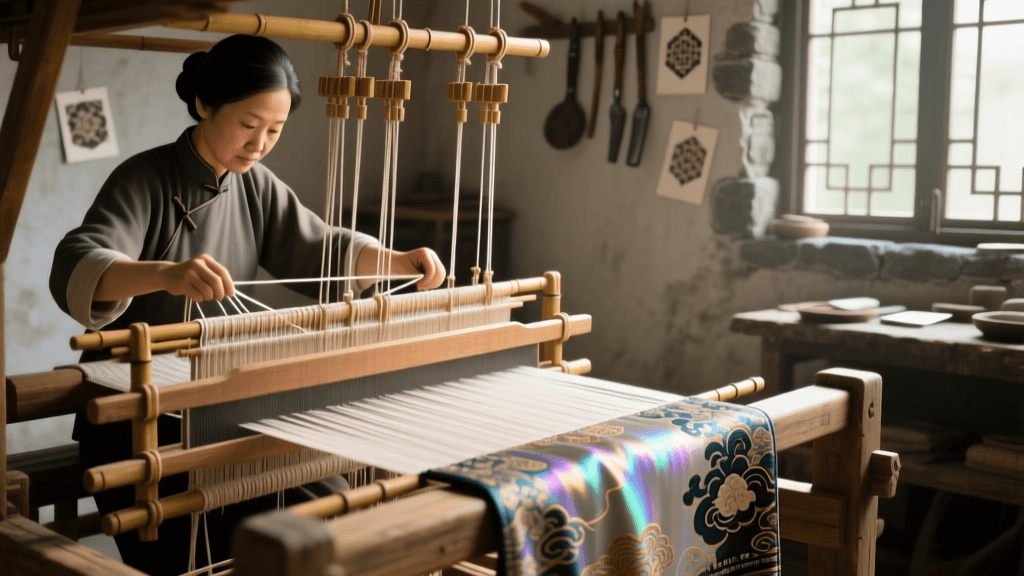
The history of Asian textiles is inextricably linked to the evolution of the loom, and few machines are as mechanically profound or historically significant as the traditional Chinese drawloom, known as the Da Hua Loom. For centuries, this towering wooden apparatus was the closely guarded engine of the Silk Road, producing complex, multi-colored figured silks that dazzled emperors and foreign dignitaries alike. Today, in 2026, we are witnessing a remarkable renaissance of these ancient weaving techniques. Driven by a global resurgence in heritage craftsmanship and supported by advanced digital preservation, contemporary textile artists and historians are returning to the drawloom to master the intricate art of Nanjing Yunjin, or "Cloud Brocade."
Unlike the Jacquard loom, which eventually mechanized pattern weaving in the West using punch cards, the traditional Chinese drawloom relies on a complex system of knotted cords and human memory. In 2026, the integration of 3D-scanned loom replicas and AI-assisted pattern drafting has made studying these ancient techniques more accessible than ever, allowing a new generation of weavers to bridge the gap between ancient Asian traditions and modern textile design.
Anatomy of the Traditional Da Hua Loom
To understand the genius of ancient Chinese weaving, one must first understand the sheer scale and mechanical complexity of the Da Hua Loom. A full-sized traditional drawloom is a massive structure, typically measuring over 5 meters in length and 4 meters in height. It requires a two-person operation: the weaver, who sits at the front managing the shuttle and beaters, and the "pull boy" (or draw apprentice), who sits atop the loom's elevated pattern tower, known as the Hualou.
The core components of the loom include:
- The Hualou (Pattern Tower): The upper section where the pattern cords are suspended. This is the "memory" of the loom, storing the intricate design in the form of a physical cord matrix.
- The Qu (Pattern Cords): Thousands of individually knotted cords that connect the pattern tower to the heddles below. Pulling a specific sequence of cords raises the exact warp threads needed for a single weft pass.
- The Zeng (Heddles): The ground heddles that manage the foundational weave structure (usually a plain or twill weave), operated by the weaver's foot treadles.
- The Quankou (Reed/Beater): Used to pack the weft threads tightly against the fell of the cloth, ensuring the dense, luxurious texture characteristic of Chinese brocades.
In 2026, heritage workshops in Nanjing and Suzhou have begun utilizing lightweight carbon-fiber composites for replacement heddle cords, reducing the physical strain on apprentices while maintaining the exact tension and acoustic feedback of traditional silk cords.
Nanjing Yunjin: The Pinnacle of Ancient Weaving
The most famous textile produced on the Da Hua Loom is Nanjing Yunjin, a brocade so exquisite it was historically reserved for imperial dragon robes. Recognized by UNESCO as an Intangible Cultural Heritage, Yunjin is celebrated for its "tongjing duanwei" technique—continuous warp and broken weft. This allows the weaver to introduce multiple colors and metallic threads in specific, localized areas of the fabric without carrying the unused yarns across the entire width of the loom.
According to the Metropolitan Museum of Art's Heilbrunn Timeline of Art History, the evolution of Chinese silk weaving reached its zenith during the Ming and Qing dynasties, where the structural integrity and visual depth of Yunjin represented the absolute peak of global textile manufacturing. A single inch of authentic Yunjin requires up to 140 weft passes, incorporating materials like spun gold, silver, and even peacock feather filaments. In 2026, master weavers still produce only about 5 to 6 centimeters of authentic Yunjin per day, making it one of the most labor-intensive and valuable textiles in the world.
The 2026 Market: Drawloom Replicas and Artisan Workshops
For modern enthusiasts, acquiring a full-sized, 5-meter antique drawloom is impractical. However, the 2026 market has responded with highly accurate, scaled-down desktop drawlooms and immersive workshop residencies. These tools allow students to understand the mechanics of the Hualou and practice the "broken weft" technique without requiring a dedicated warehouse space.
| Program / Equipment | Type | Scale / Duration | 2026 Estimated Cost (USD) | Best For |
|---|---|---|---|---|
| Suzhou Mini-Da Hua Desktop Loom | Hardware / Study Kit | 1:10 Scale (60cm wide) | $650 - $850 | Beginners learning cord-drafting mechanics |
| Nanjing Yunjin Intensive Residency | In-Person Workshop | 2-Week Masterclass | $3,400 (incl. materials) | Advanced weavers seeking imperial techniques |
| Digital Jacquard-to-Drawloom Adapter | Hybrid Tech Kit | Fits 4-shaft table looms | $1,250 | Modern artists blending digital and manual weaving |
| Heritage Silk & Peacock Thread Box | Material Sourcing Kit | 500g assorted luxury wefts | $420 | Practicing the "broken weft" tapestry technique |
Step-by-Step: Setting Up a Miniature Drawloom for Study
If you have acquired a desktop drawloom replica in 2026, setting it up requires patience and a deep understanding of warp tension. Here is a foundational guide to preparing your loom for a basic Yunjin-style study piece:
- Calculate Warp Density: Authentic Yunjin requires an incredibly dense warp, often exceeding 120 ends per inch (EPI). For a desktop study loom, scale this down to 40 EPI using a 20/2 spun silk to ensure the heddles do not jam.
- Drafting the Ground Heddles: Thread the warp through the lower Zeng heddles in a standard plain-weave draft (1, 2, 1, 2). This will form the structural "canvas" of your brocade.
- Tying the Pattern Cords (Qu): This is the most critical step. Map out a simple 10x10 geometric cloud motif on graph paper. For every square that requires a colored weft, tie a corresponding cord from your pattern tower down to the specific warp thread. In 2026, many students use open-source weaving software to generate the physical cord-tie-up maps before touching the loom.
- Preparing the Shuttles: Unlike standard weaving, Yunjin uses multiple small shuttles or bobbins, much like tapestry weaving. Load each bobbin with a different colored silk or metallic thread, ensuring they are weighted to maintain tension when dropped.
- The Weaving Sequence: The weaver steps on the treadle to open the ground shed. Simultaneously, the pattern cords are pulled (either by an assistant or a mechanical pulley system on modern desktop replicas) to open the pattern shed. The colored weft is passed only through the pattern area, then tightly beaten against the fell.
Sourcing Authentic Materials in 2026
The magic of Cloud Brocade lies in its materials. Historically, weavers used threads wrapped in real gold leaf. Today, the 2026 heritage textile market offers ethically sourced, historically accurate alternatives that capture the same luminous quality. When sourcing materials for your drawloom projects, look for the following:
- Long-Staple Mulberry Silk: Always source Grade 6A raw silk for your warp. The high tensile strength is non-negotiable when dealing with the immense friction of drawloom heddles.
- Modern Gold-Wrapped Threads: Authentic 2026 heritage suppliers in Hangzhou now offer polyester-core threads wrapped in micron-thin layers of genuine 24k gold foil, providing the historic gleam without the extreme fragility of antique paper-backed gold threads.
- Peacock Feather Filaments: Sustainably harvested peacock feather barbs, spun with a fine silk core, are now available through specialized Asian textile cooperatives online. These are used sparingly as supplementary wefts to create iridescent highlights in cloud and dragon motifs.
Preserving the Future of Ancient Weaving
The traditional Chinese drawloom is more than a tool; it is a physical manifestation of ancient mathematics, poetry, and art. As we navigate 2026, the fusion of digital preservation and hands-on artisan workshops ensures that the Da Hua Loom and the breathtaking art of Nanjing Yunjin will not be relegated to museum displays. Whether you are a historian studying the Silk Road exchanges, or a contemporary fashion designer looking to incorporate authentic Asian traditions into your work, mastering the mechanics of the drawloom offers a profound connection to the master weavers of the past. By investing in scaled study looms and supporting heritage silk cooperatives, today's textile community is keeping the intricate dance of the warp and weft alive for generations to come.