Chinese Couture on the Runway: Heritage Silhouettes and Sourcing
The Rise of Chinese Heritage in Haute Couture
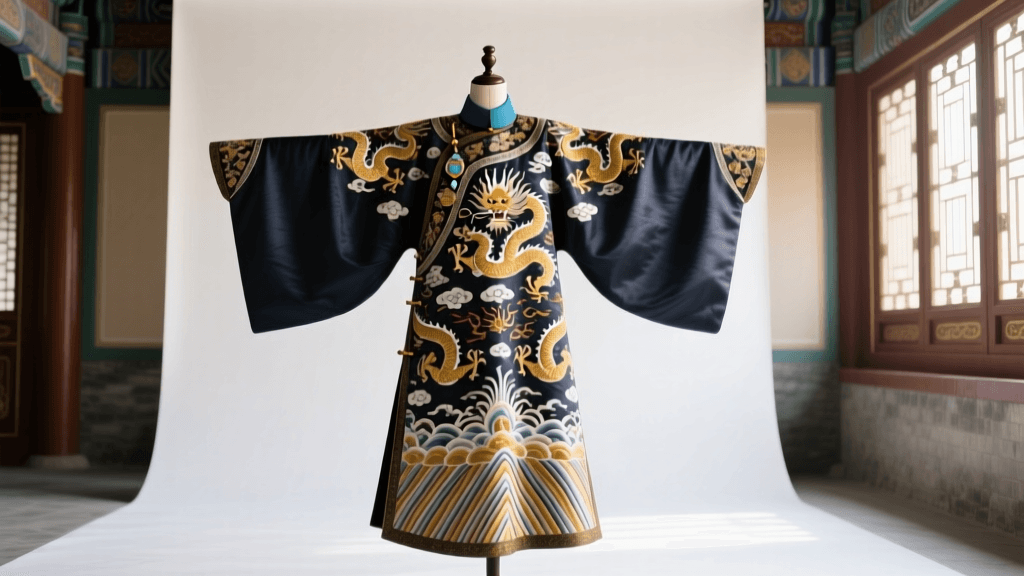
The intersection of traditional Chinese dress and Western haute couture has evolved from mere orientalist pastiche to a profound, structural dialogue. For decades, international runways relied on superficial motifs—slashed silks, mandarin collars, and dragon embroidery—often stripping them of their cultural and historical context. However, a seismic shift occurred, heavily catalyzed by landmark institutional showcases and the rise of Chinese couturiers on the global stage. As noted by The Metropolitan Museum of Art during its record-breaking 'China: Through the Looking Glass' exhibition, the integration of Chinese aesthetics into high fashion represents one of the most significant cross-cultural exchanges in modern sartorial history. Today, independent designers and major fashion houses alike are looking beyond surface-level embellishments, diving deep into the architectural silhouettes, textile engineering, and ancestral craftsmanship that define authentic Chinese garment-making.
For contemporary fashion designers, couturiers, and serious enthusiasts, translating these heritage elements into a modern runway collection requires more than just aesthetic appreciation; it demands a rigorous understanding of traditional pattern-making, material sourcing, and structural engineering. This guide provides actionable insights into integrating authentic Chinese couture techniques into modern high-fashion portfolios, complete with sourcing metrics and construction advice.
Key Traditional Elements Dominating the Runway
The Yunjian (Cloud Shoulder) Structure
The Yunjian, or cloud shoulder, is a detachable collar piece that historically draped over the shoulders of noblewomen and theatrical performers. In contemporary couture, the Yunjian has been reimagined as an architectural framing device for the face and décolletage. Unlike Western tailored shoulders that rely on padded set-in sleeves, the Yunjian creates volume through layered, radially cut panels that cascade outward.
Actionable Construction Advice: To adapt the Yunjian for a modern runway gown without it looking like a costume replica, designers should utilize a hidden structural base. Cut your foundational base from heavy-duty buckram or Pellon 71F Peltex interfacing. Draft the base with a 15-degree downward slope from the neck to the shoulder tip to ensure it hugs the clavicle rather than floating awkwardly. Overlay this base with bias-cut silk organza, which allows the edges to ripple organically while maintaining the structural integrity of the underlayer. Finish the outer edges with hand-rolled hems or delicate wire-thread piping to control the drape.
Su Xiu (Suzhou Embroidery) vs. French Beadwork
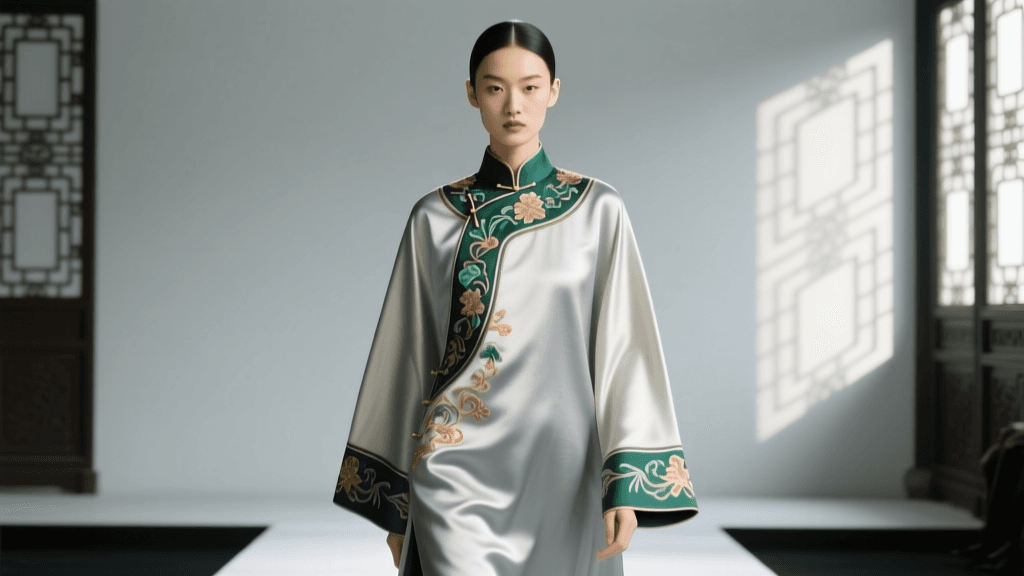
While the Lesage ateliers of Paris are famous for their luminous beadwork and metallic thread embroidery, China’s Su Xiu (Suzhou embroidery) offers an unparalleled mastery of silk thread manipulation. Recognized by UNESCO as an Intangible Cultural Heritage, Su Xiu is characterized by its astonishing fineness; master artisans can split a single silk thread into up to 48 microscopic strands, creating gradients and textures that mimic oil paintings or photographic realism. In haute couture, this technique is increasingly used to create hyper-detailed, lightweight bodices that eschew the heavy weight of glass beads and sequins.
Sourcing and Integration: Authentic, couture-grade Su Xiu cannot be bought off the rack. Designers must commission pieces directly from studios in Zhenhu Town, Suzhou. When briefing a studio, provide vector-based artwork and specify a 'double-sided embroidery' (Shuangmian Xiu) technique if the garment's interior will be visible, ensuring no loose threads or knots. For a standard bodice panel (approx. 0.5 square meters), expect costs to range from $2,500 to $6,000 USD, with a lead time of 4 to 8 months. To integrate these delicate panels into a modern silhouette, mount the embroidered silk onto a stable silk gazar backing using a floating basting technique, allowing the embroidery to bear no structural tension.
The Mamianqun (Horse-Face Skirt) Pleating
The Mamianqun has seen a massive resurgence, transitioning from historical Hanfu circles to the runways of Dior and independent avant-garde labels. Characterized by its flat front and back panels (the 'horse faces') and deeply pleated sides, the skirt offers a masterclass in kinetic fashion—remaining modest and structured while standing still, but exploding into dramatic volume during movement.
Pattern-Making Metrics: To achieve the correct runway drape, the skirt must be cut from a minimum of 4.5 to 6 meters of fabric, depending on the desired volume. Heavy silk crepe de chine, wool crepe, or metallic brocade work best. The side pleats should be knife-pleated with a 3cm visible depth and a 1cm underlap. Crucially, the flat front and back panels must be interfaced with a lightweight silk organza to prevent buckling when the wearer walks. Secure the pleats at the waistband using a traditional thread-tacking method rather than permanent topstitching, allowing the pleats to flare naturally from the hip line rather than the waist.
Actionable Guide: Sourcing Couture-Grade Chinese Materials
Building a collection rooted in Chinese heritage requires navigating a specialized supply chain. Below is a structured sourcing matrix for designers looking to procure authentic, high-end materials for runway production.
| Material / Technique | Primary Sourcing Hub | Estimated Cost (USD) | Lead Time | Best Couture Application |
|---|---|---|---|---|
| Song Brocade (Songjin) | Suzhou, Jiangsu | $45 - $90 / meter | 4 - 6 weeks | Structured corsetry, tailored outerwear, Mamianqun waistbands |
| Su Xiu Custom Panels | Zhenhu Town, Suzhou | $150 - $400 / sq. ft. | 4 - 8 months | Bodice focal points, sheer sleeve embellishments, bridal trains |
| Hand-Knotted Pankou | Shanghai / Beijing Artisans | $8 - $25 / piece | 2 - 4 weeks | Alternative closures for modern blazers, corset lacing accents |
| Xiangyunsha (Gambiered Silk) | Shunde, Guangdong | $60 - $120 / meter | 6 - 12 months | Fluid draping, asymmetrical evening gowns, luxury linings |
Note: Xiangyunsha, a silk dyed with yam juice and river mud, requires specific weather conditions to produce, hence the extensive lead time. Its papery texture and acoustic rustle make it a favorite for avant-garde runway pieces.
Integrating Heritage into Modern Pattern Making
One of the most common pitfalls for Western-trained designers attempting Chinese couture is the clash between traditional flat-cutting and modern 3D draping. Historically, as detailed in the Heilbrunn Timeline of Art History, Chinese garments were constructed from straight, uncut lengths of woven silk to honor the integrity of the textile and avoid wasting the labor-intensive fabric. This resulted in T-shaped, drop-shoulder silhouettes with excess fabric pooling at the arms and waist.
Modern couture, however, demands a close fit to the body's contours. To bridge this gap, designers must employ hybrid pattern-making techniques:
- The Hidden Princess Seam: Maintain the visual illusion of a flat-cut, seamless front panel by placing princess seams directly under the arm or hiding them within the dense lines of a Su Xiu embroidery motif. This allows for bust and waist suppression without breaking the traditional visual plane.
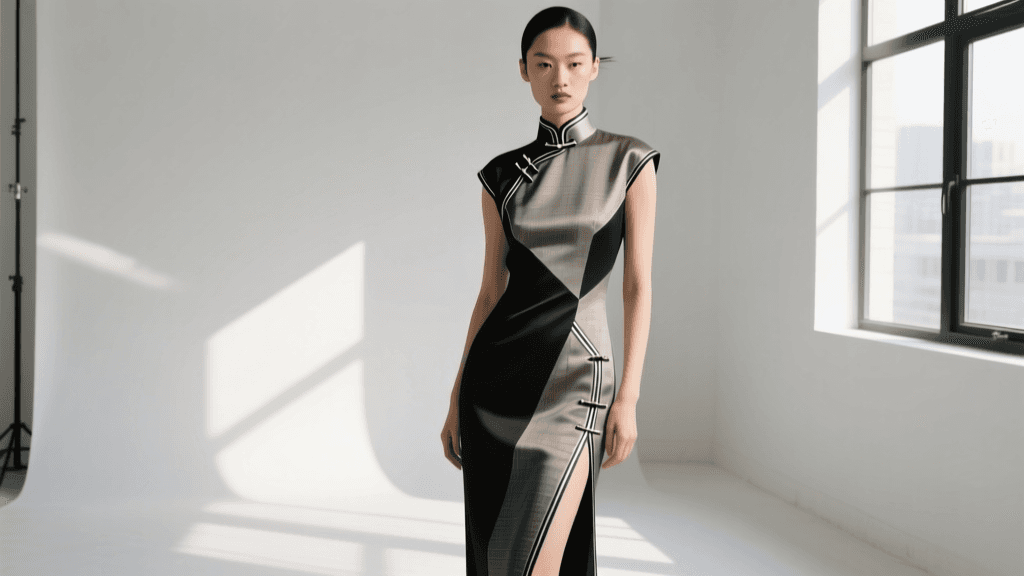
- The Modern Mandarin Collar (Yuanling): A true couture Mandarin collar is not a simple straight band. It must be drafted on a curve to follow the natural slope of the neck. Measure the collar height at 2.5cm at the center back, tapering down to 1.5cm at the center front to elongate the neck. Use French hair canvas, pad-stitched by hand, to create a stand that rolls gently away from the jawline rather than choking the wearer.
- Reinventing Pankou (Frog Closures): Traditional knotted buttons are often too fragile for heavy runway garments. Reinvent the Pankou by casting the knot shapes in lightweight brass or 3D-printed resin, then wrapping them in silk bias tubing. Use these as heavy-duty anchor points for hidden corsetry hooks, blending ancestral aesthetics with industrial strength.
Conclusion
The integration of Chinese fashion into international couture is no longer about borrowing exotic motifs; it is about engaging with a profound textile heritage that rivals the finest ateliers of Europe. By understanding the structural genius of the Yunjian, the microscopic precision of Su Xiu, and the kinetic engineering of the Mamianqun, designers can create collections that are not only visually breathtaking but culturally resonant. Sourcing these materials requires patience, significant investment, and a willingness to collaborate with master artisans, but the resulting garments offer a level of craftsmanship and storytelling that defines the very pinnacle of modern haute couture.