Evolution of Chinese Court Hanfu: Tang to Ming Dynasty Fashion
The Evolution of Chinese Court Hanfu: From Tang Opulence to Ming Grandeur
The history of traditional Chinese clothing, broadly known as Hanfu, is a rich tapestry woven with the political, philosophical, and aesthetic shifts of successive dynasties. For court nobility and the imperial elite, garments were never merely functional; they were profound symbols of cosmic order, social hierarchy, and cultural identity. Understanding the evolution of Chinese court fashion requires a deep dive into the structural and textile transformations that defined the Tang, Song, and Ming dynasties. Today, as the global Hanfu revival movement gains momentum, modern enthusiasts and historians alike are meticulously recreating these historical silhouettes. According to Smithsonian Magazine, this resurgence is not just a fashion trend, but a profound reclamation of cultural heritage, driving a demand for historically accurate court garments.
Tang Dynasty (618–907 AD): Cosmopolitan Opulence and Flowing Silhouettes
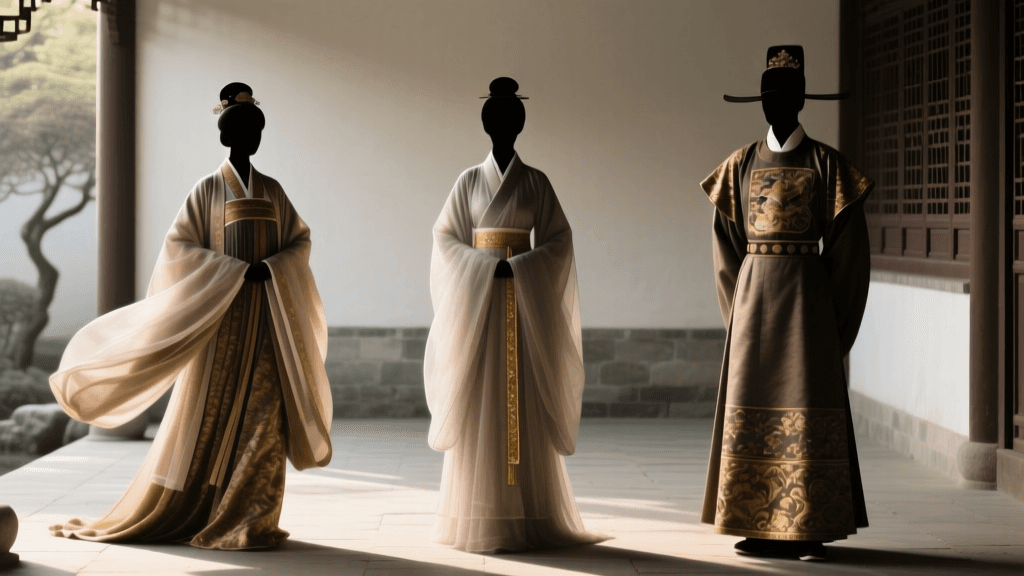
The Tang Dynasty is widely regarded as the golden age of Chinese cosmopolitanism, and its court fashion reflected an empire open to the world. Influenced by the Silk Road, Tang court garments were characterized by their bold colors, lavish patterns, and relaxed, flowing silhouettes. The defining ensemble for court women was the Qixiong Ruqun (chest-high skirt), which featured a high-waisted, floor-sweeping skirt tied securely above the bust, paired with a short, tucked-in jacket (ru).
Over this, noblewomen draped the Pibo, a long, diaphanous silk shawl that cascaded over the arms and shoulders, creating an ethereal, floating effect. The Banbi (half-sleeve jacket) was also popular, often worn as a decorative outer layer. The textiles of the Tang court were legendary. Lightweight silk gauzes (luo) and heavy, gold-woven brocades (jin) were utilized to showcase wealth. As noted by the Metropolitan Museum of Art, Tang silk weavers integrated Central Asian motifs, such as pearl roundels and confronting beasts, into their designs, highlighting the era's vibrant cross-cultural exchanges. The color palette was unapologetically vibrant, favoring deep crimsons, vibrant ochres, and rich emerald greens, often achieved through complex resist-dyeing techniques.
Song Dynasty (960–1279 AD): Neo-Confucian Restraint and Refined Elegance
As the empire transitioned into the Song Dynasty, the cultural zeitgeist shifted dramatically. The rise of Neo-Confucianism brought about a philosophical emphasis on restraint, modesty, and intellectual refinement. This ideological shift was mirrored directly in court fashion. The voluminous, extravagant silhouettes of the Tang era were replaced by slender, straight, and understated lines.
The quintessential garment of the Song court was the Beizi, a long, parallel-collared jacket that extended to the knees or ankles, featuring side slits for ease of movement. It was typically worn open over a pleated skirt (qun) and narrow trousers (songku). The sleeves were generally narrow and straight, contrasting sharply with the sweeping sleeves of the preceding era. Textile production, however, reached unprecedented technical heights. The Song court favored Kesi (cut silk) tapestry weaving, a painstaking technique that allowed for the creation of highly detailed, painterly motifs of birds, flowers, and landscapes directly into the fabric. The color palette softened into muted, elegant tones: pale celadons, soft lotus pinks, pearl whites, and subtle browns, reflecting the era's deep appreciation for natural beauty and scholarly aesthetics.
Ming Dynasty (1368–1644 AD): Structured Grandeur and the Aoqun
The Ming Dynasty marked a powerful reassertion of Han Chinese rule and a deliberate revival of ancient ritual codes, which profoundly impacted court dress. Ming court fashion was characterized by structured, imposing silhouettes, heavy layering, and the introduction of new tailoring techniques. The dominant ensemble for women was the Aoqun, consisting of a long, lined jacket (ao) worn over the iconic Mamianqun (horse-face skirt).
The Mamianqun is a masterpiece of traditional Chinese tailoring. It features a flat front and back panel with deeply pleated sides, allowing for both modesty and mobility. The Ming era also saw the widespread adoption of the liling (standing collar) and the use of intricate metal buttons, a departure from the tied sashes of earlier dynasties. According to Encyclopedia Britannica, Ming sumptuary laws strictly dictated the use of specific motifs, such as the python robe (mangfu) and rank badges (buzi), to denote official and noble status. The textiles were heavy and opulent, featuring zhijin (woven gold) and elaborate zhuanghua (woven brocade) techniques. The silhouettes were regal and grounded, projecting an aura of imperial authority and strict social order.
Dynasty Comparison Chart: Court Fashion at a Glance
| Feature | Tang Dynasty | Song Dynasty | Ming Dynasty |
|---|---|---|---|
| Primary Silhouette | Voluminous, high-waisted, flowing | Slender, straight, narrow-sleeved | Structured, A-line, layered |
| Key Garments | Qixiong Ruqun, Pibo, Banbi | Beizi, Songku, Moxiong | Ao, Mamianqun, Pifeng |
| Collar Style | Crossed collar, open chest | Parallel collar, high neckline | Crossed collar, standing collar (Liling) |
| Signature Textiles | Silk gauze (Luo), vibrant brocades | Kesi tapestry, subtle damasks | Zhijin (woven gold), heavy brocades |
| Color Palette | Crimson, ochre, emerald, gold | Celadon, pearl, pale pink, brown | Imperial yellow, deep red, navy, jade |
Practical Guide: Sourcing and Recreating Authentic Court Hanfu Today
For modern practitioners, historians, and collectors, acquiring historically accurate court Hanfu requires navigating a specialized market. Unlike mass-produced costume wear, authentic Hanfu brands focus on period-correct tailoring, traditional loom weaving, and accurate motif replication. Below is actionable advice for sourcing and commissioning high-quality Tang, Song, and Ming court garments.
1. Selecting the Right Brand and Tier
The modern Hanfu market is segmented by historical accuracy and price. For Ming Dynasty Aoqun and Mamianqun, Minghuatang is the undisputed industry leader, offering museum-grade reproductions using authentic zhuanghua brocade techniques. Expect to pay between $600 and $1,500+ for a full Ming court ensemble, with pre-order wait times often spanning 3 to 6 months. For Song Dynasty Beizi and lightweight summer silks, brands like Shisi July and Hanyu Shang offer excellent mid-tier options ($150–$350), balancing historical accuracy with modern wearability.
2. Crucial Measurements for Court Garments
Court Hanfu relies on flat-pattern cutting, meaning the fit is dictated by drape and tie placement rather than darts and seams. When ordering a Mamianqun (horse-face skirt), precise measurements are vital:
- Waist Circumference: Measure exactly where the skirt will sit (usually the natural waist). Add 2-3 cm for overlap.
- Skirt Length: Historically, court skirts grazed the floor. Measure from your waist to the floor while wearing your intended court shoes (typically 100-108 cm).
- Skirt Sweep (Hem Width): A proper Ming court Mamianqun requires a minimum hem sweep of 4 to 6 meters to ensure the pleats remain closed while walking and to maintain the structural A-line bell shape.
3. Navigating Pre-Order Cycles and Timing
Authentic Hanfu brands operate on a batch production model to minimize waste and manage the high costs of custom jacquard loom setup. Major brands open pre-orders bi-annually (usually in March/April for Spring/Summer collections, and September/October for Autumn/Winter). Missing a pre-order window means waiting for secondary market resales, which often carry a 20% to 40% premium. Always budget for international shipping and potential customs duties, which can add $30 to $80 to your total cost.
4. Accessorizing the Court Look
A court ensemble is incomplete without proper headwear and footwear. For Ming court wear, invest in a Diji (hairpin) set or a Zhudi (pearl-embellelled crown) replica, costing roughly $80-$200. Footwear should consist of traditional cloud-toe shoes (yunjian xie), which can be sourced from specialized shoemakers on Taobao for around $40-$90. Ensure the toe box is wide enough to accommodate the natural foot spread, as historical shoes lack modern arch support.
Caring for Traditional Silk Court Garments
Investing in high-end silk brocades and Kesi tapestries requires meticulous care. Never machine wash or hand-wash structured Ming Ao jackets or heavy Mamianqun, as water will distort the pleats and cause the metallic threads to tarnish. Always seek a dry cleaner experienced in handling traditional textiles and wedding gowns. For storage, avoid wire hangers which will distort the shoulder seams of the Beizi and Ao. Instead, fold the garments using acid-free tissue paper to cushion the pleats and store them flat in breathable cedar or archival cotton boxes. Include silica gel packets to control humidity, protecting the delicate silk fibers from mold and degradation over time.