Children's Kimono Guide: Shichi-Go-San & Milestones
Introduction to Japanese Children's Kimono Milestones
In Japan, the journey from infancy to adulthood is marked by a series of deeply symbolic rites of passage. Traditional garments play a central role in these ceremonies, serving not merely as clothing, but as visual prayers for health, longevity, and prosperity. For children, the most prominent of these milestones is the Shichi-Go-San (Seven-Five-Three) festival, alongside the lesser-known but culturally significant Juusan Mairi. Understanding the nuances of children's kimono—from the specific garments worn at each age to the intricate dressing techniques and modern rental economics—offers a fascinating glimpse into how Japanese heritage is preserved and adapted for new generations.
Shichi-Go-San: The Seven-Five-Three Festival
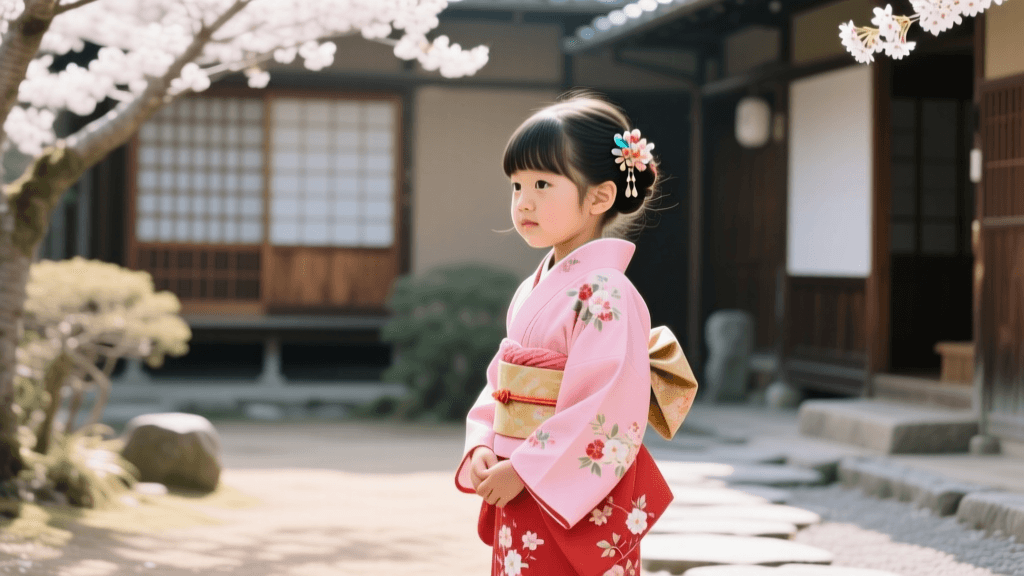
Celebrated annually on November 15th, Shichi-Go-San is a rite of passage for three- and seven-year-old girls, and three- and five-year-old boys. Historically, these ages were considered critical thresholds in a child's development, a time when they were particularly vulnerable to illness and misfortune. According to Japan Guide's cultural overview of Shichi-Go-San, the festival originated in the Heian period among court nobles before spreading to the samurai class and eventually the general public during the Edo period. Today, families dress their children in exquisite traditional attire and visit local Shinto shrines to offer gratitude and pray for future well-being.
Age 3: Kamioki (Hair-Growing Ceremony)
At age three, both boys and girls participate in the Kamioki ceremony. Historically, infants had their heads shaved to promote healthy hair growth, and age three marked the first time they were allowed to grow their hair out. Today, this milestone is celebrated with specific garments. Because toddlers lack the physical stamina and waist definition to support a heavy, tightly tied obi (sash), three-year-old girls typically wear a hifu—a beautifully embroidered, padded silk vest—worn open over a standard kimono. Boys may wear a simple kimono with a haori (jacket) and a soft, tied cord rather than formal trousers.
Age 5: Hakamagi (Hakama-Wearing Ceremony)
The Hakamagi ceremony is exclusively for five-year-old boys. This marks the first time a boy wears a hakama (pleated, skirt-like trousers) over his kimono, signifying his initial step into the male societal sphere. The outfit is completed with a formal haori jacket adorned with family crests (kamon), a stiff fan (ogiki), and zori sandals. As noted in Tofugu's comprehensive guide to Japanese festivals, the hakama represents the samurai heritage and the expectation of growing into a disciplined, respectful young man.
Age 7: Obitoki (Obi-Tying Ceremony)
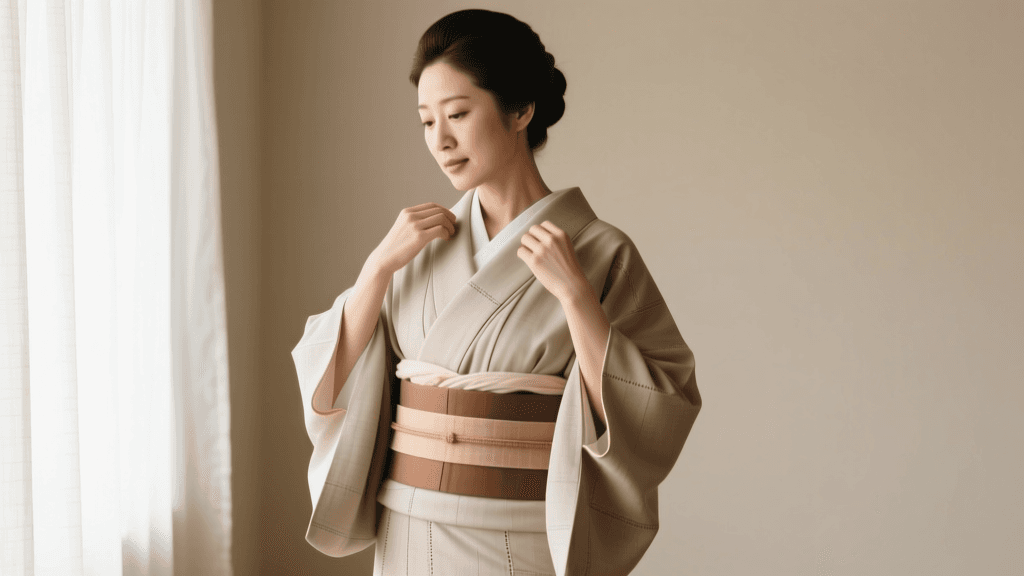
At age seven, girls undergo the Obitoki ceremony. This is a pivotal sartorial transition: girls stop wearing the simple, cord-tied kimono of early childhood and don their first adult-style kimono secured with a real, structured obi. The garment is usually a vibrant, long-sleeved furisode-style kimono, heavily patterned with auspicious motifs like cranes, pine trees, and peonies. The dressing process (kitsuke) for a seven-year-old is complex, requiring multiple ties (koshihimo) and padding to create the cylindrical silhouette expected of traditional Japanese womenswear.
Juusan Mairi: The Thirteen-Year-Old Visit
While Shichi-Go-San is celebrated nationwide, Juusan Mairi is a coming-of-age tradition primarily observed in the Kansai region (Kyoto and Osaka) on April 13th. It marks a child's transition into young adulthood and is closely associated with the Horin-ji Temple in Arashiyama, Kyoto. Thirteen-year-old girls wear their first adult-sized furisode, though the sleeves are often temporarily tucked or shortened to reflect their intermediate status between child and adult. Boys wear adult-sized hakama and haori. The visit involves receiving a blessing for wisdom and intellect, making the garments a physical representation of intellectual and spiritual maturity.
Practical Guide: Sizing, Costs, and Rental vs. Purchase
Acquiring children's kimono requires careful attention to measurements, primarily the mitake (back length from the base of the neck to the ankle) and yuki (sleeve span from the center of the back neck to the wrist). Because children grow rapidly, the modern market is heavily dominated by rental services rather than outright purchases.
| Milestone | Age | Gender | Primary Garment | Standard Yuki (Sleeve Span) | Average Rental Cost (JPY) |
|---|---|---|---|---|---|
| Kamioki | 3 | Boys & Girls | Hifu (padded vest) over kimono | 40 - 45 cm | 5,000 - 8,000 |
| Hakamagi | 5 | Boys | Kimono with Hakama & Haori | 45 - 50 cm | 7,000 - 10,000 |
| Obitoki | 7 | Girls | Furisode-style with formal Obi | 50 - 55 cm | 10,000 - 15,000 |
| Juusan Mairi | 13 | Boys & Girls | Adult-sized Furisode / Hakama | 60 - 65 cm | 15,000 - 25,000 |
Rental vs. Purchase: A high-quality, silk children's kimono set purchased new can easily exceed 100,000 JPY ($650+ USD). Consequently, 80% of modern families opt for rental packages. These packages are highly practical, typically including the garment rental, professional dressing service (kitsuke), hair styling, and a commemorative photo session. For families wishing to keep the garments as heirlooms, purchasing second-hand silk kimono from specialized vintage shops (recycle shops) in Tokyo or Kyoto is a cost-effective alternative, often ranging from 15,000 to 30,000 JPY.
Essential Accessories and the Chitose Ame Tradition
The kimono is only the foundation of the ensemble. Several accessories are mandatory for a complete and culturally accurate look:
- Tabi and Zori: Split-toe socks (tabi) and formal sandals (zori) are essential. For children, zori are often made of soft, synthetic leather or velvet to prevent blisters.
- Kanzashi: Seven-year-old girls wear elaborate hair ornaments (kanzashi), often featuring dangling silk flowers or tortoiseshell pins, symbolizing beauty and protection against evil spirits.
- Sensu: A small folding fan tucked into the obi for older girls, representing a broad, prosperous future.
- Chitose Ame: No Shichi-Go-San visit is complete without Chitose Ame (Thousand-Year Candy). These long, thin, red and white hard candies are presented in a paper bag adorned with cranes and turtles—the ultimate Japanese symbols of longevity. The candy's extreme length symbolizes a wish for a long, unbroken life.
Actionable Advice: Preparing for the Shrine Visit
Dressing a child in traditional Japanese clothing requires patience and strategic planning. The structural rigidity of the kimono can be uncomfortable for energetic toddlers. Here is actionable advice for parents and stylists preparing for a Shichi-Go-San or Juusan Mairi visit:
- Book Early: November is peak season for kimono rental studios and shrine photographers. Reservations should be made by late August or early September to secure preferred time slots and garment selections.
- Undergarment Strategy: Always dress the child in a low-necked, tight-fitting cotton undershirt (hadajuban) to protect the expensive silk from sweat and skin oils. Use soft, cotton koshihimo (tying sashes) rather than stiff nylon ones to ensure the child can breathe comfortably.
- Footwear Sizing: Children's zori should be purchased or rented exactly to size, or up to 0.5 cm larger. Apply silicone toe-protectors between the big and second toe to prevent the thong (hanao) from causing friction blisters during the shrine walk.
- The 'Tuck' Technique: As detailed in the Victoria and Albert Museum's exploration of kimono construction, kimono are rarely tailored to exact individual heights. Instead, they are adjusted using the ohashori (waist tuck). For growing children, professional dressers will create deep, hidden tucks at the waist and shoulders to ensure the hem falls perfectly at the ankle without altering the garment permanently.
- Timing the Visit: Schedule the shrine visit for the morning. Children are more patient, the lighting for photography is superior, and the weather in mid-November is generally crisp but warms up by noon, preventing the child from overheating in multiple silk layers.
"The beauty of the children's kimono lies not just in its vibrant silk and auspicious patterns, but in its ability to connect a modern child to centuries of ancestral hope and communal celebration."
Conclusion
The traditions surrounding children's kimono in Japan are a masterclass in cultural preservation. From the padded hifu of a three-year-old to the structured obi of a seven-year-old, each garment is meticulously chosen to reflect the child's developmental stage and societal role. Whether navigating the bustling rental studios of modern Tokyo or participating in the ancient rites of a Kyoto temple, families continue to use these magnificent textiles to weave their children into the enduring fabric of Japanese heritage.