Children's Hanfu Guide: Festivals and Rites of Passage
The Cultural Significance of Children's Hanfu
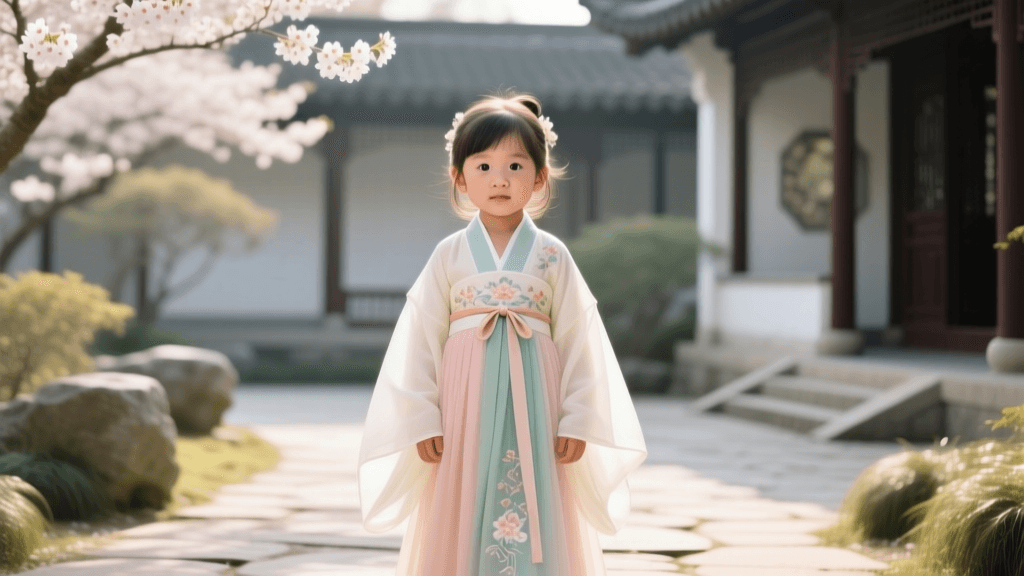
The global resurgence of traditional Chinese clothing has transcended adult fashion, deeply embedding itself into the way modern families celebrate their heritage. Dressing children in Hanfu is no longer just a matter of festive aesthetics; it is a profound educational tool and a way to instill cultural pride from a young age. As noted by the South China Morning Post, the Hanfu movement has evolved from a niche youth subculture into a mainstream lifestyle choice, with parents increasingly seeking out authentic, historically inspired garments for their children to wear during major holidays and life milestones.
Historically, as detailed in Britannica's comprehensive overview of Chinese dress, children's garments were heavily imbued with symbolism. Motifs like tigers, lotuses, and peaches were not merely decorative; they served as talismans to protect vulnerable infants from evil spirits and to bestow longevity, health, and academic success. Today, these historical traditions are being lovingly revived, blending ancient tailoring techniques with the practical needs of active, modern children.
Sizing and Measurements: Getting the Perfect Fit
One of the most common hurdles for parents purchasing Hanfu online is navigating the Chinese sizing system. Unlike Western clothing, which often uses age-based labels (e.g., 2T, 3T) or generic sizes (S, M, L), authentic children's Hanfu is strictly sized by the child's height in centimeters. A 'Size 110' is designed for a child who is approximately 110 cm tall.
To ensure a proper fit, parents should measure their child's height, chest circumference, and shoulder width. For skirts, such as the pleated Mamianqun (horse-face skirt), the length is critical. A traditional skirt should rest just above the ankle bone to allow for safe movement and prevent tripping, which is especially important during lively festival activities.
Children's Hanfu Sizing and Style Guide
| Child's Height (cm) | Approx. Age | Hanfu Size Label | Recommended Style | Best Festival / Event |
|---|---|---|---|---|
| 80 - 90 cm | 1 - 2 Years | 90 | Split-crotch pants, Tiger shoes, Lotus hat | Zhua Zhou (First Birthday) |
| 90 - 100 cm | 2 - 3 Years | 100 | Simple Ruqun (top and skirt), Beizi (jacket) | Spring Festival (Lunar New Year) |
| 100 - 110 cm | 4 - 5 Years | 110 | Ming-style Aoqun, Yisan (one-piece robe) | Mid-Autumn Festival |
| 110 - 120 cm | 6 - 7 Years | 120 | Shenyi (deep robe), Round-collar robe | Kai Bi Li (School Entry Ceremony) |
| 120 - 130 cm | 8 - 9 Years | 130 | Mamianqun, Dahu (sleeveless vest over robe) | Cultural Exhibitions, Hanfu Parades |
Choosing the Right Fabrics for Active Kids
While adult ceremonial Hanfu often features heavy silk brocades, stiff damasks, and intricate metallic embroidery, these materials are entirely impractical for young children. Kids require breathability, stretch, and ease of care. When shopping for children's Hanfu, prioritize the following fabrics:
- Cotton-Linen Blends: The gold standard for everyday and festival wear. They offer the historical matte texture of ancient hemp and cotton but with modern softness. They are machine washable and highly breathable, making them ideal for the humid months surrounding the Dragon Boat Festival.
- Bamboo Viscose: Often used for the inner layers (zhongyi) or summer Ruqun. Bamboo is naturally antibacterial, incredibly soft against sensitive skin, and drapes beautifully, mimicking the flow of silk without the delicate care requirements.
- Velvet and Fleece Linings: For winter festivals like the Spring Festival, look for outer garments (ao) made of cotton or polyester blends that feature plush, warm linings. Avoid heavy wool, which can be itchy and cause sensory distress for younger children.
Cost Expectations: Entry-level, mass-produced cotton Hanfu sets on global e-commerce platforms typically range from $25 to $45. These are excellent for toddlers who will quickly outgrow them. For premium, boutique-crafted sets featuring hand-embroidered motifs, natural dyes, and historically accurate patterning, expect to invest between $90 and $180.
Dressing for Major Festivals and Rites of Passage
Spring Festival (Lunar New Year)
The Spring Festival is the most significant holiday in the Chinese cultural calendar, and red is the undisputed color of the season, symbolizing luck, joy, and the warding off of the mythical Nian beast. For girls, a Ming-dynasty style Aoqun (a lined, high-collared jacket paired with a pleated skirt) in crimson or burgundy is highly appropriate. For boys, a red or navy Yisan (a robe with a pleated lower half and a belted waist) offers a handsome, scholarly look. Because this festival occurs in mid-winter, layering is essential. Pair the Hanfu with thermal underlayers and a traditional fur-lined or velvet Dahu (vest).
Zhua Zhou (First Birthday Rite of Passage)
Zhua Zhou is a deeply cherished rite of passage celebrating a child's first birthday. The infant is placed before a table scattered with symbolic objects—such as a book, an abacus, a stethoscope, or a paintbrush—and the item they grab is said to predict their future inclinations. For this milestone, infants are traditionally dressed in vibrant, heavily embroidered jacket-and-pants sets. The most vital accessories are the Hutoumao (tiger-head hat) and Hutouxie (tiger-head shoes). According to cultural historians, the tiger is considered the king of beasts in Chinese folklore, and its fierce visage on a child's garments serves as a powerful spiritual bodyguard during their most vulnerable years.
Kai Bi Li (School Entry Ceremony)
As children reach the age of six or seven, many traditionalist families and cultural academies participate in Kai Bi Li, the 'Opening the Brush' or school entry ceremony. This rite marks the transition from early childhood to formal education. The appropriate attire here shifts away from playful, bright colors toward modest, scholarly garments. A Shenyi (a one-piece deep robe that connects the upper and lower garments, symbolizing the unity of heaven and earth) in muted tones like bamboo green, slate blue, or ivory is ideal. This ceremony often involves the child bowing to a teacher or elder and participating in a calligraphy lesson, making the wide sleeves and dignified drape of the Shenyi highly relevant to the solemnity of the occasion.
Mid-Autumn Festival
Celebrated under the full harvest moon, the Mid-Autumn Festival calls for lighter, more ethereal garments. This is the perfect time to utilize pastel-colored Ruqun for girls, featuring embroidery of moon rabbits, osmanthus flowers, or clouds. For boys, a simple cross-collared Jiaoling Youren top paired with loose, comfortable trousers allows for ease of movement while running through parks with paper lanterns. The focus here is on harmony with nature and the evening breeze, so lightweight cottons and bamboo silks are the fabrics of choice.
Practical Tips for Parents: Timing, Footwear, and Care
Navigating the logistics of children's traditional wear requires some foresight, especially if you are ordering from overseas boutiques or specialized artisans.
- Timing Your Purchase: The demand for children's Hanfu spikes dramatically in the 60 days leading up to the Lunar New Year and the Mid-Autumn Festival. To avoid exorbitant rush-shipping fees or stockouts, place your orders at least 45 days in advance. This also allows ample time for exchanges if the height-based sizing does not perfectly match your child's proportions.
- Footwear Compromises: While traditional cloth shoes with embroidered tiger faces or lotus patterns are beautiful, they often lack the arch support and rubber grip needed for modern playgrounds or paved festival grounds. It is entirely acceptable—and highly recommended—to pair Hanfu with clean, minimalist modern sneakers (like white canvas shoes or leather slip-ons) for outdoor events. Reserve the traditional cloth shoes strictly for indoor ceremonies or photo sessions.
- Washing and Maintenance: Never machine-wash Hanfu featuring metallic threads, stiff collars, or delicate pleats (like the Mamianqun). The pleats of a horse-face skirt are set using high heat and traditional folding techniques; a washing machine will destroy them instantly. Spot clean minor stains, and for deeper cleaning, hand-wash in cold water with a mild, pH-neutral detergent, then hang to dry in the shade to prevent the vibrant dyes from fading.
Conclusion
Dressing children in Hanfu for festivals and rites of passage is a beautiful, tactile way to bridge the gap between ancient history and modern family life. By understanding the nuances of height-based sizing, selecting age-appropriate and skin-friendly fabrics, and honoring the specific symbolic requirements of events like Zhua Zhou and Kai Bi Li, parents can provide their children with more than just an outfit. They are gifting them a wearable connection to their ancestry, wrapped in the protective and auspicious motifs that have guarded Chinese children for millennia.