Ceremonial vs Everyday Kimono: 2026 Tomesode & Komon Guide
Navigating the Spectrum of Japanese Kimono Formality in 2026
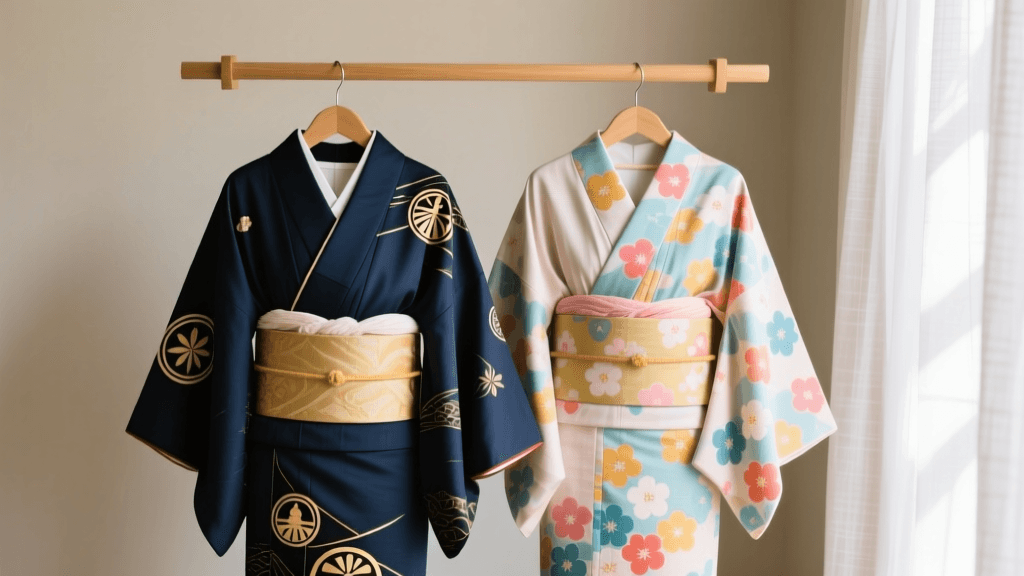
The Japanese kimono is far from a monolith; it is a highly structured garment system governed by the principles of TPO (Time, Place, and Occasion). As we move through 2026, the global and domestic appreciation for traditional Japanese garments has evolved, blending centuries-old sartorial rules with contemporary lifestyle needs. Whether you are attending a formal Shinto wedding in Kyoto or enjoying a casual matcha latte in a Tokyo cafe, understanding the distinction between ceremonial and everyday kimono is essential for dressing appropriately and respectfully.
According to the Victoria and Albert Museum, the evolution of the kimono from everyday wear to a highly codified ceremonial garment reflects broader shifts in Japanese society. Today, in 2026, the divide between the ultra-formal Tomesode and the casual Komon represents the two extremes of this spectrum. This guide breaks down the construction, styling, costs, and modern innovations defining these garments this year.
The Ceremonial Standard: Tomesode
The Tomesode sits at the absolute pinnacle of the kimono formality hierarchy for married women (with the Furisode holding a similar ceremonial rank for unmarried women). The word translates roughly to 'fastened sleeve,' referencing the historical practice of sewing up the swinging sleeves of a young woman's kimono upon marriage.
Design and Construction
There are two primary types of Tomesode: Kuro-Tomesode (black) and Iro-Tomesode (colored). Both feature a solid background with a continuous, elaborate pattern (suso-moyo) that flows across the front and back of the lower hem. Crucially, a true ceremonial Tomesode must feature three or five kamon (family crests) dyed in white. The five-crest version is reserved for the most sacred and formal events, such as a bride's mother or close relatives at a wedding.
The Metropolitan Museum of Art highlights the historical significance of these crests, noting that they serve as a visual lineage marker, elevating the garment from mere clothing to a ceremonial artifact. In 2026, bespoke Tomesode are still woven using premium tango-chirimen (heavy silk crepe) and embellished with real gold and silver leaf (surihaku) and intricate hand-embroidery.
The Everyday Essential: Komon
On the opposite end of the spectrum is the Komon, the quintessential everyday kimono. The term translates to 'small pattern,' referring to the repeating motifs that cover the entire garment. Unlike the hem-restricted patterns of the Tomesode, a Komon's design is uniform and continuous, making it the equivalent of a modern casual dress or a stylish suit.
Design and Construction
Komon are incredibly versatile. They can be made from silk, but in 2026, everyday wearers heavily favor breathable cotton, linen, and modern washable silk blends. The patterns range from traditional geometric shapes and seasonal florals to contemporary, abstract, and even pop-culture-inspired prints. A Komon never features family crests, immediately signaling its casual nature.
As noted by the Japan National Tourism Organization, experiencing traditional dress is a cornerstone of cultural tourism, and the Komon (along with the summer Yukata) is the garment most frequently rented and worn by visitors and locals exploring historic districts like Asakusa or Higashiyama.
2026 Comparison Chart: Formality, Costs, and Usage
To help you navigate the market this year, here is a structured comparison of the primary kimono types, reflecting 2026 average market prices in Japanese Yen (JPY) and approximate US Dollars (USD).
| Garment Type | Formality Level | Primary Fabric (2026) | Crests (Kamon) | Ideal Occasion | 2026 Rental Cost | 2026 Purchase Cost |
|---|---|---|---|---|---|---|
| Kuro-Tomesode | Highest (Ceremonial) | Heavy Silk Crepe | 5 White Crests | Weddings (Relatives) | ¥20,000 ($135) | ¥300,000+ ($2,000+) |
| Houmongi | High (Semi-Formal) | Silk / Washable Silk | 0 to 1 | Tea Ceremonies, Parties | ¥12,000 ($80) | ¥150,000 ($1,000) |
| Komon | Casual (Everyday) | Cotton, Linen, Poly | None | Shopping, Cafes, Travel | ¥5,000 ($35) | ¥40,000 ($270) |
| Yukata | Informal (Summer) | Lightweight Cotton | None | Summer Festivals, Onsen | ¥3,500 ($25) | ¥15,000 ($100) |
The 2026 Kitsuke Revolution: Dressing for the Occasion
Kitsuke is the art of dressing in a kimono. The gap between ceremonial and everyday wear is perhaps most evident in the time, tools, and techniques required to put them on.
Ceremonial Kitsuke: The 45-Minute Ritual
Dressing in a Tomesode requires precision and a multitude of accessories. The process involves padding the hips to create a cylindrical silhouette, securing the garment with multiple koshi-himo (cotton ties), and applying date-jime (wide under-belts). The crowning achievement is the Fukuro-obi, a heavy, brocaded sash tied in a complex taiko-musubi (drum knot) using an obi-ita (stiff board) and obi-age (silk scarf). In 2026, most women rely on professional kitsuke salons for this process, which takes roughly 45 minutes and costs around ¥7,000 ($47).
Everyday Kitsuke: The 'Smart-Kitsuke' Era
For the Komon, the 2026 market has fully embraced 'Smart-Kitsuke' technology. Modern everyday wearers utilize pre-tied hanhaba-obi (half-width sashes) equipped with hidden, high-strength neodymium magnetic clasps. These allow the wearer to achieve a perfect, secure bow in under three minutes without needing to tie complex knots. Furthermore, 2026 has seen the mainstream adoption of stretchable, jersey-knit nagajuban (undergarments) that eliminate the need for traditional chest binders, making everyday kimono wear as comfortable as modern loungewear.
Modern Styling: Bridging the Formality Gap
One of the most exciting trends in 2026 is the 'Neo-Classic' styling movement, where wearers playfully bend the rules of TPO by mixing ceremonial accessories with everyday garments, or vice versa.
- Upcycled Obi as Table Runners: Damaged ceremonial Fukuro obi are increasingly being repurposed by Kyoto artisans into luxury home decor or upcycled into structured, everyday handbags that pair beautifully with a casual Komon.
- 3D-Printed Obi-Dome: The obi-dome (the decorative clasp worn on the sash cord) has become a canvas for modern art. In 2026, independent designers are using resin 3D-printing to create hyper-detailed, lightweight obi-dome that add a touch of high-tech ceremonial flair to a simple cotton Komon.
- The Han-Eri Swap: The han-eri (half-collar) is highly visible at the neckline. Swapping a plain white ceremonial collar for a heavily embroidered, beaded, or even LED-threaded collar is a popular way to elevate a casual Komon for an evening dinner date.
Fabric Care and Maintenance in 2026
The divergence in care requirements is a major factor when choosing between ceremonial and everyday garments.
Ceremonial Care: A silk Tomesode must never be washed with water. It requires professional maru-arai (a specialized dry-cleaning process using petroleum-based solvents) and periodic shimin-nuki (spot stain removal). In 2026, a full professional cleaning and re-pressing of a Tomesode costs approximately ¥15,000 ($100) and takes up to a month. Furthermore, ceremonial garments must be aired out twice a year during the dry, windy days of late autumn to prevent mold and silk degradation.
Everyday Care: The everyday Komon has benefited immensely from the 'Arau-Silk' (Washable Silk) innovations perfected by Kyoto textile labs in 2025. These modern silk blends can be safely hand-washed in a basin with neutral pH detergents, hung to dry in the shade, and lightly ironed. Cotton and linen Komon are even more forgiving, allowing for machine washing on gentle cycles inside specialized mesh kimono bags, drastically lowering the barrier to entry for daily wear.
Sizing and Tailoring: The 3D Body Scanning Shift
Traditionally, kimono were measured using the shaku system, and standard sizing often required extensive folding and tucking at the waist (ohashori) to adjust for the wearer's height. The general rule is that the kimono's length should be roughly 1.3 times the wearer's height.
However, purchasing a Komon in 2026 is a vastly different experience. Leading online kimono retailers now offer smartphone-based 3D body scanning. By taking a quick 360-degree video of yourself, the retailer's AI calculates your exact torso length, shoulder width, and arm span. The everyday Komon is then cut and sewn to your precise millimeter specifications, ensuring the ohashori falls at the exact aesthetically pleasing proportion, eliminating the guesswork and discomfort of ill-fitting vintage garments.
Conclusion: Choosing Your Path
The choice between a ceremonial Tomesode and an everyday Komon is not merely a matter of aesthetics; it is a decision about how you wish to interact with Japanese culture and tradition. The Tomesode demands reverence, time, and a significant financial investment, rewarding the wearer with a profound connection to historical artistry and familial legacy. The Komon, especially with the lifestyle-friendly innovations of 2026, offers accessibility, comfort, and a canvas for personal expression. By understanding the distinct rules, costs, and modern adaptations of both, you can confidently build a traditional wardrobe that honors the past while seamlessly fitting into the present.