Ceremonial Furisode vs Everyday Komon Kimono Guide 2026
The 2026 Kimono Renaissance: Navigating Formality and Daily Wear
The landscape of Japanese traditional fashion in 2026 is a fascinating blend of strict historical etiquette and boundary-pushing modern styling. As global interest in sustainable, artisanal clothing continues to surge, the kimono has transcended its status as a mere ceremonial relic to become a dynamic component of contemporary wardrobes. However, for both seasoned collectors and newcomers to Asian traditional garments, understanding the rigid hierarchy of kimono formality remains essential. The most striking contrast in the Japanese garment spectrum lies between the ultra-formal Furisode and the casual, versatile Komon.
Whether you are attending a coming-of-age ceremony, a formal tea gathering, or simply navigating the streets of Kyoto on a weekend, knowing when and how to wear these distinct garments is crucial. According to the Metropolitan Museum of Art's Heilbrunn Timeline of Art History, the kimono's structure has remained remarkably consistent for centuries, yet the rules governing its social application are deeply nuanced. This guide breaks down the defining characteristics, 2026 market trends, and styling rules for ceremonial Furisode versus everyday Komon.
Ceremonial Furisode: The Pinnacle of Unmarried Formality
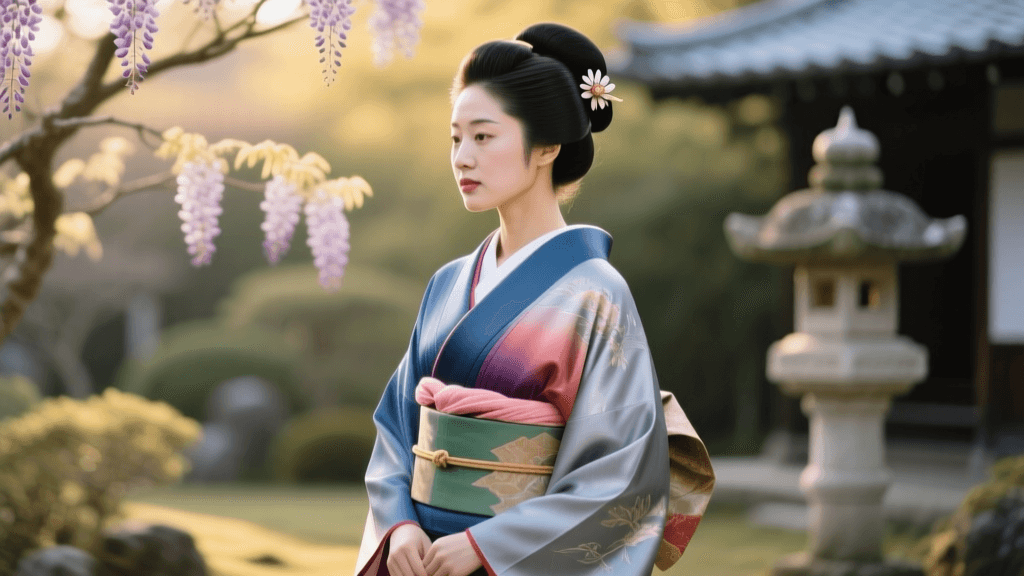
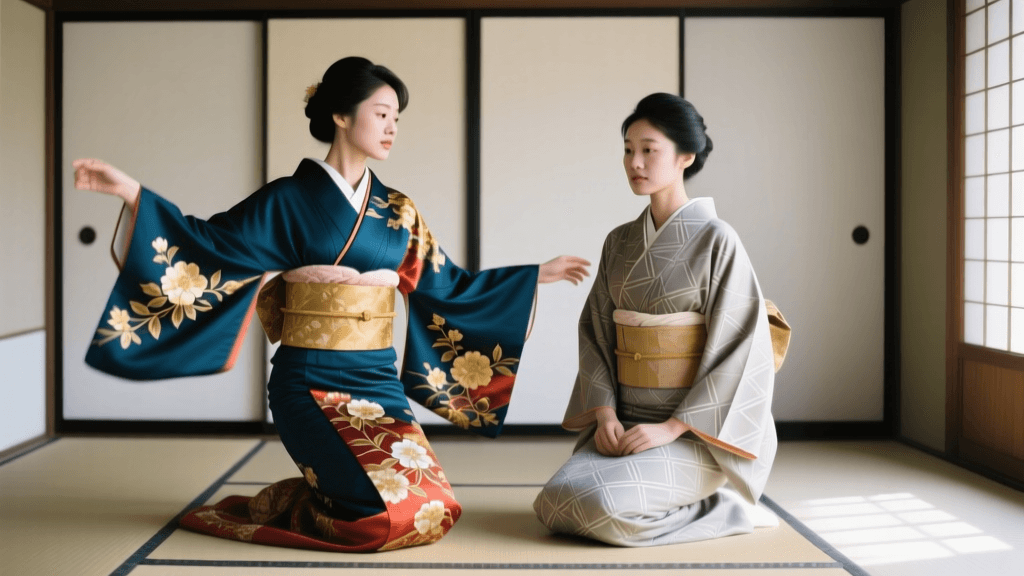
The Furisode (literally "swinging sleeves") is the most formal kimono worn by unmarried women. It is instantly recognizable by its dramatically long, flowing sleeves, which historically served as a visual signal of a woman's marital eligibility and youth. In 2026, the Furisode remains the undisputed garment of choice for Seijin no Hi (Coming of Age Day), university graduation ceremonies, and formal wedding attendance.
Sleeve Lengths and Hierarchy
Not all Furisode are created equal. The formality is dictated by the exact measurement of the sleeves:
- Ofurisode (Large Furisode): Sleeves measuring 114 cm or longer. This is the most formal tier, often worn by brides or their immediate unmarried attendants.
- Chufurisode (Medium Furisode): Sleeves measuring between 95 cm and 105 cm. This is the most common variety seen at Coming of Age ceremonies in 2026.
- Kofurisode (Small Furisode): Sleeves measuring around 75 cm to 85 cm. While still formal, it is slightly less common today but offers greater mobility.
Fabrics, Dyeing, and 2026 Pricing
Authentic Furisode are crafted from heavy, high-grade silk crepe (chirimen) or figured silk (rinzu). The surface is typically adorned with Yuzen dyeing—a meticulous, resist-dyeing technique that allows for sweeping, pictorial designs resembling painted canvases. In 2026, traditional artisanal Yuzen is increasingly being paired with sustainable, plant-based mordants to reduce the environmental impact of silk processing.
Due to the immense labor required, purchasing a new, bespoke Furisode in 2026 can cost anywhere from 500,000 to over 1,500,000 JPY. Consequently, the rental market dominates. A comprehensive 2026 rental package in Tokyo or Kyoto—including the garment, obi, underlayers, professional dressing, and hair styling—averages between 150,000 and 350,000 JPY.
Everyday Komon: The Canvas of Daily Expression
At the opposite end of the spectrum is the Komon ("fine pattern"). This is the quintessential everyday kimono, characterized by a repeating pattern that covers the entire garment. Unlike the Furisode, which demands attention and adherence to strict rules, the Komon is the kimono equivalent of a stylish casual dress or a tailored suit. It is appropriate for shopping, casual dining, theater outings, and informal tea practice.
Variations of Komon
While all Komon are casual, the technique used to apply the pattern can elevate its status slightly:
- Kyo Komon: Originating from Kyoto, these feature larger, more playful repeating motifs, often dyed using traditional stencil techniques.
- Edo Komon: A highly refined technique from Tokyo featuring microscopic, dot-like patterns that appear solid from a distance. When paired with a family crest (kamon), an Edo Komon can bridge the gap into semi-formal wear.
The 2026 Everyday Wardrobe
In 2026, the everyday Komon has experienced a massive revival among younger demographics and international enthusiasts, driven by the vintage market and modern textile innovations. While traditional silk Komon remain prized, the 2026 market is heavily focused on "washable silks" and high-grade recycled polyesters that perfectly mimic the drape and matte finish of chirimen silk. These modern fabrics allow wearers to hand-wash their garments at home using pH-neutral detergents, eliminating the need for expensive professional cleaning after every wear. Vintage silk Komon from the 1980s and 1990s can be sourced in Harajuku and Shimokitazawa thrift shops for as little as 3,000 to 8,000 JPY, making them highly accessible entry points for new collectors.
Head-to-Head Comparison: Furisode vs. Komon
To visualize the stark differences between these two garments, refer to the comparative data table below:
| Feature | Ceremonial Furisode | Everyday Komon |
|---|---|---|
| Formality Level | Ultra-Formal (Unmarried Women) | Casual / Everyday |
| Sleeve Length | 75 cm to 114+ cm | Standard 49 cm to 52 cm |
| Pattern Style | Sweeping, continuous pictorial scenes | Small, repeating geometric or floral motifs |
| Primary Fabric (2026) | Heavy Silk Crepe, Figured Silk | Washable Silk, Poly-blends, Light Crepe |
| Obi Pairing | Fukuro Obi (Formal brocade) | Nagoya Obi or Hanhaba Obi (Casual) |
| Footwear | Zori (Formal brocade/leather) | Geta (Wooden) or casual Zori |
| Avg. Cost (New/Rental) | 150,000 - 350,000 JPY (Rental Package) | 15,000 - 40,000 JPY (Purchase) |
2026 Styling Innovations: Footwear, Obi, and Accessories
The way traditional garments are accessorized has evolved significantly. As noted by the Victoria and Albert Museum's comprehensive guide to the kimono, the accessories dictate the final formality of the outfit just as much as the garment itself.
The Obi: Framing the Garment
A Furisode demands a Fukuro Obi—a long, wide, and heavily brocaded sash tied in elaborate, voluminous knots like the fukura-suzume (puffed sparrow). In 2026, digital weaving technology allows for intricate, metallic Fukuro Obi that are lighter and more pliable than traditional gold-threaded versions, making them easier for beginners to tie.
Conversely, the Komon is paired with a Nagoya Obi (pre-folded for a simpler otaiko drum knot) or a Hanhaba Obi (half-width obi). The 2026 street-style trend heavily favors upcycled Hanhaba Obi made from vintage furoshiki (wrapping cloths) or even repurposed denim, allowing for deep personalization.
Footwear and Modern Twists
While formal Furisode requires pristine, flat-soled Zori worn with white tabi socks, the everyday Komon offers immense flexibility. A major trend in the winter of 2026 is pairing wool-lined or heavy silk Komon with leather ankle boots or tailored loafers, bypassing the traditional tabi entirely for a fusion silhouette that prioritizes warmth and urban mobility. For those who prefer tradition, wooden Geta with modern, ergonomic rubber-soled inserts are the standard for casual Komon wear.
Obidome and 3D Printing
The obidome (a decorative clasp worn on the obijime cord) has become a playground for modern artisans. In 2026, independent makers are utilizing high-resolution resin 3D printing to create hyper-detailed, bespoke obidome featuring architectural motifs, modern anime aesthetics, or abstract geometric shapes, providing a stark, contemporary contrast to the vintage Komon fabrics they adorn.
Garment Care and Preservation in 2026
Maintaining these garments requires an understanding of their distinct material needs. The heavy, multi-layered silks of a Furisode cannot be washed with water. In 2026, premier kimono maintenance services in major Asian metropolises utilize advanced ozone cleaning chambers. This technology neutralizes odors, kills bacteria, and removes surface dust without the harsh chemical degradation associated with traditional dry cleaning solvents, preserving the metallic threads and delicate Yuzen dyes for future generations.
Everyday Komon, particularly those crafted from modern poly-blends or treated washable silks, require far less intensive care. Owners are encouraged to hand-wash these garments in cool water using specialized, enzyme-free silk detergents. After washing, the Komon should be stretched on specialized shinshi (bamboo drying frames) or hung smoothly to air dry, followed by a light steam pressing to restore the fabric's natural drape and remove wrinkles.
Conclusion
Understanding the dichotomy between the ceremonial Furisode and the everyday Komon is essential for anyone looking to engage with Japanese traditional fashion in 2026. The Furisode remains a breathtaking, heavily regulated masterpiece of textile art, reserved for life's most pivotal milestones. The Komon, however, is a living, breathing garment that adapts to the rhythm of daily life, embracing modern fabrics, sustainable upcycling, and contemporary street-style pairings. By respecting the historical boundaries of the Furisode while creatively pushing the limits of the Komon, wearers today ensure that the legacy of the kimono continues to evolve vibrantly in the modern era.