Ceremonial vs Everyday Hanbok and Kimono: 2026 Guide
The Evolution of Asian Garments in 2026
In 2026, the dichotomy between ceremonial and everyday traditional Asian garments is more pronounced—and more creatively interpreted—than ever before. While globalization and fast fashion once threatened to relegate these cultural staples to museum archives, a powerful revival movement has firmly integrated them into contemporary wardrobes. Today, the distinction between what is worn for sacred rites and what is worn for a casual weekend outing relies heavily on fabric technology, silhouette modifications, and styling pairings. For enthusiasts and newcomers alike, understanding the nuanced boundaries between ceremonial and everyday wear is essential to respectful and stylish participation in Asian fashion traditions.
This comprehensive guide explores the Japanese kimono and the Korean hanbok, breaking down the strict codes of ceremonial dress and contrasting them with the innovative, boundary-pushing everyday adaptations defining the 2026 fashion landscape.
The Japanese Kimono: Ceremonial vs. Everyday
Ceremonial Kimono: Preserving the Sacred Silhouette
When discussing ceremonial wear, the Japanese kimono remains a masterclass in structured elegance. Ceremonial kimonos are governed by strict rules regarding marital status, age, and the specific nature of the event. For unmarried women attending the 2026 Seijin-no-Hi (Coming of Age Day) or formal weddings, the Furisode is the undisputed garment of choice. Characterized by its dramatically long, swinging sleeves—which can measure up to 114 centimeters in length—the Furisode signals youth and availability. According to the Victoria and Albert Museum, the kimono's T-shaped structure is designed to hide the body's natural curves, creating a seamless, cylindrical canvas for exquisite, hand-painted motifs.
For brides, the Shiromuku (pure white wedding kimono) and the heavily embroidered Uchikake (outer robe) remain the pinnacle of ceremonial dress. In 2026, the creation of these garments heavily features cruelty-free peace silk (Ahimsa silk) and lab-grown spider silk blends, offering the traditional lustrous drape of silk while adhering to modern ethical standards. The ceremonial kimono is always worn with a stiff, formal maru obi, tied in complex knots like the bunko or taiko musubi, and paired with split-toe tabi socks and zori sandals.
Everyday Kimono: The 2026 Streetwear Renaissance
Conversely, the everyday kimono has undergone a radical transformation to suit the fast-paced, dynamic lifestyles of 2026. The Komon (kimono with a repeating, small pattern) and the casual summer Yukata serve as the foundation for daily wear. However, the true hallmark of 2026 everyday kimono styling is the integration of modular, washable fabrics and streetwear crossover accessories.
Modern everyday kimonos are frequently crafted from machine-washable cotton-polyester blends, Tencel, and even upcycled denim. The rigid, traditional obi has been largely replaced in everyday settings by the tsuke obi (pre-tied obi) or elasticized belt alternatives that mimic the look of a traditional knot but can be fastened in seconds. In the streets of Harajuku and Kyoto, it is now common to see everyday kimonos paired with chunky combat boots, oversized leather jackets, and minimalist crossbody bags, completely bypassing the need for traditional zori footwear.
The Korean Hanbok: Ceremonial vs. Everyday
Ceremonial Hanbok: Royal Echoes and Modern Nuptials
The ceremonial hanbok commands respect through its voluminous architecture and vibrant, symbolic color palettes. Rooted in the Joseon Dynasty, the traditional silhouette consists of the jeogori (short jacket) and the chima (full, bell-shaped skirt) for women, and the jeogori with baji (baggy trousers) for men. As noted by Encyclopædia Britannica, the hanbok's design is deeply connected to traditional Korean philosophy, utilizing the five cardinal colors (obangsaek) to represent harmony and balance.
For major life events such as weddings, Doljanchi (first birthday celebrations), and Myeongjeol (major lunar holidays), Koreans don highly formal variations like the Wonsam (a ceremonial robe with wide sleeves and dragon or phoenix motifs) or the Hwalot. In 2026, bespoke ceremonial hanboks crafted by master artisans in Seoul’s Bukchon village command premium prices, often exceeding ₩1,500,000. These garments utilize heavyweight, stiff silks that hold their dramatic, bell-like shape without the need for excessive petticoats, though modern structural underskirts are still used to perfect the silhouette.
Everyday Hanbok: Saenghwal and Gaeryang Trends
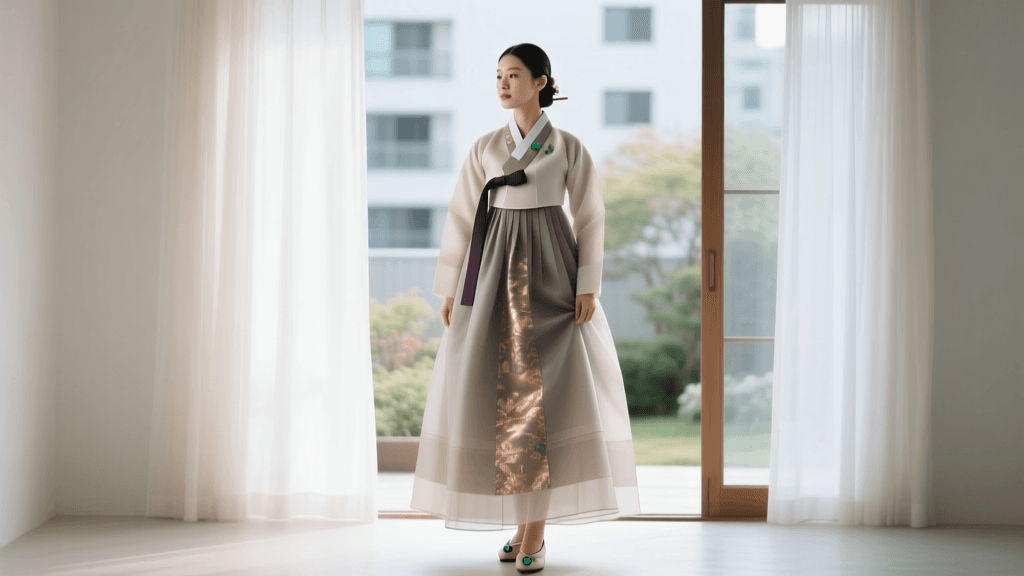
For daily wear, the 2026 market is dominated by two distinct categories: Saenghwal Hanbok (daily life hanbok) and Gaeryang Hanbok (modernized/improved hanbok). The everyday hanbok strips away the restrictive elements of the ceremonial version, prioritizing mobility, comfort, and ease of care.
The jeogori in a Saenghwal hanbok is often lengthened slightly to prevent it from riding up during movement, and the voluminous chima is reduced to a more manageable A-line or pleated midi skirt. Fabrics shift dramatically from stiff silks to breathable linen, bamboo-rayon, and organic cotton. Gaeryang hanbok takes this a step further, introducing cropped jackets, wrap-skirt silhouettes, and wide-leg palazzo pants that mimic the baji but function like modern high-waisted trousers. In 2026, everyday hanbok styling frequently incorporates Western blouses worn beneath the jeogori, and the traditional goreum (chest tie) is sometimes replaced by subtle magnetic clasps or minimalist ribbon brooches for a sleek, office-appropriate look.
2026 Comparison Chart: Ceremonial vs. Everyday Wear
To visualize the stark contrasts in construction, fabric, and styling between these categories, refer to the comparison table below:
| Feature | Ceremonial Kimono | Everyday Kimono (2026) | Ceremonial Hanbok | Everyday Hanbok (2026) |
|---|---|---|---|---|
| Primary Fabric | Heavy Silk, Brocade, Peace Silk | Washable Cotton, Denim, Tencel | Stiff Silk, Ramie, Satin | Linen, Bamboo-Rayon, Organic Cotton |
| Sleeve Style | Long (Furisode) or Standard | Standard, often with modern cuffs | Wide, curved, and flowing | Narrower, tapered, or cuffed |
| Closure System | Complex Obi knots, hidden ties | Elastic belts, pre-tied Obi, clips | Long Goreum (chest ties) | Short Goreum, magnets, or brooches |
| Footwear | Tabi socks with Zori sandals | Boots, sneakers, modern flats | Traditional Hwa (boots) or Kkotsin | Sneakers, loafers, ankle boots |
| Avg. 2026 Price | ¥80,000 - ¥300,000+ | ¥15,000 - ¥40,000 | ₩800,000 - ₩2,000,000+ | ₩120,000 - ₩350,000 |
Sourcing, Pricing, and Care in 2026
Navigating the traditional garment market in 2026 requires an understanding of sustainable textiles and modern garment care. Ceremonial garments, due to their delicate nature and high cost, are increasingly stored in smart, climate-controlled wardrobes that regulate humidity and utilize ozone technology to eliminate odors without the need for harsh chemical dry cleaning. When sourcing a ceremonial kimono or hanbok, buyers are advised to seek out certified heritage artisans who can provide documentation of the garment's provenance and the ethical sourcing of its silk.
Everyday garments, by contrast, are designed for the modern washing machine. However, to preserve the structural integrity of the collars and ties, it is highly recommended to use mesh laundry bags and wash on cold, delicate cycles. The 2026 trend of "modular traditional wear" also means that many everyday kimonos and hanboks now feature detachable collars and replaceable hem guards, allowing wearers to easily swap out soiled sections without laundering the entire garment.
"The true beauty of traditional Asian garments in the modern era lies not in their rigid preservation, but in their ability to adapt. The everyday hanbok and kimono of 2026 prove that cultural heritage can walk comfortably alongside contemporary innovation."
Conclusion
The landscape of Asian traditional garments in 2026 is a vibrant tapestry of reverence and rebellion. While the ceremonial kimono and hanbok remain steadfast guardians of history, ritual, and unparalleled craftsmanship, their everyday counterparts have evolved into dynamic, accessible fashion statements. Whether you are investing in a bespoke, peace-silk Furisode for a milestone celebration or slipping into a breathable, linen-blend Saenghwal hanbok for a weekend café outing, understanding the distinct rules and freedoms of each category ensures that you honor the past while fully embracing the present.