Ceremonial vs Everyday Hanbok: 2026 Fabric and Styling Guide
Introduction to the Hanbok Dichotomy in 2026
The hanbok, the traditional Korean garment, has undergone a fascinating evolution. While it was once the standard daily attire for all Koreans, the modern era has bifurcated the hanbok into two distinct categories: ceremonial wear and everyday wear. As we navigate through 2026, the distinction between these two styles is more pronounced than ever, driven by advances in textile technology, shifting lifestyle needs, and a renewed global interest in sustainable fashion. For enthusiasts, collectors, and modern wearers, understanding the structural, material, and stylistic differences between ceremonial hanbok (often referred to as Myeongjeol or Honsu) and everyday hanbok (Gaeryang or Saenghwal) is essential for making informed purchasing and styling decisions.
The Grandeur of Ceremonial Hanbok
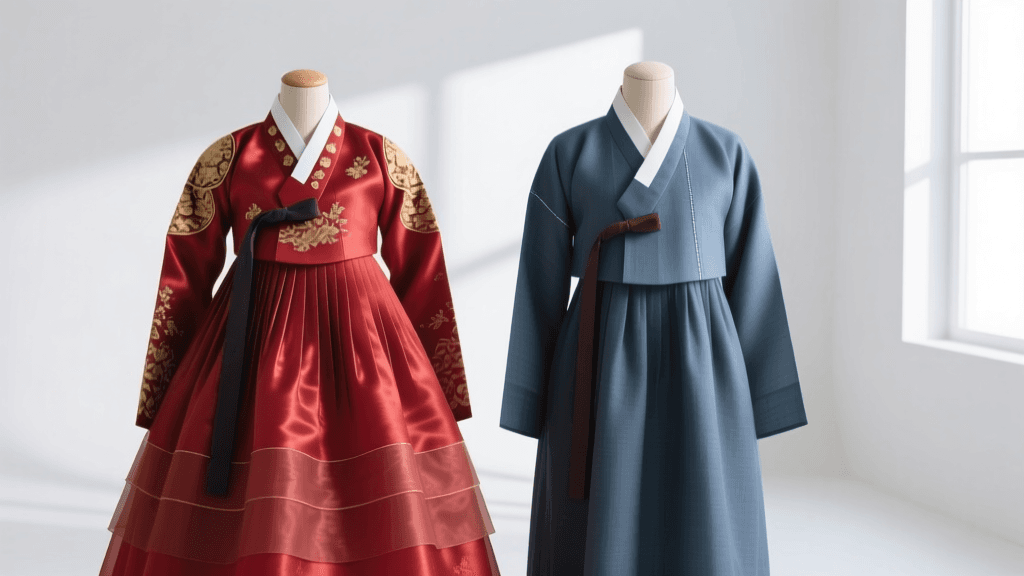
Ceremonial hanbok is designed for high-stakes, traditional events such as weddings (Honsu), major holidays like Chuseok and Seollal (Myeongjeol), and formal cultural performances. The defining characteristic of ceremonial wear is its adherence to historical silhouettes and its use of luxurious, often delicate, materials. According to the National Folk Museum of Korea, the preservation of these traditional silhouettes is vital for maintaining the historical integrity of Korean textile arts.
In 2026, ceremonial garments like the Wonsam (a formal overcoat for royalty and brides) and the Hwalot (a heavily embroidered bridal robe) remain masterpieces of construction. They feature the classic wide, sweeping baerae (the curved underside of the sleeve) and voluminous chima (skirt) that requires multiple layers of petticoats (sokchima) to achieve the iconic bell shape. The fabrics are predominantly heavy silks, brocades, and organza, often adorned with real gold leaf stamping (geumbak) and intricate hand-embroidery depicting peonies, cranes, or dragons. Because of the labor-intensive craftsmanship and premium materials, a high-quality ceremonial hanbok in 2026 typically ranges from $600 to over $2,500.
The Practicality of Everyday Hanbok
Conversely, everyday hanbok, known as Saenghwal (daily life) or Gaeryang (improved) hanbok, is engineered for the rigors of modern life. This style strips away the cumbersome volume and delicate fabrics of its ceremonial counterpart, focusing instead on comfort, mobility, and ease of care. Everyday hanbok is frequently worn to the office, cafes, or while traveling, and it has become a staple in the wardrobes of modern Koreans and international fashion enthusiasts alike.
The jeogori (jacket) in everyday styles is often slightly longer to provide more coverage and comfort, while the sleeves are narrowed to prevent catching on doors or desks. The chima is significantly less voluminous, often falling straight or in a subtle A-line, and hemlines may be raised to the ankle or mid-calf to accommodate walking and public transit. In 2026, everyday hanbok heavily utilizes washable cottons, breathable linens, ramie blends, and advanced wrinkle-resistant polyester. Fasteners have also been modernized; while the traditional goreum (ribbon tie) is retained for aesthetic purposes, it is frequently backed by hidden hooks, magnetic clasps, or zippers to ensure the garment stays securely in place throughout a busy day. Pricing for everyday hanbok is highly accessible, generally falling between $45 and $180.
2026 Comparison Chart: Ceremonial vs. Everyday Hanbok
| Feature | Ceremonial Hanbok (Myeongjeol/Honsu) | Everyday Hanbok (Saenghwal/Gaeryang) |
|---|---|---|
| Primary Fabrics | Heavy silk, brocade, organza, ramie | Cotton, linen, washable poly-blends |
| Sleeve Shape (Baerae) | Wide, dramatically curved, floor-sweeping | Narrow, straight or slightly tapered |
| Skirt Volume (Chima) | Extremely full, requires layered petticoats | Moderate to slim A-line, no petticoats needed |
| Fasteners | Traditional long silk goreum (ribbons) | Hidden zippers, magnets, snaps, short goreum |
| 2026 Price Range | $600 - $2,500+ | $45 - $180 |
| Care Instructions | Professional dry clean only, climate-controlled storage | Machine washable (gentle), low-heat ironing |
Structural Differences Explained
To truly appreciate the divergence between these two styles, one must look at the specific structural components of the hanbok. The git (collar band) and dongjeong (removable white collar) remain present in both styles, but their stiffness varies. Ceremonial hanbok utilizes heavily starched, rigid dongjeong to frame the face with sharp, regal lines. Everyday versions often use softer, flexible collars or integrated white piping that mimics the dongjeong without the need for constant adjustment.
The baji (trousers) worn underneath the skirt or as standalone bottoms also differ. Ceremonial baji are wide-legged and tied at the waist and ankles with long strings, creating a ballooned effect. Everyday baji in 2026 often feature elastic waistbands, tapered ankles, and even functional side pockets, mirroring the comfort of modern harem pants or wide-leg trousers while retaining the traditional aesthetic.
2026 Fabric Innovations and Sustainability
Sustainability is a major driving force in the 2026 Asian traditional garment market. For everyday hanbok, designers are increasingly utilizing eco-friendly textiles. Organic cotton dyed with natural plant-based pigments (such as indigo, persimmon, and gardenia) is highly sought after for its breathability and low environmental impact. Furthermore, recycled polyester blends that mimic the sheen of silk are becoming popular for everyday chima, offering a luxurious look that can be tossed into the washing machine.
Ceremonial hanbok, while still reliant on traditional silk, has seen a shift toward ethically sourced and peace silk (ahimsa silk), where the silkworm is allowed to emerge from the cocoon before the threads are harvested. The Cultural Heritage Administration has been instrumental in promoting the preservation of traditional weaving techniques, ensuring that even as materials become more ethical, the historical methods of creating brocade and gold-leaf patterns remain intact.
Styling and Footwear for Modern Contexts
Styling a hanbok correctly depends entirely on its intended use. For ceremonial wear, the styling must be historically cohesive. This means pairing the garment with traditional footwear such as kkotsin (silk shoes with floral embroidery) or hwa (leather boots). Hair is typically adorned with a binyeo (ornamental hairpin) or a daenggi (ribbon), and a norigae (decorative pendant) is tied to the goreum or the waist of the skirt to add weight and elegance.
Everyday hanbok styling in 2026 is delightfully eclectic. It is incredibly common to see everyday hanbok paired with modern accessories. Minimalist leather handbags, contemporary sunglasses, and even smartwatches are seamlessly integrated. Footwear is equally modern; clean white sneakers, leather loafers, or ankle boots are the standard choices for everyday hanbok, providing the arch support and comfort necessary for navigating city streets. The Korea Tourism Organization frequently highlights this modern styling in their campaigns, noting that the blending of traditional skirts with modern footwear is a hallmark of contemporary Seoul street fashion.
Care, Maintenance, and Storage
The divergence in care requirements is perhaps the most practical difference for consumers. Ceremonial silk hanbok is highly sensitive to water, heat, and friction. Spot cleaning is risky, and garments must be professionally dry-cleaned by specialists who understand traditional dyes and gold leafing. Between wears, ceremonial hanbok should be stored flat in breathable cotton garment bags, ideally with natural desiccants to prevent moisture damage and mold, which can rapidly destroy silk.
Everyday hanbok, by contrast, is designed for low-maintenance care. Most cotton and poly-blend everyday sets can be machine washed on a gentle cycle using a mesh laundry bag to protect the goreum from tangling. They can be tumble-dried on low or hung to dry, and a quick pass with a steam iron is usually all that is required to remove wrinkles. This ease of care is the primary reason everyday hanbok has transitioned from a niche novelty to a functional, rotating piece in the 2026 wardrobe.
Conclusion
Whether you are investing in a breathtaking, silk-embroidered ceremonial set for a milestone life event, or purchasing a breathable, cotton everyday set for a weekend in the city, understanding the distinct purposes of these garments is key. The hanbok in 2026 is not a relic of the past; it is a living, breathing garment category that respects its ceremonial roots while actively adapting to the practical demands of modern daily life.