Celebrity Kimono Trends: How To Style High-Fashion Japanese Looks
The Global Renaissance of the Kimono
The kimono has transcended its traditional boundaries, evolving from a strictly ceremonial Japanese garment into a global high-fashion statement. Over the past decade, A-list celebrities, avant-garde musicians, and digital fashion influencers have embraced the kimono, reimagining its silhouette for the modern era. From Zendaya’s structural Tommy Hilfiger look inspired by traditional Japanese tailoring to BTS members integrating yukata and haori into their off-duty streetwear, the garment is experiencing a massive cultural renaissance. However, styling a kimono for contemporary settings requires more than just throwing on a silk robe; it demands an understanding of proportion, textile contrast, and the delicate balance between cultural appreciation and modern edge.
As highlighted by the Victoria and Albert Museum's 'Kimono: Kyoto to Catwalk' exhibition, the garment has always been a dynamic fashion statement, historically adapted by wealthy merchants and geisha to reflect shifting trends. Today, digital influencers and high-fashion stylists are continuing this legacy, breaking the rigid rules of traditional kitsuke (the art of kimono dressing) to create looks that are entirely their own. This guide will deconstruct the celebrity kimono aesthetic, providing you with actionable styling techniques, precise measurements, and sourcing strategies to build your own high-fashion Japanese wardrobe.
Deconstructing the Celebrity Silhouette
Traditional kimono styling aims for a cylindrical, modest silhouette, concealing the body's natural curves. Celebrity and influencer styling, however, often subverts this by introducing western tailoring concepts, dramatic draping, and unexpected layering. To replicate these editorial looks, you must first understand the foundational measurements of the garment.
A standard kimono is constructed from a single bolt of fabric known as a tanmono, which typically measures 36 centimeters (about 14.1 inches) in width and 11.5 meters in length. When purchasing vintage or modern pieces to achieve an influencer look, the most critical measurement is the yuki—the sleeve length measured from the center back of the neck to the wrist. While traditional kitsuke dictates that the yuki should end exactly at the wrist bone, modern street-style stars often opt for an oversized yuki (68 to 72 centimeters for women, 74 to 80 centimeters for men). This allows the sleeves to drape dramatically over the hands, creating a relaxed, avant-garde silhouette that photographs beautifully and mimics the oversized proportions seen in contemporary luxury streetwear.
Influencer Styling Tricks You Can Copy Today
To transition the kimono from a cultural artifact to a daily fashion staple, influencers rely on a few key styling hacks that juxtapose the ancient with the ultra-modern.
1. The Sneaker and Silk Contrast
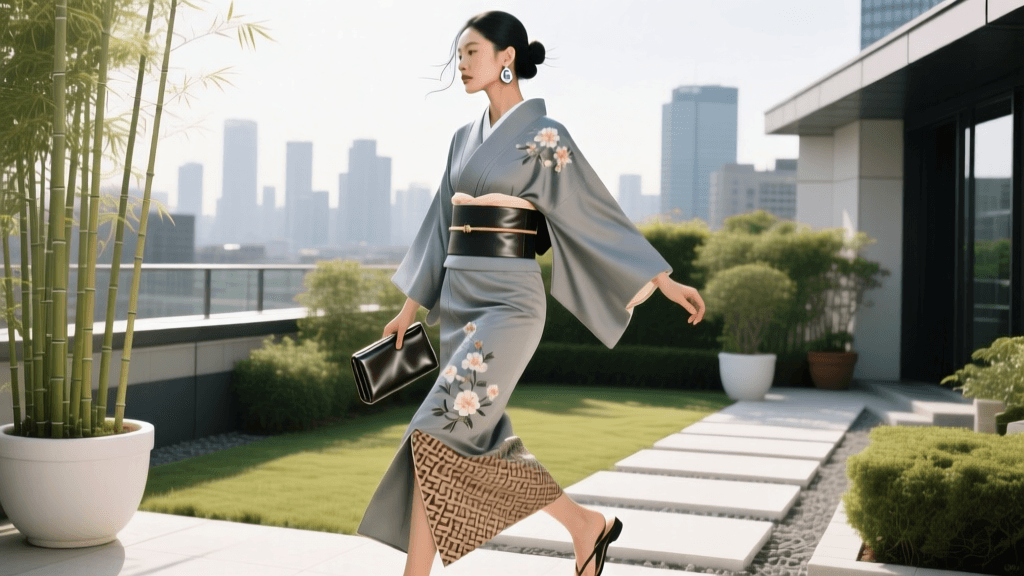
One of the most prominent trends popularized by Tokyo street-style icons and global pop stars is pairing vintage silk kimono with chunky, modern sneakers. The visual friction between delicate, mud-dyed Oshima Tsumugi silk and aggressive rubber soles creates a striking editorial contrast. To execute this, hem the kimono slightly higher than traditional standards—allowing the ankles to show—and skip the traditional tabi socks. Opt for minimalist white leather sneakers or high-end chunky runners like the New Balance 990 series or Balenciaga Track shoes. This grounds the ethereal silk in urban reality.
2. The Corset Obi Technique
The traditional obi (sash) is a stiff, heavily woven belt that requires complex tying techniques like the bunko or fukura-suzume knots. Influencers often bypass this by using the kimono as a wrap dress and cinching the waist with a structured leather corset or a wide, western-style statement belt. This not only simplifies the dressing process but also introduces an hourglass shape that appeals to western fashion sensibilities. When using a corset, ensure the kimono collar is secured with a discreet clip at the waist to prevent the fabric from shifting throughout the day.
3. Deep V Nukikata (Collar Draping)
In traditional dressing, the back collar (nukikata) is pulled down just enough to fit a single fist between the fabric and the nape of the neck. High-fashion stylists frequently exaggerate this drop, pulling the collar down several inches to expose the shoulders and collarbones. This creates a sultry, relaxed, and distinctly modern neckline that pairs exceptionally well with layered gold jewelry or a simple silk camisole underneath.
4. The Haori as Outerwear
The haori, a traditional hip- or thigh-length kimono jacket, has become a staple in the wardrobes of global influencers. Rather than wearing it over a kimono, celebrities frequently drape heavily embroidered or sheer vintage haori over minimalist slip dresses, tailored trousers, or even denim cutoffs. Because the haori is worn open and does not require an obi, it is the most accessible entry point for beginners looking to incorporate Japanese textiles into their daily rotation.
Celebrity Kimono Styling Comparison Chart
Understanding the differences between traditional rules and modern interpretations is crucial for curating an intentional look. The table below breaks down the core elements of both approaches.
| Style Element | Traditional Approach | Celebrity and Influencer Trend | Estimated Cost (USD) |
|---|---|---|---|
| Footwear | Zori sandals with white tabi socks | Chunky sneakers, combat boots, or mules | $100 - $300 |
| Waist Cinching | Fukuro obi with obijime cord and obiage scarf | Leather corset, wide western belt, or chain link | $80 - $250 |
| Collar (Nukikata) | Tight, with a fist-width gap at the nape | Deep V-drape, relaxed and off-shoulder | N/A (Styling technique) |
| Outer Layer | Haori worn strictly with formal kimono | Haori worn over denim, slip dresses, or tailoring | $60 - $200 |
| Sleeve Length (Yuki) | Ends precisely at the wrist bone | Oversized, draping over the hands for editorial effect | $40 - $150 (Vintage) |
Sourcing Your Own Statement Pieces: Timing, Costs, and Measurements
Building a high-fashion kimono wardrobe does not require spending thousands of dollars on new, custom-tailored garments. The most sustainable and cost-effective method favored by stylists is sourcing vintage pieces. The global vintage kimono market is vast, but knowing where and when to shop is the key to finding museum-quality textiles at accessible prices.
Timing and Locations: If you are traveling to Japan, timing your visit with local antique markets is essential. The Kyoto Antique Fair, held at To-ji Temple on the 21st of every month, is a goldmine for stylists. Arriving by 6:30 AM ensures you have first access to premium vintage silk komon (everyday patterned kimono) and furisode (long-sleeved formal kimono) before professional resellers clear the racks. In Tokyo, the Oedo Antique Market at the Tokyo International Forum (held on the first and third Sundays) offers a more curated, albeit slightly pricier, selection of street-style friendly pieces.
Costs: You can expect to pay between $40 and $120 for a high-quality vintage silk komon. Maru or Fukuro obi (formal sashes) typically range from $50 to $150. Avoid purchasing 'costume grade' polyester kimono from tourist shops, as they lack the structural weight and breathability required for high-fashion draping.
Measurements to Memorize: When shopping online via specialized dealers or Etsy, always check the hem width (okumi and ushiro-migoro). Because traditional kimono are woven on narrow looms, the maximum hip width is generally restricted to about 100-110 centimeters (39-43 inches). If you require a wider fit, look for garments labeled as 'modern size' or plan to wear the kimono open as a duster coat over western clothing.
Cultural Appreciation in the Age of Viral Fashion
As the kimono becomes a fixture on global runways and social media feeds, the conversation surrounding cultural appropriation versus appreciation becomes increasingly important. According to BBC Culture's retrospective on the garment's global influence, the kimono has a long history of cross-cultural exchange, dating back to the 17th century when Dutch traders first brought Japanese textiles to Europe, sparking a continent-wide obsession with 'Japonisme'.
However, modern influencers must approach the garment with respect for its foundational rules. The most critical rule of kitsuke is that the left side of the kimono must always be wrapped over the right side. Wrapping right-over-left is strictly reserved for dressing the deceased for burial. Furthermore, local Japanese publications, such as The Japan Times, have noted how contemporary designers and street-style stars are redefining the garment not by mocking its origins, but by elevating its craftsmanship in new contexts.
By investing in authentic, sustainably sourced vintage textiles, understanding the geometry of the tanmono, and styling the garment with intentionality, you participate in the ongoing evolution of the kimono. Whether you are pairing a century-old silk haori with tailored trousers for a gallery opening, or cinching a vintage komon with a leather corset for an editorial shoot, you are engaging with a living, breathing fashion tradition that continues to captivate the world.