Authentic Slavic & Balkan Embroidery Guide: 2026 Trends & Sourcing
The Renaissance of Eastern European Folk Dress in 2026
The landscape of European folk dress has experienced a profound transformation as we navigate through 2026. No longer confined to museum archives or relegated solely to seasonal festival wear, traditional Slavic and Balkan garments have firmly rooted themselves in the global conscious fashion movement. Driven by a renewed interest in heritage craftsmanship, slow fashion, and cultural preservation, artisans from the Carpathian Mountains to the Rhodope valleys are experiencing unprecedented demand for their textile arts. Today, the focus has shifted entirely away from mass-produced, synthetic approximations toward authentic, hand-loomed, and naturally dyed masterpieces.
This comprehensive guide explores the intricate world of Slavic and Balkan folk embroidery, specifically focusing on the iconic Ukrainian Vyshyvanka and the Bulgarian Shevitsa. We will decode the ancient motifs, outline the current 2026 market trends, and provide actionable advice on how to ethically source, care for, and style these remarkable garments for contemporary wardrobes.
Decoding the Motifs: Vyshyvanka vs. Shevitsa
To truly appreciate Eastern European folk dress, one must understand that the embroidery is not merely decorative; it is a complex visual language. Historically, these stitches served as talismans for protection, fertility, and health, with specific patterns denoting the wearer's marital status, village of origin, and social standing.
The Ukrainian Vyshyvanka: A Slavic Masterpiece
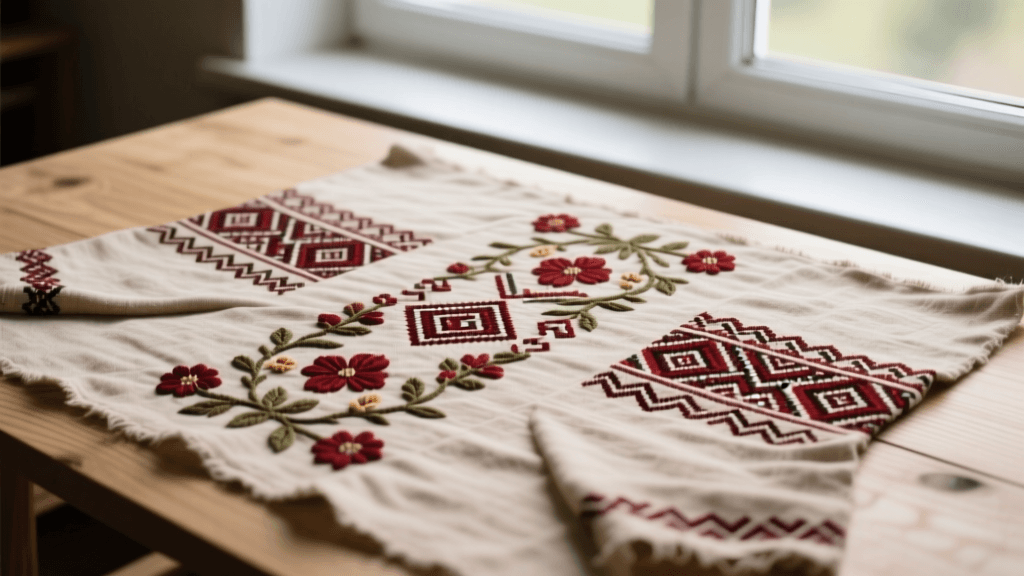
The Vyshyvanka is the quintessential Slavic embroidered shirt, recognized globally as a symbol of Ukrainian heritage. In 2026, the most significant trend in Vyshyvanka craftsmanship is the revival of the 'Bila' (white-on-white) embroidery technique, originating from the Poltava region. This incredibly labor-intensive method relies on texture and shadow rather than color, utilizing up to 180 different stitch variations to create raised, sculptural geometric and floral patterns on raw linen.
Conversely, the Hutsulshchyna region in the Carpathian Mountains is famous for its dense, vibrant geometric motifs. The dominant colors here are deep reds, blacks, and bright yellows, often accented with metallic threads or glass beads. According to cultural preservation records documented in the UNESCO Intangible Cultural Heritage Lists, the knowledge transmission of these specific regional stitches has seen a massive resurgence among younger generations of artisans who are now utilizing digital archives to reconstruct lost 19th-century patterns.
The Bulgarian Shevitsa: Balkan Geometric Codes
Moving south into the Balkans, the Bulgarian Shevitsa represents a masterclass in geometric symbolism. Unlike the flowing floral elements often found in Western European folk dress, Shevitsa is strictly mathematical, rooted in ancient Thracian and Slavic cosmology. The motifs are predominantly cross-stitched and are designed to mirror the natural order of the universe.
Key motifs include the 'Elbetitsa' (an eight-pointed star symbolizing harmony and the four cardinal directions), the 'Kanatitsa' (representing the family tree and longevity), and the 'Makaz' (a diamond shape symbolizing fertility and the union of masculine and feminine energies). In 2026, contemporary Balkan textile analysts have begun mapping these codes using AI pattern recognition, yet the actual creation remains a fiercely guarded manual tradition passed down through rural cooperatives.
2026 Sourcing Guide: Where to Find Authentic Pieces
Sourcing authentic Eastern European folk dress requires diligence. The market is unfortunately saturated with machine-embroidered imports that misappropriate cultural motifs. When building a heritage collection in 2026, buyers should seek out certified artisan cooperatives, specialized heritage boutiques, and direct commissions from master embroiderers. Below is a comparative breakdown of current market expectations for authentic, handcrafted pieces.
| Region of Origin | Garment Type | Signature Motif / Style | 2026 Artisan Price Range (USD) | Typical Lead Time |
|---|---|---|---|---|
| Poltava, Ukraine | Sorochka (Shirt) | White-on-white (Bila), cutwork | $350 - $600 | 2 - 4 Months |
| Hutsulshchyna, Ukraine | Vyshyvanka | Dense geometric, beadwork | $280 - $500 | 1 - 3 Months |
| Rhodope Mts, Bulgaria | Nosia (Folk Costume Shirt) | Elbetitsa, heavy red cross-stitch | $220 - $450 | 1 - 2 Months |
| Transylvania, Romania | Ie (Traditional Blouse) | Altita (shoulder/sleeve gathering) | $300 - $650 | 3 - 5 Months |
When evaluating a piece, always inspect the reverse side of the fabric. Authentic hand embroidery, particularly in the Slavic tradition, is executed with such precision that the back of the garment looks nearly identical to the front, with no loose threads or tangled knots. For deeper insights into identifying historical versus contemporary textile construction, the Victoria and Albert Museum Fashion Collections offers extensive digital resources and conservation guidelines that are invaluable for serious collectors.
Materials: The Return to Heritage Fibers and Natural Dyes
A defining characteristic of the 2026 folk dress revival is the strict adherence to heritage materials. Artisans have largely abandoned commercial cotton and synthetic threads in favor of locally sourced, hand-spun fibers. Ukrainian and Romanian weavers are championing the use of Carpathian hemp and organic flax, which yield a durable, breathable linen that softens beautifully over decades of wear.
The dyeing process has also returned to its botanical roots. The vibrant reds characteristic of Balkan Shevitsa are once again being extracted from madder root and cochineal, while deep blacks and browns are achieved through walnut husks and iron mordants. Yellow and green hues are derived from weld, woad, and local chamomile. These natural dyes not only provide a rich, complex color palette that synthetic dyes cannot replicate, but they are also inherently antimicrobial and environmentally sustainable, aligning perfectly with the eco-conscious values of modern consumers.
Preservation and Care for Heritage Garments
Investing in authentic Eastern European folk dress requires a commitment to proper textile care. Because these garments are crafted from natural fibers and dyed with organic botanicals, they are highly susceptible to damage from harsh chemicals and improper storage.
- Washing: Never machine wash a hand-embroidered Vyshyvanka or Ie. Hand wash in cool water (below 30°C) using a pH-neutral, eco-friendly detergent specifically formulated for delicate natural fibers. Do not wring or twist the fabric; instead, gently press out excess water and lay the garment flat on a clean, dry towel to air dry away from direct sunlight.
- Ironing: Always iron the garment on the reverse side while it is still slightly damp. Place a clean cotton pressing cloth between the iron and the embroidery to prevent crushing the three-dimensional texture of the stitches, particularly the raised white-on-white Poltava work.
- Storage: Store heritage garments in breathable, unbleached cotton bags. Avoid plastic covers, which can trap moisture and cause mildew or yellowing of the linen. Include natural cedar blocks or dried lavender sachets to deter textile pests without introducing toxic chemical odors into the fibers.
For museum-grade preservation techniques and advanced textile care, referencing the archival standards provided by the Metropolitan Museum of Art Collection Search can provide collectors with professional insights into long-term fabric conservation.
Styling Traditional Embroidery for Contemporary Wear
The beauty of the 2026 fashion landscape is its fluidity. Traditional Slavic and Balkan garments are no longer treated as rigid costumes but as versatile, statement-making pieces that integrate seamlessly into a modern wardrobe. The key to styling a Vyshyvanka or a Shevitsa blouse is contrast and balance.
For a sophisticated, contemporary look, pair a heavily embroidered, voluminous linen blouse with tailored, high-waisted wool trousers or a structured midi skirt. This juxtaposition balances the romantic, historical volume of the folk garment with sharp, modern silhouettes. In cooler months, layer a delicate Romanian Ie beneath a minimalist, oversized blazer or a chunky, hand-knit cardigan, allowing the intricate Altita sleeve embroidery to peek through.
Accessories should remain understated to let the embroidery take center stage. Opt for minimalist leather goods, simple gold or silver jewelry, and avoid competing patterns. Footwear should be grounded and practical—think high-quality leather ankle boots or classic loafers rather than overtly rustic or theatrical shoes. By treating these heritage pieces as high-end artisanal fashion rather than costume wear, you honor the craftsmanship while ensuring the garments remain relevant and wearable in daily life.
Conclusion
The Eastern European folk dress revival of 2026 is a testament to the enduring power of cultural heritage. By understanding the profound symbolism behind the Slavic Vyshyvanka and the Balkan Shevitsa, and by committing to ethical sourcing and meticulous care, we do more than just acquire beautiful clothing. We become active participants in the preservation of ancient textile traditions, ensuring that the visual languages of our ancestors continue to be spoken, worn, and celebrated for generations to come.