Carpathian Folk Dress Guide 2026: Hutsul & Lemko Costumes
The Enduring Legacy of Carpathian Mountain Textiles
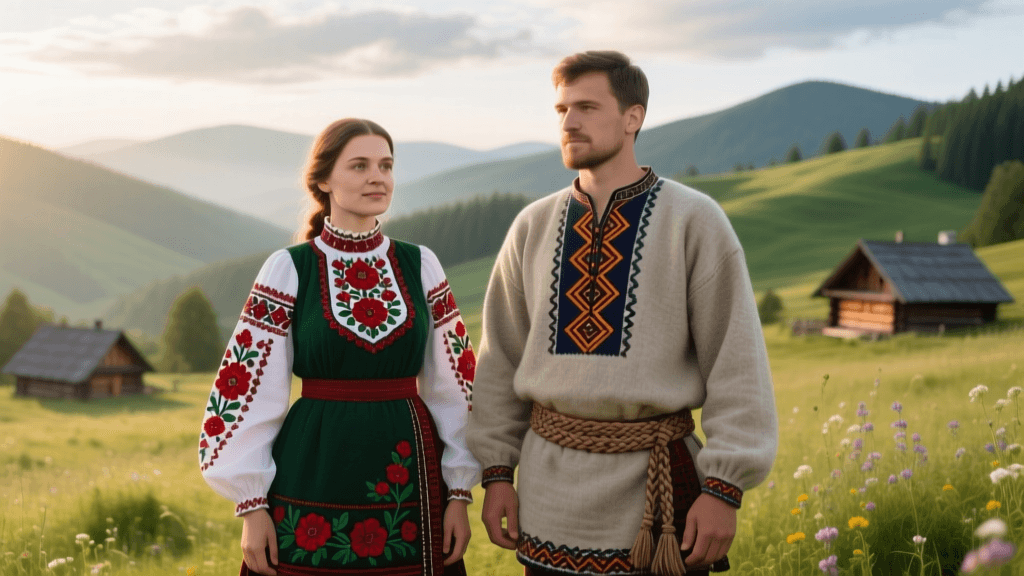
As we navigate the global fashion landscape in 2026, the pivot toward sustainable, heritage-driven wardrobes has placed traditional European folk dress at the forefront of cultural preservation. Among the most intricate and historically rich of these traditions are the folk costumes of the Carpathian Mountains. Specifically, the distinct garments of the Hutsul and Lemko ethnographic groups offer a masterclass in regional textile adaptation, utilizing local wool, linen, and metalwork to survive harsh alpine winters while maintaining profound aesthetic beauty.
According to the Encyclopedia of Ukraine, the Hutsul people have long been celebrated for their vibrant material culture, a tradition that continues to thrive and evolve in 2026. This guide explores the defining characteristics of Hutsul and Lemko folk dress, providing a comprehensive regional comparison, current market pricing for authentic garments, and actionable advice for collectors and cultural enthusiasts.
The Hutsul Tracht: Vibrant Textiles and Metalwork
The Hutsul region, nestled high in the Carpathian Mountains, is renowned for its bold, highly decorated garments. The harsh climate necessitated the use of thick sheepskin and wool, but the Hutsul people transformed these utilitarian materials into canvases of extraordinary artistry. In 2026, the demand for authentic Hutsul outerwear has surged, driven by a global appreciation for slow fashion and artisanal craftsmanship.
The Kiptar and Keptar
The centerpiece of Hutsul winter dress is the kiptar (or keptar), a sleeveless sheepskin vest. Traditionally, these were crafted from the fleece of local mountain sheep, with the wool facing inward for warmth and the leather exterior heavily embroidered with colorful wool yarns, brass chains, and leather appliqué. Today, master artisans in the Ivano-Frankivsk region continue to use traditional hand-tooling techniques. A genuine, hand-crafted Hutsul kiptar in the 2026 market typically ranges from €500 to €900, reflecting the hundreds of hours of labor and the ethical sourcing of alpine materials.
Sorochka and Gerdan Beadwork
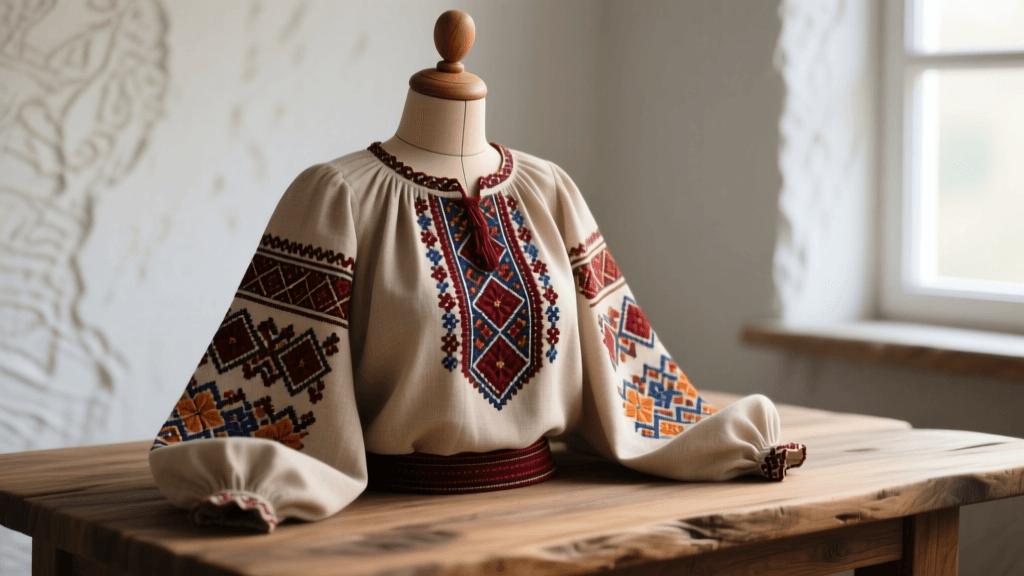
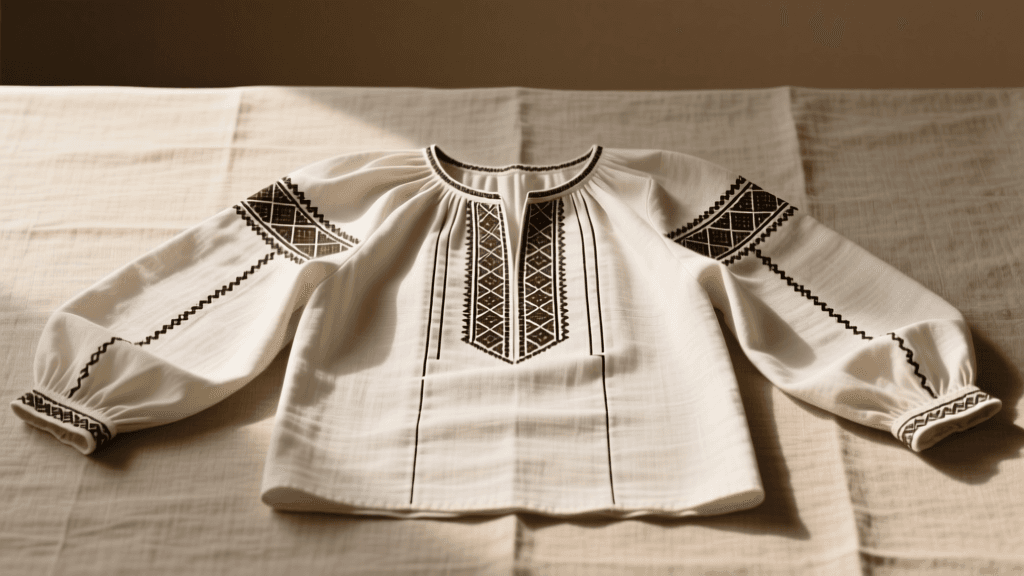
Beneath the heavy outerwear lies the sorochka, a linen tunic shirt. Hutsul embroidery is characterized by dense geometric patterns, often utilizing a technique called nyzynyvka (a type of reverse cross-stitch that creates a neat, reversible pattern). The colors are striking: deep blacks, vibrant reds, and bright yellows derived from natural dyes. In 2026, there has been a massive revival of heritage dyeing, with artisans returning to Rubia tinctorum (madder root) for reds and onion skins for rich yellows.
No Hutsul festival ensemble is complete without a gerdan, a wide, intricate collar made of glass seed beads. Originally popularized in the 19th century when Venetian glass beads became available via trade routes, modern 2026 gerdan weavers use high-quality Czech glass beads to create stunning, flexible tapestries that rest across the shoulders and chest.
Lemko Folk Dress: Subtle Elegance and Linen Mastery
While the Hutsul aesthetic is loud and heavily ornamented, the traditional dress of the Lemko people—who historically inhabited the northern slopes of the Carpathians—leans toward subtle elegance, intricate weaving, and refined linen work. As noted by ethnographic archives detailing Lemko cultural heritage, their garments reflect a deep connection to the forested, slightly lower-altitude environments they called home.
The Plakhta and Zapaska
Instead of the heavy wool skirts found in other regions, Lemko women traditionally wore a plakhta or zapaska—woven wrap skirts made of linen or lightweight wool. These garments were woven on traditional looms, featuring complex checkered or striped patterns in indigo, white, and madder red. The 2026 revival of hand-weaving has seen a new generation of textile artists recreating these specific checkered patterns using locally sourced, organic flax.
The Namitka Headcovering
One of the most distinctive elements of Lemko dress is the namitka, a long, sheer linen cloth wrapped intricately around the head and shoulders. The wrapping technique was a closely guarded cultural skill, with different folds indicating a woman's marital status and specific village origin. Mastering the namitka wrap remains a focal point for cultural preservation societies hosting workshops across Central Europe in 2026.
Regional Comparison Chart: Carpathian Folk Dress
| Feature | Hutsul Dress | Lemko Dress | Boyko Dress |
|---|---|---|---|
| Primary Outerwear | Kiptar (sheepskin vest), heavy wool coats | Leibyk (short wool jacket), linen cloaks | Serdak (dark wool vest), long sheepskin coats |
| Embroidery Style | Dense geometric, vibrant red/black/yellow | Floral and geometric, subtle indigo/white | Minimalist, primarily white-on-white or black |
| Key Accessories | Gerdan (beaded collar), brass chains | Namitka (linen headwrap), coral necklaces | Wooden crosses, simple leather belts |
| 2026 Market Price (Full Set) | €1,200 - €2,500 | €800 - €1,500 | €600 - €1,100 |
Sourcing Authentic Carpathian Garments in 2026
For collectors, museums, and heritage enthusiasts looking to acquire authentic Carpathian folk dress in 2026, the market has shifted significantly toward direct-to-artisan platforms. While vintage pieces can still be found in European auction houses, the most ethical and culturally supportive method is commissioning directly from cooperatives in the Subcarpathian and Ivano-Frankivsk regions.
When sourcing, it is vital to distinguish between mass-produced 'festival wear' and genuine ethnographic garments. Here is a checklist for authenticating 2026 Carpathian textiles:
- Stitch Reversibility: Authentic Hutsul nyzynyvka embroidery should look nearly identical on both the front and back of the fabric. Machine embroidery will show messy bobbin threads on the reverse.
- Material Burn Test: Genuine heritage garments use 100% natural fibers. If a seller claims a plakhta is traditional linen, a discreet burn test of a loose thread should yield a fine ash and smell like burning paper, not melt like synthetic polyester.
- Hardware Patina: Vintage or traditionally cast brass elements on a kiptar should have a natural, uneven patina. Mass-produced 2026 replicas often use uniformly shiny, lacquered alloy.
- Dye Bleeding: Garments dyed with traditional 2026 natural madder or woad may exhibit slight, beautiful variations in color depth, whereas synthetic chemical dyes will be perfectly uniform.
'The mountains do not just shape the land; they weave themselves into the very threads of our garments. To wear the tracht is to wear the geography of our ancestors.' — Traditional Carpathian Proverb
The Broader Artisan Ecosystem
It is impossible to discuss Carpathian folk dress without acknowledging the broader material culture that supports it. The same artisan communities that weave linen and tool leather are also responsible for other UNESCO-recognized crafts. For instance, the Kosiv painted ceramics, a staple of Hutsul identity, share the exact same geometric motifs and color palettes (green, yellow, and brown on a white slip) found in regional textile embroidery. Supporting the broader Carpathian artisan ecosystem ensures that the supply chains for natural dyes, hand-spun wool, and traditional loom parts remain economically viable in 2026.
Caring for Heritage Wool and Linen
Owning a piece of Carpathian folk history requires specialized care, especially for garments that blend raw sheepskin with delicate linen embroidery. In 2026, conservationists recommend the following protocols for maintaining these textiles:
1. Climate Control: Sheepskin vests (kiptars) must be stored in a climate-controlled environment with a relative humidity of 45-55%. Too much moisture will cause the leather hide to rot, while overly dry conditions will cause it to crack and shatter.
2. Cleaning Embroidered Linen: Never machine wash a hand-embroidered sorochka. Instead, soak the garment in a bath of distilled water with a pH-neutral, conservation-grade textile detergent. Gently agitate by hand, rinse thoroughly, and lay flat on a clean, dry towel away from direct sunlight to prevent the natural dyes from fading.
3. Pest Prevention: Alpine wool is highly susceptible to clothes moths. Instead of chemical mothballs, which can degrade natural dyes and leave a permanent odor, use sealed cedar chests combined with dried lavender and regular freezing cycles (placing the garment in a sealed bag and freezing it for 72 hours twice a year to kill any microscopic larvae).
Conclusion
The traditional folk dress of the Carpathian Mountains is far more than a historical curiosity; it is a living, breathing testament to human ingenuity and regional pride. Whether you are drawn to the vibrant, bead-laden majesty of the Hutsul tracht or the quiet, woven elegance of the Lemko plakhta, understanding the nuances of these garments enriches our appreciation for European textile history. As the 2026 heritage fashion movement continues to grow, investing in authentic, ethically sourced Carpathian garments ensures that these ancient mountain looms will continue to clatter for generations to come.