Carpathian Folk Dress 2026: Romanian Ie And Ukrainian Vyshyvanka
The Carpathian Textile Renaissance of 2026
The Carpathian Mountain range, sweeping across Central and Eastern Europe, has long served as a cradle for some of the continent's most intricate and symbolically rich textile traditions. As we navigate the fashion and cultural landscape of 2026, there is a profound, renewed global interest in authentic, handcrafted European folk dress. Discerning collectors, sustainable fashion advocates, and cultural historians are increasingly turning away from mass-produced fast fashion, seeking instead the profound heritage embedded in traditional garments. Among the most celebrated and highly sought-after pieces in this regional renaissance are the Romanian Ie and the Ukrainian Vyshyvanka. Both garments share a Carpathian lineage but diverge beautifully in their structural anatomy, symbolic motifs, and regional execution.
Understanding the nuances of these traditional garments requires a deep dive into their construction, the natural materials utilized by contemporary artisans, and the ethical sourcing practices that define the 2026 market. This guide provides a comprehensive, actionable look at the Romanian and Ukrainian folk dress traditions, equipping you with the knowledge to identify, source, and style these masterpieces of European textile heritage.
The Romanian Ie: Architecture of the Shoulder
The Romanian Ie (pronounced 'yeh') is far more than a simple peasant blouse; it is a complex topographical map of identity, community, and cosmological belief. In 2026, the demand for authentic, hand-stitched Ii has surged, driven by a desire to preserve the UNESCO Intangible Cultural Heritage lists recognized traditional techniques of making the blouse with embroidery on the shoulder. The anatomy of the Ie is strictly governed by centuries-old tradition, with every seam and stitch serving a distinct purpose.
Anatomy and Symbolism
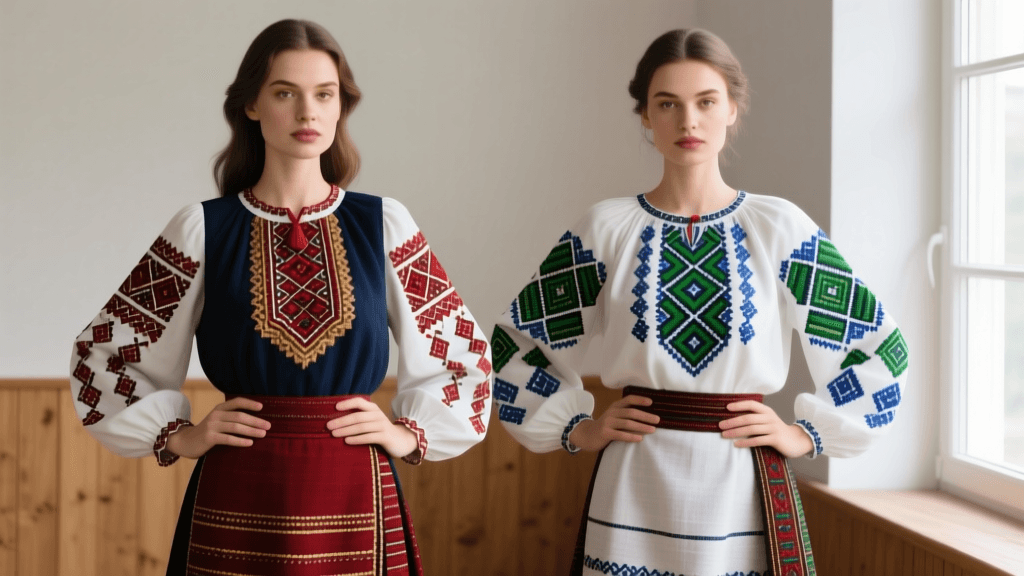
The most crucial and defining element of the Ie is the altița, the dense, rectangular embroidery panel located on the upper sleeve. Historically, the complexity, width, and color palette of the altița indicated the wearer's social standing, marital status, and specific regional origin. Below the altița lies the increț, a gathered band that provides structural support and acts as a visual bridge. Flowing down the sleeve and bodice are the râuri (rivers), vertical bands of embroidery that guide the eye downward and are believed to channel positive energy and protect the wearer from the 'evil eye'.
In regions like Muscel and Argeș, master artisans still utilize hand-spun hemp and naturally dyed silk threads. The quintessential stitch used is the punctul românesc (Romanian hemstitch), a complex interlacing technique that creates a durable, reversible, and highly textured geometric pattern. As of 2026, a genuine, hand-embroidered Ie from a recognized cooperative in the Argeș county typically costs between €450 and €900, reflecting the 150 to 300 hours of meticulous labor required to complete a single garment.
The Ukrainian Vyshyvanka: Geometry and Resilience
Across the Carpathian highlands, the Ukrainian Vyshyvanka serves a parallel yet distinct cultural function. While the Romanian Ie is celebrated for its flowing, gathered silhouette and intricate shoulder architecture, the Vyshyvanka is defined by its geometric rigor, protective talismans, and profound connection to agrarian cycles. In 2026, the Vyshyvanka continues to be a powerful emblem of resilience and national identity, worn not just on cultural holidays but integrated into contemporary, global wardrobes as a statement of solidarity and heritage.
Regional Variations and Motifs
The regional variations of the Vyshshyvanka are staggering, with over 100 distinct historical embroidery techniques documented across Ukraine. The Poltava region is world-renowned for its biloyu po bilomu (white-on-white) embroidery. This technique is a masterclass in texture, utilizing cutwork, drawn-thread work, and satin stitch to create a subtle, monochromatic relief that catches the light beautifully. In stark contrast, the Hutsul region in the Carpathian mountains favors dense, polychromatic geometric patterns, heavily featuring black, red, and yellow, often incorporating seed beads and metallic threads for a striking visual impact.
According to analyses by the Metropolitan Museum of Art's Costume Institute, the geometric motifs found on traditional Carpathian garments—such as the eight-pointed star (Rozha), the rhombus with extended corners, and the continuous zigzag (meander)—are ancient agrarian symbols. The rhombus represents a sown field and fertility, while the zigzag acts as a barrier against malevolent spirits. Ethical sourcing in 2026 means purchasing directly from Ukrainian artisan platforms like the Lviv-based Dykanka collective or verified diaspora cooperatives, with authentic hand-stitched shirts ranging from $250 to $600 depending on the complexity of the cutwork.
The 2026 Artisanal Fiber and Natural Dye Revival
A major trend defining the European folk dress market in 2026 is the strict adherence to historical, sustainable materials. Modern collectors and artisans are rejecting synthetic blends in favor of heritage fibers. Hand-loomed hemp and flax linen remain the foundational fabrics for both the Ie and the Vyshyvanka. These fibers are prized not only for their historical accuracy but also for their thermoregulating properties and exceptional durability.
Furthermore, the natural dye revival has reached maturity. Artisans are returning to botanical sources to achieve the vibrant, colorfast hues seen in antique museum pieces. Madder root is used to achieve deep, rust-reds; woad and indigo provide rich blues; and weld or onion skins yield brilliant yellows and golds. When sourcing a garment in 2026, asking the artisan for a 'botanical dye certificate' or specific details on their mordanting process (often using alum or iron) is a standard practice that guarantees the authenticity and longevity of the piece.
Comparative Analysis: Ie vs. Vyshyvanka
To assist collectors and enthusiasts in understanding the distinct characteristics of these two Carpathian masterpieces, we have compiled a comparative data table based on 2026 market standards and historical textile analysis.
| Feature | Romanian Ie | Ukrainian Vyshyvanka |
|---|---|---|
| Primary Fabric | Hand-loomed hemp or cotton-linen blends | Flax linen or raw hemp |
| Key Embroidery Zones | Altița (shoulder), Râuri (sleeves/bodice) | Chest, cuffs, collar, and central placket |
| Dominant Color Palettes | Argeș (black/red), Muscel (gold/black) | Poltava (white-on-white), Hutsul (polychrome) |
| Signature Technique | Punctul românesc (interlaced hemstitch) | Cutwork, drawn-thread, cross-stitch |
| 2026 Avg. Artisan Price | €450 - €900 | $250 - $600 |
| Silhouette | Gathered neckline, voluminous balloon sleeves | Straight cut, structured cuffs, varying sleeve widths |
Sourcing Authenticity: Red Flags in the 2026 Market
As the popularity of Carpathian folk dress grows, so does the market for machine-embroidered replicas. To ensure you are investing in a genuine, handcrafted piece, utilize the following verification techniques when evaluating garments:
- The Reverse Side Test: Turn the garment inside out. Hand embroidery will show a nearly identical pattern on the reverse side, with slight, organic variations in tension. Machine embroidery will reveal messy, chaotic bobbin threads and uniform, synthetic-looking backing stabilizers.
- Thread Composition: Authentic pieces use cotton, wool, or silk threads. If the embroidery thread has a high-gloss, plastic-like sheen, it is likely modern polyester, which is a hallmark of mass-produced tourist items rather than true artisanal work.
- Asymmetry and 'Flaws': True folk art embraces the human hand. Slight asymmetries in motif placement or minor variations in stitch length are indicators of handwork. Perfect, mathematical uniformity across a large surface area almost always indicates computerized machine embroidery.
- Fabric Slubs: Hand-loomed linen and hemp will feature natural 'slubs' (thick and thin spots in the yarn). Perfectly smooth, uniformly woven fabric suggests industrial, factory-milled textiles.
Styling Traditional Folk Dress for Contemporary Wardrobes
Integrating historical garments into a 2026 wardrobe requires a balance of respect for the textile and modern aesthetic sensibilities. The voluminous nature of both the Ie and the Vyshyvanka makes them ideal statement pieces that pair beautifully with structured, minimalist bottoms. For a sophisticated daytime look, pair a white-on-white Poltava Vyshyvanka with high-waisted, wide-leg linen trousers in charcoal or navy, allowing the intricate cutwork to stand out against the dark backdrop. Conversely, an Argeș Ie with its striking black and rust-red motifs can be elegantly tucked into a tailored, midi-length A-line skirt, cinched with a contemporary leather belt to define the waist and manage the blouse's natural volume. Avoid pairing these highly detailed tops with busy, patterned bottoms, as this will visually overwhelm the intricate embroidery and diminish the cultural impact of the garment.
Archival Care and Maintenance
Preserving the structural integrity and vibrancy of Carpathian folk dress requires meticulous care, especially when dealing with natural dyes and delicate cutwork. According to the conservation principles outlined by the Victoria and Albert Museum's fashion conservation guidelines, historical and artisanal textiles should never be subjected to harsh chemical detergents or aggressive machine washing. Instead, hand wash garments in cool water using a pH-neutral, conservation-grade detergent. Never wring or twist the fabric, as this can distort the intricate drawn-thread work and break the delicate fibers of the altița. Lay the garment flat on a clean, dry towel to air dry, away from direct sunlight, which will rapidly fade botanical dyes like madder and weld. For long-term storage, fold the garment with acid-free tissue paper to prevent hard creases from snapping the embroidered threads, and store in a breathable cotton bag in a cool, climate-controlled environment.
Conclusion
The Carpathian folk dress traditions of Romania and Ukraine represent a masterclass in textile engineering, symbolic storytelling, and cultural endurance. As we move through 2026, the conscious choice to source, wear, and preserve the Ie and the Vyshyvanka is not merely a fashion statement, but an act of cultural stewardship. By understanding the distinct anatomy, regional variations, and ethical sourcing parameters of these garments, collectors and enthusiasts can ensure that the legacy of Carpathian artisans continues to be celebrated and protected for generations to come.