Top Online Marketplaces for Authentic Banarasi Saris 2026
The Evolution of Banarasi Silk E-Commerce in 2026
The landscape of purchasing traditional South Asian garments has undergone a massive digital transformation. In 2026, sourcing an authentic Banarasi silk sari no longer requires a physical pilgrimage to the narrow, bustling alleys of Varanasi. Today’s premium online marketplaces have bridged the gap between heritage weavers and global connoisseurs, offering unprecedented transparency, high-resolution macro photography, and even Augmented Reality (AR) draping tools. For buyers seeking genuine handloom textiles, the internet has evolved from a risky bazaar of unverified sellers into a curated ecosystem of artisanal platforms. However, as the demand for traditional Indian garments grows globally, so does the sophistication of mass-produced replicas. Navigating this digital space requires a keen understanding of textile authentication, weave structures, and the specific marketplaces that prioritize artisan welfare and heritage preservation.
Why Authenticity Matters: The Threat of Power-Loom Replicas
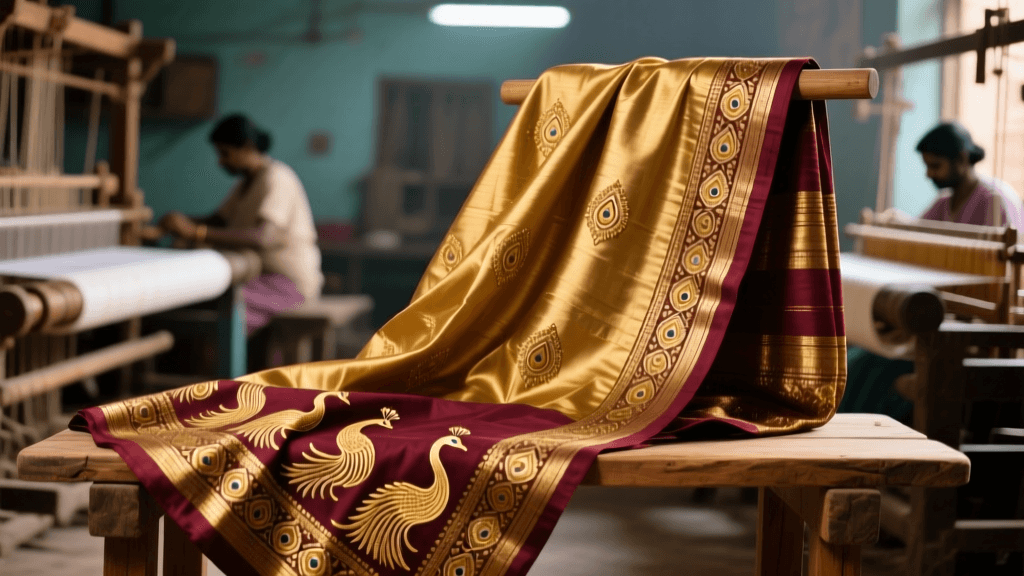
The Banarasi sari is celebrated for its intricate zari (metallic thread) work, rich silk bases, and Mughal-inspired motifs like kalga (paisley) and bel (creeping vines). True handloom Banarasi saris are protected by a Geographical Indication (GI) tag, a legal certification that guarantees the textile originates from specific districts in Uttar Pradesh and is woven using traditional methods. According to the World Intellectual Property Organization (WIPO), GI tags are essential for protecting traditional knowledge and ensuring that the economic benefits of regional crafts return to the local artisans.
Unfortunately, the market is saturated with power-loom saris manufactured in Surat and other industrial hubs. These machine-made replicas use synthetic yarns, polyester zari, and computerized jacquard attachments to mimic the Banarasi aesthetic in a fraction of the time. While they may look similar to the untrained eye on a screen, they lack the structural integrity, breathability, and generational longevity of a handloom piece. Buying from verified online marketplaces in 2026 is the most effective way to ensure your investment supports the survival of the handloom industry.
Top 4 Verified Online Marketplaces for Banarasi Saris
1. Tilfi: Direct-from-Weaver Transparency
Tilfi has established itself as a premier destination for authentic Banarasi textiles by cutting out middlemen and partnering directly with master weavers in Varanasi. In 2026, Tilfi’s platform stands out for its radical supply chain transparency. Each sari listing includes the profile of the artisan or weaving cluster responsible for its creation. They specialize in pure Katan silk (a plain-woven fabric made by twisting together different numbers of silk yarns) and offer a wide array of traditional techniques, including Butidar (small floral motifs), Jangla (dense, scrolling vine patterns), and Tanchoi (a weaving technique that uses a single or double warp and multiple colored wefts). Their pricing reflects fair wages for weavers, and every piece is shipped with a GI certificate and a Silk Mark tag.
2. Jaypore: Curated Artisanal Luxury
For buyers seeking a highly curated, luxury shopping experience, Jaypore remains a top-tier marketplace. Jaypore focuses on heritage revival, often collaborating with design institutes and master weavers to create exclusive, limited-edition collections. Their 2026 catalog features a stunning array of vintage-inspired Banarasi saris, including rare Kadwa weaves, where each motif is woven individually, making the fabric incredibly durable and labor-intensive. Jaypore’s user interface provides exceptional macro-zoom capabilities, allowing buyers to inspect the interlocking weft threads and the purity of the zari. While their price point is at the premium end of the spectrum, their quality assurance and elegant packaging make them a favorite for bridal trousseaus and heirloom investments.
3. India Handloom Brand: The Government-Backed Standard
Launched by the Ministry of Textiles, the India Handloom Brand portal is the most authoritative online marketplace for genuine Indian handlooms. To be listed on this platform, weavers and cooperatives must pass rigorous quality checks regarding yarn purity, dye safety, and traditional weaving methods. Shopping here in 2026 guarantees that you are purchasing a 100% authentic, GI-certified Banarasi sari free from the azo dyes and synthetic blends found in unregulated markets. The portal connects buyers directly with state-recognized weaving cooperatives, ensuring that the highest percentage of the retail price goes back into the community. The interface is more utilitarian than private luxury boutiques, but the authenticity guarantee is unparalleled.
4. Karagiri: Tech-Enabled Customization and Global Reach
Karagiri has revolutionized the online sari shopping experience by combining a massive inventory of authentic handlooms with cutting-edge e-commerce technology. For international buyers, Karagiri is often the marketplace of choice in 2026 due to its seamless global shipping, localized currency pricing, and responsive customer service. They offer an extensive selection of Banarasi silk, ranging from heavy bridal pieces to lightweight Kora (organza) silk saris suitable for summer events. A major advantage of Karagiri is their integrated tailoring service; buyers can upload their measurements and select modern blouse designs, receiving a fully stitched, ready-to-drape ensemble. Their strict authentication process ensures that all Banarasi silks sold under their premium label carry the requisite Silk Mark certification.
2026 Marketplace Comparison Chart
| Marketplace | Weaver Direct | GI & Silk Mark Certified | Price Range (USD) | Global Shipping |
|---|---|---|---|---|
| Tilfi | Yes | Yes | $180 - $1,200+ | Yes (Select Regions) |
| Jaypore | Curated Partners | Yes | $300 - $2,500+ | Yes (Worldwide) |
| India Handloom | Yes (Cooperatives) | Yes (Govt. Verified) | $150 - $900 | Limited |
| Karagiri | Verified Vendors | Yes (Premium Label) | $120 - $1,500 | Yes (Worldwide) |
How to Verify Authenticity Before and After You Buy
Even when shopping on reputable platforms, an educated buyer should know how to verify the authenticity of a Banarasi sari. The most critical indicator is the Silk Mark, an initiative by the Silk Mark Organisation of India. This holographic tag is affixed only to products made of 100% pure silk and can be scanned or verified via their official database.
When your sari arrives, examine the reverse side of the fabric. A genuine handloom Banarasi will show a distinct grid-like structure and small loose threads where the weaver has changed bobbins or tied off the zari. Power-loom fabrics, by contrast, will have a perfectly uniform, flat reverse side with no loose threads, as the machine automatically cuts and locks the yarn. Additionally, pure zari (which uses a silk core wrapped in flattened silver or gold wire) will feel heavy and slightly malleable. If the metallic threads feel stiff, overly shiny, or lightweight, they are likely synthetic polyester or copper-coated plastics. Finally, if the marketplace provides a swatch, you can perform a burn test: pure silk will burn slowly, smell like singed hair, and leave a crushable, powdery ash, whereas synthetic blends will melt into a hard, plastic-like bead.
Pricing Expectations for Pure Handloom Banarasi in 2026
Understanding the financial investment required for a genuine Banarasi sari is crucial to avoiding scams. In 2026, the cost of raw silk yarn, precious metals for real zari, and fair-wage compensation for skilled artisans has driven the baseline prices for authentic handlooms upward.
- Pure Katan Silk with Real Zari: Saris featuring pure silk bases and genuine silver/gold zari are heirloom pieces. Expect to pay between $600 and $3,000+ USD, depending on the density of the jaal (all-over web pattern) and the intricacy of the Kadwa work.
- Katan Silk with Tested Zari: 'Tested zari' is a high-quality synthetic alternative that mimics the look of real metal without the tarnishing or extreme weight. These saris are more practical for regular wear and typically range from $180 to $450 USD.
- Kora (Organza) Silk: Known for its sheer, crisp texture and delicate cut-work (katawa) motifs, authentic handloom Kora silk saris generally cost between $250 and $700 USD.
- Banarasi Georgette: Handwoven georgette offers a fluid, modern drape while maintaining traditional motifs. Prices usually fall between $150 and $400 USD.
If you encounter a marketplace listing a 'Pure Handloom Banarasi Silk' sari for under $80 USD in 2026, it is almost certainly a power-loom replica made of art silk (artificial silk).
Caring for Your Handloom Investment
Proper maintenance is essential to preserve the structural integrity and vibrant colors of your Banarasi silk. Always rely on professional dry cleaning for the first wash to set the dyes and remove any residual starch from the weaving process. For subsequent cleaning, seek out dry cleaners who specialize in heritage textiles. Never store a silk sari in plastic, as it traps moisture and causes the silk to rot or yellow. Instead, wrap your sari in unbleached muslin or pure cotton cloth, which allows the natural fibers to breathe. Refold the sari every three to four months to prevent the silk from tearing along permanent crease lines, and store it in a cool, dark wooden drawer away from direct sunlight and humidity. By purchasing from verified 2026 marketplaces and caring for the textile properly, your Banarasi sari will remain a breathtaking piece of wearable art for generations.