Drafting a 15th-Century Burgundian Kirtle: 2026 Maker's Guide
The Resurgence of the Burgundian Kirtle in 2026
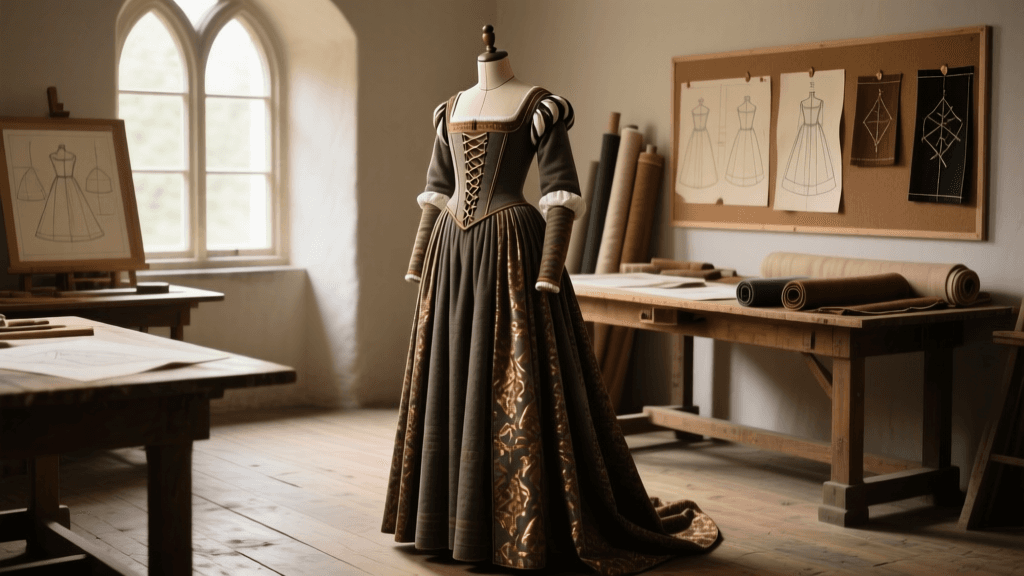
The 15th-century Burgundian court, under the rule of Philip the Good, set the undisputed standard for European fashion. At the heart of this sartorial revolution was the kirtle, a foundational garment worn beneath the voluminous, fur-lined houppelande. In 2026, the intersection of the slow fashion movement, historical reenactment, and digital pattern-making has sparked a massive revival of medieval and Renaissance European clothing. Modern makers are no longer satisfied with generic 'costume' approximations; they demand historically accurate, structurally sound garments that reflect the true textile heritage of the era.
This comprehensive guide will walk you through the process of drafting, sourcing, and constructing an authentic 15th-century Burgundian kirtle. Whether you are a seasoned historical costumer or a modern tailor looking to integrate medieval geometry into your wardrobe, understanding the engineering of the kirtle is essential. According to the Metropolitan Museum of Art's Heilbrunn Timeline of Art History, the transition from the loosely draped garments of the early Middle Ages to the highly tailored, fitted silhouettes of the 15th century represents one of the most significant leaps in European textile engineering.
Historical Context: The Engineering of the Fitted Bodice
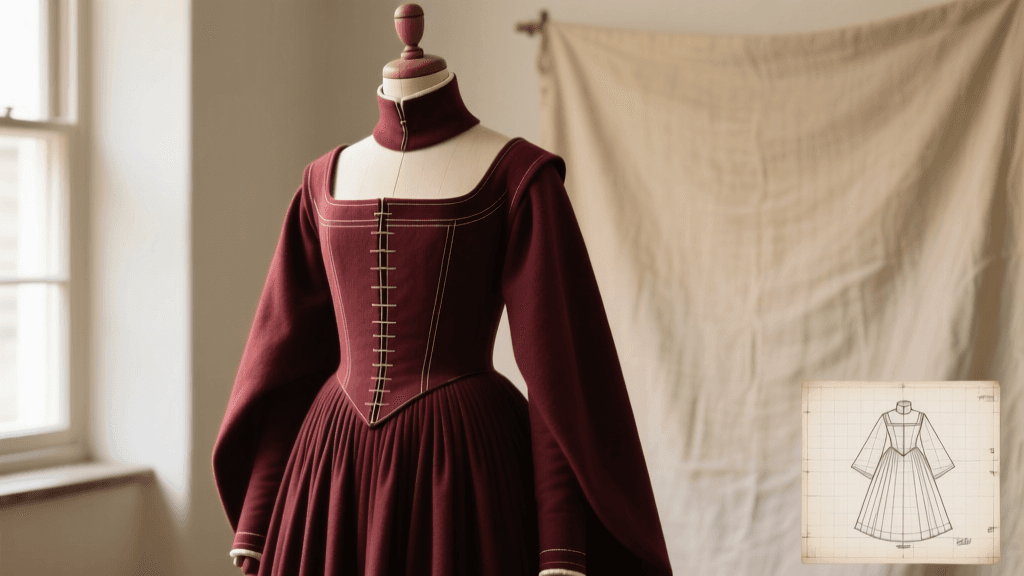
Before the 14th century, European clothing was largely based on rectangular construction—tunics and shifts that relied on belts and draping to shape the fabric to the body. The Burgundian kirtle changed everything. It introduced the concept of the curved seam, utilizing multiple tailored panels to support the bust and contour the waist without the need for rigid boning or corsetry, which would not appear until the 16th century.
The 15th-century kirtle was typically front-lacing or side-lacing, featuring a snug bodice that ended at the natural waist or hips, with a flared skirt attached or cut in one piece. The support came entirely from the tension of the woven fabric and the precision of the fit. In 2026, historical tailors utilize a combination of traditional draping on dress forms and modern 3D body scanning to achieve this precise, supportive fit, bridging the gap between medieval craftsmanship and contemporary technology.
Sourcing Historically Accurate Textiles in 2026
The success of your kirtle relies heavily on your fabric choice. The Textile Research Centre in Leiden notes that medieval weavers produced woolens with a density and drape that is rarely found in modern commercial fabrics. In 2026, the global supply chain for heritage textiles has stabilized, but you must know exactly what to look for. Avoid modern suit wools, which are often blended with synthetic fibers and treated with chemical finishes that ruin the historical drape.
You need a medium-to-heavyweight wool twill or tabby weave with a high twist yarn, which provides natural elasticity and structural memory. For the lining, a medium-weight linen tabby is historically appropriate and provides breathability.
2026 Fabric Sourcing Comparison Chart
| Material Type | Weave Structure | 2026 Avg. Price (USD/Yard) | Historical Accuracy | Best Use Case |
|---|---|---|---|---|
| Heritage Worsted Wool | 2/2 Twill | $38.00 - $55.00 | High | Outer Kirtle, Winter Wear |
| Wool Flannel (Heavy) | Tabby | $25.00 - $40.00 | Medium-High | Everyday Kirtle, Working Class |
| Bleached Linen | Tabby (Medium) | $18.00 - $28.00 | High | Kirtle Lining, Summer Kirtles |
| Silk-Wool Blend | Satin/Twill | $60.00 - $90.00 | Low (Anachronistic) | Modern Fusion (Not Historical) |
Drafting the Pattern: Measurements and Geometry
Drafting a 15th-century kirtle requires abandoning modern dart manipulation in favor of paneling and gores. The goal is to create a garment that fits like a second skin through the torso and flares dramatically at the hem. As detailed in studies of Medieval and Renaissance Dress and Textiles, fabric was a precious commodity; therefore, medieval tailors used geometric inserts (gores) to add volume to the skirt without wasting the valuable broadcloth.
Essential Measurements for the Kirtle Block
- Overbust & Full Bust: Taken while wearing your foundational linen chemise. The kirtle must compress and lift slightly.
- Underbust: Crucial for establishing the structural seam line that will bear the weight of the skirt.
- Natural Waist: The narrowest part of the torso.
- Low Hip / High Thigh: Where the bodice tension releases into the skirt.
- Shoulder to Waist (Front and Back):strong> Determines the armscye depth.
- Bicep, Elbow, and Wrist: For drafting the fitted, buttoned sleeves characteristic of the Burgundian style.
The Mathematics of the Gore
To achieve the sweeping hemline seen in 15th-century tapestries, you will need to insert triangular gores into the side and center-back seams.
The Formula:
1. Measure your low hip circumference (e.g., 40 inches).
2. Determine your desired hem circumference (historically, 120 to 160 inches for a full Burgundian drape).
3. Subtract the hip measurement from the hem measurement (160 - 40 = 120 inches of added flare).
4. Divide the added flare by the number of gores (e.g., 4 gores = 30 inches per gore).
5. Each gore should be cut with a base width of 30 inches plus 1 inch for seam allowances, tapering to a point that is inserted into a slit in the main skirt panel.
Fitting the 15th-Century Silhouette
The modern aesthetic often favors a relaxed fit, but the 15th-century silhouette demands rigorous tension. When fitting your muslin toile, the fabric should feel snug—almost uncomfortably tight when you first put it on. As the wool fibers warm to your body heat and the bias grains relax, the garment will mold to your shape, providing exceptional back support and bust lift.
Ensure that the armscye (armhole) is cut high into the armpit. A common modern mistake is dropping the armhole too low, which restricts arm movement. A historically high armscye allows the sleeve to pivot with the shoulder joint, granting full mobility even with a tightly fitted sleeve.
Construction and Hand-Finishing Techniques
While modern sewing machines can construct the structural seams, the true hallmark of a 2026 master-level historical garment lies in the hand-finishing. The Victoria and Albert Museum's fashion archives showcase extant garments where the interior finishing is as immaculate as the exterior.
Stitching the Seams
For the main structural seams of the wool, use a backstitch with heavily waxed linen thread (60/2 or 40/2 weight). The backstitch provides the necessary tensile strength to hold the fitted bodice together under pressure. Once the main seams are sewn, fell the seam allowances flat using a running stitch, catching only the backing threads of the wool so the stitches are invisible on the right side.
The Lacing Mechanism
Front-lacing kirtles require reinforced eyelets. Never use metal grommets for a historically accurate 15th-century garment. Instead, use a metal awl to push the wool fibers apart, creating a hole without breaking the yarn. Stitch around the hole using a tight buttonhole stitch or whipstitch with silk or linen thread. Space the eyelets closely together (about 0.75 inches apart) at the bust and waist for maximum tension distribution, and slightly further apart at the stomach.
Modern Notions vs. Historical Accuracy in 2026
The historical costuming community in 2026 has seen a surge in the availability of accurate notions. When sourcing buttons for your kirtle sleeves, avoid modern plastic or mass-cast metal. Look for cast pewter or bronze buttons based on archaeological finds from the Thames foreshore.
For thread, modern cotton-wrapped polyester will cut through historical wool over time due to friction and differing stretch properties. Always use 100% long-staple linen thread, conditioned with pure beeswax, for all structural seams. For topstitching and decorative edge finishing, use filament silk thread, which provides a beautiful luster that mimics the high-end garments of the Burgundian nobility.
Conclusion: Wearing History
Drafting and sewing a 15th-century Burgundian kirtle is an exercise in patience, geometry, and respect for the artisans of the past. By sourcing the correct heritage wools, applying medieval mathematical principles to your gores, and utilizing period-correct hand-sewing techniques, you create more than just a garment. You create a tangible connection to European folk and courtly dress. As the historical tailoring movement continues to grow through 2026, the kirtle remains a testament to the ingenuity of medieval engineering—a garment that supports, flatters, and endures.