Medieval Burgundian Houppelande: 2026 Tailoring Guide
The Resurgence of the Burgundian Houppelande in 2026
The Burgundian houppelande remains one of the most striking, opulent, and recognizable garments of the late medieval period. As we navigate the 2026 European historical reenactment and folk dress festival circuit, the demand for strict material authenticity and precise tailoring has never been higher. Gone are the days of synthetic brocades and machine-serged seams; today's heritage festivals, museum exhibitions, and historical European martial arts (HEMA) events require garments that reflect the true weight, drape, and construction of the 15th century. This comprehensive guide will walk you through the process of designing, sourcing, and tailoring an authentic Burgundian houppelande for the modern era, ensuring your historical wardrobe meets the highest contemporary standards.
Historical Context and the 15th-Century Silhouette
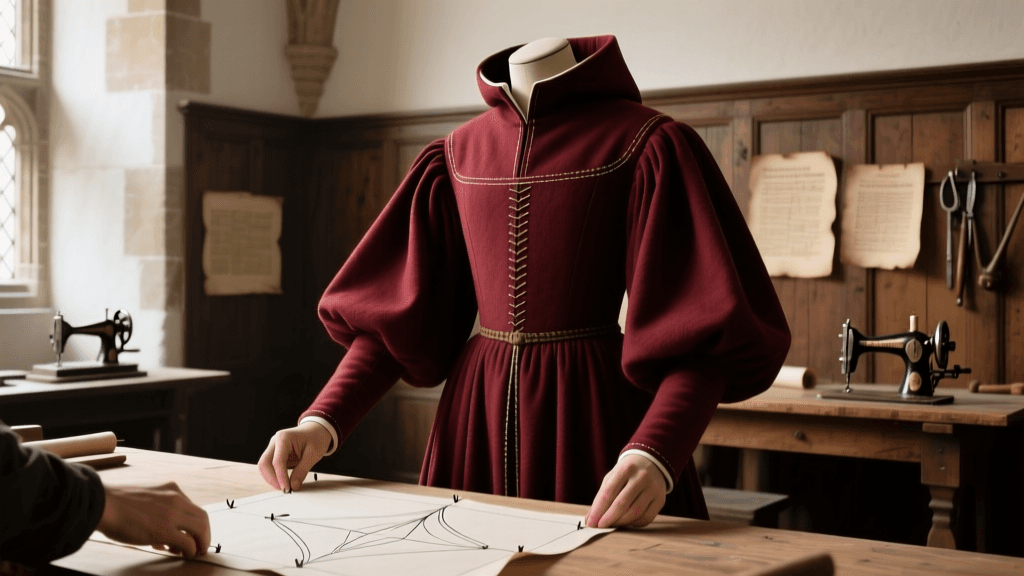
Originating in the late 14th century and reaching its zenith in the 15th century, the houppelande was a voluminous outer gown worn by both men and women of the nobility and wealthy merchant classes. According to the Victoria and Albert Museum, the transition from the tightly fitted cotehardie to the sweeping, belted houppelande marked a significant shift in European sartorial culture, emphasizing wealth through the sheer volume of expensive textiles used. The defining features of the garment include a high, stiffened collar, massive pleating at the shoulders and waist, and extraordinarily large sleeves. For modern tailors and folk dress enthusiasts participating in 2026 heritage festivals, capturing this specific silhouette requires moving away from modern fitted tailoring and embracing the geometric, drape-heavy construction methods of the medieval period.
Sourcing Authentic Materials in 2026
The success of a houppelande relies entirely on the quality and weight of the textiles. Modern lightweight wools will not provide the deep, structured folds seen in historical tapestries and illuminated manuscripts.
The Outer Shell: Heavyweight Wool
You must source a heavyweight melton wool or historically fulled broadcloth. The Textile Research Centre notes that medieval broadcloth was heavily fulled (milled) to create a dense, weather-resistant fabric that did not fray when cut. In 2026, finding true broadcloth is difficult, but a high-quality, double-faced melton wool weighing at least 24 to 30 ounces per yard is the accepted standard for premium reenactment garments. Look for wools with a high lanolin content and a brushed finish to mimic the historical nap.
Linings and Interlinings
A houppelande is fully lined, and the lining is often visible at the sweeping hem, the massive sleeve openings, and the turned-back collar. For the body lining, a medium-weight linen is appropriate for summer festivals, while a lightweight wool or silk is preferred for autumn events. For the stiffened collar, you will need heavyweight linen to create a historical buckram. When sourcing these specialized historical textiles, the Burnley and Trowbridge Company remains a premier destination for reenactors, offering historically accurate linens, wools, and silk brocades that meet the rigorous standards of the 2026 living history community.
2026 Fabric Yardage and Budgeting Estimates
Constructing a full-length, floor-sweeping houppelande requires a significant investment in fabric. The table below outlines the estimated yardage and 2026 market costs for a standard adult male or female garment, assuming a 60-inch fabric width.
| Material Component | Recommended Fabric | Estimated Yardage | 2026 Est. Cost (USD) |
|---|---|---|---|
| Outer Shell | Heavy Melton Wool (24-30oz) | 7 - 9 yards | $210 - $360 |
| Body Lining | Medium-Weight Linen | 7 - 9 yards | $105 - $180 |
| Sleeve Lining | Silk Taffeta or Brocade | 3 - 4 yards | $90 - $160 |
| Collar Stiffening | Heavyweight Linen / Buckram | 1 - 2 yards | $25 - $50 |
| Thread & Notions | Silk and Linen Thread | N/A | $30 - $50 |
Note: Prices reflect 2026 retail averages for high-quality, natural-fiber textiles. Budget an additional $150-$300 if commissioning bespoke hand-woven trims or tablet-woven belts.
Pattern Drafting and Geometric Construction
Unlike modern clothing, which relies on complex curved seams to fit the body, the medieval houppelande is constructed from large geometric shapes. The body is typically made of four main panels (two front, two back) with massive triangular gores inserted at the sides and center back to create the sweeping hemline. The hemline should ideally touch the ground or pool slightly at the front, while the back is cut longer to form a modest train.
Drafting the Bombard Sleeves
The bombard sleeve is the most iconic element of the Burgundian style. It is cut as a single, massive piece that curves dramatically from the shoulder to a wide, floor-grazing hem. A slit is cut at the elbow or forearm to allow the wearer's arm to pass through, leaving the heavy fabric to hang behind. When drafting this sleeve, ensure the wrist opening is wide enough to touch the floor when the arm is resting at the side. The sleeve lining is often a contrasting color or a luxurious silk brocade, which becomes highly visible when the arm is bent or the sleeve is thrown back over the shoulder.
The Signature High Collar
The high, standing collar is a hallmark of the Burgundian style and must be stiffened to stand upright against the neck and jawline. In 2026, historical tailors strictly avoid modern plastic boning, which creates an unnatural, rigid silhouette. Instead, use multiple layers of heavyweight linen, basted together and pad-stitched to create a historical buckram effect. The collar is cut as a straight or slightly curved band, interfaced heavily, and attached to the neckline with deep, structured pleats.
Step-by-Step Assembly Techniques
To achieve an authentic finish, the assembly process must prioritize historical hand-sewing techniques, at least for the visible seams.
- Step 1: Flat-Lining and Basting. Baste your outer wool shell to your linen body lining. Treating these two layers as one during construction prevents the heavy wool from sagging and ensures the garment drapes correctly.
- Step 2: Inserting the Gores. Sew the triangular gores into the side and back seams. Use a flat-felled seam or a run-and-fell seam to enclose the raw edges, providing structural integrity to support the massive weight of the skirt.
- Step 3: Cartridge Pleating the Waist. The houppelande is worn belted tightly at the natural waist or slightly above. To manage the sheer volume of fabric, use cartridge pleating (also known as gauging) at the waistline. This technique creates deep, rounded folds that spring outward, giving the skirt its characteristic bell-like shape.
- Step 4: Attaching the Sleeves. The armholes of a houppelande are cut very wide and deep, often extending down the side of the torso. The top of the sleeve is heavily pleated to fit into this large armscye, creating a padded, broad-shouldered silhouette.
- Step 5: Hemming and Weighting. Hem the outer shell and lining separately. To ensure the hem hangs properly and does not tangle around the legs during movement, sew small lead or brass drapery weights into the hem allowance of the wool shell.
Essential Accessories for the Complete Silhouette
A houppelande is never worn alone. To complete the 15th-century Burgundian look, you must accessorize appropriately. A wide, heavily tooled leather belt with a brass or pewter buckle is essential for cinching the voluminous waist. For headwear, the chaperon—a complex, draped turban-like hat made from a single long piece of wool or linen—is the most historically accurate choice for men, while women might opt for a steeple hennin or a padded bourrelet. Finally, historical leather turnshoes or wooden pattens are necessary to protect the sweeping wool hem from the mud and dampness of outdoor festival grounds.
Garment Care and Long-Term Storage
Maintaining a heavyweight wool houppelande requires specific care routines. Never machine wash or dry clean the garment using modern harsh chemicals, as this will strip the wool of its natural lanolin and ruin the drape. Spot clean stains with a damp cloth and a mild, wool-safe soap. After every wearing, brush the entire garment vigorously with a natural bristle clothes brush to remove surface dust and prevent the fibers from matting. For long-term storage in 2026, avoid plastic garment bags which trap moisture and cause mildew. Instead, store the houppelande in a breathable, unbleached cotton canvas bag, layered with acid-free tissue paper and natural cedar blocks to deter moths.
Conclusion
Crafting a Burgundian houppelande is a monumental tailoring project that rewards patience, historical research, and a dedication to quality materials. By sourcing heavyweight wools, utilizing geometric pattern drafting, and embracing historical hand-finishing techniques, you will create a garment that not only meets the rigorous standards of the 2026 historical community but also serves as a breathtaking, wearable tribute to Europe's rich medieval folk and courtly dress traditions.