Full Burgundian Houppelande Reconstruction: 2026 Guide
The Allure of the Burgundian Houppelande in Modern Reconstruction
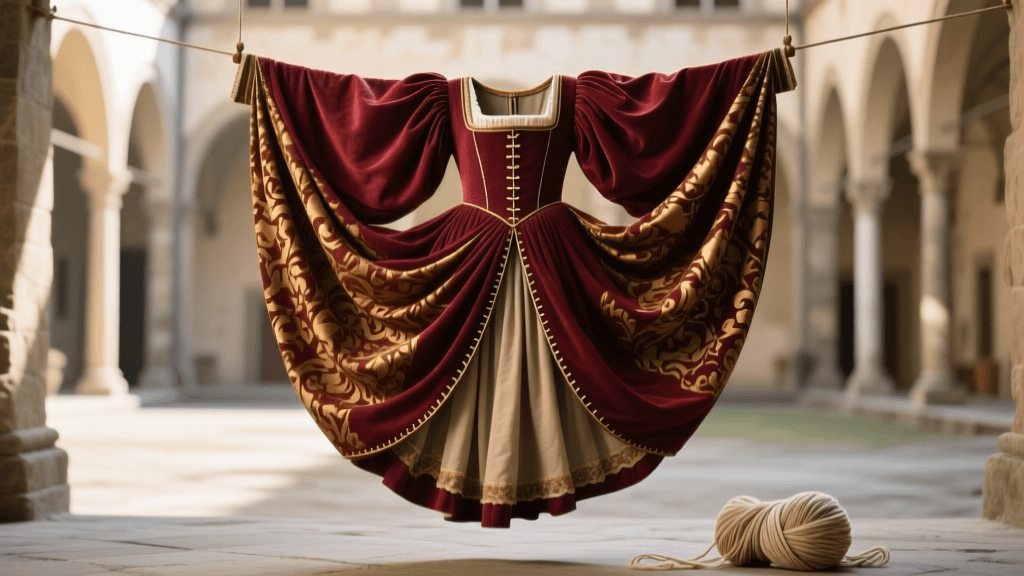
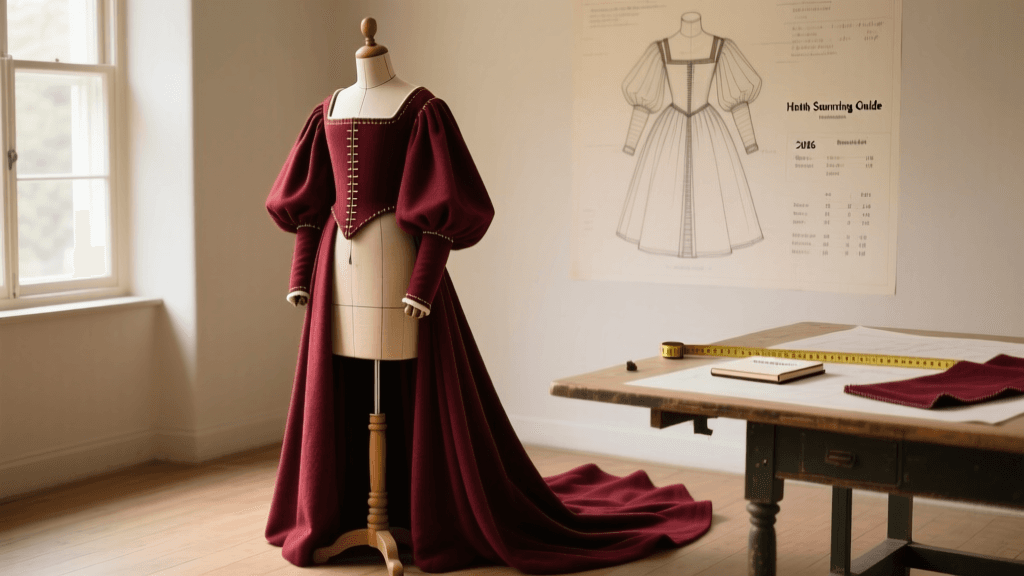
The 15th-century Burgundian houppelande represents the absolute zenith of medieval European court fashion. Characterized by its voluminous folds, floor-length hemline, dramatic bombard sleeves, and an imposing high collar, this outer garment was a definitive status symbol during the reign of Philip the Good. For historical tailors, reenactors, and costume historians in 2026, reconstructing the houppelande is not merely an exercise in sewing; it is a deep dive into the geometric pattern drafting, textile economics, and sartorial engineering of the Late Middle Ages.
As we navigate the 2026 historical garment community, the demand for museum-quality accuracy has never been higher. Enthusiasts are moving away from synthetic costume fabrics and compromised silhouettes, opting instead for heritage-milled wools, authentic natural dyes, and hand-finished seams. This comprehensive guide will walk you through the exact materials, measurements, and tailoring techniques required to recreate a masterwork of Renaissance and Medieval European clothing.
Studying the Historical Silhouette
Before cutting into expensive yardage, one must understand the drape and structure of the original garments. The houppelande was designed to conceal the body's natural lines beneath cascading, tubular folds of heavy cloth. When studying the drape and fold of period garments, the Victoria and Albert Museum's fashion archives provide invaluable visual references and conservation notes on how heavy wools behave under their own weight. Furthermore, for those examining the evolution of the court silhouette and the transition into early Renaissance styles, the Metropolitan Museum of Art's Costume Institute offers extensive digital resources and period portraiture analyses that highlight the rigid posture enforced by the garment's structured collar and heavy belting.
Sourcing Heritage Textiles in 2026
The most critical element of a successful houppelande is the fabric. A garment of this magnitude requires heavy, fulled wool that can hold deep pleats without collapsing. As of 2026, the market for historically accurate textiles has seen a remarkable renaissance, with several heritage mills in Yorkshire and the Biella region of Italy expanding their historical reproduction lines.
Wool Broadcloth and Melton
You will need a heavily fulled wool, typically weighing between 16oz and 22oz per yard. Modern melton is a close substitute, but true historical broadcloth—which is woven wide, then heavily milled and sheared to create a dense, weather-resistant face—is the gold standard. In 2026, expect to pay between $55 and $85 per yard for authentic heritage broadcloth. Avoid lightweight suit wools; they will not support the dramatic folds of the skirt or the stiffness required for the sleeves.
Silk Damask and Linen Linings
The houppelande was almost always fully lined, both for warmth and to provide a contrasting flash of color at the hem and sleeve openings. For the lining, a medium-weight linen (around 5.5 to 7 oz) is historically appropriate for the body, while the sleeves and collar were often lined with silk damask, velvet, or even fur. Sustainably sourced, peace-silk damasks from specialized European weavers are currently running about $90 to $120 per yard in the 2026 market.
Yardage and Cost Breakdown (2026 Estimates)
Constructing a full-length houppelande requires a massive amount of fabric. The garment is typically cut from circles or large gores to achieve the sweeping hemline. Below is a detailed breakdown of the materials required for a standard floor-length garment tailored for an average adult height of 5'8".
| Material | Yardage Required | 2026 Est. Cost/Yard | Total Estimated Cost |
|---|---|---|---|
| Heavy Wool Broadcloth (Outer) | 8 - 10 yards | $70.00 | $560 - $700 |
| Medium Linen (Body Lining) | 8 - 10 yards | $25.00 | $200 - $250 |
| Silk Damask (Sleeve/Collar Lining) | 3 - 4 yards | $100.00 | $300 - $400 |
| Heavy Linen Canvas (Interfacing) | 1 yard | $15.00 | $15.00 |
| Silk Thread & Beeswax | N/A | $30.00 (flat) | $30.00 |
Note: Total material costs for a high-end, museum-quality reproduction in 2026 will generally range from $1,100 to $1,400, excluding trims and belting.
Pattern Drafting: Geometric vs. Draped
Medieval tailors did not use complex, multi-piece paper patterns like modern sewists. Instead, they relied on geometric shapes—rectangles, triangles (gores), and circles—to maximize fabric usage and create volume. The body of the houppelande is essentially a massive rectangle or half-circle, gathered or pleated into a fitted yoke or collar.
Drafting the Body
For a traditional late-14th to early-15th-century cut, draft a large rectangle for the front and back panels. The width of the fabric (usually 54 to 60 inches for modern heritage wools) dictates the volume. To achieve the iconic 'pipe-organ' pleats at the waist and shoulders, you will need to mark and press deep, uniform pleats. A 60-inch wide panel will yield approximately fifteen to twenty 1-inch deep pleats per panel, creating the signature tubular drape.
The High Collar
The collar is a separate band, cut on the straight grain, and heavily interfaced. It must stand upright, framing the face and reaching the jawline or even the ears. Measure the circumference of your neck where the collar will sit, add two inches for overlap and comfort, and cut the collar band to a height of 4 to 6 inches, depending on your desired historical decade and personal proportions.
Tailoring Techniques: Stiffening and Structure
The magic of the houppelande lies in its internal structure. Without proper interfacing, the high collar will flop, and the heavy wool will drag the garment off the shoulders.
Interfacing the Collar and Yoke
In the 15th century, tailors used multiple layers of stiff linen canvas, heavily sized with starch or glue, to create buckram. In 2026, you can replicate this by using heavy linen canvas layered with a modern, breathable thermoplastic millinery mesh. Baste the canvas to the wrong side of your wool collar piece, and pad-stitch it securely. This ensures the collar remains rigid but moves comfortably with the wearer.
Setting the Pleats
Do not rely on a machine to gather the heavy wool. You must hand-pleat the garment. Use a heavy, waxed linen or silk thread to run a series of parallel basting stitches across the top edge of your wool panels. Pull the threads up to gather the fabric to the exact measurement of your yoke or collar band. Once gathered, use a steam iron and a wooden clapper to press the pleats flat. The wool's natural memory, combined with the steam, will set the pleats permanently.
Constructing the Bombard Sleeves
The bombard sleeve is a hallmark of the Burgundian style. It is cut extremely wide at the armhole and flares out into a massive, floor-dragging bell or 'bag' shape at the wrist. The interior of this massive sleeve is lined with a contrasting fabric—often a bright silk or patterned damask—so that when the wearer moves, the lining flashes brilliantly.
To draft the sleeve, start with a standard sleeve block but extend the underarm seam outward dramatically. The wrist opening should be wide enough to sweep the floor when the arm is raised. Because of the sheer weight of the lined sleeve, you must reinforce the armhole seam with a strip of linen twill tape to prevent the heavy wool from tearing under its own weight over time.
Dyeing and Color Accuracy
If you are sourcing undyed heritage wool, you have the opportunity to utilize historically accurate natural dyes. The Burgundian court favored deep, saturated colors that were incredibly expensive to produce. Madder root yields rich reds, while woad and weld can be overdyed to create deep, complex greens. In 2026, several specialized botanical dye houses in Europe offer custom vat-dyeing services for large yardages, ensuring color penetration all the way through the thick fulled wool. Expect to pay a premium of about $20 to $30 per yard for professional natural dyeing, but the depth of color is unmatched by synthetic chemical dyes.
Accessories: The Hennin and Leather Belt
A houppelande is never worn alone. For women, the steeple hennin—a tall, conical headdress draped with a sheer linen veil—is the quintessential pairing. The hennin is constructed over a wire or buckram cone, covered in silk, and pinned securely to a velvet cap. For men, a chaperon or a heavily embroidered velvet hat balances the volume of the garment.
Crucially, the houppelande must be belted. A wide, tooled leather belt, worn high just under the bust or ribcage for women, and at the natural waist or hips for men, cinches the massive volume of the garment and creates the bloused effect over the belt that is prominent in period portraiture. Sourcing a custom-tooled leather belt from a historical leatherworker will add approximately $150 to $250 to your final 2026 project budget.
Caring for Your Historical Garment
Given the investment in heavy wools and silk linings, proper care is essential. Never machine wash a fully lined houppelande. The differential shrinkage between the wool outer and the linen/silk lining will ruin the garment's drape. Instead, rely on vigorous brushing with a natural bristle garment brush to remove dust and dirt. For deep cleaning, seek out a dry cleaner in 2026 who specializes in historical textiles or theatrical costumes, as they understand the delicate nature of pad-stitched interfacings and hand-pleated wools. Store the garment flat or folded over a wide, padded hanger to prevent the heavy shoulders from stretching out of shape.
Conclusion
Reconstructing the Burgundian houppelande is a labor of love that bridges the gap between modern tailoring and medieval artistry. By investing in heritage textiles, mastering geometric pattern drafting, and respecting the structural engineering of the 15th century, you can create a garment that not only looks spectacular but moves, drapes, and feels exactly as it did in the courts of the Renaissance. Whether you are attending a high-level historical symposium or simply preserving the craft of European folk dress, the houppelande remains an enduring masterpiece of textile history.