2026 Guide: 15th-Century Burgundian Houppelande Dress
Introduction to the 15th-Century Burgundian Houppelande
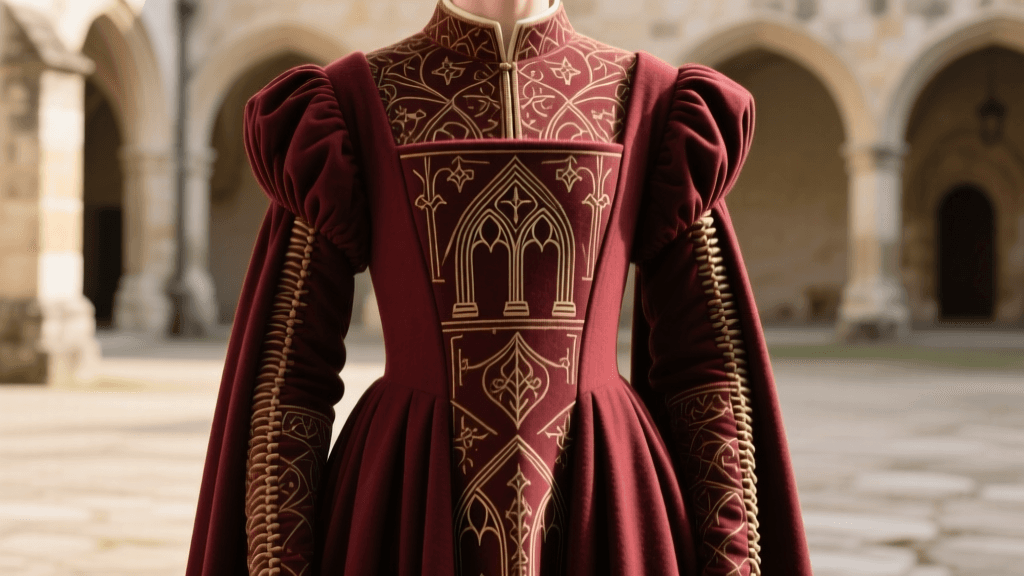
The Burgundian court of the 15th century was the undisputed epicenter of European fashion, setting trends that rippled across the continent. At the heart of this sartorial revolution was the houppelande, a magnificent, sweeping outer garment characterized by its voluminous folds, high standing collar, and dramatic, floor-length sleeves. For historical costumers, reenactors, and textile historians, recreating this iconic piece of medieval and Renaissance European clothing requires more than just basic sewing skills; it demands a deep understanding of historical drape, textile behavior, and period-accurate construction techniques. As we navigate the historical textile market in 2026, modern makers have access to unprecedented resources, yet the fundamental challenge remains: translating the narrow-loom fabrics of the 1400s into a garment that behaves authentically using today's materials.
The Historical Context of Burgundian Extravagance
To understand the houppelande, one must understand the socio-political climate of the Burgundian Netherlands under Philip the Good. The garment was a canvas for displaying immense wealth, often lined with contrasting silks, edged with fur, and heavily embroidered. According to the Encyclopædia Britannica's historical overview of European dress, the transition from the highly fitted, buttoned cotehardie of the late 14th century to the voluminous, belted houppelande represented a shift toward draped elegance and conspicuous consumption. The sheer volume of fabric required to create the deep, tubular folds of the skirt and the massive, hanging sleeves was a direct indicator of the wearer's financial status. In 2026, museum curators and historical dress scholars continue to study surviving tapestries and illuminated manuscripts to decode the exact draping methods used by Burgundian tailors, revealing that the garment was less about complex tailoring and more about the masterful manipulation of heavy textiles through strategic pleating and belting.
Sourcing Authentic Historical Textiles in 2026
The most critical step in constructing a historically accurate houppelande is sourcing the correct fabric. A modern polyester blend or lightweight worsted wool will simply not provide the structural integrity required for the deep cartridge pleats and the stiff, flaring collar. In 2026, the historical reenactment community has heavily championed the return to heavyweight, fulled wool broadcloth and pure silk taffetas. Heritage mills in West Yorkshire, England, and the Biella region of Italy have recently expanded their 'historical reproduction' lines to meet the surging demand from global museums and high-end theatrical productions.
When sourcing your primary textile, you must look for a wool that has been heavily milled or fulled, giving it a dense, almost felt-like texture that resists fraying and holds pleats beautifully. For linings, silk taffeta or lightweight silk twill provides the necessary 'rustle' and structural support without adding excessive weight.
| Textile Type | Historical Role | 2026 Avg. Cost per Yard | Recommended Sourcing Region |
|---|---|---|---|
| Heavy Wool Broadcloth (20-24oz) | Primary Outer Gown | $95 - $145 USD | West Yorkshire, UK |
| Silk Taffeta (Medium Weight) | Contrasting Linings & Cuffs | $65 - $90 USD | Como, Italy |
| Heavyweight Linen Canvas | Collar Interfacing & Buckram | $25 - $40 USD | Baltic States / Eastern Europe |
| Vegetable-Tanned Calfskin | Belts & Turnshoes | $12 - $18 per sq. ft. | Tuscany, Italy |
Adapting Patterns for Modern Loom Widths
One of the most significant hurdles for the modern costumer is adapting 15th-century cutting layouts to 2026 fabric widths. Medieval broadcloth was woven on narrow horizontal looms, typically yielding fabric widths of only 27 to 36 inches. Tailors of the era achieved the massive circumference of the houppelande skirt by inserting numerous triangular gores. Today, most commercial wool broadcloths are woven on industrial power looms, yielding widths of 54 to 60 inches.
To replicate the historical drape, you have two primary options in your patterning phase:
- The Gored Method (Most Authentic Drape): Cut your 54-inch fabric down to 30-inch panels, mimicking medieval loom widths. Construct the skirt using a central front panel, a central back panel, and multiple side gores. This method creates a conical, flaring silhouette that stacks beautifully on the floor and allows the heavy wool to fold into deep, vertical tubes when belted.
- The Circular Method (More Fabric Efficient): Cut the skirt as a full or three-quarter circle. While this uses the modern fabric width more efficiently and reduces seam lines, it tends to create a flatter, more uniform flare that lacks the distinct, heavy tubular folds seen in 15th-century portraiture. If you choose this route, you must add internal tie-tapes to force the fabric into vertical columns.
For the bodice, keep the construction relatively simple. The houppelande bodice is essentially a fitted, waist-seamed shell that anchors the massive skirt. Ensure the armscyes are cut high and tight under the arm to allow for maximum mobility, a hallmark of medieval tailoring that modern pattern drafters often overlook.
Constructing the High Collar and Cartridge Pleats
The defining features of the Burgundian houppelande are its towering, flaring collar and the dense cartridge pleats that attach the skirt to the bodice. The collar must stand away from the neck, framing the face and supporting the elaborate headwear of the era. In 2026, costumers have access to archival-quality, acid-free buckrams and heavy linen canvases that provide excellent stiffening without the historical inaccuracies of modern plastic boning. Cut your collar interfacing from heavy linen canvas, pad-stitch it to the wool, and use a sturdy wire or heavy cord along the top edge to help it maintain its flared, fan-like shape.
Cartridge pleating is the technique used to gather a massive amount of skirt fabric into a relatively small bodice waistline. To achieve the authentic 15th-century look, follow these steps:
- Finish the top edge of your skirt with a narrow facing or binding.
- Run three to four parallel rows of heavy, waxed linen gathering threads along the top edge, spaced about 1/4 inch apart.
- Pull the threads simultaneously to gather the fabric. The goal is a ratio of approximately 4:1 or 5:1, creating dense, rounded pleats that resemble the cardboard tubes of yarn cartridges.
- Whipstitch the top of each individual pleat directly to the finished bottom edge of your bodice. This allows the pleats to flare outward from the waist, creating the iconic bell-shaped volume.
2026 Advances in Historical Dyeing and Finishing
A major trend in the 2026 historical dress community is the shift away from synthetic aniline dyes toward historically accurate, plant-based dyes. The Burgundian court was famous for its deep, rich colors, particularly the vibrant reds derived from kermes and madder, and the deep blues achieved through multiple vats of woad. Today, specialized heritage dyers in France and Germany are utilizing bio-mordanting techniques that make these natural dyes incredibly colorfast, solving the historical issue of rapid fading. If you are commissioning custom-dyed broadcloth for your houppelande, request a 'madder-alum' red or a 'woad-iron' blue to achieve the precise, slightly muted, yet incredibly rich tones seen in the portraits of Jan van Eyck and Rogier van der Weyden.
Essential Accessories: The Hennin and Turnshoes
No Burgundian houppelande is complete without its accompanying accessories. For women, the steeple hennin is the quintessential headwear of the mid-to-late 15th century. Constructing a hennin in 2026 is greatly aided by modern millinery wire and lightweight thermoplastic buckram, which can be shaped into the perfect cone and covered in silk taffeta. A sheer silk or fine linen veil, sometimes featuring a wired 'butterfly' frame at the front, is draped over the cone and allowed to trail down the back. To view surviving medieval accessories, leatherwork, and textile fragments that inform these reconstructions, researchers and costumers frequently consult The Metropolitan Museum of Art's Medieval Art collection, which houses invaluable examples of period craftsmanship.
Footwear must consist of authentic turnshoes—leather shoes constructed inside out and then turned right-side out while damp. The 2026 market for bespoke historical footwear has expanded, with master cobblers in Eastern Europe offering custom-lasted turnshoes made from vegetable-tanned calfskin, featuring the characteristic long, pointed poulaine toes that were stuffed with moss or wool to maintain their shape.
Final Thoughts for the 2026 Reenactor
Constructing a 15th-century Burgundian houppelande is a labor of love that bridges the gap between historical research and tangible craftsmanship. By prioritizing heavyweight, fulled wools, adapting your pattern to respect historical drape, and mastering the art of the cartridge pleat, you can create a garment that not only looks authentic but moves and behaves exactly as it would have in the courts of Philip the Good. As historical textile sourcing continues to improve in 2026, there has never been a better time to bring the breathtaking elegance of the Burgundian Renaissance to life.