2026 Burgundian Houppelande Guide: Patterns, Fabrics & Dagging
Introduction to the Burgundian Houppelande
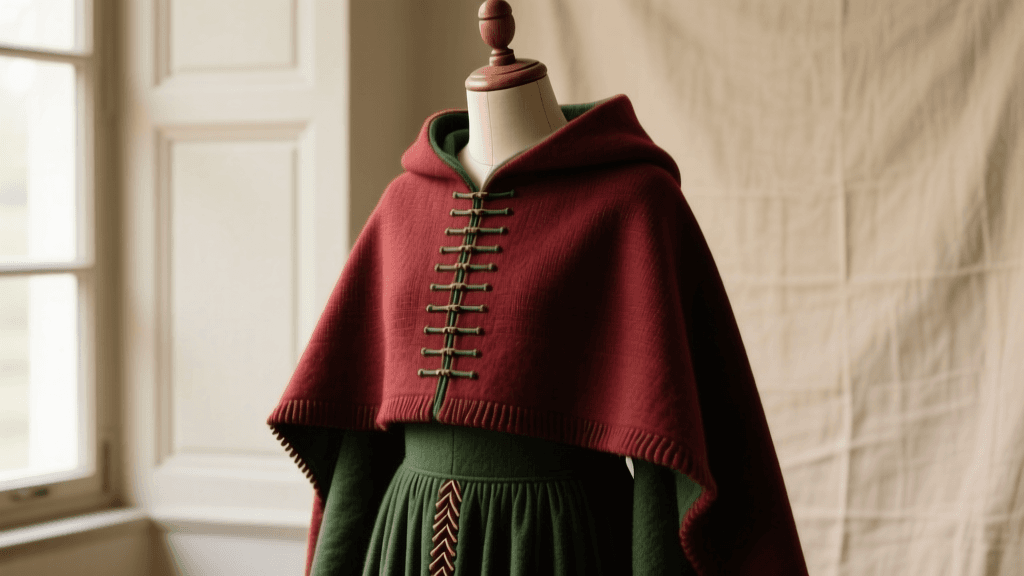
The Burgundian houppelande remains one of the most striking, opulent, and recognizable garments of the late medieval period. Characterized by its massive, flowing sleeves, high stiffened collar, and deep, tubular folds created by heavy belting, this garment was the pinnacle of 15th-century European fashion. For historical reenactors, costume historians, and Renaissance festival participants in 2026, recreating the houppelande requires a meticulous understanding of historical tailoring, textile behavior, and decorative techniques. Unlike the fitted cotehardie of the 14th century, the houppelande relies on the sheer volume and drape of the fabric to create its dramatic silhouette. This comprehensive guide explores the exact materials, pattern drafting methods, and dagging techniques required to construct an authentic Burgundian houppelande that meets the rigorous standards of modern historical interpretation.
Historical Context and 2026 Authenticity Standards
According to The Metropolitan Museum of Art's Heilbrunn Timeline of Art History, the houppelande emerged in the late 14th century and reached its zenith in the courts of Burgundy and France during the 1400s. It was worn by both men and women, though the length and styling varied by gender and social rank. Men’s versions were often cut to the knee or calf to allow for movement and to display the elaborate hose and poulaines (pointed shoes) beneath, while women’s garments were strictly floor-length, pooling elegantly around the feet. In 2026, top-tier historical reenactment circuits and heritage festivals have updated their authenticity guidelines to heavily scrutinize the fiber content and drape of outer garments. Synthetic blends, which possess an unnatural sheen and stiff drape, are universally rejected in favor of properly fulled wools and heavy silks that mimic the behavior of historically accurate broadcloths.
Sourcing Authentic Textiles: Wool, Silk, and Linen
Sourcing the correct textiles is the most critical step in constructing a houppelande that behaves authentically. The garment requires a heavy outer shell to hold the deep, organ-pipe folds created when the fabric is belted at the natural waist or high hips. In 2026, the historical textile market offers several excellent options for reenactors, though prices for premium, historically milled fabrics have risen due to global supply chain shifts in natural fibers. Fulled wool broadcloth is the undisputed gold standard for the outer shell. The fulling process shrinks and thickens the wool, creating a dense, felt-like fabric that does not fray when cut—a crucial property for the decorative edge treatments known as dagging. For the lining, lightweight worsted wool, heavy linen, or silk taffeta are appropriate, depending on the climate and the wearer's budget.
| Material | Weight | 2026 Avg. Cost/Yard | Best Historical Use |
|---|---|---|---|
| Fulled Wool Broadcloth | Heavy (16oz) | $55 - $75 | Outer shell, dagged edges |
| Worsted Wool | Medium (10oz) | $35 - $50 | Lining, lighter spring garments |
| Heavyweight Linen | Medium (7oz) | $20 - $30 | Base interlining, structural support |
| Silk Taffeta | Light (4oz) | $40 - $60 | Contrast lining, sleeve accents |
Pattern Drafting and Geometric Cutting
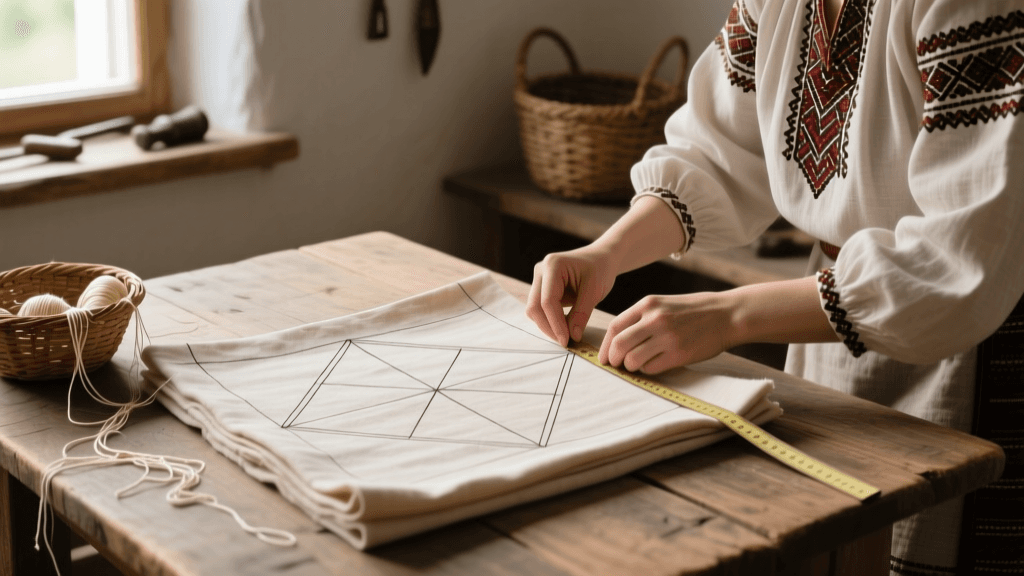
Drafting the pattern for a houppelande in 2026 relies on geometric cutting methods rather than the complex, curved multi-piece patterns of modern tailoring. The most historically accurate method utilizes a series of large gores (triangular panels) sewn together to create a massive circle or semi-circle. To draft the base pattern, you must first determine the garment's length. For a women’s floor-length houppelande, measure from the base of the neck to the floor, adding two inches for hem allowance and historical pooling. For a men’s mid-calf version, measure to the desired calf point. The circumference of the hem should be exceptionally wide—often exceeding 180 inches for a moderately full garment, and up to 240 inches for an opulent, court-style ensemble.
The Bombard Sleeve
The iconic "bombard" sleeve is cut as an extended half-circle or a massive gusset that drops from the shoulder, widening dramatically toward the wrist and often dragging on the ground. When cutting the fabric, lay the panels out on a large, clean floor space, using a weighted string and tailor’s chalk to draw perfect arcs for the hem and sleeve openings. This geometric approach minimizes fabric waste while maximizing the dramatic volume required for the period silhouette.
Mastering the Dagging Technique
The defining decorative feature of the Burgundian houppelande is "dagging"—the art of cutting the raw edges of the fabric into intricate, repeating patterns such as scallops, castellations (castle battlements), oak leaves, or flame-like motifs. Because historical broadcloth was heavily fulled, the edges could be cut without unraveling, eliminating the need for time-consuming hemming on yards of complex curves. In 2026, while some modern makers attempt to use laser-cutting services for synthetic fabrics, authentic wool dagging must be done by hand to maintain historical integrity and pass event inspections.
To execute perfect dagging, begin by creating a template from heavy cardstock. Chalk the template outline meticulously along the entire hem, collar, and the massive bell-shaped openings of the bombard sleeves. Use high-carbon steel dressmaking shears, ensuring they are freshly sharpened. Cutting through heavy fulled wool requires significant hand strength; take frequent breaks to avoid repetitive strain injuries and to ensure your cuts remain crisp and symmetrical. For complex motifs like oak leaves, use small embroidery scissors to navigate the tight inner curves without fraying the wool fibers.
Assembly, Pleating, and Finishing
Once the fabric is cut and dagged, the assembly process begins. The shoulder seams and side gores are sewn together using a running stitch or backstitch, ideally with heavy silk or linen thread to match the historical record. Modern polyester thread is strictly forbidden in high-level 2026 reenactments, as it can cut through natural fibers over time and melts under the heat of a period-accurate smoothing iron. The high collar of the houppelande requires internal stiffening. Historically, this was achieved with heavy buckram or multiple layers of starched linen. Today, you can use heavyweight linen canvas, pad-stitched to the outer wool shell to create a rigid, standing collar that frames the face and supports the elaborate headwear of the era.
The waist is typically gathered using deep cartridge pleats or large, rolled tubular folds, which are then secured beneath a wide, ornate leather belt. The belt is essential; without it, the houppelande hangs like a shapeless tent. When cinched, the heavy wool collapses into the striking vertical folds seen in 15th-century tapestries and manuscript illuminations, creating the unmistakable "organ pipe" drapery that defines the garment.
Accessories: The Chaperon and Metalwork
No Burgundian houppelande is complete without its accompanying accessories. The most iconic headwear paired with this garment is the chaperon—a complex, turban-like headdress evolved from the simple hood. By the mid-15th century, the chaperon was pre-arranged and stitched into its twisted, sculptural form, often featuring a long, trailing cornette (tail) that could be draped over the shoulder or wrapped around the neck. Additionally, the Victoria and Albert Museum's Medieval and Renaissance Collections highlight the importance of metalwork and leather accessories in completing the silhouette. A tooled leather belt with a cast bronze or pewter buckle, worn low on the hips for men or at the natural waist for women, is mandatory. Men should also pair the ensemble with particolored wool hose and leather turnshoes, while women must ensure their kirtle sleeves feature contrasting silks that peek through the houppelande's sleeve openings.
Garment Care and Maintenance
Maintaining a wool houppelande in 2026 requires specific care protocols. Never machine wash or dry clean the garment using harsh modern chemicals, as this will strip the natural lanolin from the wool and destroy the fulled finish that prevents the dagged edges from fraying. Instead, spot clean stains with a damp cloth and mild wool wash, and air the garment out in a shaded, breezy area after wearing it at outdoor festivals. Store the houppelande flat or folded over a wide, padded hanger to prevent the heavy wool from stretching and distorting the shoulder seams over time. By adhering to these historical construction methods, textile choices, and maintenance routines, modern makers can create a Burgundian houppelande that not only survives the rigors of the 2026 festival season but also serves as a wearable, breathing tribute to the master tailors of the 15th century.