2026 Guide: Sewing a 15th-Century Burgundian Houppelande
The Renaissance of Historical Tailoring in 2026
As we move through 2026, the historical European martial arts (HEMA) and living history communities have experienced a massive paradigm shift toward museum-grade accuracy. Gone are the days of relying on synthetic blends and guesswork. Today’s reenactors, theatrical costumers, and historical sewing enthusiasts demand meticulous authenticity, right down to the weave of the wool and the stitch count on a collar. Among the most iconic and challenging garments to recreate from the late Medieval and early Renaissance period is the Burgundian houppelande. Dominating European court fashion from the late 14th through the mid-15th century, this voluminous gown is a masterclass in geometric tailoring, dramatic draping, and opulent textile use.
Whether you are preparing for a high-level historical encampment, a university theatrical production, or simply expanding your heritage sewing portfolio, constructing a houppelande requires a deep understanding of period techniques. This comprehensive 2026 guide will walk you through sourcing authentic heritage textiles, drafting the unique geometric patterns, and executing the specialized hand-sewing techniques required to bring this magnificent garment to life.
The Anatomy of the 15th-Century Houppelande
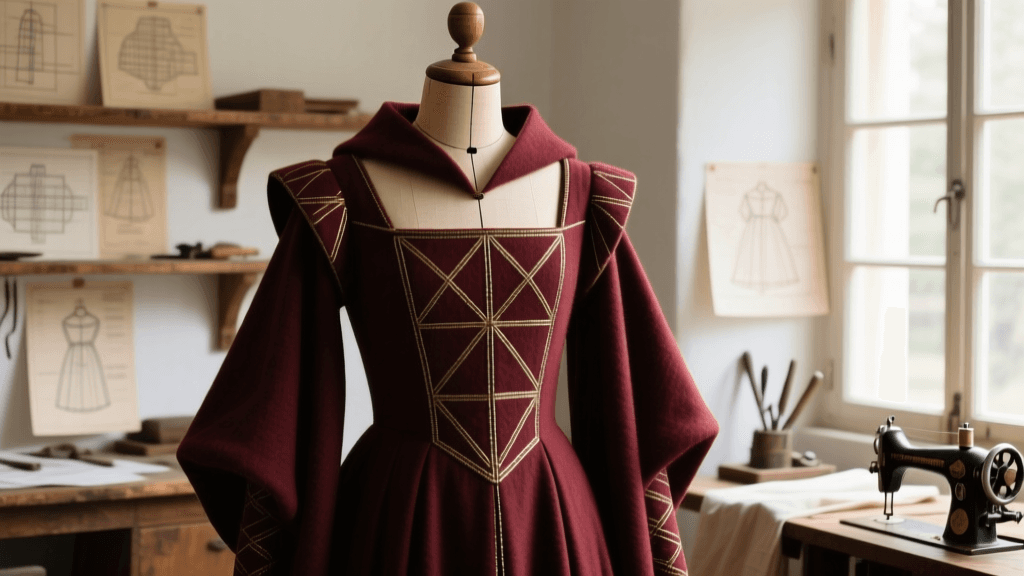
Before cutting into expensive yardage, it is crucial to understand the structural elements that define the houppelande. Unlike the closely fitted cotehardie that preceded it, the houppelande is characterized by its massive volume, high collar, and sweeping sleeves. According to the textile conservation archives at the Victoria and Albert Museum, the transition from fitted medieval tunics to the voluminous houppelande represented a significant shift in displaying wealth through the sheer quantity of imported fabric.
Key Structural Elements:
- The High Collar: Often stiffened and standing up to 4 inches tall, framing the face and sometimes featuring dagged (scalloped) edges.
- The Bodice and Skirt: Fitted smoothly across the upper chest and shoulders, but exploding into deep, organ-like cartridge or knife pleats just below the bust or at the natural waist, creating a floor-sweeping, bell-shaped skirt.
- The Bombard Sleeves: The most recognizable feature. These sleeves are set into a relatively normal armhole but expand dramatically, sometimes touching the ground, with edges heavily dagged or lined in contrasting silk or fur.
- The Belt: A wide, often ornate leather or woven belt worn high, just under the bust or at the empire waist, to control the immense volume of the skirt.
Sourcing Heritage Textiles in 2026
The success of your houppelande hinges entirely on your fabric choices. In 2026, the global textile market has seen a welcome resurgence in heritage wool mills, particularly in the UK and Italy, catering specifically to the booming historical accuracy market. However, these premium materials come at a premium price. You must budget carefully, as a full-length houppelande with bombard sleeves can easily require 10 to 15 yards of 60-inch wide fabric.
The Metropolitan Museum of Art's Medieval Department frequently highlights the importance of textile weight and drape in surviving garment fragments. A fabric that is too light will not hold the deep, structured pleats of the skirt, while a fabric that is too heavy will make the massive sleeves unwearable.
2026 Fabric Comparison Chart for Houppelande Construction
| Fabric Type | Weight (oz/yd) | Drape Quality | 2026 Est. Cost/Yard | Best Application |
|---|---|---|---|---|
| Melton Wool | 14-16 oz | Stiff, Structural | $55 - $75 | High Collars, Dagged Edges |
| Worsted Wool Twill | 10-12 oz | Fluid, Elegant | $45 - $60 | Main Skirt, Bombard Sleeves |
| Silk Taffeta | N/A | Crisp, Rustling | $85 - $130 | Sleeve Linings, Contrasting Trims |
| 5-7 oz | Breathable, Matte | $25 - $35 | Inner Bodice Linings |
Note: Prices reflect early 2026 retail averages from specialized historical textile vendors. Always order swatches before committing to bulk yardage.
Dyeing and Color Accuracy
If you are aiming for strict museum-level authenticity, color choice is just as important as fiber content. In the 15th century, the Burgundian court was famous for its deep, saturated colors, which were incredibly expensive to produce. Today, you can achieve these historically accurate shades using modern, colorfast synthetic dyes that mimic historical natural dyes. Look for deep madder reds, woad blues, and weld yellows. Avoid neon or overly bright synthetic shades. If you are a purist, several artisan dyers operating in 2026 offer custom vats using authentic woad and madder root, though you should expect to pay upwards of $100 per yard for these bespoke, naturally dyed heritage wools.
Drafting the Pattern: Geometry Over Curves
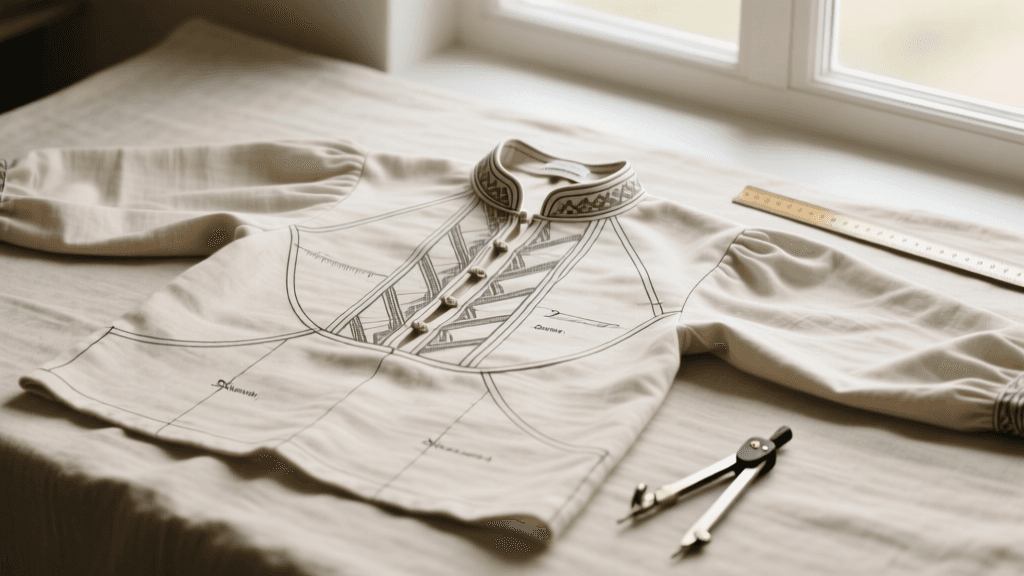
Modern sewing relies heavily on curved darts and complex multi-piece bodices to achieve a fit. Medieval tailoring, however, was fundamentally geometric. The houppelande is essentially a study in circles, rectangles, and triangles. Drafting your own pattern is highly recommended over buying modern commercial patterns, which often incorrectly apply modern darting to medieval garments.
Step-by-Step Drafting Instructions:
- The Skirt: The skirt is constructed from multiple quarter-circle or half-circle panels. Measure from your high waist (where the belt will sit) to the floor, adding 4 inches for hem allowance and belt roll. Use this as the radius for your circles. You will typically need four to six panels to achieve the requisite volume.
- The Bodice: The upper bodice is relatively simple, consisting of a front and back panel that fit smoothly over the shoulders. The seam should sit slightly off the natural shoulder line, dropping down the back to accommodate the heavy sleeves.
- The Sleeves: Draft the bombard sleeve as a massive, elongated triangle or a modified bell shape. The armhole cap should be relatively small and fitted to the shoulder, but the sleeve itself expands immediately. The hem circumference of a true bombard sleeve can easily exceed 60 inches.
Construction Techniques: Pleating and Bag-Lining
The true test of a historical tailor lies in the finishing techniques. Two specific methods are vital for the houppelande: cartridge pleating the skirt and bag-lining the sleeves.
Cartridge Pleating the Skirt
To attach the massive volume of the circular skirt panels to the relatively small bodice waist, you must use cartridge pleating (also known as gauging). This technique involves running two or three parallel rows of heavy, waxed linen thread along the top edge of the skirt and pulling them tight to create dense, rounded, organ-like folds. These folds are then whip-stitched directly to the finished bottom edge of the bodice. This creates a beautiful, structural flare that pushes the skirt outward, perfectly mimicking the silhouettes seen in 15th-century tapestries.
Bag-Lining the Bombard Sleeves
Because the sleeves are so large and often feature dagged (cut-out) edges, the lining must be treated as a separate, equal layer of fabric. Cut your outer wool and your silk taffeta lining identically. Place them right-sides together and sew along the entire outer edge, including all the complex dagging. Turn the sleeve right-side out, press the edges flat, and then attach the lined sleeve to the armhole. This "bag-lining" method ensures that no raw edges are visible, and the silk lining will flash beautifully as the wearer moves their arms.
Hand-Sewing vs. Modern Machine Construction
In 2026, the debate between hand-sewing and machine-sewing in the reenactment community remains vibrant. For a garment as large as a houppelande, a hybrid approach is often the most practical for modern makers. Use a modern sewing machine for the long, straight structural seams of the skirt panels and the lining. However, reserve hand-sewing for the visible elements: the high collar attachment, the cartridge pleating, the hemming, and the dagged edges. Using a heavy waxed linen thread and a period-accurate running stitch or backstitch for the visible seams will elevate the garment's authenticity while saving you dozens of hours of labor.
Finishing Touches and Accessories
A houppelande is never worn in isolation. To complete the 15th-century Burgundian silhouette, you must accessorize correctly.
- The Belt: Commission or craft a wide leather belt, ideally tooled or featuring cast brass plaques. The belt must be sturdy enough to support the heavy wool skirt without stretching.
- The Chaperon: The iconic headwear of the era. Originally a hood worn backwards, by the 15th century, it had evolved into a complex, twisted turban-like hat made of wool, often featuring a trailing cornette (tail).
- Footwear: Pair the gown with historically accurate leather turnshoes or pattens. The hem of the houppelande will hide modern shoes, but for strict accuracy, avoid rubber soles that alter your posture and gait.
Conclusion
Constructing a 15th-century Burgundian houppelande in 2026 is a rewarding journey into the heart of medieval sartorial engineering. By respecting the geometric origins of the pattern, investing in high-quality heritage wools, and mastering period-specific techniques like cartridge pleating, you will create a garment that is not merely a costume, but a wearable piece of living history. Take your time, test your pleats on muslin first, and embrace the magnificent volume of one of Europe's most spectacular traditional garments.