2026 Guide: Tailoring the 15th-Century Burgundian Houppelande
The Resurgence of Authentic 15th-Century Reenactment in 2026
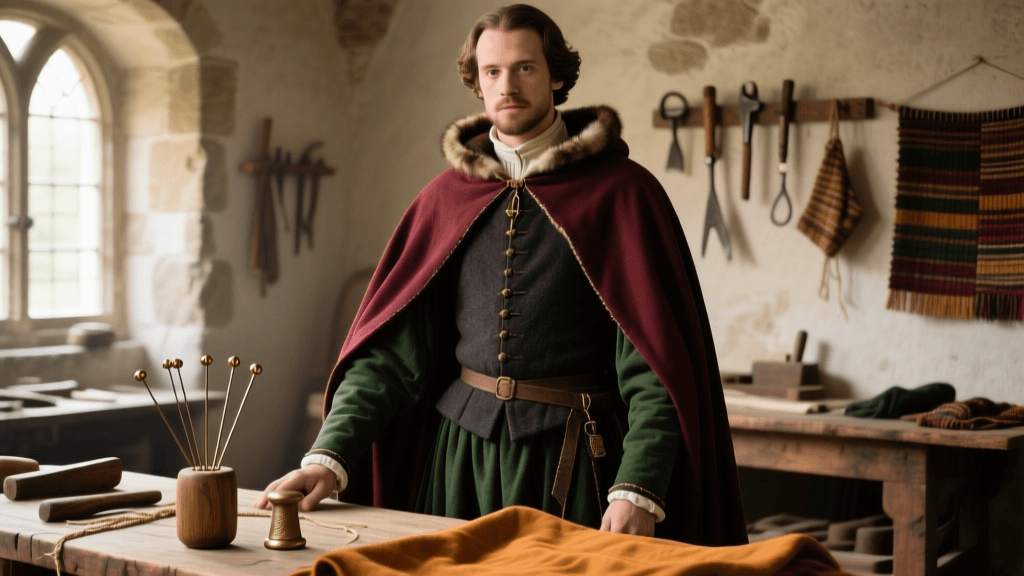
As we navigate the historical costuming and European folk dress landscape in 2026, the demand for uncompromising accuracy in Medieval and Renaissance garments has reached an all-time high. Among the most iconic and structurally complex garments of this era is the 15th-century Burgundian houppelande. Characterized by its voluminous silhouette, floor-length cut, high standing collar, and massive bombard sleeves, the houppelande remains a centerpiece for serious historical reenactors, museum educators, and Renaissance festival attendees. This comprehensive 2026 guide will walk you through sourcing authentic textiles, selecting the right heavy-duty sewing equipment, and mastering the geometric pattern drafting required to bring this masterpiece of European folk dress to life.
According to the Victoria and Albert Museum's extensive archives on medieval fashion, the houppelande emerged in the late 14th century and dominated aristocratic and wealthy merchant wardrobes throughout the 15th century. Today, modern textile reproduction allows us to replicate these garments with stunning fidelity, provided one understands the nuances of historical tailoring.
Sourcing Period-Accurate Wool Broadcloth
The foundation of any authentic houppelande is heavyweight, fulled wool broadcloth. Unlike modern suit wools, which are often worsted and tightly woven with a distinct sheen, historical broadcloth was woven on wide looms, heavily milled (fulled) to shrink and mat the fibers, and then sheared to create a dense, weather-resistant, and non-fraying fabric. This non-fraying quality is crucial, as 15th-century tailoring relied heavily on raw edges and minimal seam finishing.
In 2026, finding true fulled wool requires looking beyond standard fabric stores. Specialist historical textile merchants such as Woolsome and Historic Enterprises continue to lead the market. You should expect to invest between $45 and $65 per yard for premium, historically accurate, plant-dyed wool broadcloth. For a standard floor-length houppelande with full bombard sleeves, you will need a minimum of 6 to 8 yards of 60-inch-wide fabric. Opt for weights between 14 oz and 18 oz per square yard to achieve the proper structural drape necessary for the iconic deep, tubular folds of the garment.
Heavy-Duty Sewing Machines for Historical Seams (2026 Comparison)
While purists may advocate for entirely hand-sewn garments, the reality of modern 2026 reenactment schedules often necessitates machine-sewn internal structural seams, reserving hand-stitching for visible hems, collars, and buttonholes. Sewing through multiple layers of 16 oz wool broadcloth requires a machine with exceptional piercing power and a robust motor. Standard domestic machines will quickly overheat or fail to feed the fabric evenly.
Below is our 2026 comparison chart of the top heavy-duty sewing machines recommended for historical European garment construction:
| Machine Model | Type | Max Wool Layers | 2026 Est. Price | Best For |
|---|---|---|---|---|
| Juki TL-2010Q | Semi-Industrial Straight Stitch | 6-8 Layers | $1,299 | Long structural seams, speed |
| Sailrite Fabricator | Industrial Walking Foot | 10+ Layers | $2,850 | Thick hem allowances, leather belts |
| Janome Memory Craft 6700P | Heavy Domestic | 4-6 Layers | $1,600 | Versatility, decorative period stitches |
For most historical tailors, the Juki TL-2010Q remains the gold standard in 2026 due to its massive throat space (essential for maneuvering the voluminous skirts of a houppelande) and its powerful, no-nonsense straight stitch.
Natural Dyeing: Achieving Authentic Burgundian Hues
The term "Burgundian" in modern costuming often evokes deep, rich reds and purples, but historically, achieving these colors required immense wealth and complex dye vats. In 2026, the sustainable and historical crafting movement has made natural dyeing more accessible than ever. To achieve authentic 15th-century colors, synthetic chemical dyes must be avoided.
For the iconic deep reds, Madder Root (Rubia tinctorum) is the primary dyestuff. By utilizing an alum mordant and carefully controlling the temperature of the dye bath (keeping it below 160°F to prevent brown tones), you can achieve the vibrant crimson favored by the Burgundian court. For deep blues, Woad (Isatis tinctoria) or natural Indigo is required. Suppliers like Botanical Colors offer organic, ethically sourced madder and woad extracts that yield consistent, colorfast results on protein fibers like wool.
Pro Tip for 2026 Dyers: Always scour your raw wool broadcloth with a mild, pH-neutral soap before mordanting. Many modern commercial wools are treated with synthetic sizing agents that will block natural dye penetration, resulting in patchy, uneven historical colors.
Pattern Drafting: The Geometry of the Houppelande
Unlike modern clothing, which is drafted using complex, curved darts to fit the body's contours, 15th-century European folk dress relied on geometric shapes. The houppelande is essentially a series of trapezoids and triangles. The body is constructed from four main panels (two front, two back) that flare out dramatically from the shoulders to the hem. To achieve the massive circumference at the floor, triangular gores are inserted into the side seams and sometimes the center back.
Measuring for the houppelande requires taking the circumference of the hem into account. A proper court houppelande should have a hem circumference of at least 4 to 5 yards to allow for the deep, cascading folds that were so highly prized in Burgundian portraiture. Ensure your fabric is pre-shrunk and pressed before cutting these massive geometric panels.
The sleeves, known as "bombard" sleeves, are cut as massive half-circles or bell shapes that are set into a deeply curved armscye. The high standing collar, often lined with contrasting fur or silk, is a simple rectangle that is stiffened with heavy linen canvas or modern buckram. When drafting your pattern in 2026, utilize a 1/2-inch seam allowance for machine-sewn structural seams, but leave the hem edges raw if your broadcloth is properly fulled, just as a 15th-century tailor would have done.
Hand-Finishing and Period Accessories
To elevate your houppelande from a simple costume to a masterwork of European folk dress, the finishing details are paramount. The voluminous sleeves and hem were frequently decorated with "dagges"—intricate, scalloped, or leaf-shaped cutouts along the raw edges. Because fulled wool does not fray, these dagges can be cut freehand with sharp embroidery scissors or a modern laser-cutter for absolute precision.
Additionally, consider lining the collar and cuffs with high-quality faux fur that mimics the historically accurate marten, sable, or miniver (squirrel belly) used by the nobility. Modern ethical furs from specialized theatrical suppliers in 2026 offer incredible realism without the ethical concerns of historical trapping.
Furthermore, the houppelande was almost always belted high under the bust or at the natural waist with a woven sash or tablet-woven belt. Tablet weaving (or card weaving) remains a highly prized skill in the 2026 historical textile community. Utilizing 60/2 silk or fine worsted wool yarn, you can weave intricate geometric patterns that perfectly complement the heavy wool of the garment. For lacing and internal ties, finger-loop braiding using period-accurate linen or silk thread provides both historical authenticity and superior tensile strength compared to modern spun cords.
Conclusion
Constructing a 15th-century Burgundian houppelande in 2026 is a deeply rewarding endeavor that bridges the gap between medieval history and modern craftsmanship. By investing in high-quality fulled wool broadcloth, utilizing heavy-duty sewing equipment like the Juki TL-2010Q, and embracing the chemistry of natural botanical dyes, you can create a garment that honors the rich legacy of European folk dress. Whether you are attending a strict historical encampment or simply preserving the textile arts of the Renaissance, the houppelande stands as a timeless testament to the artistry of the past.